You’re settling into your favorite armchair, the room dim, the anticipation a palpable hum in the air. The screen flickers to life, not with jarring jump scares or bombastic pronouncements, but with a slow, deliberate pan across a starfield so dense it looks like spilled glitter. This is your invitation, your cosmic boarding pass. You’re about to embark on “Exploring the Unknown: A Deep Space Documentary,” and it promises more than just pretty pictures; it’s a journey that will stretch your mind, tug at your sense of wonder, and perhaps even redefine your place in the grand tapestry of existence.
You’ve always looked up, haven’t you? Even as a child, tracing constellations with a finger against the velvet night, you felt a pull. This documentary understands that primal urge, that innate human curiosity that has propelled us to build telescopes, launch rockets, and ponder the immeasurable. “Exploring the Unknown” doesn’t just present facts; it taps into the very essence of why we venture into the void.
A Shared Human Fascination
You’re not alone in this fascination. From ancient stargazers who charted celestial movements to religious mystics who saw divine patterns in the heavens, the stars have always held a special significance. This documentary reminds you of that shared human heritage, weaving together historical accounts with cutting-edge scientific discovery. You’ll witness how our understanding of the cosmos has evolved, a testament to our relentless pursuit of knowledge. It’s a journey that connects you to generations past, all of whom have marveled at the same distant lights.
The Philosophical Imperative
Beyond mere curiosity, there’s a deeper, philosophical imperative at play. What do the stars tell us about ourselves? About our origins? About the possibility of life beyond Earth? The documentary gently guides you through these profound questions, avoiding easy answers and instead encouraging you to grapple with the enormity of the unknown. It’s a humbling experience, seeing our pale blue dot dwarfed by the sheer scale of the universe, prompting introspection about the fragility of our existence and the preciousness of life.
For those intrigued by the mysteries of the universe, a fascinating article titled “Exploring the Depths of the Cosmos” can be found on My Cosmic Ventures. This piece delves into the latest discoveries in deep space, complementing the insights offered in the recent deep space documentary. To read more about these groundbreaking findings and their implications for our understanding of the universe, visit My Cosmic Ventures.
Unveiling the Cosmic Canvas: A Tour of Celestial Wonders
The documentary wastes no time in immersing you in the breathtaking beauty of space. Forget textbooks and sterile diagrams. This is a visual feast, a symphony of light and shadow painted across an infinite canvas. You’ll witness phenomena that defy easy comprehension, vistas that inspire awe and a profound sense of perspective.
Nebulae: Stellar Nurseries and Cosmic Art
You’ll be mesmerized by the vibrant hues of nebulae. These vast clouds of gas and dust are not just beautiful; they are the birthplaces of stars. Imagine, here, in these swirling clouds, the raw materials for future suns are coalescing, gravity performing its silent, inexorable work. The documentary showcases nebulae in exquisite detail, from the iconic Pillars of Creation to the ethereal tendrils of the Orion Nebula. You’ll learn about the processes that ignite stellar fires, the complex chemistry at play, and the sheer, unadulterated power of creation unfolding light-years away.
Galaxies: Islands in the Cosmic Ocean
Then, the galaxies. You’ll journey through the majestic spiral arms of our own Milky Way, a dizzying perspective that makes you feel like a tiny speck within its grandeur. But the documentary doesn’t stop there. You’ll travel to encounter Andromeda, our nearest galactic neighbor, and venture further into the cosmic web, observing galaxies in all their shapes and sizes – elliptical, irregular, and the strangely beautiful colliding systems. You’ll understand that each of these galaxies contains billions, even trillions, of stars, each a potential solar system, each a potential home for life. The sheer number is staggering, a concept that your mind struggles to fully grasp.
Stellar Evolution: Birth, Life, and Death
You’ll witness the entire lifecycle of stars. From the incandescent brilliance of young, blue giants to the serene, fading glow of red dwarfs, you’ll see how stars are born, how they live, and how they die. The documentary offers a vivid portrayal of supernova explosions, the cataclysmic events that mark the end of massive stars, scattering heavy elements across the cosmos – elements that, you’ll come to realize, are the very building blocks of planets, and indeed, of life itself. You’ll understand that you are, quite literally, stardust.
The Quest for Extraterrestrial Life: Are We Alone?

This is perhaps the most compelling question that fuels humanity’s fascination with space, and “Exploring the Unknown” dives headfirst into this profound inquiry. You’ll be presented with the scientific endeavors and philosophical considerations surrounding the search for life beyond Earth. It’s a journey that pushes the boundaries of our understanding and forces us to confront the possibilities, both thrilling and perhaps a little unsettling.
The Habitable Zone: Finding Earth-like Worlds
You’ll learn about the concept of the “habitable zone,” the region around a star where a planet could potentially harbor liquid water on its surface. The documentary will showcase the incredible work of exoplanet hunters, detailing the ingenious methods used to detect these distant worlds, from the transit method to radial velocity. You’ll see visualizations of newly discovered planets, some of which reside within their star’s habitable zone, igniting whispers of potential life. It’s a testament to the accelerating pace of discovery that so many exoplanets have been found in recent decades.
The Drake Equation and the Fermi Paradox: Theoretical Frameworks
You’ll be introduced to the theoretical underpinnings of the search for extraterrestrial intelligence (SETI). The Drake Equation, a probabilistic argument, will be dissected, illustrating the factors involved in estimating the number of communicative extraterrestrial civilizations in our galaxy. Then, you’ll confront the chilling silence of the Fermi Paradox: if the universe is so vast and old, and the conditions for life seem so prevalent, then where is everybody? The documentary explores the myriad potential explanations for this paradox, from the simplistic to the mind-bending.
Biosignatures: The Chemical Fingerprints of Life
The focus then shifts to what scientists are actually looking for. You’ll learn about biosignatures, the unique chemical or physical indicators that could suggest the presence of life. Imagine detecting oxygen or methane in the atmosphere of a distant exoplanet – a telltale sign of biological processes. The documentary explains the sophisticated instruments and techniques being developed to detect these faint whispers of life across interstellar distances. It’s a patient, meticulous search, driven by the hope of a monumental discovery.
Pushing the Boundaries: Human Ingenuity in the Void
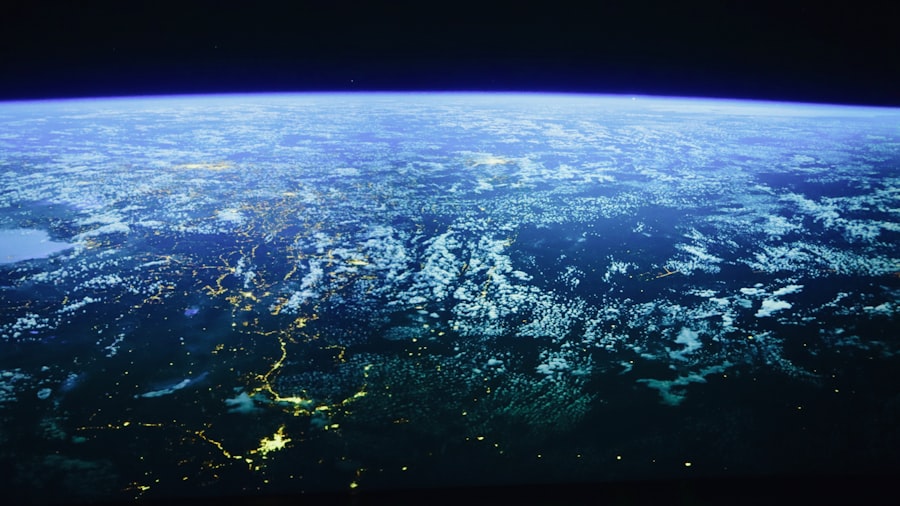
The journey to explore the unknown is not just about observing; it’s about venturing. “Exploring the Unknown” celebrates the incredible feats of engineering and human determination that allow us to push the boundaries of our terrestrial home and venture into the cosmos. You’ll witness the ingenuity that has transformed science fiction into scientific reality.
The Evolution of Spacecraft: From Sputnik to Starship
You’ll trace the remarkable evolution of space exploration technology. From the rudimentary beginnings of Sputnik and early manned missions to the sophisticated designs of the Voyager probes and the International Space Station, you’ll see how our ability to travel and operate in space has grown exponentially. The documentary will highlight pivotal moments in space history, celebrating the pioneers who dared to dream of reaching the stars.
Robotic Explorers: Our Eyes and Hands in Distant Worlds
You’ll meet the unsung heroes of deep space exploration: the robotic probes. From the iconic Voyager missions, now journeying through interstellar space, to the agile rovers exploring the Martian surface, these machines are our tireless emissaries. You’ll witness the data they transmit, the images they capture, and the scientific breakthroughs they facilitate. The documentary will emphasize the crucial role of these unmanned missions in paving the way for future human endeavors.
The Promise of Future Missions: Mars, Europa, and Beyond
The documentary looks forward, showcasing the ambitious plans for future space exploration. You’ll learn about the ongoing efforts to return humans to the Moon, the dedicated missions to Mars, and the tantalizing prospect of exploring the subsurface oceans of icy moons like Europa and Enceladus, which may harbor hidden forms of life. It’s a vision of a future where humanity’s reach extends further than ever before, driven by an insatiable desire to uncover the universe’s secrets.
If you’re fascinated by the mysteries of the universe, you might enjoy exploring a related article that delves into the latest discoveries in deep space exploration. This insightful piece offers a comprehensive overview of recent missions and technological advancements that are reshaping our understanding of the cosmos. To learn more about these exciting developments, check out the article here: latest discoveries in deep space exploration.
The Cosmic Perspective: Redefining Your Place
| Documentary Title | Release Year | Director | Duration |
|---|---|---|---|
| Into the Universe with Stephen Hawking | 2010 | N/A | 4 episodes, 60 minutes each |
| The Farthest: Voyager in Space | 2017 | Emer Reynolds | 1 hour 56 minutes |
| Cosmos: A Spacetime Odyssey | 2014 | Brannon Braga, Ann Druyan, Steven Soter | 13 episodes, 60 minutes each |
Perhaps the most profound impact of “Exploring the Unknown” is the shift in perspective it instills. As you journey through the vastness of space, witnessing the grandeur and the incomprehensible scale of the universe, you can’t help but feel a profound sense of insignificance, yet also, paradoxically, a deep connection.
Humility in the Face of Infinity
The sheer immensity of space is a humbling force. You’ll see our planet, a tiny blue marble, adrift in a cosmic ocean. This perspective can be overwhelming, but it also serves to put our earthly concerns into a different context. The squabbles, the divisions, the everyday worries can seem, from this vantage point, incredibly small. The documentary encourages a sense of humility, reminding you that we are but a brief flicker in the eternal expanse of time.
The Interconnectedness of All Things
As you learn about stellar nucleosynthesis and the formation of elements, you’ll come to a profound understanding of interconnectedness. The atoms that make up your body were forged in the hearts of stars that lived and died billions of years ago. You are, quite literally, made of stardust. This realization fosters a sense of belonging to something far grander than yourself, a cosmic family that stretches across time and space.
Inspiring a Sense of Responsibility
With this expanded perspective comes a renewed sense of responsibility. If our planet is so precious and unique, and if we are but transient inhabitants of this corner of the cosmos, then it behooves us to protect it. The documentary subtly, yet powerfully, conveys a message of stewardship, urging you to cherish and preserve the only home we have, while simultaneously dreaming of the wider universe that awaits. You’ll leave your armchair, not just with images of distant galaxies etched in your mind, but with a renewed appreciation for the miracle of existence and your role within it, however small. The unknown, as “Exploring the Unknown” so beautifully demonstrates, is not just out there; it’s inside us, too, waiting to be explored.

The Universe Never Truly Forgets. Physics Can’t Explain Why.
FAQs
What is a deep space documentary?
A deep space documentary is a film or video presentation that explores and showcases the wonders of outer space, including distant galaxies, stars, planets, and other celestial phenomena. These documentaries often feature stunning visuals captured by telescopes and spacecraft, as well as expert commentary from astronomers and scientists.
What topics are typically covered in a deep space documentary?
Deep space documentaries often cover a wide range of topics, including the formation and evolution of the universe, the life cycles of stars, the search for extraterrestrial life, the exploration of other planets and moons, and the latest discoveries in astronomy and astrophysics. They may also delve into theoretical concepts such as black holes, dark matter, and the nature of space and time.
How are deep space documentaries created?
Deep space documentaries are typically created using a combination of stunning visuals captured by telescopes and spacecraft, computer-generated imagery (CGI), and expert commentary from astronomers, astrophysicists, and other scientists. Filmmakers and production teams work closely with experts in the field to ensure accuracy and scientific integrity in the content presented.
Where can I watch deep space documentaries?
Deep space documentaries can be found on various streaming platforms, such as Netflix, Amazon Prime Video, and Disney+, as well as on television networks dedicated to science and nature programming. They may also be available for purchase or rental on DVD or Blu-ray, and some may be screened at science museums and planetariums.
What are some popular deep space documentaries?
Some popular deep space documentaries include “Cosmos: A Spacetime Odyssey” hosted by Neil deGrasse Tyson, “The Universe” series on the History Channel, “Into the Universe with Stephen Hawking,” and “Journey to the Edge of the Universe.” These documentaries have garnered critical acclaim for their stunning visuals and insightful exploration of the cosmos.