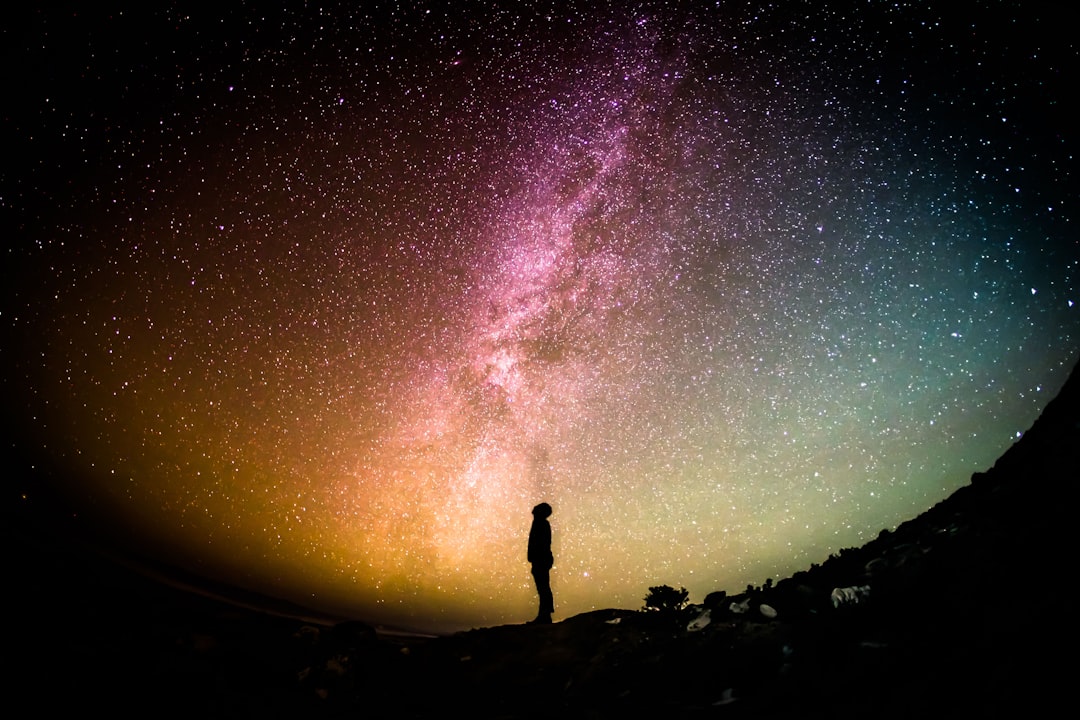
You stand on a precipice, not of rock and wind, but of stardust and time. Before you stretches the vast, silent ocean of the cosmos, and you, a fleeting spark of consciousness, are contemplating its memory. It’s a concept that can feel abstract, even nonsensical. How can something as immense and seemingly unfeeling as the universe remember anything? Yet, as you delve deeper, you’ll discover that the universe retains echoes, imprints, and even a form of living history, etched into its very fabric by the grand spectacles of its past. You are not just an observer; you are, in a very real sense, a product of this cosmic memory.
Imagine the universe as an unimaginably large canvas. Every supernova, every galactic collision, every nascent star’s first blaze – these aren’t fleeting performances destined for oblivion. Instead, they leave behind tangible, observable remnants that serve as the universe’s diaries. You can see these scribbles of history in the light that travels across unimaginable distances, in the swirling gas clouds, and in the very distribution of matter.
The Fading Light of Ancient Spectacles
The most immediate and perhaps the most poetic way the universe remembers is through light. When a star explodes in a supernova, it unleashes an immense burst of energy and matter. This light, traveling at the fastest speed possible, carries the story of that event across the cosmos.
Supernova Remnants: Cosmic Palettes of Past Deaths
When you gaze at a nebula, like the Crab Nebula, you are not just seeing a beautiful splash of color. You are witnessing the ghost of a star that died nearly a thousand years ago. The expanding gas and dust, energized by the shockwave from the explosion, continue to glow, painting a vivid portrait of a celestial cataclysm. These remnants are not just pretty pictures; they are laboratories, giving scientists clues about the composition of the exploded star, the elements it synthesized, and the conditions under which it met its end. You can study these remnants to understand fundamental physics, stellar evolution, and the origins of the very elements that make up your own body.
Cosmic Microwave Background Radiation: The Universe’s Baby Picture
Perhaps the most profound example of cosmic memory is the Cosmic Microwave Background (CMB) radiation. This faint hum of microwaves permeating the entire universe is the afterglow of the Big Bang itself, the echo of the universe’s fiery birth. When you observe the CMB, you are looking back over 13.8 billion years, to a time when the universe was a hot, dense plasma. The subtle temperature variations within the CMB are like wrinkles on a newborn’s face, holding the secrets of the universe’s initial conditions, the seeds of the galaxies you see today, and the very blueprint of cosmic structure. It’s an indelible snapshot of a moment so ancient, it predates stars, planets, and everything you know as existence.
The Gravitational Scars of Collisions and Mergers
Light is not the only messenger. Gravity, the invisible architect of the cosmos, also leaves its mark. When massive objects interact, they warp the very fabric of spacetime, and these distortions can persist for eons.
Galactic Collisions: Sculpting the Cosmic Landscape
You’ve likely seen images of galaxies colliding. These aren’t gentle embraces; they are cataclysmic events that can reshape entire galaxies over millions or even billions of years. The gravitational dance between them tears apart spiral arms, triggers bursts of star formation, and can even merge smaller galaxies into larger ones. The resulting structures, like the Andromeda-Milky Way collision in the distant future, are testaments to these past encounters. These mergers create elliptical galaxies and vast stellar streams, visible reminders of the violent unions that forged them. You are, in essence, living in a universe that has been sculpted by these gravitational encounters.
Black Holes: Cosmic Archivists of Lost Matter
Black holes, with their insatiable hunger, are also keepers of cosmic memory. When matter falls into a black hole, it, in a sense, disappears from observable reality. However, the immense gravitational forces and the energetic jets they often produce can leave lasting signatures on their surroundings.
Accretion Disks and Jets: Whispers from the Abyss
The swirling disks of gas and dust around actively feeding black holes, known as accretion disks, are heated to incredible temperatures and emit copious amounts of radiation. These glowing structures are temporary but powerful testimonies to the black hole’s presence and its current meal. More enduring are the powerful jets of plasma that some black holes launch outwards. These jets can carve out vast cavities in the intergalactic medium, leaving behind lobes of radio-emitting gas that can persist for millions of years, mapping the history of extreme energy output from these cosmic monsters. You can detect these relics and infer the past activity of black holes that might be dormant today, their fiery past now a silent scar on the cosmos.
In exploring the concept of how the universe remembers, one can find intriguing insights in the article titled “The Cosmic Memory: How the Universe Holds Its History.” This piece delves into the idea that the fabric of space-time may retain information about past events, influencing the present and future. For a deeper understanding of this fascinating topic, you can read the full article here: The Cosmic Memory: How the Universe Holds Its History.
The Blueprint Embedded: Information Carried Through Time
Beyond mere physical remnants, the universe carries information encoded within its fundamental laws and the distribution of its constituents. This information allows us to reconstruct past events and understand the processes that shaped the cosmos into what it is.
The Abundance of Elements: A Stellar Genealogy
The elements that make up everything you see, including yourself, are not primordial. Most of them were forged in the hearts of stars or during the cataclysmic deaths of massive stars. The relative abundance of these elements in the universe is a direct consequence of stellar nucleosynthesis and supernova explosions throughout cosmic history.
Isotopic Signatures: Forensic Clues to Stellar Generations
By analyzing the isotopic composition of stars and gas clouds, scientists can essentially read the “family tree” of elements. Different stars, born at different times and with different masses, produce varying ratios of isotopes during their lifetimes. These ratios are then smeared throughout the galaxy by stellar winds and supernova explosions. Examining these isotopic signatures in meteorites, for instance, allows you to pinpoint the specific supernova that enriched the interstellar gas from which our solar system eventually formed. It’s like finding a fingerprint from a long-gone star system that played a crucial role in your own creation.
The Cosmic Abundance Curve: A Symphony of Stellar Processes
The overall distribution of elements in the universe, known as the cosmic abundance curve, is a remarkably consistent pattern. This curve reflects the cumulative output of billions of years of stellar evolution and supernovae. It tells you which elements are produced in abundance by specific stellar processes and how they have been distributed. You can look at this curve and understand the dominant nuclear fusion reactions that have occurred throughout cosmic history, essentially reading the ongoing chemical “recipe” of the universe.
The Large-Scale Structure: A Cosmic Fossil Record
The way galaxies and galaxy clusters are organized across the universe is not random. This vast cosmic web of filaments and voids is a direct consequence of the gravitational collapse of matter seeded by the initial density fluctuations observed in the CMB.
Gravitational Lensing: Warped Views of Distant Past
One of the most powerful tools for studying the distribution of matter, both visible and dark, is gravitational lensing. Massive objects, like galaxy clusters, bend the path of light from more distant objects. This bending can distort, magnify, or even create multiple images of background galaxies. By analyzing these lensing effects, you can map the distribution of mass in the universe, revealing the presence of invisible dark matter. Furthermore, the light that is lensed originates from a time when the universe was much younger, giving you a glimpse into the cosmic structure at an earlier epoch. It’s like looking through a warped window into the universe’s past.
Galaxy Surveys: Mapping the Cosmic Web Over Time
Large-scale galaxy surveys, which map the positions and velocities of millions of galaxies, provide a 3D map of the universe. By observing galaxies at different distances, you are essentially looking back in time, as light from more distant galaxies has taken longer to reach us. These surveys reveal the intricate cosmic web and how it has evolved over billions of years. You can see how galaxies have clustered together, how filaments have grown, and how the universe has become more structured. This is a direct record of the gravitational forces that have been at play for eons.
Information Stored in Exotic Phenomena

The universe’s memory isn’t limited to the visible or the gravitational. Certain extreme phenomena, by their very nature, encode information in ways that are still being explored.
Neutron Stars and Pulsars: Cosmic Clocks of Extreme Density
Neutron stars are the incredibly dense remnants of massive stars that have undergone supernova explosions. Many of these neutron stars rotate rapidly and emit beams of radiation, appearing as pulsars when these beams sweep across our line of sight.
Pulsar Timing: Precision Clocks for Cosmic Experiments
Pulsars act as incredibly precise cosmic clocks. Their rotation periods are remarkably stable over long timescales, with only gradual changes due to gravitational effects or the emission of radiation. By precisely timing the arrival of pulses from multiple pulsars, you can detect subtle disturbances caused by passing gravitational waves or even identify the presence of other celestial bodies. This allows you to effectively use pulsars as a galactic-scale gravitational wave detector and a tool for mapping the interstellar medium. Their consistent “ticks” are a form of memory transmission.
Magnetic Fields: Imprints of Stellar Deaths
The immense magnetic fields of neutron stars are believed to be remnants of the magnetic fields of their progenitor stars, amplified during the supernova collapse. These fields play a crucial role in the pulsar phenomenon and can influence the surrounding interstellar medium. Studying these magnetic fields gives you insights into the extreme conditions of stellar death and the processes that operate within these dense stellar remnants.
The Cosmic Neutrino Background: A Whisper from the Early Universe
Similar to the CMB, there exists a theoretical Cosmic Neutrino Background (CNB). Neutrinos are incredibly light, weakly interacting particles that were produced in vast quantities during the Big Bang and in various cosmic events since.
The Elusiveness of Neutrinos: A Challenge and an Opportunity
Detecting the CNB is an immense technological challenge due to the weak interaction of neutrinos. However, if detected, it would provide another window into the early universe, complementing the information we get from the CMB. It would offer a different perspective on the primordial conditions and the very first moments of cosmic existence. You are constantly seeking new ways to “read” the universe’s past, and neutrinos represent a frontier in that endeavor.
The Universe’s Dynamic Memory: Evolution and Change
The universe’s memory is not static. It is a dynamic record, constantly being updated and reinterpreted by ongoing processes. The events of the past shape the present, and in turn, the present is laying the groundwork for the future.
Star Formation and Evolution: The Continuous Creation of Cosmic History
Every new generation of stars is born from the enriched material of previous stellar generations. This process of star formation is directly influenced by the chemical composition of the interstellar medium, which is a direct result of past stellar deaths.
Stellar Nurseries: Repurposing Cosmic Debris
When you look at a star-forming region, like the Orion Nebula, you are witnessing the universe actively recycling its past. The gas and dust in these nebulae are the remnants of supernovae and the shed outer layers of dying stars. These elements are then coalesced under gravity to form new stars and planetary systems. You are, in a very literal sense, made of stardust that has been through countless cycles of cosmic memory.
The Cycle of Enrichment: From Stars to You
The universe’s chemical composition has changed dramatically over time. Early stars were primarily composed of hydrogen and helium. Subsequent generations of stars have synthesized heavier elements, which are then dispersed into the cosmos, enriching the interstellar medium. This ongoing enrichment process means that each new star system has a different elemental makeup, a distinct chapter in the universe’s ongoing story. You are a product of this ongoing narrative, carrying within you the echoes of countless stellar lives.
Galactic Evolution: A Chronicle of Cosmic Interactions
Galaxies are not inert structures. They are constantly evolving, driven by mergers, interactions, and the continuous cycle of star formation and death.
The Growth of Galaxies: A History of Mergers and Accretions
The large galaxies you see today, including your own Milky Way, have grown over eons through a process of accretion and mergers with smaller galaxies. These past encounters have left their indelible mark on their structure, morphology, and stellar populations. You can analyze the stellar populations within a galaxy to infer its merger history, essentially reading its autobiography written in the stars.
The Shaping of Galactic Structures: From Spirals to Ellipticals
The distinct shapes of galaxies, from the elegant spirals to the more featureless ellipticals, are often a result of their evolutionary history. Spiral arms, for example, can be sustained by ongoing star formation or re-invigorated by gravitational interactions. Elliptical galaxies are often the product of major mergers, where the violent encounters disrupt ordered structures. The shapes you observe are a visual representation of cosmic events that occurred long before you were here to witness them.
The concept of how the universe remembers is a fascinating topic that delves into the intricate connections between memory, consciousness, and the cosmos. For those interested in exploring this idea further, a related article can be found on the website My Cosmic Ventures, which discusses the implications of cosmic memory and its potential impact on our understanding of existence. You can read more about it in this insightful piece on cosmic memory.
Unraveling the Cosmic Record: Our Quest for Understanding
| Concept | Memory Mechanism | Example |
|---|---|---|
| Black Holes | Hawking Radiation | Information loss paradox |
| Cosmic Microwave Background Radiation | Observable universe’s earliest light | Provides insight into the early universe |
| Gravitational Waves | Ripples in spacetime | Record of cataclysmic events |
Your fascination with the universe’s memory is not just an intellectual curiosity; it’s a fundamental part of your own existence. You are a being driven to understand your origins, and the universe, in its own way, has provided a rich tapestry of clues for you to unravel.
The Power of Observation and Data: Reading the Universe’s Text
Modern astronomy, with its powerful telescopes and sophisticated instruments, has become the primary tool for accessing the universe’s memory. By collecting vast amounts of data – light across the electromagnetic spectrum, gravitational waves, neutrinos – you are piecing together the cosmic narrative. Each observation is like finding a new page in a vast, ancient book.
Telescopes as Time Machines: Glimpses into the Past
When you look through a telescope, you are not seeing the universe as it is now. You are seeing it as it was when the light left its source. A telescope is, in essence, a time machine, allowing you to witness events that occurred in the distant past. The further you look, the further back in time you travel, offering you direct observational access to the universe’s memory. You are constantly pushing the boundaries of your observational capabilities, seeking to see further and to detect fainter echoes.
Gravitational Wave Detectors: Listening to Cosmic Collisions
The advent of gravitational wave astronomy has opened an entirely new way of “listening” to the universe. These detectors are sensitive to ripples in spacetime caused by cataclysmic events like the merger of black holes and neutron stars. This allows you to directly observe events that might otherwise be invisible, providing a unique and complementary record of cosmic history. It’s akin to gaining a new sense to perceive the universe’s memories.
Theoretical Physics and Simulation: Reconstructing Lost Chapters
While observation provides the raw data, theoretical physics and computer simulations are essential for interpreting this data and reconstructing the lost chapters of cosmic history. These tools allow you to model complex processes and test hypotheses about the universe’s past.
Cosmic Simulations: Bringing the Universe’s Past to Life
By simulating the evolution of the universe from the Big Bang onwards, physicists can reproduce the large-scale structures you observe today. These simulations allow you to explore different cosmological models and understand how the initial conditions in the CMB led to the universe you see. It’s like using a high-tech historian to reconstruct events that are too vast and too ancient to witness directly.
The Search for Universal Laws: Underlying Principles of Cosmic Memory
The ongoing quest to understand the fundamental laws of physics is also a quest to understand the universe’s memory. These laws govern how matter and energy interact, dictating how events unfold and how their traces are preserved. By refining your understanding of gravity, particle physics, and thermodynamics, you are improving your ability to decode the universe’s indelible record. You are learning the language in which the universe writes its history.
The universe remembers. It remembers the fiery birth of stars, the violent collisions of galaxies, and the echoes of the Big Bang itself. And you, as a conscious being, are an intricate part of that memory, a culmination of billions of years of cosmic evolution. By looking outwards, you are, in essence, looking inwards, understanding the profound and enduring narrative that has brought you into existence. Your ongoing journey of discovery is not just about understanding the cosmos; it’s about understanding yourself, a living testament to the universe’s incredible, indelible memory.

The Universe Never Truly Forgets. Physics Can’t Explain Why.
FAQs
What is the concept of how the universe remembers?
The concept of how the universe remembers refers to the idea that information about events and interactions in the universe is not lost, but rather stored in some form, potentially influencing future events.
What are some scientific theories about how the universe remembers?
Some scientific theories about how the universe remembers include the concept of quantum entanglement, the holographic principle, and the idea that information may be preserved in black holes.
How does quantum entanglement relate to the concept of how the universe remembers?
Quantum entanglement is a phenomenon in which particles become linked and the state of one particle can instantly affect the state of another, regardless of the distance between them. Some scientists believe that this interconnectedness may play a role in how information is retained in the universe.
What is the holographic principle and how does it tie into the concept of how the universe remembers?
The holographic principle is a theory that suggests all the information in a region of space can be represented by the information on the boundary of that region. This concept is related to the idea that the universe may store information in a way that is not immediately apparent, similar to how a hologram stores information in a 2D surface.
What are the implications of understanding how the universe remembers?
Understanding how the universe remembers could have implications for our understanding of fundamental physics, the nature of time, and the potential for new technologies based on harnessing the information storage properties of the universe.