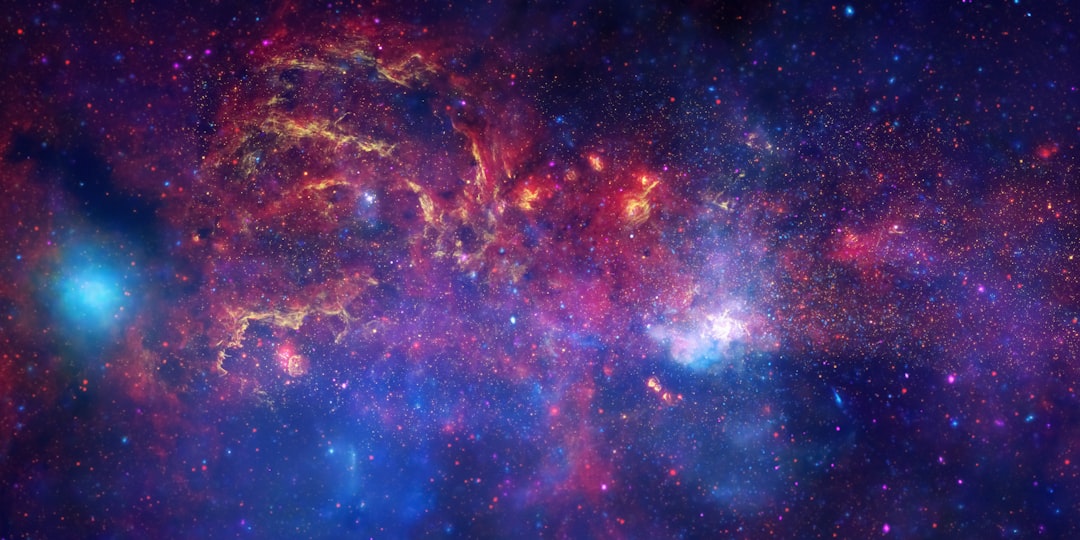
The Big Bang Theory stands as one of the most significant scientific explanations for the origin of the universe. It posits that approximately 13.8 billion years ago, the universe began as an infinitely small, hot, and dense point known as a singularity. This singularity underwent a rapid expansion, leading to the formation of space, time, and all matter as we know it.
The initial moments of this expansion were characterized by extreme temperatures and densities, which eventually cooled, allowing for the formation of subatomic particles and, subsequently, atoms. This monumental event marked the beginning of the universe’s expansion, setting in motion the cosmic evolution that would lead to the galaxies, stars, and planets observed today. As the universe expanded, it transitioned through various phases, including the formation of hydrogen and helium during the first few minutes—a process known as Big Bang nucleosynthesis.
Over millions of years, these primordial elements coalesced under gravity to form the first stars and galaxies. The Big Bang Theory not only provides a framework for understanding the universe’s beginnings but also serves as a foundation for modern cosmology. It invites further inquiry into the nature of space and time and raises profound questions about what existed before this explosive event.
Key Takeaways
- The Big Bang Theory marks the beginning of the universe’s expansion, leading to the formation of galaxies and stars.
- Evidence such as the redshift of galaxies and the cosmic microwave background supports the idea of the universe’s rapid expansion.
- Dark energy is believed to be responsible for accelerating the universe’s expansion, although its nature remains a mystery.
- Hubble’s constant is used to measure the rate of expansion of the universe, providing crucial insights into its evolution.
- The Hubble Space Telescope has made significant contributions to our understanding of the universe’s expansion, including the discovery of dark energy.
Evidence for the Universe’s Rapid Expansion
The evidence supporting the rapid expansion of the universe is multifaceted and compelling.
When light from these galaxies reaches Earth, it appears redder than it would if they were stationary.
This phenomenon occurs because as galaxies move away from us, their light waves are stretched, a direct consequence of the universe’s expansion. Edwin Hubble was instrumental in this discovery in the 1920s when he formulated Hubble’s Law, which states that the farther away a galaxy is, the faster it is receding from us. This relationship provided a clear indication that the universe is not static but is indeed expanding.
In addition to redshift observations, cosmic background radiation serves as another critical piece of evidence for the universe’s expansion. Discovered in 1965 by Arno Penzias and Robert Wilson, this faint afterglow of the Big Bang permeates the universe and provides a snapshot of its early state. The uniformity and slight fluctuations in this radiation offer insights into how matter was distributed in the early universe, further supporting the notion that it has been expanding since its inception.
Together, these observations form a robust framework that underpins our understanding of cosmic expansion.
The Role of Dark Energy in Accelerating the Universe’s Expansion
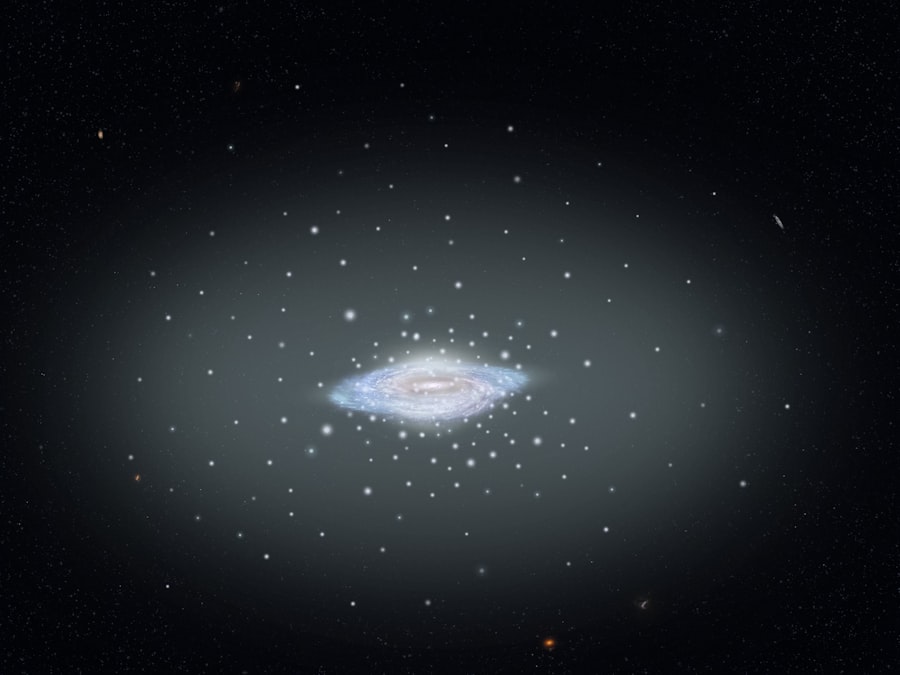
While the initial expansion of the universe can be attributed to the energy released during the Big Bang, a more mysterious force has been identified as playing a crucial role in its ongoing acceleration: dark energy. This enigmatic component makes up approximately 68% of the universe and is thought to exert a repulsive force that counteracts gravity on cosmic scales. The discovery of dark energy emerged from observations made in the late 1990s when astronomers studying distant supernovae found that they were dimmer than expected.
This unexpected dimming suggested that these supernovae were farther away than previously thought, indicating that the rate of expansion was accelerating rather than slowing down. The implications of dark energy are profound, as it challenges existing theories about gravity and the ultimate fate of the universe. If dark energy continues to dominate cosmic dynamics, it could lead to scenarios such as the “Big Freeze,” where galaxies drift apart indefinitely, or even a “Big Rip,” where the fabric of space-time itself is torn apart.
Understanding dark energy remains one of cosmology’s greatest challenges, prompting researchers to explore its properties and origins through various observational and theoretical approaches.
Measuring the Rate of Expansion: Hubble’s Constant
| Method | Hubble’s Constant (km/s/Mpc) |
|---|---|
| Cepheid Variables | 73.24 |
| Supernovae Type Ia | 74.03 |
| Planck Satellite | 67.4 |
Hubble’s Constant is a critical parameter in cosmology that quantifies the rate at which the universe is expanding. It is defined as the proportionality factor between the distance to a galaxy and its recessional velocity due to cosmic expansion. The value of Hubble’s Constant has been a subject of intense study and debate among astronomers, with different methods yielding varying results.
Traditionally, measurements have been made using Cepheid variable stars and Type Ia supernovae as standard candles to determine distances to far-off galaxies. However, discrepancies have emerged in recent years regarding Hubble’s Constant value derived from different techniques. The local measurements using supernovae suggest a higher value than that inferred from observations of cosmic microwave background radiation by missions like Planck.
This tension between measurements has sparked discussions about potential new physics beyond our current understanding of cosmology. Resolving this discrepancy is crucial for refining models of cosmic expansion and understanding fundamental aspects of our universe.
The Hubble Space Telescope and Its Contributions to Understanding the Universe’s Expansion
The Hubble Space Telescope (HST) has revolutionized our understanding of cosmic expansion since its launch in 1990. Positioned above Earth’s atmosphere, HST has provided unprecedented clarity in observing distant galaxies and celestial phenomena. One of its most significant contributions has been refining measurements of Hubble’s Constant through its observations of Cepheid variable stars and supernovae.
By providing accurate distance measurements to these objects, HST has enabled astronomers to calculate more precise values for cosmic expansion rates. Moreover, HST has played a pivotal role in exploring various aspects of galaxy formation and evolution within an expanding universe. Its deep-field images have revealed thousands of galaxies at different stages of development, allowing scientists to study how galaxies interact and evolve over billions of years.
By examining these processes within the context of an expanding universe, researchers can gain insights into how cosmic structures have formed and changed over time.
The Cosmic Microwave Background and its Implications for the Universe’s Expansion
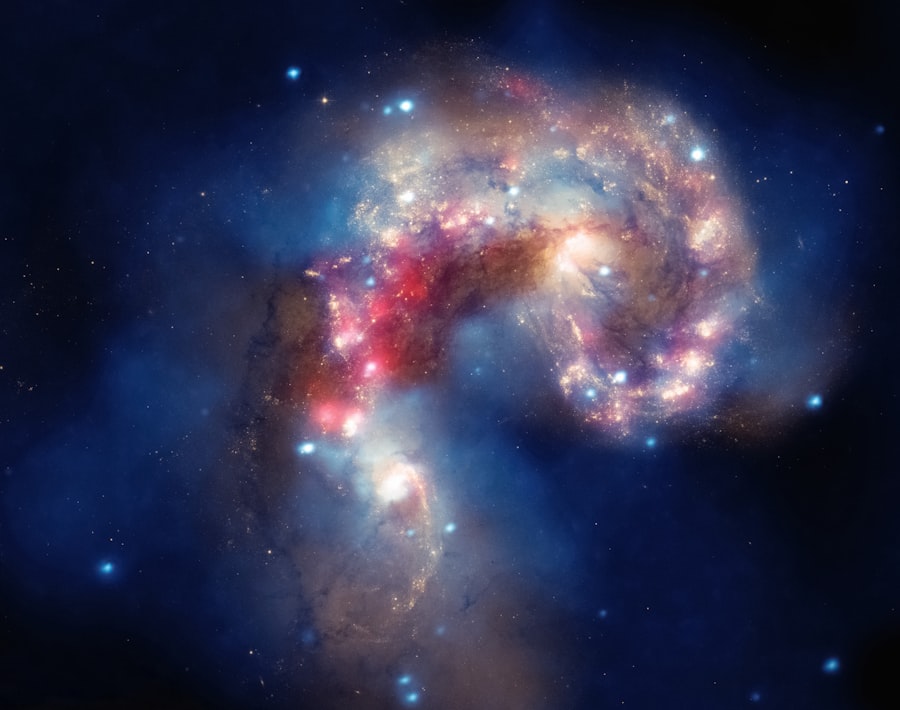
The Cosmic Microwave Background (CMB) radiation is often referred to as the afterglow of the Big Bang, providing a wealth of information about the early universe. This faint radiation fills all space and is remarkably uniform, with slight fluctuations that reveal critical details about cosmic structure formation. The CMB serves as a snapshot of the universe approximately 380,000 years after the Big Bang when atoms first formed and photons could travel freely through space.
The study of CMB fluctuations has profound implications for understanding cosmic expansion. These fluctuations correspond to regions of varying density in the early universe, which eventually led to galaxy formation under gravitational influence. By analyzing these patterns, cosmologists can infer key parameters about the universe’s composition, including estimates for dark matter and dark energy densities.
The CMB thus acts as a cornerstone for modern cosmology, linking our understanding of cosmic expansion with fundamental physical processes that shaped our universe.
The Future of the Universe’s Expansion: What Does it Mean for the Fate of the Universe?
As scientists continue to unravel the mysteries surrounding cosmic expansion, questions about the future fate of the universe loom large. Current models suggest several potential scenarios based on how dark energy behaves over time. If dark energy remains constant or increases in strength, it could lead to an ever-accelerating expansion known as “eternal inflation,” where galaxies drift apart indefinitely until they become isolated entities in an increasingly cold and dark cosmos.
Conversely, if dark energy diminishes or changes form over time, gravitational forces could eventually dominate again, leading to a deceleration in expansion or even a contraction phase known as “the Big Crunch.” This scenario would see galaxies collapsing back into a singularity similar to that from which they originated. Each potential outcome carries profound implications for our understanding of time, space, and existence itself—questions that have fascinated humanity for centuries.
Challenges and Controversies in Measuring the Universe’s Expansion Rate
Despite significant advancements in measuring cosmic expansion rates, challenges persist that complicate our understanding. One major issue lies in reconciling different measurement techniques that yield conflicting values for Hubble’s Constant. While local measurements using supernovae suggest a higher rate than those derived from CMB observations, this discrepancy raises questions about potential systematic errors or unknown factors influencing these measurements.
Additionally, uncertainties surrounding dark energy further complicate efforts to understand cosmic expansion fully. As researchers strive to refine their models and measurements, they must grapple with inherent limitations in observational data and theoretical frameworks. These challenges underscore the dynamic nature of cosmological research—an ever-evolving field where new discoveries can reshape existing paradigms.
The Connection between the Universe’s Expansion and the Formation of Galaxies and Stars
The expansion of the universe is intricately linked to processes governing galaxy and star formation. As space expands, regions with higher densities attract matter through gravitational forces, leading to clumping that forms galaxies over billions of years. This interplay between expansion and gravitational attraction shapes not only large-scale structures but also influences star formation within galaxies.
In regions where gas clouds collapse under gravity due to density fluctuations from cosmic expansion, stars are born through nuclear fusion processes. The rate at which stars form can be influenced by environmental factors such as gas availability and interactions with neighboring galaxies—factors that are themselves affected by cosmic expansion dynamics. Thus, understanding how galaxies evolve within an expanding universe provides critical insights into both stellar evolution and broader cosmological principles.
Theoretical Models for Understanding the Universe’s Rapid Expansion
To comprehend rapid cosmic expansion fully, scientists have developed various theoretical models that attempt to explain observed phenomena while accounting for dark energy’s role. One prominent model is Lambda Cold Dark Matter (ΛCDM), which incorporates dark energy (represented by Lambda) alongside cold dark matter as essential components driving cosmic evolution. This model successfully explains many observed features of large-scale structure formation while remaining consistent with CMB data.
Other models explore alternative explanations for cosmic acceleration or propose modifications to general relativity itself—such as scalar-tensor theories or modified gravity theories like f(R) gravity. Each theoretical framework offers unique insights into fundamental questions about our universe while highlighting areas where further research is needed to refine our understanding.
The Impact of the Universe’s Rapid Expansion on our Understanding of Cosmology
The rapid expansion of the universe has profoundly impacted cosmology by reshaping fundamental concepts about space-time and matter interactions on cosmic scales. It challenges traditional notions about static universes while providing a dynamic framework for understanding how galaxies evolve over time within an ever-expanding cosmos. Moreover, ongoing research into cosmic expansion continues to push boundaries across multiple disciplines—from particle physics exploring dark matter candidates to astrophysics investigating galaxy formation processes influenced by expansion dynamics.
As scientists delve deeper into these interconnected realms, they uncover new layers of complexity that enrich humanity’s understanding not only about our place in this vast cosmos but also about fundamental laws governing existence itself. In conclusion, exploring cosmic expansion reveals an intricate tapestry woven from diverse threads—each contributing unique insights into our universe’s origins and fate while challenging existing paradigms along the way. As researchers strive toward unraveling these mysteries further through observation and theory alike—one thing remains clear: humanity’s quest for knowledge about its place among stars will continue unabated amidst an ever-expanding cosmos filled with wonder yet-to-be-discovered.
In exploring the rapid expansion of the universe, one might find it fascinating to delve into the intricacies of cosmic inflation and the Big Bang theory. A related article that provides insights into these phenomena can be found on My Cosmic Ventures. This article discusses the initial moments after the Big Bang and how the universe expanded at an astonishing rate, setting the stage for the formation of galaxies, stars, and planets. For a deeper understanding of these cosmic events, you can read more about it on mycosmicventures.
com/sample-page/’>My Cosmic Ventures. This resource offers a comprehensive look at the forces and events that shaped our universe in its earliest moments.
WATCH THIS! Did JWST DISPROVE The BIG BANG?!?!
FAQs
What is the expansion rate of the universe?
The expansion rate of the universe is measured by the Hubble constant, which is currently estimated to be around 67.4 kilometers per second per megaparsec.
How fast did the universe expand in the past?
The rate of expansion of the universe has not been constant over time. In the early universe, it is believed to have expanded much more rapidly than it does today.
What is the evidence for the expansion of the universe?
The expansion of the universe is supported by various lines of evidence, including the redshift of distant galaxies, the cosmic microwave background radiation, and the large-scale structure of the universe.
What is the role of dark energy in the expansion of the universe?
Dark energy is thought to be the mysterious force driving the accelerated expansion of the universe. It is believed to account for about 68% of the total energy density of the universe.
Will the universe continue to expand indefinitely?
The ultimate fate of the universe is still uncertain. Depending on the amount of dark energy and the overall geometry of the universe, it may continue to expand indefinitely or eventually begin to contract.