The quest to understand dark matter has captivated scientists and astronomers for decades, representing one of the most profound mysteries in modern astrophysics. This elusive substance, which is believed to make up approximately 27% of the universe, remains undetectable by conventional means. Unlike ordinary matter, which emits light and can be observed through telescopes, dark matter does not interact with electromagnetic forces, making it invisible to current observational techniques.
The search for dark matter is not merely an academic pursuit; it holds the key to unlocking the secrets of the cosmos and understanding the fundamental structure of the universe. Researchers have employed various methods to infer the presence of dark matter, primarily through its gravitational effects on visible matter. For instance, the rotation curves of galaxies reveal that stars at the edges of galaxies move at speeds that cannot be accounted for by the visible mass alone.
This discrepancy suggests that a significant amount of unseen mass—dark matter—exists, exerting gravitational influence. Additionally, observations of galaxy clusters and the cosmic microwave background radiation provide further evidence for dark matter’s existence. As scientists continue to probe deeper into the cosmos, they remain hopeful that new discoveries will shed light on this enigmatic component of the universe.
Key Takeaways
- Dark matter is one of the greatest mysteries in the universe, and scientists are actively searching for it.
- While we know some things about dark matter, there is still much that remains unknown and unexplained.
- Dark matter plays a crucial role in the formation of galaxies and the universe as a whole.
- Black holes are formed from the collapse of massive stars and have an event horizon beyond which nothing can escape.
- There is an intriguing connection between dark matter and black holes that scientists are working to understand.
Understanding Dark Matter: What We Know and What We Don’t
Despite extensive research, dark matter remains shrouded in mystery. What is known is that it does not consist of baryonic matter, which includes protons, neutrons, and electrons—the building blocks of stars, planets, and living organisms. Instead, dark matter is thought to be composed of non-baryonic particles, such as Weakly Interacting Massive Particles (WIMPs) or axions.
These hypothetical particles are predicted to interact very weakly with ordinary matter, making them incredibly difficult to detect directly. Theoretical models suggest that dark matter could be a fundamental aspect of particle physics, yet its exact nature continues to elude scientists. The gaps in knowledge surrounding dark matter are significant.
For instance, while its gravitational effects can be observed, the particle physics behind dark matter remains largely speculative. Numerous experiments are underway to detect dark matter particles directly or indirectly, yet none have yielded conclusive results thus far. The lack of empirical evidence has led to various competing theories about what dark matter could be, ranging from supersymmetry to extra dimensions.
As researchers strive to bridge these gaps in understanding, they are also challenged by the need to reconcile dark matter theories with established physics.
The Role of Dark Matter in the Formation of Galaxies and the Universe

Dark matter plays a crucial role in the formation and evolution of galaxies and large-scale structures in the universe.
The prevailing theory suggests that shortly after the Big Bang, dark matter began to clump together due to gravitational attraction, creating potential wells that allowed baryonic matter to fall into them.
This process led to the formation of galaxies and galaxy clusters, shaping the universe as we observe it today. The influence of dark matter extends beyond mere structure formation; it also affects galaxy dynamics and interactions.
These interactions can lead to phenomena such as starbursts and active galactic nuclei, which are critical for understanding galaxy evolution. As researchers continue to study these processes, they gain insights into how dark matter has sculpted the universe’s landscape over billions of years.
Unraveling the Enigma of Black Holes: How They Form and What Lies Beyond the Event Horizon
| Aspect | Details |
|---|---|
| Title | Unraveling the Enigma of Black Holes: How They Form and What Lies Beyond the Event Horizon |
| Topic | Black Holes |
| Focus | Formation and Beyond the Event Horizon |
| Research | Scientific Theories and Observations |
| Importance | Understanding the Nature of Black Holes |
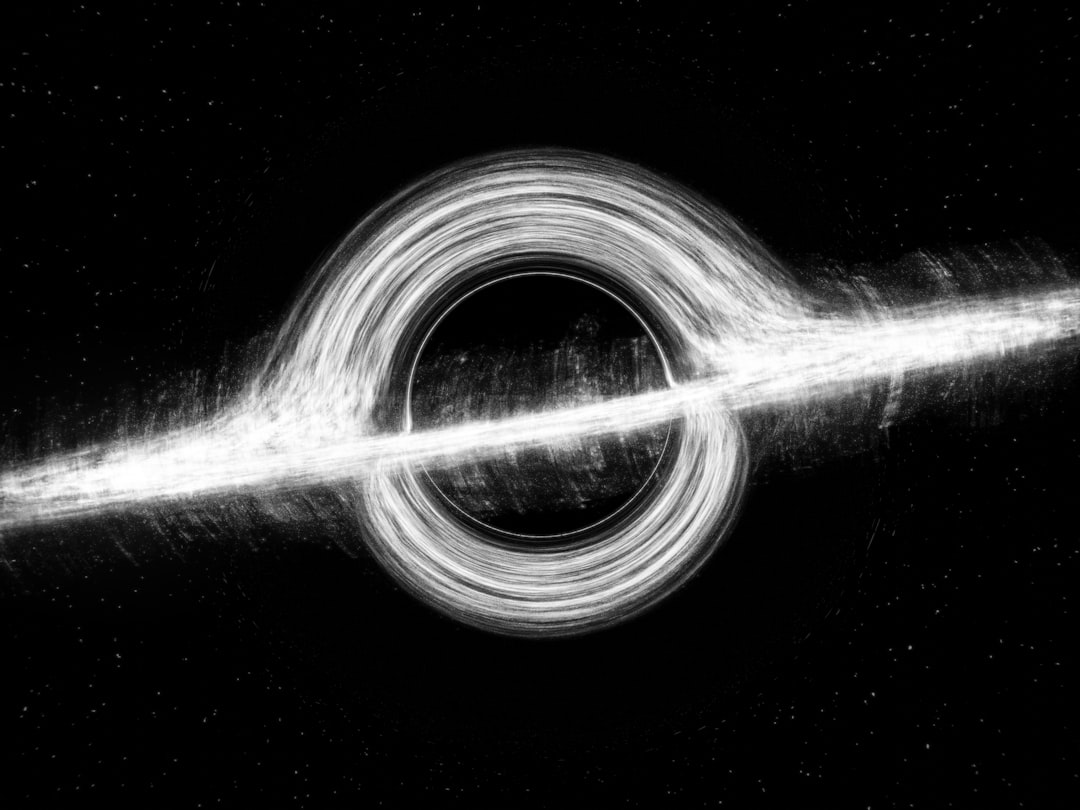
Black holes represent another profound mystery in astrophysics, characterized by their immense gravitational pull from which nothing can escape once it crosses the event horizon. They are formed from the remnants of massive stars that have exhausted their nuclear fuel and undergone gravitational collapse. This process leads to a singularity—a point of infinite density—surrounded by an event horizon that marks the boundary beyond which escape is impossible.
The study of black holes raises fundamental questions about the nature of space and time. What lies beyond the event horizon remains one of the most intriguing questions in modern physics. According to general relativity, once an object crosses this threshold, it is irretrievably drawn into the black hole’s singularity.
However, quantum mechanics introduces complexities that challenge this notion. Theories such as Hawking radiation suggest that black holes may emit radiation due to quantum effects near the event horizon, potentially leading to their evaporation over astronomical timescales. This interplay between general relativity and quantum mechanics continues to fuel debates among physicists as they seek a unified theory that can explain both phenomena.
The Intriguing Connection Between Dark Matter and Black Holes
The relationship between dark matter and black holes is a subject of intense research and speculation. Some theories propose that black holes could be a form of dark matter themselves, particularly primordial black holes formed in the early universe. These black holes would have formed from density fluctuations shortly after the Big Bang and could account for some or all of the dark matter observed today.
If this hypothesis holds true, it would fundamentally alter our understanding of both dark matter and black hole formation. Moreover, black holes may influence the distribution and behavior of dark matter in their vicinity. The gravitational pull of a black hole can affect nearby dark matter particles, potentially leading to observable effects on galactic scales.
Conversely, regions with high concentrations of dark matter could facilitate black hole formation by providing additional mass for gravitational collapse. This intricate interplay between these two cosmic phenomena highlights the complexity of the universe and underscores the need for further investigation into their connections.
The Impact of Black Holes on the Fabric of Space and Time

Black holes have profound implications for our understanding of space and time itself. According to Einstein’s theory of general relativity, massive objects warp spacetime around them, creating gravitational fields that affect the motion of nearby objects. In the case of black holes, this warping becomes extreme; as one approaches a black hole’s event horizon, time appears to slow down relative to an outside observer due to gravitational time dilation.
This phenomenon raises fascinating questions about the nature of reality and perception. The effects of black holes extend beyond their immediate vicinity; they can influence entire galaxies and even cosmic structures on larger scales. For instance, supermassive black holes at the centers of galaxies can regulate star formation rates by emitting powerful jets and radiation that affect surrounding gas clouds.
This feedback mechanism plays a crucial role in galaxy evolution and highlights how black holes are not merely passive entities but active participants in shaping their environments.
Theories and Models: Attempting to Explain the Nature of Dark Matter and Black Holes
Theoretical frameworks attempting to explain dark matter and black holes have proliferated over recent decades, reflecting the complexity and depth of these subjects. In terms of dark matter, various models have been proposed, including WIMP candidates from supersymmetry theories and lighter particles like axions or sterile neutrinos. Each model presents unique predictions about how dark matter might behave or interact with ordinary matter, guiding experimental efforts aimed at detection.
Similarly, black hole research has led to numerous theoretical advancements regarding their properties and behaviors. Concepts such as black hole thermodynamics explore relationships between entropy and information loss associated with black holes, while ideas like loop quantum gravity attempt to reconcile general relativity with quantum mechanics at singularities. These theories not only seek to explain existing observations but also aim to predict new phenomena that could be tested through future observations or experiments.
Observational Techniques: How Scientists Study Dark Matter and Black Holes
Studying dark matter and black holes requires innovative observational techniques due to their elusive nature. For dark matter, astronomers rely on indirect methods such as gravitational lensing—where light from distant objects is bent around massive foreground objects—allowing them to map out dark matter distributions in galaxy clusters. Additionally, cosmic microwave background measurements provide insights into how dark matter influenced early universe conditions.
In contrast, black holes are often studied through their interactions with surrounding material. Observations of X-ray emissions from accretion disks around black holes reveal vital information about their mass and spin. Gravitational wave detections from merging black holes have opened a new window into understanding their properties and populations across cosmic history.
As technology advances, scientists continue to refine these techniques while developing new instruments capable of probing deeper into these cosmic enigmas.
The Quest for Dark Matter and Black Holes: Current and Future Missions and Projects
The pursuit of understanding dark matter and black holes is ongoing, with numerous current missions and future projects aimed at unraveling these mysteries. Experiments like the Large Hadron Collider (LHC) seek to produce conditions conducive to detecting potential dark matter candidates through high-energy collisions. Meanwhile, observatories such as the Vera Rubin Observatory will provide unprecedented data on galaxy dynamics and structure formation over time.
Future missions also include space-based observatories like NASA’s James Webb Space Telescope (JWST), which aims to explore early galaxy formation influenced by dark matter while providing insights into supermassive black holes’ growth across cosmic epochs. As interdisciplinary collaboration continues among physicists, astronomers, and engineers worldwide, there is hope that these efforts will yield groundbreaking discoveries that deepen humanity’s understanding of the universe.
The Practical Applications of Understanding Dark Matter and Black Holes
While studying abstract concepts like dark matter and black holes may seem esoteric at first glance, there are practical applications stemming from this research that could benefit society at large. Advances in technology developed for astrophysical research often find applications in other fields; for instance, imaging techniques used in studying cosmic phenomena have been adapted for medical imaging technologies such as MRI scans. Moreover, understanding fundamental physics principles related to dark matter and black holes may lead to breakthroughs in energy production or materials science down the line.
As researchers continue exploring these cosmic mysteries through innovative approaches, they may inadvertently pave pathways toward technological advancements that enhance everyday life on Earth.
The Future of Dark Matter and Black Hole Research: What Lies Ahead
The future of research into dark matter and black holes is filled with promise as scientists strive to unlock their secrets through innovative methodologies and collaborative efforts across disciplines. As observational technologies improve and theoretical frameworks evolve, there is optimism that breakthroughs will occur within this century that could fundamentally alter humanity’s understanding of the universe. In conclusion, while much remains unknown about dark matter and black holes—two pillars supporting our comprehension of cosmology—the relentless pursuit by researchers worldwide continues unabated.
With each discovery comes new questions; however, it is precisely this journey into uncertainty that fuels scientific inquiry—a testament to humanity’s enduring quest for knowledge amidst the vastness of space.
In recent developments within the field of astrophysics, researchers have made groundbreaking discoveries regarding the behavior of dark matter in galaxy clusters. These findings have significant implications for our understanding of the universe’s structure and evolution. For a deeper dive into these discoveries, you can explore a related article on the topic by visiting My Cosmic Ventures. This resource provides detailed insights and expert analyses that shed light on the complexities of dark matter and its role in cosmic phenomena.
WATCH THIS! Did JWST DISPROVE The BIG BANG?!?!
FAQs
What are the latest discoveries in astrophysics?
Some of the latest discoveries in astrophysics include the detection of gravitational waves, the discovery of exoplanets, the study of black holes, and the exploration of the cosmic microwave background radiation.
What are gravitational waves?
Gravitational waves are ripples in the fabric of spacetime that are caused by some of the most violent and energetic processes in the universe, such as the collision of two black holes or the explosion of massive stars.
What are exoplanets?
Exoplanets are planets that orbit stars outside of our solar system. The discovery of exoplanets has expanded our understanding of planetary systems and the potential for life beyond Earth.
What is the study of black holes?
Black holes are regions of spacetime where gravity is so strong that nothing, not even light, can escape. The study of black holes has provided insights into the nature of spacetime and the behavior of matter under extreme conditions.
What is cosmic microwave background radiation?
Cosmic microwave background radiation is the residual heat left over from the Big Bang. Studying this radiation has provided valuable information about the early universe and the formation of galaxies and large-scale structures.