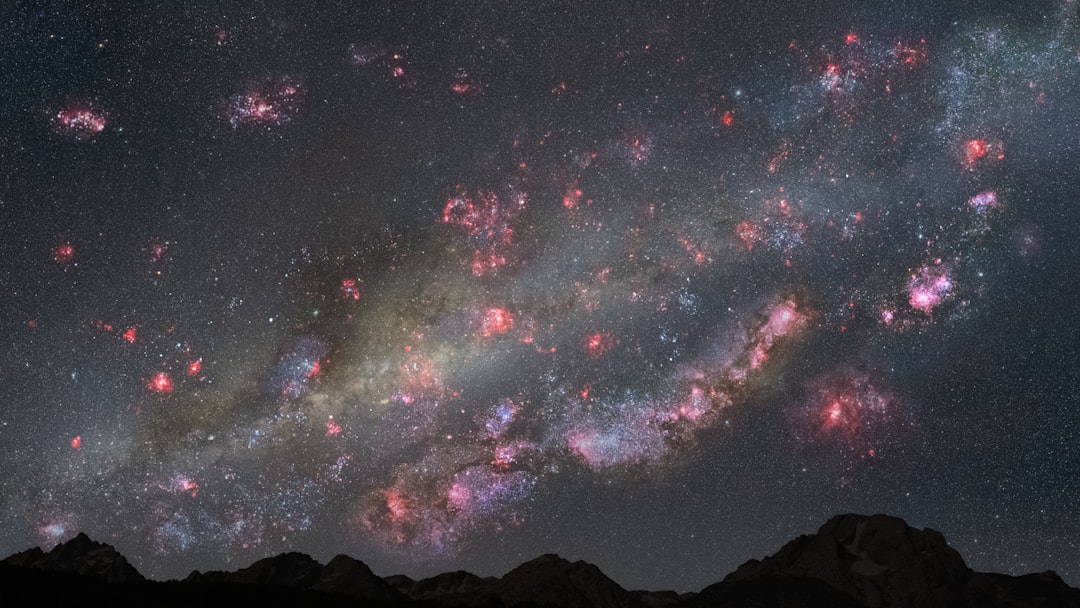
The James Webb Space Telescope (JWST) represents a monumental leap forward in the field of astronomy and cosmology. Launched on December 25, 2021, this sophisticated observatory is designed to explore the universe in unprecedented detail, focusing on the infrared spectrum. Its significance lies not only in its advanced technology but also in its potential to answer some of the most profound questions about the cosmos.
By peering deeper into space than ever before, JWST aims to uncover the secrets of the early universe, the formation of galaxies, and the nature of dark matter and dark energy.
With a larger primary mirror and advanced instruments, it can capture light from the faintest and most distant objects.
This ability allows astronomers to study celestial phenomena that occurred billions of years ago, providing insights into the origins of galaxies, stars, and planetary systems. As a result, JWST is poised to revolutionize our understanding of the universe, offering a new lens through which to view cosmic history and evolution.
Key Takeaways
- JWST is a revolutionary space telescope with the potential to transform our understanding of the universe and its origins.
- Analyzing JWST observations presents complex data challenges, requiring advanced processing and analysis techniques.
- JWST plays a crucial role in unraveling the mysteries of the early universe, providing insights into its formation and evolution.
- The telescope’s data is instrumental in understanding the formation and evolution of galaxies, shedding light on their intricate processes.
- Interpreting JWST data to study the distribution of dark matter poses significant challenges, but offers valuable insights into this elusive component of the universe.
Data challenges and complexities in analyzing JWST observations
Despite its groundbreaking potential, the analysis of data from JWST presents significant challenges. The sheer volume of data generated by this powerful telescope is staggering. Each observation can produce terabytes of information, necessitating robust data management systems and sophisticated algorithms for processing.
Researchers must navigate this vast sea of data to extract meaningful insights, which can be a daunting task given the complexity of the information being collected. Moreover, the intricacies of interpreting infrared data add another layer of complexity. Unlike visible light observations, infrared data requires specialized techniques to account for various factors such as noise, calibration errors, and atmospheric interference.
Astronomers must employ advanced statistical methods and machine learning algorithms to ensure accurate interpretations. This complexity can lead to delays in research timelines as scientists work diligently to refine their analyses and validate their findings.
The role of JWST in unraveling the mysteries of the early universe
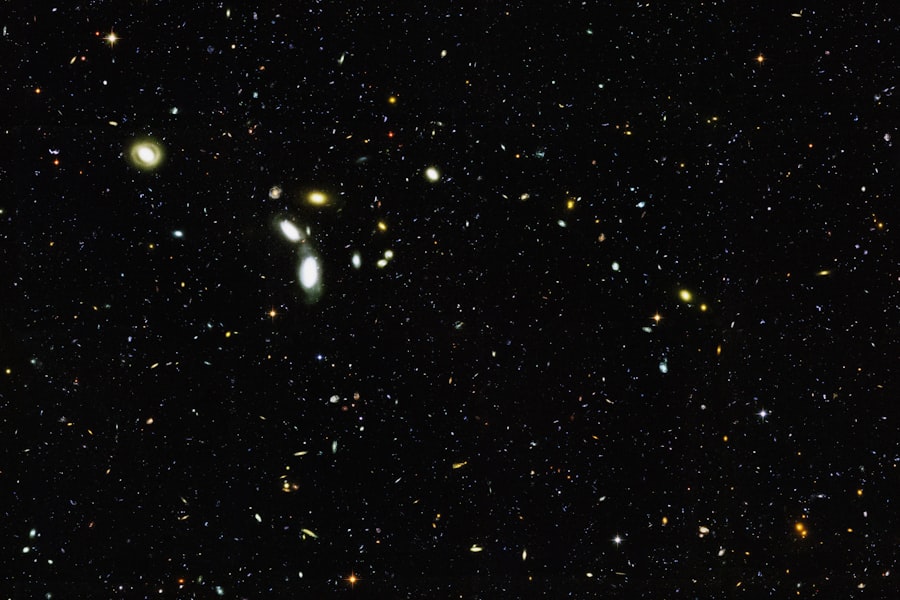
One of JWST’s primary missions is to explore the early universe, a period that remains shrouded in mystery. By observing distant galaxies and cosmic structures formed shortly after the Big Bang, JWST aims to shed light on how these entities evolved over time. The telescope’s ability to detect light from the first stars and galaxies will provide invaluable information about the conditions that prevailed in the universe’s infancy.
Through its observations, JWST is expected to reveal critical details about cosmic reionization, a phase when the universe transitioned from being opaque to transparent. Understanding this process is essential for comprehending how galaxies formed and evolved in the early universe. By capturing images and spectra of these ancient celestial bodies, JWST will help astronomers piece together the timeline of cosmic history and provide insights into the fundamental processes that shaped the universe as we know it today.
Understanding the formation and evolution of galaxies using JWST data
| Galaxy Formation and Evolution Metrics | Observations |
|---|---|
| Galaxy Morphology | High-resolution imaging to study the shapes and structures of galaxies |
| Star Formation Rates | Measuring the rate at which stars are forming within galaxies |
| Galactic Dynamics | Studying the movement and interactions of stars and gas within galaxies |
| Chemical Composition | Analyzing the elements present in galaxies to understand their chemical evolution |
| Black Hole Activity | Investigating the presence and behavior of supermassive black holes in galactic centers |
The formation and evolution of galaxies are central themes in cosmology, and JWST is uniquely equipped to investigate these phenomena. By observing galaxies at various stages of their development, researchers can gain insights into how they form, grow, and interact over time. The telescope’s infrared capabilities allow it to penetrate dust clouds that often obscure visible light observations, revealing hidden structures within galaxies.
JWST’s observations will enable scientists to study star formation rates, chemical compositions, and the dynamics of galaxy mergers. By analyzing these factors, researchers can develop models that explain how galaxies evolve in response to their environments. Furthermore, JWST’s ability to observe distant galaxies means that it can capture snapshots of galactic evolution across cosmic time, providing a comprehensive view of how these massive structures have changed over billions of years.
Challenges in interpreting JWST data to study the distribution of dark matter
Dark matter remains one of the most enigmatic components of the universe, constituting approximately 27% of its total mass-energy content. Understanding its distribution is crucial for constructing accurate models of cosmic structure formation. However, interpreting JWST data to study dark matter presents significant challenges.
Unlike ordinary matter, dark matter does not emit or absorb light, making it invisible to direct observation. Instead, astronomers rely on gravitational lensing—a phenomenon where massive objects bend light from more distant sources—to infer the presence and distribution of dark matter. JWST’s high-resolution imaging capabilities will enhance these studies by providing clearer views of gravitational lensing effects.
However, accurately modeling these effects requires sophisticated simulations and a deep understanding of both visible and dark matter interactions.
Using JWST to investigate the nature of dark energy and its implications for cosmology

Dark energy is another critical component of the universe that remains poorly understood. It is believed to be responsible for the accelerated expansion of the universe, yet its nature is still a mystery. JWST has the potential to contribute significantly to this field by providing data that can help refine models of dark energy and its effects on cosmic evolution.
By observing distant supernovae and galaxy clusters, JWST can gather information about their distribution and behavior over time. This data will allow researchers to test various theories regarding dark energy and its role in shaping the universe’s fate. As scientists analyze this information, they may uncover new insights that could lead to a deeper understanding of fundamental physics and cosmology.
The potential for JWST to revolutionize our understanding of exoplanets and their atmospheres
In addition to its contributions to cosmology, JWST is set to transform our understanding of exoplanets—planets orbiting stars outside our solar system. With its advanced spectroscopic capabilities, JWST can analyze the atmospheres of these distant worlds in unprecedented detail. This ability opens up new avenues for studying their composition, temperature, and potential habitability.
By examining the chemical signatures present in exoplanet atmospheres, astronomers can identify key molecules such as water vapor, carbon dioxide, and methane.
Furthermore, JWST’s observations will enable researchers to compare exoplanetary atmospheres with those in our solar system, enhancing our understanding of planetary formation processes.
Data processing and analysis techniques for maximizing the scientific yield of JWST observations
To fully harness the potential of JWST’s observations, researchers must employ advanced data processing and analysis techniques. The complexity and volume of data generated by the telescope necessitate innovative approaches for extracting meaningful information. Techniques such as machine learning and artificial intelligence are increasingly being utilized to automate data analysis processes and identify patterns within large datasets.
Additionally, collaborative efforts among scientists from various disciplines are essential for maximizing scientific yield. By sharing expertise in fields such as computer science, astrophysics, and statistics, researchers can develop more effective algorithms for data interpretation. This interdisciplinary approach not only enhances individual studies but also fosters a more comprehensive understanding of cosmic phenomena.
Overcoming technical obstacles and limitations in collecting and interpreting JWST data
While JWST represents a technological marvel, it is not without its challenges. Technical obstacles can arise during both data collection and interpretation phases. For instance, issues related to instrument calibration or unexpected environmental factors can impact observational quality.
Researchers must remain vigilant in addressing these challenges to ensure that data integrity is maintained throughout the research process. Moreover, limitations inherent in current observational techniques may hinder scientists’ ability to draw definitive conclusions from JWST data. As researchers work to refine their methodologies and improve calibration processes, they must also remain open to revising existing theories based on new findings.
This adaptability is crucial for advancing knowledge in an ever-evolving field like cosmology.
Collaborative efforts and international partnerships in utilizing JWST data for cosmological research
The success of JWST relies heavily on collaborative efforts among scientists worldwide. International partnerships have been instrumental in developing the telescope’s technology and ensuring its successful operation. As researchers begin analyzing data from JWST, collaboration will continue to play a vital role in maximizing its scientific impact.
By sharing findings across institutions and countries, scientists can build upon each other’s work and foster a global community dedicated to unraveling cosmic mysteries. Collaborative projects may involve joint observations or shared datasets that enhance research capabilities. Such partnerships not only accelerate scientific progress but also promote knowledge exchange among diverse perspectives within the astronomical community.
Future prospects and implications for cosmology with the launch of JWST and its data challenges
The launch of JWST marks a new era in cosmology with far-reaching implications for our understanding of the universe. As researchers begin to analyze its data, they will confront both exciting opportunities and formidable challenges. The potential discoveries that await could reshape existing theories about cosmic evolution, dark matter, dark energy, and even life beyond Earth.
However, navigating these challenges will require ongoing innovation in data processing techniques and collaborative efforts among scientists worldwide. As they work together to interpret complex datasets generated by JWST, researchers will not only advance their understanding of fundamental questions but also inspire future generations of astronomers eager to explore the cosmos further. The journey ahead promises to be as enlightening as it is challenging—a testament to humanity’s enduring quest for knowledge about the universe we inhabit.
The James Webb Space Telescope (JWST) has opened new frontiers in cosmology, but it also presents unique data challenges that researchers are striving to overcome. These challenges include managing the vast amounts of data generated, ensuring accurate calibration, and interpreting the complex signals from distant cosmic phenomena. An insightful article discussing these issues can be found on My Cosmic Ventures. It delves into the intricacies of JWST’s data handling and the implications for our understanding of the universe. For more detailed information, you can read the full article by visiting