
Time, an ever-flowing river, is a fundamental aspect of human existence. It governs the rhythm of life, marking the moments that define individual experiences and collective histories. The concept of time is not merely a measurement; it is a framework within which events unfold, memories are created, and legacies are established.
In this intricate tapestry, records serve as the threads that weave together the past, present, and future. They encapsulate moments, preserving them for posterity and allowing societies to reflect on their journeys through time. Records can take many forms, from written documents and photographs to digital files and oral histories.
Each record serves as a snapshot of a particular moment, capturing the essence of experiences that might otherwise fade into obscurity. As humanity progresses, the importance of these records becomes increasingly evident. They not only provide a means of understanding the past but also offer insights into the present and guidance for the future.
In this exploration of time and records, one can appreciate how intertwined these concepts are, revealing the profound impact that documentation has on human civilization.
Key Takeaways
- Records serve as a means of capturing and preserving the passage of time, allowing us to understand and learn from the past.
- The historical significance of records lies in their ability to preserve and document important events, shaping our understanding of the past.
- Record-keeping methods have evolved over time, from oral traditions to written documents, and now to digital technology, reflecting changes in society and culture.
- Digital technology has revolutionized record-keeping, making information more accessible and easily transferable, but also raising ethical considerations.
- Accurate and reliable records are crucial for understanding cultural and societal changes, shaping future perspectives, and preserving collective memory.
The role of records in capturing the passage of time
Records play a pivotal role in capturing the passage of time by serving as tangible evidence of events and experiences. They act as markers that delineate significant moments in history, allowing individuals and societies to chronicle their journeys. From ancient cave paintings to modern digital archives, records have evolved but their core purpose remains unchanged: to document the human experience.
Each record tells a story, providing context and meaning to the events it represents. Moreover, records facilitate a deeper understanding of temporal progression. They allow individuals to reflect on their personal histories while also enabling societies to analyze broader trends over time.
For instance, census data can reveal demographic shifts, while historical documents can illuminate social movements and cultural transformations. By examining these records, one can trace the evolution of ideas, values, and practices across generations. In this way, records serve as both mirrors and windows—reflecting individual lives while offering glimpses into the collective narrative of humanity.
Historical significance of records in preserving the past

The historical significance of records cannot be overstated; they are essential for preserving the past and ensuring that future generations have access to their heritage. Throughout history, civilizations have recognized the importance of documentation as a means of safeguarding their legacies. Ancient civilizations such as the Egyptians and Mesopotamians meticulously recorded their achievements, beliefs, and daily lives on papyrus scrolls and clay tablets.
These early records laid the foundation for future generations to understand their origins and cultural identities. In more recent times, the role of records in preserving history has only grown more critical. Archives filled with letters, photographs, and official documents provide invaluable insights into pivotal moments in history, such as wars, revolutions, and social movements.
These records not only serve as evidence of events but also capture the emotions and sentiments of those who lived through them. By studying these materials, historians can piece together narratives that shape our understanding of the past, ensuring that the lessons learned are not forgotten but rather passed down through time.
The evolution of record-keeping methods over time
| Time Period | Record-keeping Method |
|---|---|
| Ancient Times | Clay tablets, papyrus scrolls |
| Medieval Period | Manuscripts, parchment |
| Early Modern Era | Handwritten ledgers, quill pens |
| 19th Century | Typewriters, filing cabinets |
| 20th Century | Computers, databases |
| 21st Century | Cloud storage, digital archives |
The methods of record-keeping have undergone significant evolution throughout history, reflecting advancements in technology and changes in societal needs. In ancient times, record-keeping was often a laborious process involving manual inscription on stone or clay surfaces. As societies progressed, so too did their methods; the invention of writing systems allowed for more efficient documentation.
The transition from oral traditions to written records marked a pivotal moment in human history, enabling more accurate preservation of information. With the advent of the printing press in the 15th century, record-keeping experienced another transformation. Printed materials became more accessible, allowing for widespread dissemination of knowledge and information.
This democratization of record-keeping paved the way for greater literacy rates and an informed populace. In contemporary society, digital technology has revolutionized record-keeping once again. The ability to store vast amounts of data electronically has made it easier than ever to create, access, and share records.
However, this shift also raises questions about data security and longevity in an increasingly digital world.
The impact of digital technology on record-keeping
Digital technology has profoundly impacted record-keeping practices, introducing both opportunities and challenges. On one hand, digital records offer unparalleled convenience; they can be created quickly, stored efficiently, and accessed from virtually anywhere in the world. This ease of access has transformed how individuals and organizations manage information, allowing for real-time updates and collaboration across distances.
Furthermore, digital archives can house vast amounts of data without the physical limitations associated with traditional record-keeping methods. However, the shift to digital record-keeping is not without its pitfalls. Concerns about data privacy and security have become increasingly prominent as more information is stored online.
The risk of data breaches or loss due to technological failures poses significant challenges for individuals and institutions alike. Additionally, the rapid pace of technological change raises questions about the longevity of digital records; formats that are accessible today may become obsolete tomorrow. As society navigates this digital landscape, it becomes essential to develop strategies for preserving records in a way that ensures their accessibility for future generations.
Records as a tool for understanding cultural and societal changes
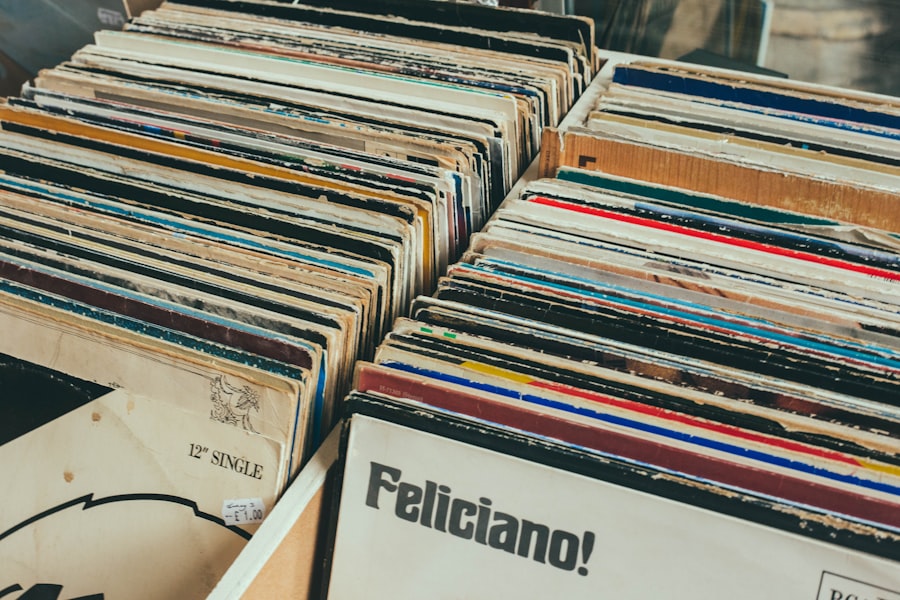
Records serve as invaluable tools for understanding cultural and societal changes over time. They provide insights into how societies evolve in response to various influences—be it political shifts, economic developments, or social movements. By examining records such as newspapers, government documents, and personal diaries, researchers can gain a deeper understanding of the zeitgeist during specific periods in history.
For instance, records from the civil rights movement in the United States reveal not only the struggles faced by activists but also the broader societal attitudes towards race and equality at that time. Similarly, immigration records can shed light on patterns of migration and integration within different communities. By analyzing these documents, scholars can trace how cultural identities are formed and transformed over time, highlighting the dynamic nature of human societies.
The relationship between records and memory
The relationship between records and memory is intricate and multifaceted. Records serve as external manifestations of memory; they capture moments that individuals may forget but which can be revisited through documentation. This interplay between memory and records is particularly significant in personal contexts—family photographs or letters can evoke powerful emotions and recollections that shape one’s identity.
On a collective level, records contribute to societal memory by preserving shared experiences that define communities and nations. National archives filled with historical documents serve as repositories of collective memory, allowing societies to remember their pasts while informing their futures. However, it is essential to recognize that records are not neutral; they are shaped by perspectives and biases inherent in their creation.
Thus, understanding how memory influences record-keeping practices is crucial for interpreting historical narratives accurately.
The importance of accurate and reliable records
Accurate and reliable records are fundamental to effective record-keeping practices. The integrity of documentation directly impacts its usefulness for research, legal purposes, and historical analysis. Inaccurate or incomplete records can lead to misunderstandings or misinterpretations of events, potentially distorting historical narratives or undermining trust in institutions.
In fields such as law or medicine, where precise documentation is critical, the consequences of inaccuracies can be severe. Legal disputes often hinge on the validity of records presented as evidence; similarly, medical histories must be meticulously maintained to ensure patient safety and effective treatment. Therefore, establishing standards for accuracy in record-keeping is essential across various domains to uphold accountability and foster trust within society.
The role of records in shaping future perspectives
Records play a crucial role in shaping future perspectives by providing context for contemporary issues and guiding decision-making processes. By examining historical records, individuals and organizations can learn from past successes and failures, informing their strategies moving forward. This retrospective analysis allows societies to avoid repeating mistakes while building upon previous achievements.
Moreover, records serve as a foundation for future research and innovation. Scholars rely on historical documents to develop new theories or challenge existing paradigms within their fields. In this way, records not only preserve knowledge but also stimulate intellectual growth by fostering critical inquiry into past events.
As societies continue to evolve, maintaining accurate records will be essential for ensuring that future generations have access to the lessons learned from history.
The ethical considerations of record-keeping
The practice of record-keeping is fraught with ethical considerations that must be navigated carefully. Issues surrounding privacy, consent, and representation are paramount when documenting personal or sensitive information. Individuals have a right to control how their stories are told; therefore, ethical record-keeping practices require transparency about how information will be used and shared.
Additionally, there is an ethical responsibility to ensure that marginalized voices are included in historical narratives. Many communities have been historically underrepresented in official records; thus, efforts must be made to amplify these voices through inclusive documentation practices. By prioritizing ethical considerations in record-keeping, societies can work towards creating a more equitable representation of diverse experiences throughout history.
The enduring value of records in marking the arrow of time
In conclusion, records hold enduring value as they mark the arrow of time—capturing moments that define human experiences while preserving legacies for future generations. Their role in documenting history cannot be overstated; they provide insights into cultural shifts, societal changes, and individual narratives that shape our understanding of who we are today. As humanity continues to navigate an ever-evolving landscape marked by technological advancements and ethical dilemmas surrounding documentation practices, it becomes increasingly vital to recognize the importance of accurate record-keeping.
By valuing records as tools for reflection and learning from our pasts while shaping our futures responsibly—societies can ensure that they honor their histories while paving pathways toward progress. Ultimately, records serve as bridges between generations—connecting individuals with their heritage while fostering a sense of continuity amidst change. As long as time flows onward, so too will the significance of records endure—marking each moment along humanity’s journey through existence.
An intriguing article that explores this subject can be found on My Cosmic Ventures. This article discusses the intricate ways in which the accumulation of records and information contributes to our understanding of time’s irreversible flow. For a deeper insight into this topic, you can read more about it by visiting