
In the vast expanse of the cosmos, the discovery of interstellar objects has always sparked intrigue and speculation. Among these celestial wanderers, Oumuamua stands out as a particularly enigmatic entity. This cigar-shaped object, which traversed our solar system in late 2017, has captivated astronomers and the public alike with its unusual characteristics and origins.
Oumuamua, which means “scout” or “messenger” in Hawaiian, was the first known interstellar object to pass through our solar system, marking a significant milestone in humanity’s quest to understand the universe beyond its own planetary confines. The arrival of Oumuamua prompted a flurry of scientific inquiry and debate. Its unexpected trajectory and peculiar features led to a myriad of theories regarding its nature and origin.
As researchers delved deeper into its properties, they uncovered a wealth of information that not only challenged existing astronomical paradigms but also ignited discussions about the possibility of extraterrestrial life. The implications of Oumuamua’s discovery extend far beyond the realm of astronomy, touching on fundamental questions about the existence of life beyond Earth and humanity’s place in the universe.
Key Takeaways
- Oumuamua is the first known interstellar object to pass through our solar system, sparking great interest and speculation.
- Oumuamua was discovered in 2017 by the Pan-STARRS1 telescope in Hawaii, and its unusual trajectory and speed raised questions about its origin.
- Oumuamua’s characteristics, such as its elongated shape and non-gravitational acceleration, have led to various theories about its composition and nature.
- Theories about Oumuamua’s origin range from natural phenomena like outgassing to more controversial ideas involving alien technology.
- The alien technology hypothesis suggests that Oumuamua could be a probe or spacecraft sent by extraterrestrial civilizations, but evidence supporting this idea is limited and met with skepticism.
Oumuamua’s Discovery
Oumuamua was first detected on October 19, 2017, by astronomers using the Pan-STARRS1 telescope in Hawaii. Initially classified as an asteroid, its unusual trajectory quickly raised eyebrows among scientists. Unlike typical asteroids or comets that orbit the Sun in predictable paths, Oumuamua exhibited a hyperbolic trajectory, suggesting that it originated from outside the solar system.
This revelation marked a groundbreaking moment in astronomy, as it was the first time an object from another star system had been observed passing through our own. The discovery of Oumuamua was not merely a stroke of luck; it was the result of advanced observational techniques and international collaboration. The Pan-STARRS1 telescope, designed for detecting near-Earth objects, played a crucial role in identifying this interstellar visitor.
As astronomers analyzed its trajectory and speed, they realized that Oumuamua was moving at an astonishing velocity of approximately 196,000 miles per hour relative to the Sun. This rapid movement further confirmed its interstellar origin and set the stage for a deeper investigation into its characteristics and implications.
Characteristics of Oumuamua

Oumuamua’s physical characteristics are as intriguing as its origin. Measuring about 800 meters in length and only 80 meters in width, its elongated shape is unlike any known asteroid or comet within our solar system. This peculiar form has led scientists to speculate about its composition and structure.
Observations indicated that Oumuamua has a reddish hue, suggesting that it is composed of metal-rich rock and possibly ice. Its surface appears to be covered in a layer of organic material, which could provide clues about its formation and history. One of the most striking features of Oumuamua is its unusual rotation.
The object spins on its axis approximately every 7.3 hours, causing its brightness to fluctuate dramatically as it reflects sunlight. This variability in brightness has led to debates about whether Oumuamua is solid or composed of multiple fragments. Additionally, unlike typical comets that exhibit tails due to outgassing when heated by the Sun, Oumuamua did not display any such features during its passage through the solar system.
This absence of a tail further complicates the understanding of its nature and raises questions about how it interacts with solar radiation.
Theories about Oumuamua’s Origin
| Theories | Description |
|---|---|
| Interstellar Object | Oumuamua is a comet or asteroid from another star system. |
| Fragment from a Planet | Oumuamua is a fragment from a destroyed planet or moon. |
| Alien Spacecraft | Some scientists have suggested that Oumuamua could be an alien spacecraft. |
The origin of Oumuamua has been a subject of intense speculation among scientists since its discovery. One prevailing theory suggests that it is a fragment from a larger body that was ejected from its home star system due to gravitational interactions or collisions with other celestial objects. This theory aligns with the understanding that many stars produce debris that can eventually escape their gravitational pull and wander through interstellar space.
Another hypothesis posits that Oumuamua could be a remnant from a protoplanetary disk—a region surrounding a young star where planets are formed. In this scenario, Oumuamua would represent an early building block of planetary formation that never coalesced into a planet. The diversity of theories surrounding its origin reflects the complexity of celestial mechanics and the dynamic processes that govern the formation and evolution of star systems.
Alien Technology Hypothesis
Among the myriad theories regarding Oumuamua’s origin, one of the most provocative is the suggestion that it could be an artificial object—perhaps even a probe sent by an extraterrestrial civilization. This hypothesis gained traction due to Oumuamua’s unusual characteristics, particularly its elongated shape and rapid velocity. Some scientists have speculated that such an object could be a form of alien technology designed for exploration or communication.
The notion of Oumuamua as an alien artifact has captured the imagination of both scientists and the public alike. The idea challenges conventional thinking about life beyond Earth and raises profound questions about the existence of intelligent civilizations elsewhere in the universe. While this hypothesis remains controversial, it has sparked discussions about the potential for interstellar communication and exploration, pushing the boundaries of human understanding regarding life beyond our planet.
Evidence Supporting Alien Technology
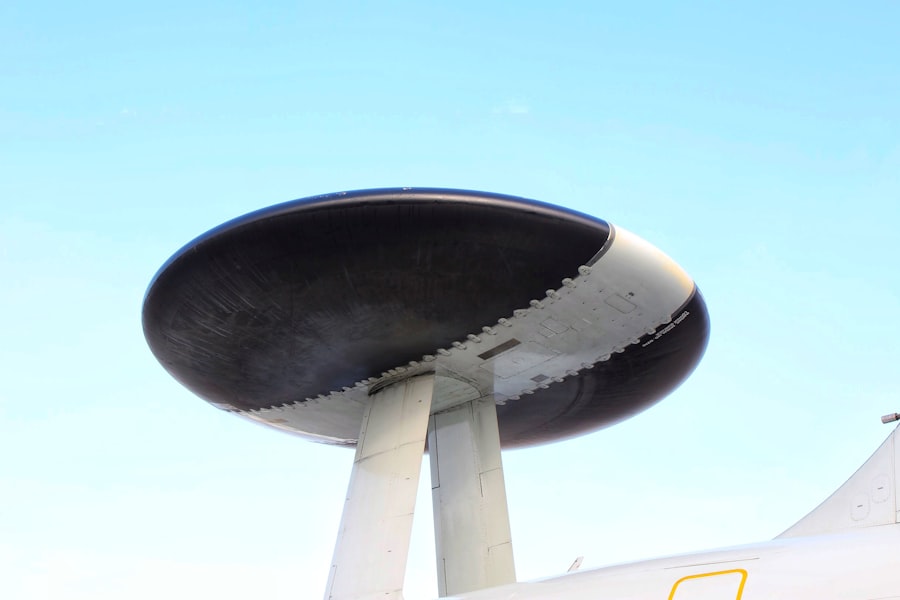
Proponents of the alien technology hypothesis point to several pieces of evidence that they believe support their claims. One argument centers around Oumuamua’s unusual acceleration as it traveled through the solar system. Unlike typical celestial objects that follow predictable trajectories influenced solely by gravitational forces, Oumuamua exhibited slight changes in speed that could not be fully explained by gravitational interactions alone.
Some researchers have suggested that this acceleration might be indicative of propulsion mechanisms akin to those used by spacecraft. Additionally, the object’s shape and reflective properties have led some to propose that it could be engineered rather than naturally occurring. The elongated form and lack of visible cometary activity have fueled speculation that Oumuamua may have been designed for specific purposes—perhaps even as a means of gathering data about our solar system.
While these claims remain speculative and lack definitive proof, they have ignited interest in exploring the possibility of advanced civilizations capable of interstellar travel.
Skepticism and Criticism
Despite the excitement surrounding the alien technology hypothesis, skepticism abounds within the scientific community. Many researchers argue that attributing Oumuamua’s characteristics to extraterrestrial technology is premature and lacks sufficient evidence. Critics emphasize that natural explanations for its behavior are still plausible and warrant further investigation before jumping to conclusions about alien involvement.
Furthermore, some scientists caution against anthropomorphizing extraterrestrial intelligence based on human technological paradigms.
As such, while the idea of Oumuamua as an alien probe is captivating, it remains one among many theories vying for acceptance within the scientific discourse.
Ongoing Research and Observations
In light of Oumuamua’s unique characteristics and implications for our understanding of interstellar objects, ongoing research continues to explore its nature and origins. Astronomers are utilizing advanced telescopes and observational techniques to search for similar interstellar visitors that may provide additional context for understanding Oumuamua’s behavior. The study of these objects could yield insights into the formation processes of star systems beyond our own.
Moreover, researchers are investigating whether future missions could be designed to intercept or study interstellar objects more closely. The development of new technologies capable of reaching high velocities may enable humanity to explore these cosmic wanderers firsthand, providing invaluable data about their composition and origins. As scientists continue to analyze existing data from Oumuamua’s passage through our solar system, they remain hopeful that new discoveries will shed light on this enigmatic object.
Implications of Oumuamua’s Discovery
The discovery of Oumuamua carries profound implications for humanity’s understanding of the universe and our place within it.
The existence of interstellar objects suggests that our solar system is not an isolated entity but rather part of a dynamic cosmic landscape filled with wandering bodies from distant star systems.
Furthermore, Oumuamua’s arrival has reignited discussions about the search for extraterrestrial life. If interstellar objects can traverse vast distances between star systems, it raises questions about the potential for life to exist elsewhere in the universe—and whether such life might possess technology capable of reaching out to other civilizations. The implications extend beyond mere curiosity; they touch on fundamental questions about existence, evolution, and humanity’s role in the cosmos.
Future Missions and Investigations
As interest in interstellar objects continues to grow, plans for future missions aimed at studying these celestial wanderers are taking shape. NASA’s upcoming missions may include spacecraft designed to intercept or observe interstellar objects more closely than ever before. These missions could provide critical data about their composition, structure, and origins—potentially answering some of the questions raised by Oumuamua’s passage through our solar system.
Additionally, advancements in telescope technology may enable astronomers to detect more interstellar visitors in real-time, allowing for timely observations and analyses. The prospect of discovering additional objects like Oumuamua could revolutionize our understanding of cosmic dynamics and broaden our knowledge about the formation processes occurring throughout the universe.
Conclusion and Speculations
In conclusion, Oumuamua represents a remarkable chapter in humanity’s exploration of the cosmos—a testament to both scientific inquiry and human curiosity about our place in the universe. Its discovery has sparked debates ranging from scientific theories about its origins to speculations regarding extraterrestrial life and technology. While many questions remain unanswered, ongoing research promises to deepen our understanding of interstellar objects and their significance within the broader context of astronomy.
As humanity continues to gaze into the depths of space, Oumuamua serves as a reminder that there is still much to learn about our universe—and perhaps even ourselves. Whether viewed as a natural phenomenon or an artifact from an advanced civilization, Oumuamua challenges us to expand our horizons and consider possibilities beyond what we currently know. The journey into understanding this enigmatic visitor is far from over; it is merely the beginning of an exciting exploration into the unknown realms of space and time.
In recent years, the mysterious interstellar object known as ‘Oumuamua has sparked significant debate and intrigue within the scientific community, with some researchers speculating about its potential as alien technology. A related article on this topic can be found on My Cosmic Ventures, which delves into the various theories surrounding ‘Oumuamua’s origins and characteristics. The article explores the possibility of it being an artificial object, potentially sent by an advanced extraterrestrial civilization. For more insights and detailed analysis, you can read the full article by visiting My Cosmic Ventures.
WATCH THIS! 🚀NASA’s Biggest Alien Secret Exposed
FAQs
What is Oumuamua?
Oumuamua is the first known interstellar object to pass through our solar system. It was discovered in October 2017 by astronomers using the Pan-STARRS1 telescope in Hawaii.
What makes Oumuamua unique?
Oumuamua is unique because of its unusual shape and trajectory. It is elongated and tumbling through space, unlike any other asteroid or comet observed before.
Is there evidence that Oumuamua is alien technology?
There is currently no scientific evidence to support the idea that Oumuamua is alien technology. Most scientists believe it is a natural object, possibly a comet or asteroid, that originated from another star system.
What are some of the theories about Oumuamua’s origin?
Some scientists have proposed that Oumuamua could be a fragment of a larger body that was ejected from a planetary system. Others have suggested it could be a “lightsail” or a piece of alien technology designed for interstellar travel.
Has Oumuamua’s true nature been confirmed?
No, Oumuamua’s true nature has not been confirmed. It remains a subject of ongoing scientific study and debate.
What are the next steps in studying Oumuamua?
Scientists are continuing to analyze the data collected from Oumuamua’s brief visit to our solar system. They are also preparing for future observations of similar interstellar objects that may pass through our cosmic neighborhood.