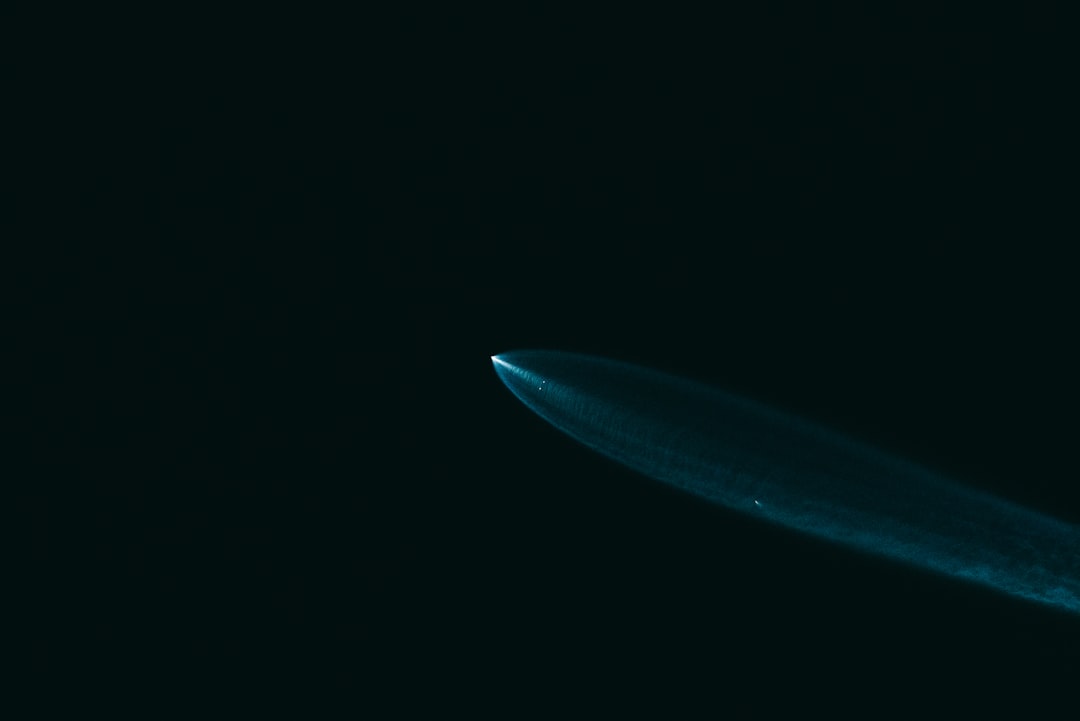
In October 2017, the astronomical community was abuzz with excitement following the discovery of an unusual object that would soon be known as Oumuamua. This interstellar visitor, whose name means “scout” or “messenger” in Hawaiian, marked a significant milestone in humanity’s understanding of the cosmos. Oumuamua was not just another asteroid or comet; it was the first known object from outside the solar system to pass through the inner solar system.
Its arrival prompted a flurry of research and speculation, as scientists sought to unravel the mysteries surrounding its origin, composition, and trajectory. The significance of Oumuamua extends beyond its status as an interstellar object. It serves as a reminder of the vastness of the universe and the potential for other celestial bodies to traverse the space between stars.
As researchers delved deeper into its characteristics, they uncovered a wealth of information that would challenge existing theories about the formation and behavior of such objects. Oumuamua’s journey through our solar system has opened new avenues for exploration and inquiry, prompting questions about what else might be lurking in the depths of interstellar space.
Key Takeaways
- Oumuamua is the first known interstellar object to pass through our solar system, sparking great interest and curiosity among scientists and astronomers.
- Oumuamua was discovered in 2017 and is characterized by its elongated shape and unusual trajectory, leading to speculation about its origins and composition.
- Solar radiation has been found to have a significant effect on Oumuamua, causing it to accelerate and deviate from its expected trajectory as it moves away from the sun.
- The pushing force of solar radiation, known as the “solar sail” effect, has been proposed as the mechanism behind Oumuamua’s unexpected acceleration and behavior.
- Oumuamua’s unique trajectory and acceleration have raised questions about its potential origins, with some suggesting it could be a fragment of a larger object or even a piece of alien technology.
Discovery and Characteristics of Oumuamua
Oumuamua was first detected by astronomers using the Pan-STARRS1 telescope in Hawaii on October 19, 2017. Initial observations revealed that it was moving at an extraordinary speed, approximately 315,000 kilometers per hour (196,000 miles per hour), which indicated that it was not bound by the sun’s gravity. This high velocity suggested that Oumuamua had originated from another star system, making it a rare and exciting find.
Its elongated shape, estimated to be about 800 meters long and only 80 meters wide, further distinguished it from typical asteroids and comets. The object’s reddish hue hinted at a composition rich in metals and possibly organic materials. As astronomers continued to observe Oumuamua, they noted its unusual brightness variations, which suggested that it was tumbling through space rather than rotating uniformly.
This erratic behavior raised questions about its physical properties and how it had come to possess such a unique form. The combination of its speed, shape, and brightness made Oumuamua a subject of intense scrutiny and debate among scientists eager to understand its nature.
Solar Radiation and its Effects on Oumuamua

As Oumuamua traveled through the solar system, it encountered solar radiation—an omnipresent force that affects all celestial bodies within the sun’s influence. Solar radiation consists of electromagnetic waves emitted by the sun, including visible light, ultraviolet light, and infrared radiation. For most objects in space, this radiation has minimal impact; however, Oumuamua’s unique characteristics made it particularly susceptible to these forces.
The interaction between solar radiation and Oumuamua was particularly intriguing due to its elongated shape and reflective surface. As sunlight struck the object, it generated a slight push that could alter its trajectory.
For Oumuamua, this effect was significant enough to warrant further investigation into how solar radiation might have contributed to its unusual path through the solar system.
The Pushing Force of Solar Radiation
| Location | Pushing Force (N/m^2) |
|---|---|
| Earth’s Surface | 1361 |
| Mars’ Surface | 589 |
| Venus’ Surface | 2613 |
The concept of solar radiation exerting a pushing force on celestial objects is not new; however, Oumuamua presented a unique case study due to its interstellar origins and peculiar shape. As sunlight warmed one side of Oumuamua, it emitted thermal energy unevenly, resulting in a force that could alter its trajectory. This force was subtle yet powerful enough to account for some of the unexpected changes in Oumuamua’s path as it sped through the solar system.
Researchers calculated that this push from solar radiation could explain some of the deviations observed in Oumuamua’s trajectory. The object’s acceleration as it moved away from the sun was not entirely consistent with gravitational influences alone; instead, it suggested that solar radiation played a crucial role in propelling it forward. This realization prompted scientists to reconsider how they understood the dynamics of interstellar objects and their interactions with solar systems.
Oumuamua’s Unique Trajectory
Oumuamua’s trajectory was unlike any other object previously observed within our solar system. Its hyperbolic path indicated that it was not merely passing through but rather on a one-time journey from another star system. The object’s approach angle was also noteworthy; it entered the solar system at a steep angle of about 38 degrees relative to the plane of the planets.
This unique trajectory raised questions about how such an object could have been ejected from its home star system and what forces might have influenced its path. As Oumuamua continued on its journey, astronomers tracked its movement with great interest. The data collected revealed that it was moving away from the sun at an increasing speed, further supporting the idea that it was not bound by solar gravity.
The combination of its hyperbolic trajectory and rapid acceleration made Oumuamua a fascinating subject for study, prompting researchers to explore potential scenarios for its origin and journey through space.
Oumuamua’s Potential Origins

The origins of Oumuamua have been a topic of intense speculation since its discovery. Given its interstellar nature, scientists have proposed several theories regarding where it might have come from. One possibility is that Oumuamua originated from a binary star system, where gravitational interactions could have ejected it into interstellar space.
Another theory suggests that it may have been part of a larger body that broke apart due to collisions or other cosmic events. Some researchers have even entertained more exotic possibilities, including the idea that Oumuamua could be an artificial object created by an advanced civilization. While this notion remains highly speculative and controversial, it reflects humanity’s innate curiosity about the universe and our desire to explore the unknown.
Regardless of its origins, Oumuamua has sparked discussions about the potential for other interstellar objects to visit our solar system in the future.
Oumuamua’s Implications for Interstellar Objects
The discovery of Oumuamua has profound implications for our understanding of interstellar objects and their potential interactions with our solar system. It has highlighted the fact that such objects are not merely theoretical constructs but tangible entities that can traverse vast distances between stars. This realization has prompted astronomers to broaden their search for similar objects and consider how they might influence planetary systems.
Oumuamua’s journey also raises questions about the frequency of interstellar visitors and what they might reveal about their home systems. By studying these objects, scientists can gain insights into the formation and evolution of planetary systems beyond our own. The implications extend beyond mere curiosity; understanding interstellar objects could inform future missions aimed at exploring other star systems and searching for signs of life.
Ongoing Research and Observations of Oumuamua
Since its discovery, ongoing research has focused on analyzing data collected during Oumuamua’s brief passage through our solar system. Astronomers have utilized various telescopes and observational techniques to gather information about its composition, shape, and trajectory. Despite its rapid departure from our vicinity, scientists continue to analyze archival data in hopes of uncovering additional insights into this enigmatic object.
The scientific community remains engaged in discussions about Oumuamua’s characteristics and implications for future research. New technologies and observational methods are being developed to enhance our ability to detect and study interstellar objects as they enter our solar system. As researchers refine their understanding of Oumuamua, they are also laying the groundwork for future explorations aimed at identifying other interstellar visitors.
The Future of Oumuamua’s Journey
As Oumuamua continues its journey through interstellar space, it serves as a reminder of the dynamic nature of our universe. Having passed through our solar system at incredible speeds, it is now on a trajectory that will take it far beyond our reach. While astronomers may no longer be able to observe it directly, its legacy will endure as a catalyst for further exploration and inquiry into interstellar phenomena.
The future trajectory of Oumuamua is expected to take it deeper into the cosmos, potentially traveling for millions or even billions of years before encountering another star system or celestial body. This long journey underscores the vastness of space and the potential for countless other objects like Oumuamua to exist beyond our current observational capabilities.
Comparisons to Other Interstellar Objects
Oumuamua’s discovery has prompted comparisons with other interstellar objects that may be lurking in the depths of space. In recent years, astronomers have identified additional candidates that exhibit similar characteristics to Oumuamua, suggesting that interstellar visitors may be more common than previously thought. These objects provide valuable opportunities for study and comparison, allowing scientists to refine their understanding of interstellar dynamics.
One notable example is 2I/Borisov, a comet discovered in 2019 that also originated from outside our solar system. Unlike Oumuamua, which exhibited an elongated shape and metallic composition, Borisov displayed characteristics typical of comets found within our solar system. The contrasting features between these two interstellar objects highlight the diversity of celestial bodies that can traverse between stars and offer insights into their respective origins.
Conclusion and Significance of Oumuamua’s Solar Radiation Push
In conclusion, Oumuamua represents a groundbreaking discovery in the field of astronomy, challenging existing paradigms about celestial bodies and their interactions with solar systems. Its unique characteristics—ranging from its elongated shape to its hyperbolic trajectory—have sparked intense research and debate among scientists seeking to understand its origins and implications for future exploration. The role of solar radiation in influencing Oumuamua’s path underscores the importance of considering external forces when studying celestial objects.
As researchers continue to analyze data related to this enigmatic visitor, they are not only unraveling the mysteries surrounding Oumuamua but also paving the way for future investigations into interstellar phenomena. The significance of this discovery extends far beyond one object; it opens new avenues for exploration and inquiry into the vast universe that surrounds us, reminding humanity of both our curiosity and our place within the cosmos.
In recent years, the mysterious interstellar object known as ‘Oumuamua has intrigued scientists and sparked numerous theories about its origin and propulsion. One of the most compelling discussions revolves around the possibility that ‘Oumuamua was pushed by non-gravitational forces, such as radiation pressure from the Sun. This theory suggests that the object could be a thin, flat structure, possibly an artificial light sail. For a deeper dive into the various hypotheses surrounding ‘Oumuamua’s journey through our solar system, you can explore a related article on the topic by visiting this page. This article delves into the scientific debates and the latest research findings that continue to captivate astronomers and the public alike.
WATCH THIS! 🚀NASA’s Biggest Alien Secret Exposed
FAQs
What is Oumuamua?
Oumuamua is the first known interstellar object to pass through our solar system. It was discovered in October 2017 by astronomers using the Pan-STARRS1 telescope in Hawaii.
What pushed Oumuamua?
The exact cause of Oumuamua’s acceleration and trajectory is still a topic of scientific debate. Some scientists have proposed that it could be due to outgassing, the release of gas from the object as it gets closer to the sun, while others have suggested that it could be the result of radiation pressure from the sun.
What are some theories about what pushed Oumuamua?
Some of the theories proposed to explain Oumuamua’s acceleration and trajectory include outgassing, the Yarkovsky effect (the force exerted on a rotating body by the anisotropic emission of thermal photons), and the possibility of it being an alien spacecraft (although this theory is not widely accepted in the scientific community).
Why is Oumuamua significant?
Oumuamua is significant because it is the first known object from another star system to pass through our solar system. Its unique characteristics and mysterious acceleration have sparked scientific interest and debate about its origins and nature.