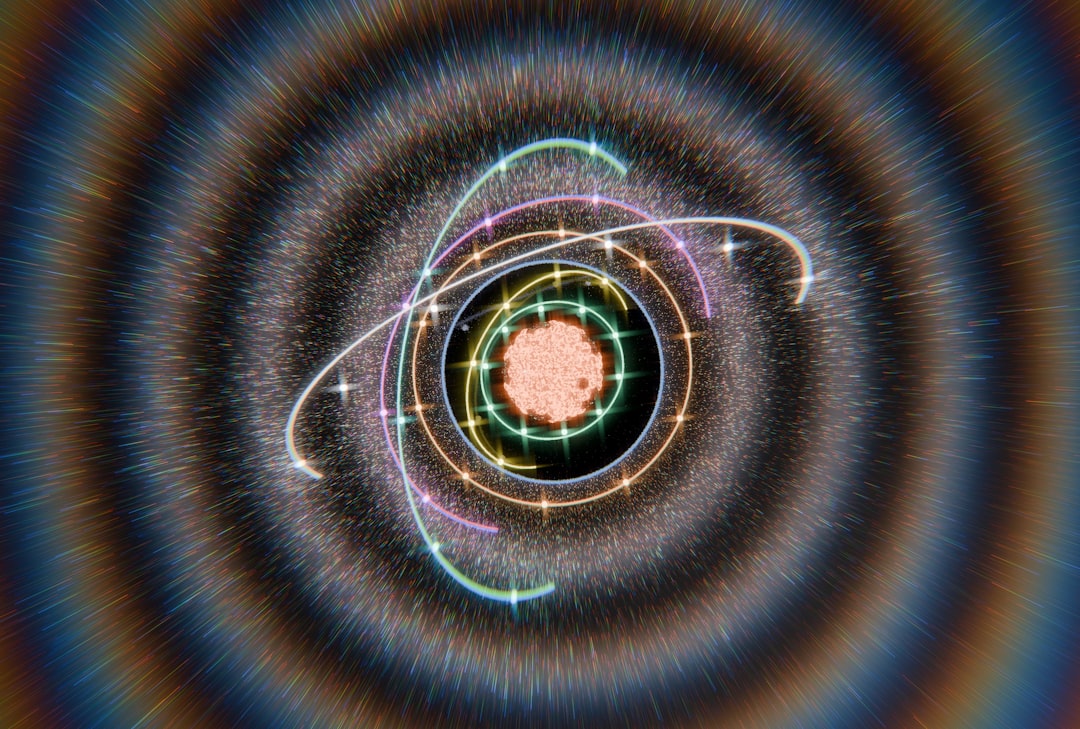
The quantum vacuum, a concept that challenges our everyday intuition, is far from the empty void it might seem. It is a dynamic and energetic arena, teeming with fleeting particles and energy fluctuations that constantly bubble into existence and then vanish. These “quantum vacuum fluctuations” are not mere theoretical curiosities; they are fundamental to our understanding of the universe, influencing everything from the behavior of subatomic particles to the very fabric of spacetime. Unveiling these ephemeral phenomena requires delving into the strange and counterintuitive world of quantum mechanics, a realm where certainty dissolves and probabilities reign supreme.
The classical view of a vacuum is one of absolute emptiness. Imagine a box from which all matter and energy have been meticulously removed. In this classical conception, there would be nothing there – no fields, no particles, just pure, unadulterated nothingness. However, quantum mechanics paints a drastically different picture. The Heisenberg uncertainty principle, a cornerstone of quantum theory, dictates that certain pairs of physical properties, like position and momentum, or energy and time, cannot be known with infinite precision simultaneously.
Heisenberg’s Uncertainty Principle and its Implications
The uncertainty principle, often stated as $\Delta x \Delta p \geq \frac{\hbar}{2}$ and $\Delta E \Delta t \geq \frac{\hbar}{2}$, has profound implications for the vacuum. The second formulation, concerning energy and time, allows for temporary “borrowing” of energy from the vacuum, provided it is repaid within a very short timeframe. This means that even in the “emptiest” of spaces, there is a constant flux of energy, which can manifest as the spontaneous creation and annihilation of particle-antiparticle pairs.
Virtual Particles: The Ephemeral Inhabitants of the Vacuum
These fleeting entities are known as “virtual particles.” They are not real particles in the sense that they can be directly observed or detected as persistent entities. Instead, they exist as transient fluctuations in quantum fields, appearing and disappearing in accordance with the energy-time uncertainty principle. Think of them as momentary creases in the fabric of reality, appearing due to quantum jitters and smoothing out almost as quickly.
Quantum Fields: The Underlying Reality
At the heart of this understanding lies the concept of quantum fields. Quantum field theory posits that the universe is pervaded by various fundamental fields, such as the electromagnetic field, the electron field, and the Higgs field. Particles are not considered independent entities but rather as excitations, or quanta, of these underlying fields. In this framework, the quantum vacuum is not empty of fields; it is the state of lowest energy for these fields. However, even in this lowest energy state, quantum fluctuations mean that the fields are never truly at rest.
Quantum vacuum fluctuations are a fascinating phenomenon that illustrates the dynamic nature of empty space, where particles can spontaneously appear and disappear. For a deeper understanding of this concept, you can explore the article titled “Understanding Quantum Vacuum Fluctuations” available at this link. This resource delves into the implications of vacuum fluctuations in quantum field theory and their significance in various physical processes, shedding light on the intricate workings of the universe at the quantum level.
Evidence for Quantum Vacuum Fluctuations
While virtual particles are elusive and cannot be directly observed, their existence has been indirectly confirmed through a variety of experimental phenomena. These observations provide compelling evidence that the quantum vacuum is not empty but a fertile ground for these energetic fluctuations.
The Casimir Effect: A Tangible Manifestation
One of the most direct pieces of evidence for quantum vacuum fluctuations comes from the Casimir effect. Discovered by Dutch physicist Hendrik Casimir in 1948, this phenomenon demonstrates an attractive force between two uncharged, parallel conducting plates placed very close to each other in a vacuum.
Explanation of the Casimir Effect
In the absence of the plates, the vacuum is filled with virtual photons of all possible wavelengths. However, when the plates are introduced, they impose boundary conditions on these virtual photons. Only photons with wavelengths that are integer fractions of the distance between the plates can exist within the gap. This means that there are fewer allowed modes of vacuum energy in the space between the plates compared to the space outside. The imbalance in vacuum energy creates a net pressure pushing the plates together.
Experimental Verification of the Casimir Effect
The Casimir effect, though small, has been experimentally verified with remarkable precision, providing strong support for the reality of vacuum fluctuations. Variations of the experiment have been conducted using different geometries and materials, all yielding results consistent with theoretical predictions based on quantum vacuum fluctuations.
The Lamb Shift: Refinements in Atomic Spectra
Another significant experimental observation that points to the influence of vacuum fluctuations is the Lamb shift, also known as the Lamb-Retherford shift. This phenomenon refers to a small difference in energy between two energy levels in the hydrogen atom, specifically the $2S_{1/2}$ and $2P_{1/2}$ states.
Theoretical Calculation of the Lamb Shift
According to the Dirac equation, these two energy levels should be degenerate (have the same energy). However, the Lamb shift reveals a tiny but measurable separation. This separation arises from the interaction of the atom’s electron with the fluctuating quantum vacuum. The virtual photons in the vacuum interact with the electron, causing it to undergo slight fluctuations in its position and momentum, which in turn alters its energy.
Experimental Measurement and Triumph of QED
The Lamb shift was first observed in 1947 by Willis Lamb and Robert Retherford. Its theoretical explanation within the framework of Quantum Electrodynamics (QED), which incorporates vacuum fluctuations, was a major triumph for the theory and further solidified our understanding of these subtle quantum effects.
Spontaneous Emission: The Inevitability of Photon Emission
The phenomenon of spontaneous emission, where an excited atom emits a photon and transitions to a lower energy state, is also intimately linked to vacuum fluctuations.
The Role of Vacuum Fluctuations in Spontaneous Emission
In the absence of any external stimulation, an excited atom would, in principle, remain in its excited state indefinitely according to classical physics. However, quantum mechanics dictates that the vacuum is not passive. The fluctuating electromagnetic field of the vacuum can interact with the excited atom, providing a tiny “kick” that triggers the emission of a photon. Without these vacuum fluctuations, spontaneous emission would not occur, and lasers, which rely on stimulated emission often initiated by spontaneous emission, would not function.
Quantum Vacuum Fluctuations and Their Cosmological Implications
The influence of quantum vacuum fluctuations extends far beyond the microscopic realm, playing a crucial role in the evolution of the universe at its grandest scales. These ephemeral energetic events are believed to have been instrumental in shaping the large-scale structure of the cosmos.
Inflationary Cosmology: The Genesis of Structure
One of the most compelling applications of quantum vacuum fluctuations is in the theory of cosmic inflation. This theory proposes that the early universe underwent a period of extremely rapid expansion, much faster than the expansion we observe today.
The Inflaton Field and Quantum Fluctuations
During inflation, a hypothetical field known as the “inflaton field” is thought to have dominated the universe’s energy content. Quantum fluctuations in this inflaton field, amplified to macroscopic scales by the rapid expansion, are believed to have seeded the tiny density variations that eventually grew into the galaxies, galaxy clusters, and large-scale structures we observe in the universe today.
From Quantum Ripples to Cosmic Tapestry
These initial quantum ripples, through gravitational attraction over billions of years, are responsible for the cosmic web – the vast network of filaments and voids that characterize the universe’s structure. Without these primordial quantum fluctuations, the universe would likely be a much more homogeneous and featureless place.
Dark Energy: The Mystery of Accelerated Expansion
The ongoing accelerated expansion of the universe, a phenomenon dubbed “dark energy,” is another area where quantum vacuum fluctuations are hypothesized to play a role. While the exact nature of dark energy remains one of the biggest mysteries in physics, the concept of vacuum energy is a leading contender.
Vacuum Energy as a Candidate for Dark Energy
According to quantum field theory, the vacuum itself possesses an intrinsic energy density. If this vacuum energy is uniformly distributed throughout space, it would exert a negative pressure, causing the expansion of the universe to accelerate. This idea aligns with observational data suggesting a cosmological constant-like behavior for dark energy.
The Cosmological Constant Problem: A Grand Discrepancy
However, a significant challenge arises when trying to calculate the magnitude of this vacuum energy. Theoretical calculations from quantum field theory predict a vacuum energy density that is staggeringly larger – by something like 120 orders of magnitude – than what is observed cosmologically. This immense discrepancy, known as the cosmological constant problem, is a major hurdle in our understanding and suggests that our current theories of vacuum energy and gravity may be incomplete.
The Role of Quantum Vacuum Fluctuations in Particle Physics
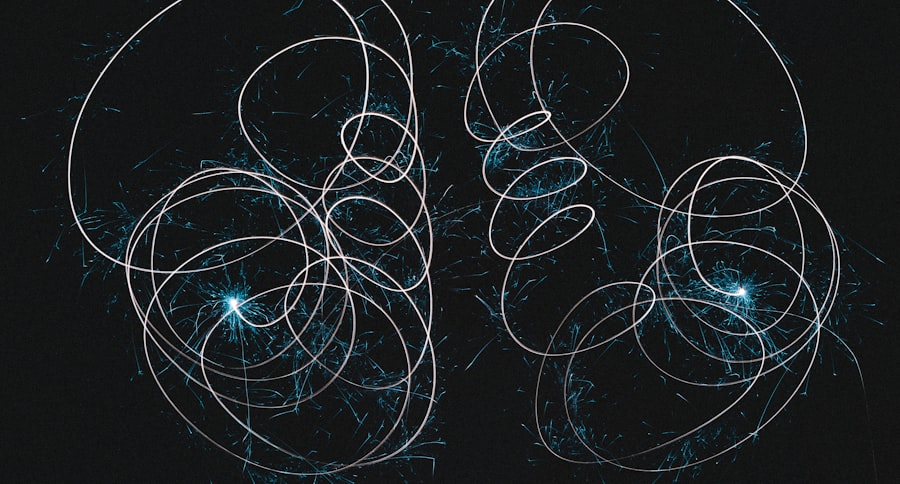
Quantum vacuum fluctuations are not just cosmic architects but also essential ingredients in the behavior of elementary particles and the forces that govern them. They are woven into the very fabric of the Standard Model of particle physics.
Quantum Chromodynamics (QCD) and the Sea of Quarks and Gluons
In the realm of Quantum Chromodynamics (QCD), the theory that describes the strong nuclear force and the interactions of quarks and gluons, vacuum fluctuations are critical. The vacuum in QCD is not empty but is filled with a dynamic “sea” of virtual quark-antiquark pairs and gluons.
The Nucleon’s Structure: Beyond Valence Quarks
When we think about a proton or a neutron, we often imagine them as being composed of three “valence” quarks. However, quantum vacuum fluctuations mean that these protons and neutrons are far more complex. The sea of virtual particles constantly interacts with the valence quarks, contributing to the proton’s mass, charge distribution, and other properties. Without these dynamical vacuum fluctuations, protons and neutrons would have significantly different masses.
Confinement and Asymptotic Freedom: Consequences of Vacuum Structure
The unique properties of the strong force, such as confinement (quarks are never observed in isolation) and asymptotic freedom (the force weakens at very short distances), are also intimately linked to the structure and fluctuations of the QCD vacuum. The complex vacuum structure effectively “binds” quarks together.
Hawking Radiation: Black Holes and Quantum Vacuum
Perhaps one of the most profound implications of quantum vacuum fluctuations comes from their connection to black holes. Stephen Hawking famously proposed that black holes are not entirely black and can, under certain circumstances, emit radiation.
Pair Production Near the Event Horizon
Hawking radiation arises from quantum vacuum fluctuations occurring near the event horizon of a black hole. According to the principles of quantum field theory in curved spacetime, virtual particle-antiparticle pairs are constantly popping into existence in the vacuum.
The Fate of Black Holes
When these pairs are created near a black hole’s event horizon, one particle might fall into the black hole while the other escapes. The escaping particle is observed as Hawking radiation. For an external observer, this radiation appears as if the black hole is emitting particles, causing it to lose mass and eventually evaporate over extremely long timescales. This concept bridges the domains of quantum mechanics and general relativity, offering tantalizing clues about quantum gravity.
Quantum vacuum fluctuations are fascinating phenomena that reveal the dynamic nature of empty space, where particles can spontaneously appear and vanish. For those interested in delving deeper into this topic, a related article can be found at My Cosmic Ventures, which provides an insightful exploration of how these fluctuations contribute to our understanding of quantum mechanics and the universe. This resource offers a comprehensive overview that complements the study of quantum vacuum fluctuations, making it a valuable read for anyone curious about the mysteries of the cosmos.
Future Directions and Unanswered Questions
| Concept | Explanation |
|---|---|
| Quantum Vacuum Fluctuations | The temporary change in the amount of energy at a point in space, as explained by quantum mechanics. |
| Quantum Field Theory | The theoretical framework that describes the behavior of quantum fields, including vacuum fluctuations. |
| Casimir Effect | The attraction between two uncharged parallel plates due to quantum vacuum fluctuations. |
| Experimental Evidence | Observations of Casimir effect and other phenomena support the existence of quantum vacuum fluctuations. |
Despite the significant progress made in understanding quantum vacuum fluctuations, many mysteries persist. The field is ripe with opportunities for future research and exploration.
The Nature of Vacuum Energy
The cosmological constant problem remains a paramount challenge. Understanding why the theoretically calculated vacuum energy is so vastly different from the observed value is crucial for developing a complete picture of the universe. New theories that reconcile quantum field theory with general relativity, such as string theory or loop quantum gravity, may offer solutions.
Experimental Probing of Vacuum Fluctuations
While experiments like the Casimir effect provide indirect evidence, developing more direct methods to probe vacuum fluctuations is a significant goal. Researchers are exploring various avenues, including highly sensitive interferometers and novel particle detectors, to potentially observe the subtle effects of these quantum phenomena more directly.
Quantum Gravity and the Vacuum
The unification of quantum mechanics and general relativity, often referred to as quantum gravity, is one of the holy grails of modern physics. Understanding the quantum vacuum is likely to be a key component in achieving this unification, as it connects the quantum world with the gravitational fabric of spacetime.
The Role of Vacuum Fluctuations in Fundamental Constants
There is ongoing speculation about whether some of the fundamental constants of nature, such as the fine-structure constant, might not be as constant as we assume and could, in fact, be influenced by vacuum fluctuations over cosmic timescales or in different regions of the universe. Investigating such possibilities could lead to a radical shift in our understanding of the universe’s fundamental laws.
In conclusion, quantum vacuum fluctuations are a testament to the non-intuitive and vibrant nature of reality at its most fundamental level. From the ephemeral dance of virtual particles to the grand architectural blueprints of the cosmos and the enigmatic behavior of black holes, these fluctuations are a constant, energetic hum beneath the surface of what we perceive as empty space. As scientists continue to probe this fascinating domain, we inch closer to unveiling the deepest secrets of the universe.

The Universe Could End Without Warning
FAQs
What are quantum vacuum fluctuations?
Quantum vacuum fluctuations are temporary changes in the amount of energy at a particular location, arising from the uncertainty principle in quantum mechanics. They are also known as virtual particles.
How do quantum vacuum fluctuations occur?
According to quantum field theory, the vacuum is not truly empty but is filled with pairs of virtual particles and antiparticles that constantly pop in and out of existence, creating temporary fluctuations in energy.
What is the significance of quantum vacuum fluctuations?
Quantum vacuum fluctuations play a crucial role in various physical phenomena, such as the Casimir effect and the Lamb shift. They also have implications for our understanding of the fundamental nature of space and time.
Can quantum vacuum fluctuations be observed or measured?
While virtual particles themselves cannot be directly observed, their effects can be measured indirectly through experiments and observations, providing evidence for the existence of quantum vacuum fluctuations.
How are quantum vacuum fluctuations related to quantum mechanics?
Quantum vacuum fluctuations are a consequence of the principles of quantum mechanics, particularly the uncertainty principle, which allows for the temporary creation of particle-antiparticle pairs in the vacuum.