
The human fascination with the cosmos is an ancient one, a deep-seated curiosity about our place in the universe. From the earliest stargazers charting celestial movements to the sophisticated observatories of today, we have strived to understand the grand narrative of existence. This pursuit of knowledge, focusing on the origin, evolution, and ultimate fate of the universe, is what we call cosmology. While the subject can quickly delve into complex mathematics and abstract theories, a fundamental understanding of its core concepts is surprisingly accessible. This article aims to provide a simple explanation of cosmology, breaking down its key components into digestible parts.
The question of origins is perhaps the most profound in cosmology. For centuries, various philosophical and religious explanations dominated our understanding. However, the advent of the scientific method and astronomical observation has led to a prevailing scientific model for the universe’s beginning.
The Big Bang: A Universe in Expansion
The cornerstone of modern cosmology is the Big Bang theory. It’s crucial to understand that the “Big Bang” wasn’t an explosion in pre-existing space, but rather the rapid expansion of space itself. Imagine a tiny, incredibly dense point containing all the matter and energy of the universe. At some point, this point began to expand at an astonishing rate.
The Early Universe: A Hot and Dense Plasma
In the immediate aftermath of the Big Bang, the universe was an intensely hot and dense plasma. Protons, neutrons, and electrons were all in a state of flux, unable to coalesce into stable atoms. The universe was opaque, with photons of light constantly interacting with charged particles, preventing them from traveling freely.
The Cooling and Formation of Atoms
As the universe expanded, it also cooled. This cooling was a critical phase. Approximately 380,000 years after the Big Bang, the temperature dropped enough for electrons to combine with protons and neutrons to form the first neutral atoms, primarily hydrogen and helium. This event, known as recombination, was pivotal because it made the universe transparent to light. The photons that were previously trapped could now travel unimpeded, and these are the photons we detect today as the Cosmic Microwave Background radiation.
The Cosmic Microwave Background (CMB): A Relic of the Past
The CMB is one of the strongest pieces of evidence supporting the Big Bang theory. This faint glow of radiation permeates the entire universe, originating from the time when the universe became transparent. It’s a snapshot of the universe when it was only a fraction of its current age and size, and its remarkable uniformity, with tiny temperature fluctuations, provides crucial clues about the early universe’s structure and composition. These slight variations are like seeds from which all the large-scale structures of the universe, like galaxies and galaxy clusters, eventually grew.
If you’re looking for a straightforward explanation of cosmology, you might find the article on My Cosmic Ventures particularly helpful. It breaks down complex concepts into easily digestible information, making it accessible for readers of all backgrounds. To explore this enlightening resource, visit My Cosmic Ventures for a deeper understanding of the universe and its mysteries.
The Expanding Universe: More Than Just Space Stretching
The observation that the universe is expanding is a cornerstone of modern cosmology, directly supporting the Big Bang narrative and leading to further profound insights about the cosmos.
Hubble’s Discovery: Galaxies Are Moving Away
In the late 1920s, Edwin Hubble made a groundbreaking discovery. By observing the light from distant galaxies, he noticed that their light was shifted towards the red end of the spectrum – a phenomenon known as redshift. This redshift indicated that these galaxies were moving away from us. Furthermore, he found that the farther away a galaxy was, the faster it was receding. This relationship, now known as Hubble’s Law, provided the first concrete evidence for an expanding universe.
Redshift and Blueshift: The Doppler Effect in Astronomy
The concept of redshift and blueshift is analogous to the Doppler effect we experience with sound. When a sound source moves towards us, its waves are compressed, making the pitch higher (blueshift). When it moves away, the waves are stretched, making the pitch lower (redshift). In astronomy, light waves behave similarly. Light from objects moving away from us is stretched, shifting its spectrum towards the red end, while light from objects moving towards us is compressed, shifting it towards the blue end. The observed redshift of distant galaxies is a direct consequence of the expansion of space itself, carrying these galaxies away from us.
The Scale of Expansion: Not Just Movement Through Space
It’s important to reiterate that Hubble’s Law doesn’t imply that galaxies are moving through space like rockets. Instead, the fabric of spacetime itself is stretching, carrying the galaxies along for the ride, much like dots on an expanding balloon. This means that every point in the universe is receding from every other point, and there is no “center” to this expansion.
The Building Blocks: What the Universe is Made Of

Understanding the universe’s composition is a crucial part of cosmology. For centuries, we believed the universe was primarily made of the “normal” matter we can see and interact with. However, modern observations have revealed a much more mysterious and surprising picture.
Ordinary Matter: The Stuff We Know
Ordinary matter, also known as baryonic matter, is what makes up stars, planets, gas clouds, and ourselves. It’s composed of protons, neutrons, and electrons. While this is the matter we are most familiar with, it constitutes only a small fraction of the universe’s total mass-energy content.
Atoms and Elements: The Periodic Table in the Cosmos
The various elements that make up ordinary matter are arranged in the periodic table. These elements were forged in the hearts of stars through nuclear fusion and dispersed into the cosmos through stellar explosions. Hydrogen and helium are the most abundant elements, formed primarily during the Big Bang, while heavier elements are created in stars.
Stars, Galaxies, and Nebulae: The Visible Structures
The observable universe is filled with magnificent structures formed from ordinary matter. Stars, the luminous powerhouses, generate energy through nuclear fusion. Galaxies, vast collections of stars, gas, dust, and dark matter, are the fundamental building blocks of the large-scale structure of the universe. Nebulae are vast interstellar clouds of dust and gas, often the birthplaces of new stars.
Dark Matter: The Invisible Scaffolding
One of the most significant discoveries in cosmology has been the existence of dark matter. It’s called “dark” because it doesn’t interact with light – it neither emits, absorbs, nor reflects it. We infer its presence indirectly through its gravitational effects on visible matter.
Evidence for Dark Matter: Galactic Rotation and Gravitational Lensing
The primary evidence for dark matter comes from observing the rotation of galaxies. Stars in the outer regions of galaxies orbit much faster than predicted by the amount of visible matter alone. This suggests that there must be a significant amount of unseen mass providing the extra gravitational pull. Another strong piece of evidence is gravitational lensing, where the gravity of massive objects, including concentrations of dark matter, bends the path of light from more distant objects, distorting their images.
What is Dark Matter? The Unanswered Question
Despite the overwhelming evidence for its existence, the exact nature of dark matter remains one of the biggest mysteries in physics. It’s not made of protons, neutrons, or electrons. Scientists are actively searching for particles that could explain dark matter, with theories ranging from WIMPs (Weakly Interacting Massive Particles) to axions.
Dark Energy: The Accelerator of Expansion
Even more enigmatic than dark matter is dark energy. This mysterious force is responsible for the accelerating expansion of the universe. Observations of distant supernovae in the late 1990s revealed that the universe’s expansion is not slowing down as expected due to gravity; instead, it is speeding up.
The Accelerating Universe: A Surprising Revelation
The discovery of the accelerating expansion was a Nobel Prize-winning revelation. It implies that there is some repulsive force counteracting gravity on cosmic scales, pushing galaxies further apart at an ever-increasing rate. This force is attributed to dark energy.
The Nature of Dark Energy: The Cosmological Constant and Beyond
One leading candidate for dark energy is the cosmological constant, originally proposed by Albert Einstein. This concept suggests that empty space itself possesses energy, which exerts a negative pressure, causing expansion. Other theories propose that dark energy is a dynamic field that changes over time. Understanding dark energy is crucial for determining the ultimate fate of the universe.
The Grand Architecture: How the Universe is Organized
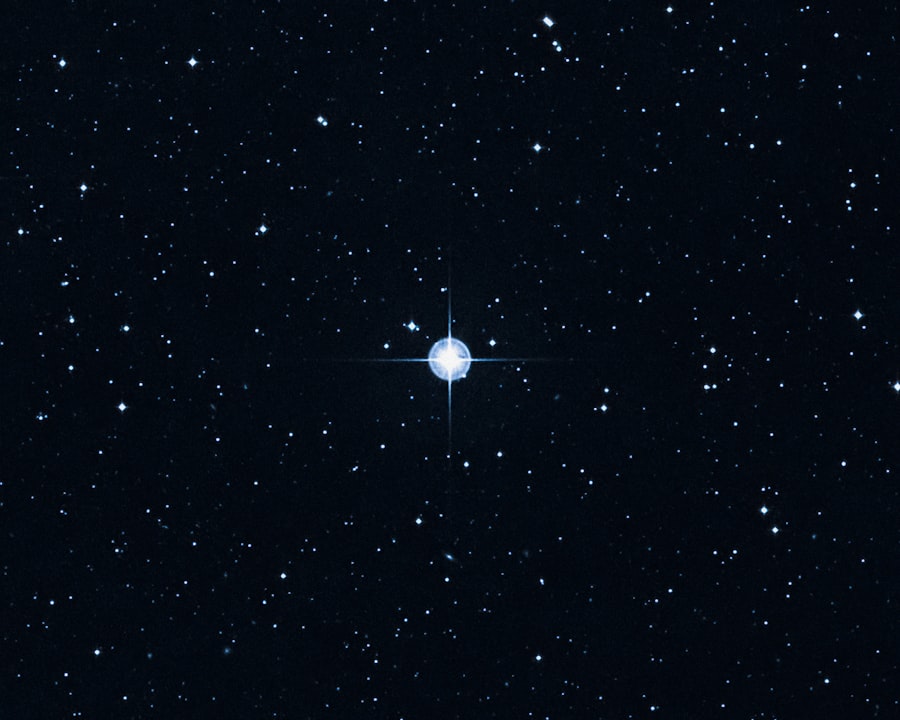
Cosmology doesn’t just focus on the origins and composition of the universe, but also on its large-scale structure and how it has evolved over billions of years.
Galaxies and Galaxy Clusters: The Cosmic Web
Galaxies are not randomly distributed throughout the universe. Instead, they are organized into a vast cosmic web, a filamentary structure of clusters and superclusters of galaxies, separated by immense voids. This intricate network is a direct consequence of the gravitational attraction of matter, amplified by the presence of dark matter.
Galactic Formation and Evolution: From Primordial Gas to Magnificent Spirals
Galaxies form and evolve over billions of years. In the early universe, small overdensities in the distribution of matter, seeded by quantum fluctuations in the Big Bang, began to attract more surrounding gas and dark matter. These clumps grew, eventually condensing to form the first stars and then the first galaxies. Over time, galaxies merge and interact, shaping their morphology and influencing their star formation rates. Spiral galaxies, like our Milky Way, are thought to form through continuous accretion of gas, while elliptical galaxies might result from major mergers.
The Cosmic Web: Filaments, Clusters, and Voids
The cosmic web is characterized by dense knots of galaxies called clusters and superclusters, embedded within long, thread-like filaments. The vast, emptier regions between these structures are known as voids. This large-scale structure provides strong evidence for the gravitational processes that have shaped the universe since its inception.
Gravitational Lensing: A Cosmic Magnifying Glass
As mentioned earlier in the context of dark matter, gravitational lensing is a powerful tool for studying the universe. Massive objects, such as galaxies and galaxy clusters, warp spacetime around them. When light from a distant object passes through this warped spacetime, its path is bent, similar to how a lens bends light.
Einstein’s General Relativity: The Foundation of Lensing
The phenomenon of gravitational lensing is a direct prediction of Albert Einstein’s theory of General Relativity, which describes gravity not as a force, but as a curvature of spacetime caused by mass and energy. The degree of light bending observed allows astronomers to infer the mass of the lensing object, even if it contains significant amounts of dark matter or dark energy.
Studying Distant Galaxies and Dark Matter Distribution
Gravitational lensing acts as a natural telescope, magnifying and distorting the images of distant galaxies, allowing us to study objects that would otherwise be too faint to observe. It also provides a way to map the distribution of mass, including dark matter, across the universe, giving us insights into the structure and evolution of cosmic formations.
Cosmology, the study of the universe’s origins and structure, can often seem complex, but there are resources that break it down into simpler terms. For a more accessible explanation, you can check out this informative article that covers the fundamental concepts of cosmology. It provides insights into topics like the Big Bang and the expansion of the universe, making it easier for anyone to grasp the basics. If you’re curious to learn more, visit this page for a straightforward overview.
The Future of Everything: What Lies Ahead?
| Topic | Explanation |
|---|---|
| Big Bang Theory | The theory that the universe began as a hot, dense point and has been expanding ever since. |
| Dark Matter | An invisible substance that makes up about 27% of the universe and has gravitational effects on galaxies. |
| Dark Energy | A mysterious force that makes up about 68% of the universe and is causing its expansion to accelerate. |
| Cosmic Microwave Background Radiation | The afterglow of the Big Bang, which is a faint radiation that fills the universe. |
| Galaxies | Huge collections of stars, gas, and dust held together by gravity. |
Cosmology also grapples with the ultimate destiny of the universe. The answer hinges on the interplay of gravity, dark energy, and the universe’s expansion.
The Fate of the Universe: Multiple Scenarios
Based on current understanding, several scenarios are possible for the future of the universe. The dominant factor influencing these scenarios is the balance between the outward push of dark energy and the inward pull of gravity.
The Big Freeze (Heat Death): A Cold, Dark End
The most widely accepted scenario, given the current dominance of dark energy, is the Big Freeze, also known as heat death. In this scenario, the universe will continue to expand indefinitely, with galaxies moving further and further apart. Stars will eventually exhaust their fuel, and black holes will evaporate through Hawking radiation. The universe will become increasingly cold, dark, and empty, with no further thermodynamic processes possible.
The Big Rip: A Violent Separation
Another, more extreme possibility, if dark energy’s density increases over time, is the Big Rip. In this scenario, the accelerating expansion would become so powerful that it would eventually overcome all fundamental forces holding matter together. Galaxies would be torn apart, then stars and planets, and eventually even atoms would be ripped asunder, leading to a chaotic and violent end.
The Big Crunch: A Cosmic Collapse
While less likely given current observations, the Big Crunch scenario posits that if the total mass-energy density of the universe were sufficiently high, gravity would eventually overcome the expansion. The expansion would halt, and the universe would begin to contract, eventually collapsing back into a singular point, potentially leading to another Big Bang. This scenario is largely disfavored by the accelerating expansion driven by dark energy.
Ongoing Research and Unanswered Questions
Cosmology is a dynamic and evolving field. While the Big Bang theory and the Lambda-CDM model (which incorporates dark matter and dark energy) provide a robust framework, many fundamental questions remain. The precise nature of dark matter and dark energy, the very first moments of the Big Bang, and the potential existence of other universes are all areas of active scientific inquiry. The continued development of more sophisticated telescopes and theoretical models promises to unlock further secrets of our vast and wondrous cosmos, pushing the boundaries of human understanding ever outward.

The Universe Could End Without Warning
FAQs
What is cosmology?
Cosmology is the scientific study of the origin, evolution, and eventual fate of the universe. It seeks to understand the large-scale structure and dynamics of the universe as a whole.
What are the key components of cosmology?
The key components of cosmology include the study of the Big Bang theory, the expansion of the universe, dark matter, dark energy, and the formation and evolution of galaxies and large-scale structures.
What is the Big Bang theory?
The Big Bang theory is the prevailing cosmological model for the observable universe from the earliest known periods through its subsequent large-scale evolution. It suggests that the universe began as a hot, dense point and has been expanding and cooling ever since.
What is dark matter and dark energy?
Dark matter is a form of matter that is thought to account for approximately 85% of the matter in the universe and is invisible to electromagnetic radiation. Dark energy is a mysterious force that is thought to be responsible for the accelerating expansion of the universe.
How does cosmology impact our understanding of the universe?
Cosmology helps us understand the fundamental nature of the universe, its origins, and its ultimate fate. It also provides insights into the formation and evolution of galaxies, stars, and planets, as well as the fundamental forces and particles that govern the universe.