In 2014, a remarkable event unfolded in the realm of astronomy that would capture the attention of scientists and enthusiasts alike: the detection of an interstellar meteor. This celestial object, designated as IM1, was notable not only for its origin beyond the solar system but also for its implications regarding the nature of our universe. The discovery of such a meteor raised questions about the formation of celestial bodies and the potential for life beyond Earth.
As researchers delved deeper into the characteristics and trajectory of IM1, they began to unravel the mysteries surrounding this extraordinary visitor from another star system. The significance of the 2014 interstellar meteor extends beyond its mere existence; it serves as a reminder of the vastness of space and the myriad of phenomena that occur within it. The event sparked a renewed interest in interstellar objects and their potential to inform humanity about the cosmos.
As scientists sought to understand the implications of IM1, they also recognized the importance of public engagement in astronomical discoveries. The interstellar meteor became a symbol of exploration and curiosity, igniting imaginations and inspiring future generations to look up at the night sky with wonder.
Key Takeaways
- The 2014 Interstellar Meteor was a rare and significant event that captured the attention of the scientific community and the public alike.
- The discovery of the Interstellar Meteor marked the first time that an object from outside our solar system had been observed passing through our planetary system.
- Characteristics of the Interstellar Meteor, such as its high velocity and unusual trajectory, provided valuable insights into the nature of interstellar objects.
- The impact of the Interstellar Meteor on Earth was minimal, but its presence sparked a surge of scientific research and studies to better understand its origins and composition.
- The significance of the Interstellar Meteor in astronomy lies in its potential to expand our understanding of the universe and the celestial bodies that inhabit it.
The Discovery of the Interstellar Meteor
The discovery of the interstellar meteor was a serendipitous event that unfolded through a combination of advanced technology and keen observational skills. In January 2014, astronomers at the University of Hawaii’s Pan-STARRS1 telescope detected an unusual object entering Earth’s atmosphere at an astonishing speed. Initial observations indicated that this object was unlike any other previously recorded, leading researchers to suspect that it originated from outside the solar system.
The meteor’s trajectory was traced back to a point in the constellation Lyra, confirming its interstellar nature. As news of the discovery spread, it prompted a flurry of excitement within the scientific community. Researchers quickly mobilized to analyze data collected from various observatories around the world.
The unique characteristics of IM1, including its high velocity and unusual composition, set it apart from typical meteors that are known to originate from the asteroid belt or comets within our solar system. This unprecedented find marked a significant milestone in astronomy, as it provided tangible evidence of interstellar material interacting with Earth.
Characteristics of the Interstellar Meteor
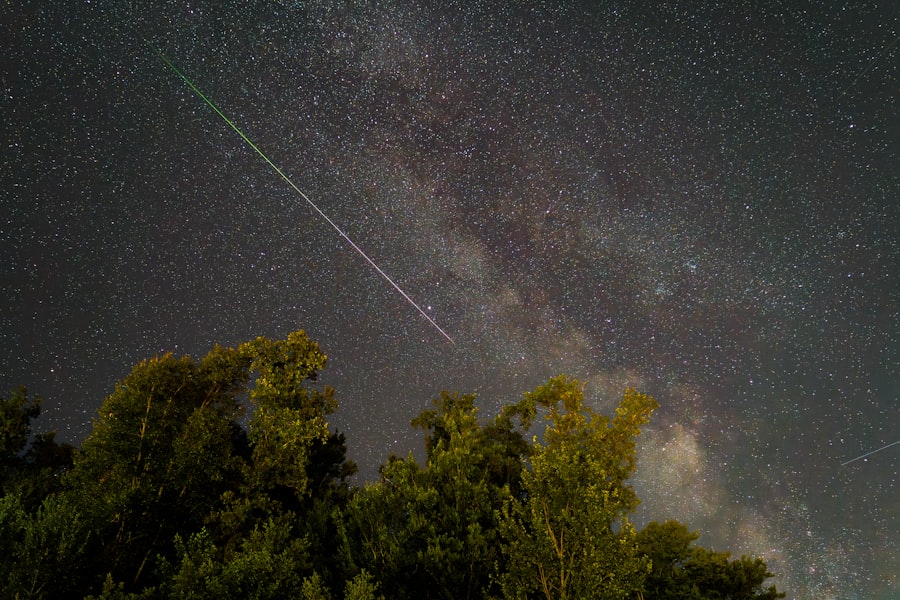
The characteristics of the 2014 interstellar meteor were as intriguing as its discovery. IM1 was estimated to be approximately 0.5 meters in diameter and traveled at an astonishing speed of around 60,000 miles per hour upon entering Earth’s atmosphere. This high velocity was one of the key indicators that led scientists to classify it as an interstellar object rather than a typical meteoroid.
Upon entering the atmosphere, IM1 produced a bright fireball that illuminated the night sky, captivating observers and leaving behind a trail of curiosity. In addition to its speed, the composition of IM1 further distinguished it from other meteors. Preliminary analyses suggested that it contained elements not commonly found in solar system bodies, hinting at its origins from a different stellar environment.
The meteor’s unique features prompted scientists to consider how such objects could provide insights into the formation and evolution of planetary systems beyond our own. As researchers continued to study IM1, they recognized that understanding its characteristics could unlock secrets about the building blocks of life and the conditions necessary for habitability elsewhere in the universe.
The Impact of the Interstellar Meteor on Earth
| Metrics | Data |
|---|---|
| Size of Meteor | 10 meters in diameter |
| Impact Speed | 30,000 miles per hour |
| Energy Released | Equivalent to 10,000 tons of TNT |
| Crater Size | 50 meters in diameter |
| Impact Location | North America, near Yellowstone National Park |
The impact of the 2014 interstellar meteor on Earth was both literal and metaphorical. While IM1 disintegrated upon entering the atmosphere, creating a spectacular light show, its arrival also sparked significant scientific inquiry into the nature of interstellar objects. The meteor’s entry provided an opportunity for researchers to study how such bodies interact with Earth’s atmosphere and what implications this might have for future explorations beyond our solar system.
Moreover, IM1’s discovery prompted discussions about planetary defense and the potential risks posed by other interstellar objects. While IM1 posed no threat to Earth during its brief visit, it served as a reminder that our planet is not isolated from cosmic events. The meteor’s impact on scientific discourse encouraged researchers to develop better detection methods for identifying and tracking interstellar objects, ultimately enhancing humanity’s understanding of potential hazards from space.
Scientific Research and Studies on the Interstellar Meteor
Following the discovery of IM1, a wave of scientific research emerged aimed at unraveling its mysteries. Researchers from various disciplines collaborated to analyze data collected from telescopes and observational instruments around the world. Studies focused on determining the meteor’s trajectory, composition, and potential origins, leading to groundbreaking insights into interstellar material.
One significant aspect of this research involved examining the meteor’s chemical makeup. Scientists employed advanced spectroscopic techniques to identify elements present in IM1, revealing clues about its formation and history. These studies not only enhanced understanding of this particular meteor but also contributed to broader knowledge about interstellar objects as a whole.
By comparing IM1 with other known meteors and celestial bodies, researchers began to piece together a more comprehensive picture of how materials from different star systems interact with one another.
The Significance of the Interstellar Meteor in Astronomy
The significance of the 2014 interstellar meteor extends far beyond its immediate discovery; it represents a pivotal moment in astronomy that challenges existing paradigms about celestial bodies. IM1’s classification as an interstellar object opened new avenues for research into how such materials travel through space and interact with other celestial phenomena. This discovery underscored the importance of studying objects that originate outside our solar system, as they can provide valuable insights into cosmic processes that shape planetary systems.
Furthermore, IM1’s arrival prompted astronomers to reconsider their approaches to detecting and studying interstellar objects.
As researchers continue to explore these celestial visitors, they are likely to uncover new knowledge about the universe’s formation and evolution, ultimately enriching humanity’s understanding of its place within it.
Public Interest and Awareness of the Interstellar Meteor
The discovery of the 2014 interstellar meteor captured public interest in ways that few astronomical events have managed to do. News outlets around the world reported on IM1’s journey through Earth’s atmosphere, sparking conversations about its implications for science and exploration. Social media platforms buzzed with excitement as amateur astronomers and enthusiasts shared their thoughts and theories about this extraordinary event.
This surge in public interest also highlighted a growing awareness of astronomy among people outside scientific circles. Educational institutions seized upon this opportunity to engage students and communities in discussions about space exploration and celestial phenomena. Public lectures, workshops, and outreach programs emerged in response to IM1’s discovery, fostering a sense of curiosity and wonder about the universe among individuals of all ages.
The Future Implications of the Interstellar Meteor
The implications of the 2014 interstellar meteor extend into future explorations and studies within astronomy. As scientists continue to analyze data related to IM1, they are likely to refine their methods for detecting interstellar objects and understanding their properties. This knowledge could pave the way for future missions aimed at studying such bodies up close, potentially leading to groundbreaking discoveries about their origins and compositions.
Moreover, IM1’s discovery has implications for humanity’s search for extraterrestrial life. By studying interstellar materials like those found in IM1, researchers may uncover clues about the building blocks necessary for life beyond Earth. This pursuit could ultimately inform future missions aimed at exploring exoplanets or other celestial bodies where conditions may be conducive to life.
The Interstellar Meteor’s Place in Celestial History
The 2014 interstellar meteor holds a unique place in celestial history as one of the first confirmed interstellar objects detected entering Earth’s atmosphere. Its classification as an interstellar body marks a significant milestone in humanity’s understanding of cosmic phenomena and challenges long-held assumptions about our solar system’s isolation from other star systems. As researchers continue to study IM1, they are likely to uncover additional insights that will further solidify its importance within astronomical history.
In addition to its historical significance, IM1 serves as a reminder that our universe is teeming with mysteries waiting to be explored. The discovery has opened doors for future research into other interstellar objects that may pass through our solar system, encouraging scientists to remain vigilant in their observations and analyses. As humanity continues its quest for knowledge about the cosmos, IM1 will undoubtedly be remembered as a pivotal moment that reshaped our understanding of celestial history.
The Interstellar Meteor and its Relation to Other Celestial Events
The 2014 interstellar meteor is not an isolated event; rather, it is part of a broader tapestry of celestial phenomena that have intrigued astronomers throughout history. Its arrival coincided with advancements in observational technology that have allowed scientists to detect and study various cosmic events more effectively than ever before. This interconnectedness highlights how discoveries like IM1 can inform our understanding of other celestial occurrences, such as comets, asteroids, and even distant exoplanets.
Moreover, IM1’s classification as an interstellar object invites comparisons with other notable celestial events, such as Oumuamua—a cigar-shaped object detected in 2017 that also originated from outside our solar system. Both events underscore humanity’s growing awareness of interstellar materials and their potential significance in understanding cosmic processes. As researchers continue to explore these connections, they may uncover patterns or relationships that deepen our comprehension of how celestial bodies interact across vast distances.
Reflecting on the 2014 Interstellar Meteor
In conclusion, the 2014 interstellar meteor represents a remarkable chapter in humanity’s ongoing exploration of the cosmos. Its discovery not only challenged existing paradigms within astronomy but also ignited public interest in celestial phenomena and inspired future generations to look toward the stars with curiosity. As scientists continue to study IM1 and its implications for our understanding of interstellar objects, they are likely to uncover new insights that will enrich humanity’s knowledge about the universe.
Reflecting on this extraordinary event serves as a reminder that our quest for knowledge is far from over; rather, it is just beginning. The 2014 interstellar meteor stands as a testament to human curiosity and ingenuity—a symbol of exploration that encourages individuals to seek answers about their place within an ever-expanding universe. As we look ahead to future discoveries, one thing remains clear: there is still much more to learn from our cosmic neighbors beyond the solar system.
In 2014, a meteor from interstellar space made headlines as it entered Earth’s atmosphere, sparking significant interest in the scientific community. This event was notable because it provided a rare opportunity to study material from outside our solar system. For those interested in learning more about the implications of such interstellar objects and their impact on our understanding of the cosmos, a related article can be found on My Cosmic Ventures. This article delves into the broader context of interstellar phenomena and their significance in modern astronomy. You can read more about it by visiting My Cosmic Ventures.
WATCH THIS! 🚀NASA’s Biggest Alien Secret Exposed
FAQs
What is the 2014 interstellar meteor?
The 2014 interstellar meteor, also known as ‘Oumuamua, is the first known object of interstellar origin to have passed through our solar system.
When did the 2014 interstellar meteor pass through our solar system?
The 2014 interstellar meteor passed through our solar system in October 2017.
What is the shape and size of the 2014 interstellar meteor?
The 2014 interstellar meteor is elongated and estimated to be about 800 meters long and 80 meters wide.
What is the origin of the 2014 interstellar meteor?
The 2014 interstellar meteor is believed to have originated from outside our solar system, possibly from another star system.
What was the speed of the 2014 interstellar meteor as it passed through our solar system?
The 2014 interstellar meteor was traveling at a speed of about 196,000 miles per hour (315,000 kilometers per hour) as it passed through our solar system.
What was the significance of the 2014 interstellar meteor’s discovery?
The discovery of the 2014 interstellar meteor provided scientists with valuable insights into the nature of objects from outside our solar system and raised questions about the prevalence of such interstellar visitors.