
In a groundbreaking revelation that has captivated scientists and enthusiasts alike, researchers have unearthed a remarkable alien metal from the depths of the ocean floor. This discovery, which has sparked intense curiosity and debate, challenges existing paradigms about the materials that can be found on Earth and raises questions about the origins of such an extraordinary substance. The implications of this find extend far beyond mere scientific inquiry; they touch upon the very fabric of our understanding of the universe and our place within it.
As the world grapples with the significance of this alien metal, it becomes increasingly clear that this discovery may herald a new era in materials science and exploration. The excitement surrounding this discovery is palpable, as it not only represents a significant advancement in geological research but also opens up a myriad of possibilities for future applications. The alien metal, with its unique properties and composition, has the potential to revolutionize various fields, from engineering to medicine.
As researchers delve deeper into its characteristics and origins, they are uncovering layers of complexity that could reshape our understanding of both terrestrial and extraterrestrial materials. This article aims to explore the composition of the alien metal, the circumstances surrounding its discovery, its significance, and the potential applications that could arise from this extraordinary find.
Key Takeaways
- A new alien metal has been discovered on the ocean floor, sparking excitement and curiosity among scientists and researchers.
- The composition of the alien metal includes rare earth elements and unknown isotopes, making it a unique and valuable find.
- The discovery of the alien metal was made possible through advanced deep-sea exploration technology and the use of autonomous underwater vehicles.
- The significance of the discovery lies in its potential applications in various industries, including aerospace, electronics, and renewable energy.
- The origin of the alien metal remains a mystery, leading to various theories about its formation and presence on the ocean floor.
The Composition of the Alien Metal
The alien metal exhibits a composition that is unlike any known terrestrial material. Preliminary analyses suggest that it contains a unique blend of elements, some of which have never been observed in nature on Earth. This unusual combination raises intriguing questions about its formation and the conditions under which it may have originated.
Researchers have identified traces of rare isotopes and exotic elements that hint at a cosmic origin, suggesting that this metal may have formed in environments vastly different from those found on our planet.
It is incredibly lightweight yet exceptionally strong, exhibiting a tensile strength that surpasses many conventional metals.
Furthermore, its resistance to corrosion and extreme temperatures makes it an ideal candidate for various applications in harsh environments. As scientists continue to study its structure at the atomic level, they are uncovering insights that could lead to breakthroughs in material science, potentially paving the way for innovations in everything from aerospace engineering to advanced electronics.
How the Alien Metal was Discovered

The discovery of the alien metal was serendipitous, occurring during a routine deep-sea exploration mission aimed at studying hydrothermal vents. Researchers aboard an advanced submersible were conducting geological surveys when they stumbled upon an unusual metallic deposit on the ocean floor. Initial observations indicated that this deposit was unlike any other previously cataloged, prompting further investigation.
As samples were collected and brought back to the surface for analysis, excitement began to build within the scientific community. The process of analyzing the samples was meticulous and time-consuming. Scientists employed a range of sophisticated techniques, including mass spectrometry and electron microscopy, to determine the metal’s composition and properties.
Each test revealed more about this enigmatic substance, confirming its status as an alien metal. The unexpected nature of this find has led to a flurry of research initiatives aimed at understanding not only the metal itself but also the geological processes that may have contributed to its formation.
The Significance of the Discovery
| Discovery | Significance |
|---|---|
| Penicillin | Revolutionized medicine by introducing the first antibiotic |
| Electricity | Transformed society by powering homes, industries, and technology |
| DNA | Opened new frontiers in genetics and personalized medicine |
The significance of discovering an alien metal cannot be overstated. It challenges long-held beliefs about the materials available on Earth and expands our understanding of what is possible in terms of material composition. This discovery has implications for various scientific fields, including geology, astrophysics, and materials science.
It raises fundamental questions about how materials can form under different environmental conditions and what this means for our understanding of planetary formation and evolution. Moreover, this find has ignited discussions about the potential for extraterrestrial life and resources beyond Earth. If such materials can exist in our oceans, what else might be lurking in the cosmos?
The discovery serves as a reminder of how much remains unknown about our universe and encourages further exploration beyond our planet. As researchers continue to investigate the implications of this alien metal, they are not only expanding scientific knowledge but also inspiring future generations to look toward the stars.
Potential Applications of the Alien Metal
The unique properties of the alien metal open up a plethora of potential applications across various industries. Its lightweight yet strong nature makes it an attractive option for aerospace engineering, where reducing weight while maintaining structural integrity is crucial for efficiency and performance. Additionally, its resistance to extreme temperatures and corrosion could lead to advancements in manufacturing processes for high-performance components used in everything from spacecraft to high-speed trains.
Beyond aerospace, the medical field stands to benefit significantly from this discovery. The biocompatibility of the alien metal could pave the way for innovative medical devices and implants that are not only durable but also capable of withstanding harsh bodily environments without degrading over time. Furthermore, its unique electrical properties may lead to breakthroughs in electronics, potentially resulting in faster and more efficient devices that could revolutionize consumer technology.
Theories about the Origin of the Alien Metal
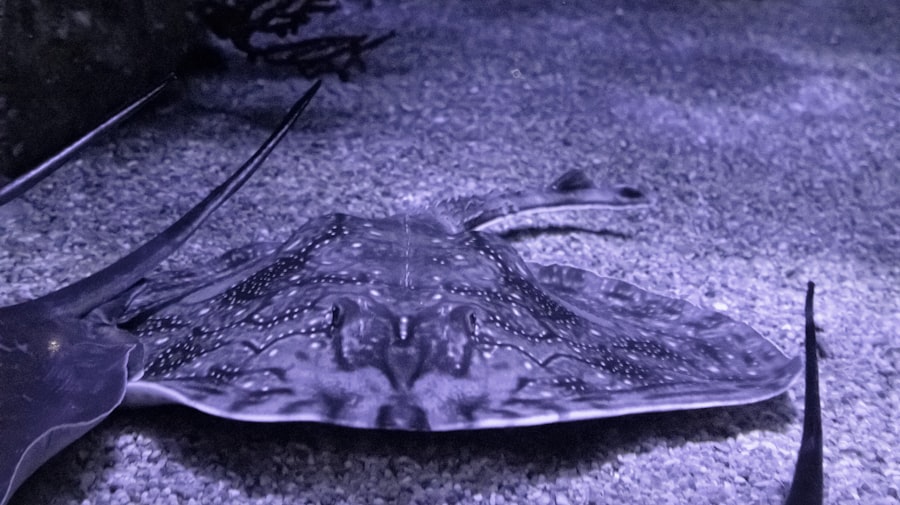
As researchers delve deeper into understanding the alien metal’s properties, they are also exploring various theories regarding its origin.
This theory is supported by the presence of isotopes typically associated with cosmic events, indicating that the metal may have formed in space before being deposited on our planet.
Another theory posits that the metal could be a product of unique geological processes occurring at extreme depths within the Earth’s crust or mantle. Some scientists speculate that it may have formed under conditions similar to those found in other celestial bodies, such as Mars or Europa, where extreme pressure and temperature could lead to the creation of such exotic materials. As research continues, these theories will be tested against new findings, potentially leading to a clearer understanding of how this alien metal came to be.
The Impact on Our Understanding of the Ocean Floor
The discovery of the alien metal has profound implications for our understanding of the ocean floor and its geological processes. Traditionally viewed as a relatively stable environment, recent findings suggest that there may be more dynamic processes at play beneath the waves than previously thought. The presence of such an unusual material indicates that there are still many mysteries waiting to be uncovered in these uncharted territories.
This discovery also highlights the importance of deep-sea exploration in advancing scientific knowledge. As researchers continue to investigate these remote regions, they are likely to encounter more unexpected findings that could reshape our understanding of Earth’s geology and history. The ocean floor is not merely a barren wasteland; it is a complex ecosystem with potential treasures waiting to be discovered.
The Role of Technology in the Discovery
The role of technology in uncovering the alien metal cannot be understated. Advanced submersibles equipped with cutting-edge imaging and sampling technologies enabled researchers to explore previously inaccessible areas of the ocean floor. These innovations have transformed deep-sea exploration from a challenging endeavor into a more systematic scientific pursuit.
Moreover, analytical techniques such as mass spectrometry and electron microscopy have allowed scientists to characterize materials at unprecedented levels of detail. These tools have been instrumental in identifying the unique properties of the alien metal and understanding its composition. As technology continues to evolve, it will undoubtedly play a crucial role in future discoveries, enabling researchers to push the boundaries of what is known about our planet and beyond.
Future Research and Exploration Plans
In light of this groundbreaking discovery, plans for future research and exploration are already underway. Scientists are eager to return to the site where the alien metal was found to conduct further investigations and gather additional samples. These expeditions will aim not only to deepen understanding of this particular material but also to explore other areas of the ocean floor that may harbor similar treasures.
Collaborative efforts among international research teams are expected to enhance these exploration initiatives. By pooling resources and expertise, scientists hope to accelerate their understanding of both the alien metal and its broader implications for geology and materials science. Future research will likely focus on developing new technologies for deep-sea exploration while also addressing questions related to environmental sustainability and conservation.
Environmental and Ethical Considerations
As with any significant scientific discovery, ethical considerations must be taken into account when exploring new frontiers. The extraction and study of materials from the ocean floor raise important questions about environmental impact and sustainability. Researchers must balance their desire for knowledge with their responsibility to protect fragile marine ecosystems.
Efforts are being made to ensure that exploration activities adhere to strict environmental guidelines aimed at minimizing disruption to marine life. Additionally, discussions surrounding ownership and access rights to extraterrestrial materials are becoming increasingly relevant as humanity ventures further into space exploration. Establishing ethical frameworks will be essential in guiding future research endeavors while safeguarding our planet’s natural resources.
Conclusion and Implications for the Future
The discovery of an alien metal from the ocean floor represents a monumental leap forward in scientific understanding and exploration. Its unique composition challenges existing paradigms while opening up new avenues for research and application across various fields. As scientists continue to investigate its properties and origins, they are not only expanding knowledge but also inspiring curiosity about what lies beyond our planet.
The implications of this discovery extend far beyond immediate scientific inquiry; they touch upon fundamental questions about our universe and humanity’s place within it. As researchers embark on future explorations fueled by technological advancements, they will undoubtedly uncover more mysteries waiting beneath the waves. Ultimately, this discovery serves as a reminder that there is still much left to learn about our world—and beyond—and that each new finding brings with it both opportunities and responsibilities for future generations.
In recent years, the discovery of alien metals on the ocean floor has sparked significant interest among scientists and researchers. These metals, believed to be of extraterrestrial origin, have the potential to revolutionize our understanding of both oceanic and cosmic processes. For those interested in exploring this fascinating topic further, a related article can be found on My Cosmic Ventures. This article delves into the implications of these findings and their potential impact on future technological advancements. To read more about this intriguing subject, visit the article on My Cosmic Ventures.
WATCH THIS! 🚀NASA’s Biggest Alien Secret Exposed
FAQs
What is the ocean floor alien metal?
The ocean floor alien metal refers to a mysterious metallic object discovered on the ocean floor that has unusual and unexplained characteristics.
Where was the ocean floor alien metal discovered?
The ocean floor alien metal was discovered in the depths of the ocean, in an area that is not easily accessible to humans.
What are the characteristics of the ocean floor alien metal?
The ocean floor alien metal is reported to have unusual properties such as being highly resistant to corrosion, having a unique composition, and exhibiting magnetic properties.
What is the origin of the ocean floor alien metal?
The origin of the ocean floor alien metal is currently unknown and subject to speculation. Some theories suggest that it may be of extraterrestrial origin, while others propose natural geological processes as a possible explanation.
What are scientists saying about the ocean floor alien metal?
Scientists are intrigued by the discovery of the ocean floor alien metal and are conducting further research to understand its composition, origin, and potential implications for our understanding of the Earth’s geology and the possibility of extraterrestrial materials on our planet.
Is the ocean floor alien metal a threat to the environment or human life?
At this time, there is no evidence to suggest that the ocean floor alien metal poses any threat to the environment or human life. However, further research is needed to fully understand its properties and potential impact.