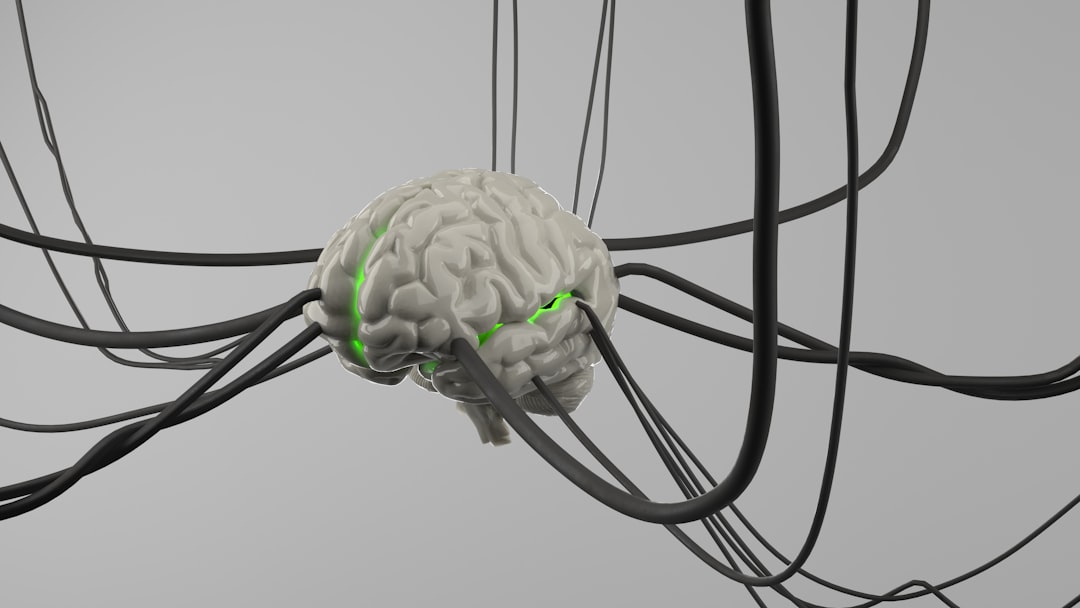
You perceive the world, don’t you? You see the sunlight dappling through the leaves, you feel the warmth of your mug in your hands, you hear the gentle hum of the refrigerator. But what if I told you that this rich, vibrant reality you experience is not a direct, objective recording of the external world? What if it’s more like a masterful, ongoing work of art, meticulously crafted by your own brain? This is the essence of the brain’s model of reality, a concept that is both profoundly complex and remarkably elegant. Your brain isn’t a passive camera; it’s an active constructor, constantly building and refining a representation of what’s happening around you, and indeed, within you. This model is the foundation of your consciousness, your decisions, and your very sense of self. Understanding it is like unlocking a secret door into the architecture of your own mind.
Imagine you’re walking down a busy street. Your brain isn’t meticulously processing every single sensory input – every glint of light, every faint sound, every subtle scent – in real-time. That would be computationally overwhelming and, frankly, inefficient. Instead, your brain operates on a principle of prediction. It uses past experiences and learned patterns to anticipate what’s coming next. This predictive processing is a fundamental aspect of how your brain constructs its model of reality.
Anticipating the Immediate Future
Think about catching a ball. You don’t just react the moment it reaches your hand. Your brain has already calculated its trajectory, its speed, and where it will be at a certain time. This allows you to position your hands and muscles in advance, making the catch look effortless. This predictive capability extends to almost every aspect of your daily life, from anticipating the next word in a conversation to knowing how to navigate familiar environments without conscious thought.
The Role of Prior Knowledge
Your prior knowledge is the bedrock of these predictions. Every time you learn something new – a new fact, a new skill, a new way to interact with the world – you’re updating and refining your brain’s predictive models. This is why learning can feel challenging at first, as your brain struggles to integrate new information with existing frameworks. But with practice and repetition, these new patterns become ingrained, allowing for smoother and more automatic predictions.
The Surprise Factor: Error Signals
What happens when your predictions are wrong? If you’re expecting a smooth pavement and suddenly encounter a pothole, that’s a prediction error. Your brain registers this discrepancy and uses it to update its model. This “error signal” is crucial for learning and adaptation. It alerts your brain that its current understanding of the environment is flawed and needs adjustment. Without this mechanism, you’d be constantly bumping into things and reacting to the world in a slow, inefficient manner.
The Advantage of Efficiency
Why all this prediction? The answer lies in efficiency. By predicting what’s likely to happen, your brain can allocate its limited resources more effectively. It doesn’t need to process every single detail of the present moment. Instead, it focuses on processing the unexpected – the novel stimuli that might require immediate attention or learning. This allows you to react quickly to threats, to notice important changes, and to engage with the world in a fluid and responsive way.
Reducing Cognitive Load
Consider the sheer volume of information bombarding your senses at any given moment. If your brain had to process all of it equally, you’d be paralyzed by information overload. Predictive processing acts as a filter, allowing you to focus on what’s relevant and ignore the noise. This significantly reduces your cognitive load, freeing up mental resources for more complex tasks like problem-solving and creativity.
Faster Responses
The ability to predict and act before full sensory processing is complete is the key to rapid responses. Whether it’s dodging a falling object or understanding a quickly spoken sentence, your brain’s predictive models are working overtime to give you that split-second advantage. This is why skilled athletes and performers often appear to have superhuman reflexes; their brains have meticulously honed their predictive models through extensive practice.
In exploring the intricate connections between our cognitive processes and the way we perceive reality, a fascinating article titled “Understanding the Brain Model of Reality” delves into the mechanisms by which our brains construct our understanding of the world around us. This piece highlights the latest research in neuroscience and psychology, shedding light on how our experiences shape our mental frameworks. For more insights, you can read the article here: Understanding the Brain Model of Reality.
The Bayesian Brain: Probabilistic Reasoning
Your brain isn’t just predicting; it’s constantly making probabilistic judgments. This is where the concept of the “Bayesian brain” comes into play. Named after the 18th-century mathematician Thomas Bayes, this framework suggests that your brain processes information by combining prior beliefs with incoming sensory evidence to arrive at the most likely interpretation of the world.
The Foundation of Beliefs and Evidence
Think of your prior beliefs as your existing understanding of how the world works. These are shaped by your past experiences, your upbringing, and the vast amount of information you’ve absorbed throughout your life. When you encounter new sensory input – what we call evidence – your brain weighs this evidence against your prior beliefs.
Updating Your Worldview
The more compelling the new evidence, the more your beliefs will shift. Conversely, if the evidence is weak or contradictory to strong prior beliefs, your brain might discount it or reinterpret it to fit its existing framework. This constant interplay between belief and evidence is how your brain continuously updates its model of reality. It’s a dynamic process, not a static one.
The Likelihood of Events
Your brain is essentially calculating the probability of different events happening given the available evidence. For example, if you hear a rumbling sound and see dark clouds, your brain assigns a high probability to the event of rain. This probabilistic reasoning allows you to make informed decisions and navigate uncertainty.
Handling Ambiguity and Uncertainty
The world is rarely black and white. Often, sensory information is ambiguous, incomplete, or even contradictory. The Bayesian framework is particularly adept at explaining how your brain handles this uncertainty. By assigning probabilities to different interpretations, your brain can make the most reasonable guess, even with limited information.
The Power of Prior Probabilities
Your prior probabilities are your starting point. If you’ve lived your whole life in a tropical climate, your brain might assign a lower prior probability to snow. When you encounter a white, powdery substance, your brain will likely interpret it as something else unless the evidence strongly suggests otherwise (e.g., seeing people skiing).
The Influence of New Data
As you gather more data, your brain updates these probabilities. If you visit a country known for its winters and experience a heavy snowfall, your prior belief about snow will adjust. This is the essence of learning and adaptation – your brain is constantly recalibrating its internal model based on new information.
Building the Internal World: Constructing Perception

Your sensory organs – eyes, ears, nose, tongue, skin – are the gateways for information from the external world. However, the raw data they provide are just that: raw data. Your brain then takes these signals and actively constructs a coherent and meaningful perception of reality.
From Sensations to Perceptions
A sensation is a basic detection of a stimulus (e.g., a specific wavelength of light hitting your retina). A perception is the interpretation of that sensation into something meaningful (e.g., the color red, the sound of a barking dog). This transformation is a complex neural process where your brain integrates information from various sensory modalities and compares it with stored knowledge.
The Harmony of Senses
Your brain doesn’t process each sense in isolation. It integrates information from all your senses to create a unified experience. For example, when you see a person speaking, your brain combines the visual information of their facial movements with the auditory information of their voice to understand their words coherently. This integration is what makes your experience of reality feel so seamless.
Filling in the Gaps
Your brain is remarkably adept at filling in missing information. This is evident in optical illusions, where your brain makes assumptions based on its learned patterns that lead to misinterpretations. It also happens constantly in everyday perception. For instance, you can read words with letters missing or jumbled because your brain uses context and prior knowledge to infer the intended message.
The Role of Attention and Expectation
What you pay attention to significantly influences what you perceive. Your brain prioritizes processing information that is relevant to your current goals or interests. Similarly, your expectations can shape what you perceive, sometimes leading you to see what you expect to see, even if it’s not entirely accurate.
Selective Attention: Focusing the Spotlight
Imagine being at a noisy party. You can usually focus on a single conversation, filtering out the surrounding cacophony. This is selective attention at work. Your brain is actively choosing what sensory information to prioritize and process, effectively narrowing down its focus to a specific stream of data.
Top-Down vs. Bottom-Up Processing
Your brain uses two primary modes of processing: bottom-up and top-down. Bottom-up processing starts with the raw sensory data and moves upwards to create a perception. Top-down processing, on the other hand, uses your existing knowledge, expectations, and goals to influence how you interpret sensory input. Often, these two processes work in tandem, with your brain constantly adjusting its interpretation based on both incoming data and pre-existing frameworks.
Consciousness and the Self: The Embodied Model

Your brain’s model of reality is not just an external representation; it also encompasses your internal state, your sense of self, and your consciousness. This embodied model is what allows you to experience yourself as a distinct entity within the world.
The Subjective Experience of “You”
The feeling of being “you” – your thoughts, your emotions, your memories, your desires – is a product of your brain’s ongoing construction of your internal reality model. It’s a complex tapestry woven from neural activity, neurotransmitter fluctuations, and the intricate connections between different brain regions.
The Narrative Self
Your brain often constructs a coherent narrative about who you are, linking your past experiences to your present self and projecting into the future. This narrative self provides a sense of continuity and identity, helping you to understand your place in the world.
The Role of Embodiment
Your physical body is an integral part of your brain’s model of reality. The sensations of touch, proprioception (your sense of body position), and interoception (your sense of internal bodily states) all contribute to your sense of self and your experience of being in the world. Your brain doesn’t just represent the external world; it represents you interacting with that world.
The Illusion of Direct Access
While your experience feels direct and immediate, it’s important to remember that you never have direct access to objective reality. Your brain’s model is an interpretation, filtered and constructed through your unique neural architecture and past experiences. This means that two people can experience the same event quite differently, based on their individual models of reality.
The Limits of Our Senses
Our senses are limited. We can’t see ultraviolet light or hear ultrasound. Our perception of reality is therefore a subset of what might objectively exist. Your brain does its best to create a functional and useful model within these limitations.
The Subjectivity of Experience
Your emotions, your biases, and your personal history all color your perception. What you find beautiful, what you find threatening, what you find enjoyable – these are all subjective interpretations shaped by your internal model. This subjectivity is what makes each individual’s experience of reality unique.
Recent studies have delved into the intricate workings of the brain and its model of reality, shedding light on how our perceptions shape our understanding of the world. For a deeper exploration of this fascinating topic, you can read an insightful article that discusses the implications of these findings on our daily lives. This article offers a comprehensive overview and can be found at My Cosmic Ventures, where you can discover more about the relationship between neuroscience and our perception of reality.
Implications and Future Directions
| Aspect | Metrics |
|---|---|
| Neural Connections | Number of synapses, neural pathways |
| Information Processing | Speed of neural transmission, cognitive load |
| Perception | Sensory input, interpretation of stimuli |
| Memory | Short-term memory capacity, long-term memory consolidation |
| Cognitive Functions | Attention, decision-making, problem-solving |
Understanding the brain’s model of reality has profound implications for various fields, from artificial intelligence and psychology to neuroscience and even philosophy.
Reimagining Artificial Intelligence
The concept of the predictive, Bayesian brain is a powerful inspiration for developing more sophisticated AI. Instead of simply programmed responses, AI that learns and adapts based on probabilistic reasoning and prediction errors could lead to more intelligent and adaptable systems.
Building Truly Intelligent Machines
AI that can accurately model its environment and predict future states would be a significant leap forward. This could lead to AI that can navigate complex real-world scenarios, understand context, and even exhibit forms of creativity.
The Challenge of Consciousness in AI
While modeling predictive and probabilistic behavior is achievable, replicating genuine consciousness and subjective experience in AI remains a monumental challenge. This is where the philosophical questions about the nature of consciousness and the self become particularly relevant.
Advances in Understanding Mental Health
Many mental health conditions can be viewed, in part, as disruptions in the brain’s model of reality. Anxiety, for example, might involve an over-prediction of threat, while depression could involve a distorted and pessimistic model of the self and the world.
Targeted Therapies
By understanding how individual models of reality are formed and how they can become maladaptive, researchers are developing more targeted therapies. Cognitive behavioral therapy (CBT), for instance, aims to help individuals identify and challenge negative thought patterns that contribute to their distorted models.
The Role of Neuroplasticity
The brain’s ability to change and adapt (neuroplasticity) offers hope for recovery. Therapies that encourage the formation of new neural pathways can help individuals build more accurate and adaptive models of reality.
A New Perspective on Our Own Existence
Ultimately, understanding the brain’s model of reality encourages a deeper appreciation for the intricate and active nature of our own minds. It highlights that what we perceive as objective truth is, in fact, a sophisticated construction, constantly being refined and updated.
Embracing Uncertainty and Imperfection
Recognizing the model-based nature of reality can foster a greater tolerance for uncertainty and a more compassionate understanding of others. It reminds us that our own perspectives are not absolute, and that others may genuinely perceive the world differently.
The Ongoing Quest for Knowledge
The study of the brain’s model of reality is a continuous journey. As neuroscience advances and our understanding deepens, we will undoubtedly uncover even more about the remarkable ways our brains construct the world we inhabit, and in doing so, discover more about ourselves. You are not just an observer of reality; you are an active architect of it.

You’ve Never Experienced “Now”
FAQs
What is the brain model of reality?
The brain model of reality refers to the way in which the brain processes sensory information from the environment to construct a representation of reality. This model is based on the brain’s ability to interpret and integrate various sensory inputs to create a coherent and meaningful perception of the world.
How does the brain create its model of reality?
The brain creates its model of reality through a complex process of sensory perception, integration, and interpretation. It receives input from the senses, such as sight, hearing, touch, taste, and smell, and then processes and integrates this information to form a coherent and meaningful representation of the external world.
What factors influence the brain’s model of reality?
The brain’s model of reality is influenced by a variety of factors, including sensory input, past experiences, cultural and social influences, and cognitive processes. These factors can shape the way in which the brain perceives and interprets the world around us.
How does the brain’s model of reality impact behavior and decision-making?
The brain’s model of reality can impact behavior and decision-making by influencing how individuals perceive and interpret the world around them. This can affect their beliefs, attitudes, and actions, as well as their ability to understand and interact with others.
What are the implications of understanding the brain model of reality?
Understanding the brain model of reality has implications for various fields, including psychology, neuroscience, philosophy, and artificial intelligence. It can provide insights into how the brain processes information and constructs perceptions of reality, as well as how these processes may be altered in different contexts or individuals.