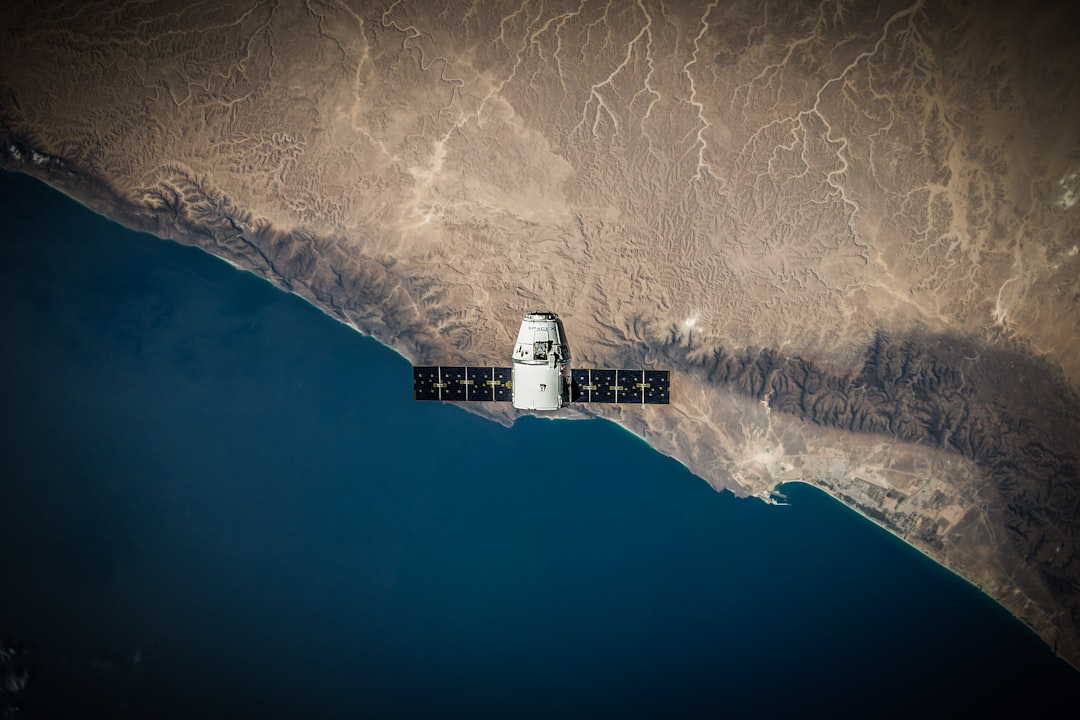
In the ever-evolving realm of space exploration, the need for robust risk assessment methodologies has never been more critical. The 3I/ATLAS system emerges as a pioneering tool designed to enhance the safety and reliability of spacecraft missions.
” This innovative framework aims to systematically identify, evaluate, and mitigate risks associated with spacecraft operations, ensuring that missions can be conducted with a higher degree of confidence.
The significance of 3I/ATLAS extends beyond mere risk management; it embodies a comprehensive approach that integrates advanced data analytics, machine learning, and real-time monitoring. By leveraging these technologies, 3I/ATLAS not only identifies potential threats but also provides actionable insights that can guide decision-making processes throughout the mission lifecycle.
Key Takeaways
- 3I/ATLAS is a cutting-edge spacecraft risk assessment tool that plays a crucial role in ensuring the safety and success of space missions.
- Spacecraft risk assessment is of utmost importance in the space industry as it helps in identifying and mitigating potential risks that could jeopardize the mission.
- 3I/ATLAS contributes to spacecraft risk assessment by providing a comprehensive analysis of potential risks and their impact on the mission.
- The key components of 3I/ATLAS include advanced data collection, risk analysis algorithms, and predictive modeling to assess and mitigate spacecraft risks.
- 3I/ATLAS utilizes data and analysis to provide valuable insights into potential risks, allowing for informed decision-making and risk mitigation strategies.
Understanding the Importance of Spacecraft Risk Assessment
Spacecraft risk assessment is a fundamental aspect of mission planning and execution. It involves the systematic evaluation of potential hazards that could jeopardize the success of a mission or the safety of its crew. The stakes are incredibly high in space exploration; even minor oversights can lead to catastrophic failures, resulting in loss of equipment, financial resources, and, in crewed missions, human lives.
Therefore, a thorough understanding of risk assessment is essential for all stakeholders involved in space missions. The importance of risk assessment is underscored by the complex nature of space environments. Factors such as radiation exposure, micrometeoroid impacts, and equipment malfunctions can pose significant threats to spacecraft.
Moreover, the unpredictable nature of space travel necessitates a proactive approach to identifying and mitigating risks. By employing rigorous risk assessment methodologies, mission planners can develop contingency strategies that enhance mission resilience and ensure that objectives are met without compromising safety.
The Role of 3I/ATLAS in Spacecraft Risk Assessment
3I/ATLAS plays a pivotal role in the landscape of spacecraft risk assessment by providing a structured framework for identifying and analyzing potential threats. Its design is rooted in the understanding that effective risk management requires not only the identification of risks but also a comprehensive analysis of their potential impacts. By integrating various data sources and analytical techniques, 3I/ATLAS enables mission planners to gain a holistic view of the risks associated with their missions.
One of the standout features of 3I/ATLAS is its ability to adapt to different mission profiles and environments. Whether it is a crewed mission to Mars or an unmanned satellite deployment, 3I/ATLAS can be tailored to meet specific requirements. This flexibility allows for a more nuanced understanding of risks, as it considers factors unique to each mission scenario.
As a result, 3I/ATLAS not only enhances the accuracy of risk assessments but also fosters a culture of safety within organizations engaged in space exploration.
Key Components of 3I/ATLAS
| Component | Description |
|---|---|
| Infrastructure | Physical and organizational structures that support the implementation of the 3I/ATLAS framework. |
| Information | Data and knowledge that are used to inform decision-making and drive improvements in the 3I/ATLAS framework. |
| Integration | The process of combining different components and systems within the 3I/ATLAS framework to work together effectively. |
The architecture of 3I/ATLAS comprises several key components that work in concert to facilitate effective risk assessment. At its core lies an advanced data integration system that aggregates information from various sources, including historical mission data, real-time telemetry, and environmental monitoring systems. This comprehensive data collection forms the foundation for subsequent analyses and decision-making processes.
Another critical component is the risk modeling engine, which employs sophisticated algorithms to simulate potential scenarios and assess their likelihood and impact. By utilizing machine learning techniques, this engine can continuously improve its predictive capabilities based on new data inputs. Additionally, 3I/ATLAS features an intuitive user interface that allows mission planners to visualize risks and their potential consequences easily.
This user-friendly design ensures that stakeholders can engage with the system effectively, making informed decisions based on clear insights.
How 3I/ATLAS Utilizes Data and Analysis
Data is at the heart of 3I/ATLAS’s functionality. The system harnesses vast amounts of information from diverse sources to create a comprehensive risk profile for each mission. This includes not only technical data related to spacecraft systems but also environmental factors such as solar activity and orbital debris density.
By synthesizing this information, 3I/ATLAS can identify correlations and trends that may indicate emerging risks. The analytical capabilities of 3I/ATLAS extend beyond simple data aggregation. The system employs advanced statistical methods and machine learning algorithms to analyze historical data and predict future risks.
For instance, by examining past mission failures or anomalies, 3I/ATLAS can identify patterns that may not be immediately apparent. This predictive analysis allows mission planners to anticipate potential issues before they arise, enabling proactive measures to be implemented.
Benefits of Using 3I/ATLAS for Spacecraft Risk Assessment
The adoption of 3I/ATLAS offers numerous benefits for organizations involved in space exploration. One of the most significant advantages is enhanced safety. By providing a comprehensive risk assessment framework, 3I/ATLAS helps identify potential hazards early in the mission planning process, allowing for timely interventions that can prevent accidents or failures.
Moreover, 3I/ATLAS contributes to improved decision-making by offering actionable insights derived from data analysis. Mission planners can leverage these insights to prioritize risks based on their potential impact and likelihood, ensuring that resources are allocated effectively. This strategic approach not only enhances mission success rates but also optimizes operational efficiency by minimizing unnecessary expenditures on risk mitigation efforts.
Case Studies: Successful Implementation of 3I/ATLAS
Several case studies illustrate the successful implementation of 3I/ATLAS in real-world scenarios. One notable example involves a recent Mars rover mission where 3I/ATLAS was employed to assess risks associated with landing maneuvers. By analyzing historical landing data and simulating various scenarios, the system identified critical factors that could affect landing success.
As a result, mission planners were able to adjust their approach, ultimately leading to a successful landing and operation on the Martian surface. Another case study highlights the use of 3I/ATLAS in satellite deployment missions. In this instance, the system was utilized to evaluate risks related to orbital debris encounters during launch and deployment phases.
By providing real-time assessments of debris density and trajectory predictions, 3I/ATLAS enabled mission teams to make informed decisions about launch windows and trajectory adjustments. This proactive approach significantly reduced the likelihood of collisions, ensuring the safety and longevity of the satellite.
Challenges and Limitations of 3I/ATLAS
Despite its many advantages, 3I/ATLAS is not without challenges and limitations. One significant hurdle is the reliance on high-quality data inputs. The effectiveness of 3I/ATLAS hinges on the availability and accuracy of data from various sources.
In cases where data is incomplete or unreliable, the system’s predictive capabilities may be compromised, leading to suboptimal risk assessments. Additionally, while 3I/ATLAS offers advanced analytical tools, it may require specialized knowledge to interpret its outputs effectively. Mission planners must possess a certain level of expertise in data analysis and risk management to fully leverage the system’s capabilities.
This requirement could pose challenges for organizations with limited resources or personnel trained in these areas.
Future Developments and Improvements for 3I/ATLAS
Looking ahead, there are numerous opportunities for enhancing 3I/ATLAS’s capabilities. One area for development involves integrating more advanced artificial intelligence techniques that could further improve predictive accuracy and automate certain aspects of risk assessment. By incorporating deep learning algorithms, for instance, 3I/ATLAS could analyze vast datasets more efficiently and uncover insights that may not be readily apparent through traditional methods.
Another potential improvement lies in expanding the system’s data integration capabilities. As new sensors and monitoring technologies emerge, incorporating these into 3I/ATLAS could provide even richer datasets for analysis. This would enable more comprehensive assessments that account for an increasingly complex array of risks associated with modern space missions.
Comparison of 3I/ATLAS with Other Spacecraft Risk Assessment Methods
When compared to traditional spacecraft risk assessment methods, 3I/ATLAS stands out due to its integrated approach and reliance on advanced data analytics. Conventional methods often rely on static checklists or expert judgment alone, which can lead to oversights or missed opportunities for risk mitigation. In contrast, 3I/ATLAS continuously updates its assessments based on real-time data inputs, providing a dynamic view of risks throughout the mission lifecycle.
Furthermore, while other methods may focus primarily on historical data or expert opinions, 3I/ATLAS combines both quantitative analysis and qualitative insights from subject matter experts. This holistic approach ensures that all relevant factors are considered when evaluating risks, leading to more informed decision-making processes.
The Future of Spacecraft Risk Assessment with 3I/ATLAS
As space exploration continues to advance at an unprecedented pace, the importance of effective risk assessment cannot be overstated. The introduction of systems like 3I/ATLAS represents a significant leap forward in how organizations approach spacecraft risk management. By integrating advanced data analytics with real-time monitoring capabilities, 3I/ATLAS empowers mission planners to make informed decisions that enhance safety and mission success.
Looking toward the future, it is clear that tools like 3I/ATLAS will play an increasingly vital role in shaping the landscape of space exploration. As technology continues to evolve and new challenges emerge, ongoing improvements to systems like 3I/ATLAS will be essential in ensuring that humanity’s quest for knowledge beyond our planet remains safe and sustainable.
In recent years, the discovery of interstellar objects like 3I/ATLAS has sparked significant interest and concern regarding the potential risks they pose to spacecraft. These celestial bodies, originating from outside our solar system, travel at high velocities and could potentially collide with spacecraft, causing damage or even catastrophic failure. An insightful article discussing the implications of such interstellar objects on spacecraft safety can be found on My Cosmic Ventures. This article delves into the challenges of tracking these fast-moving objects and the measures that can be taken to mitigate the risks they present. For more detailed information, you can read the full article on their website by following this