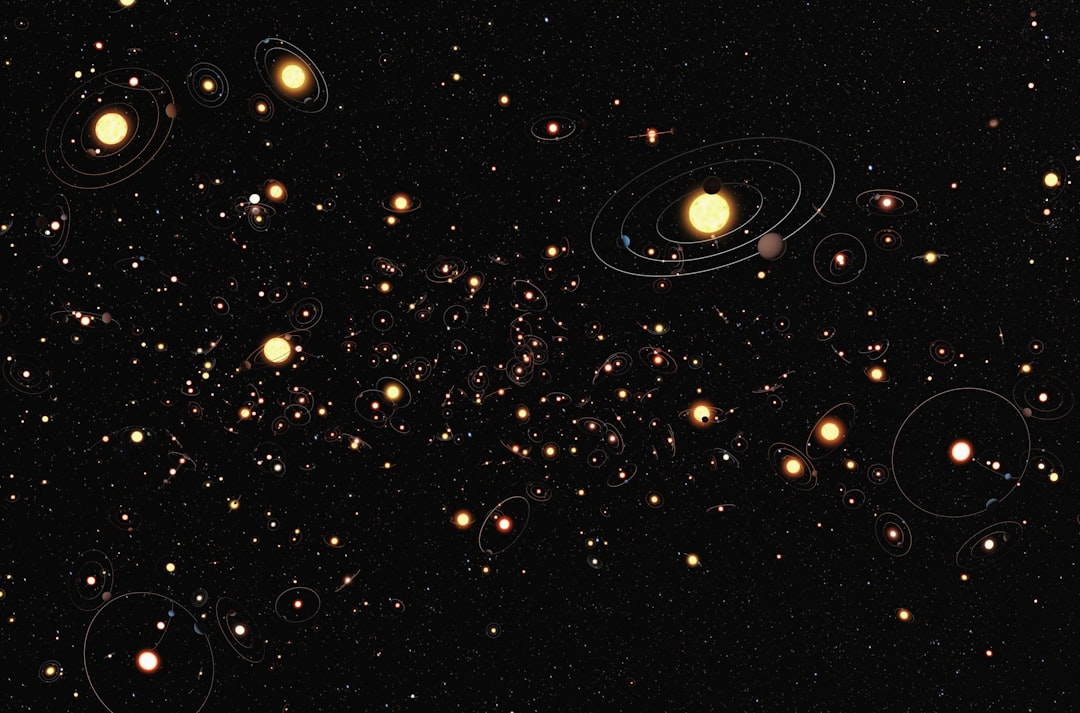
Interstellar objects, those celestial bodies that traverse the vast expanses of space between stars, have captivated the imagination of astronomers and the general public alike. These enigmatic entities, which originate from outside our solar system, offer a unique glimpse into the processes that govern the formation and evolution of planetary systems. Unlike asteroids and comets that are native to our solar neighborhood, interstellar objects carry with them the secrets of distant star systems, potentially revealing insights about the conditions that prevailed during their formation.
As humanity’s understanding of the cosmos expands, the study of these interstellar visitors has become increasingly significant, prompting scientists to explore their origins, characteristics, and implications for our understanding of the universe. The discovery of interstellar objects has opened a new frontier in astronomy, challenging existing paradigms and inspiring a wave of research aimed at unraveling their mysteries. The very existence of these objects raises profound questions about the dynamics of stellar systems and the potential for life beyond Earth.
As researchers continue to refine their observational techniques and theoretical models, the allure of interstellar objects remains strong, promising to enhance our comprehension of the cosmos and our place within it.
Key Takeaways
- Interstellar objects are celestial bodies that originate from outside our solar system and travel through interstellar space.
- The first interstellar object, 1I/2017 U1 (‘Oumuamua), was discovered in 2017, sparking a new wave of interest in studying these mysterious objects.
- The Oumuamua anomaly refers to the unusual characteristics and behavior exhibited by the first detected interstellar object, leading to intense scientific debate and speculation.
- Interstellar objects exhibit unique characteristics such as unusual shapes, high speeds, and varying compositions, challenging our understanding of celestial bodies.
- Theories on the origin of interstellar objects range from natural ejection from other star systems to artificial objects created by extraterrestrial civilizations, fueling scientific curiosity and debate.
History of Interstellar Object Discoveries
The history of interstellar object discoveries is relatively brief but marked by significant milestones that have reshaped our understanding of the universe. The first confirmed interstellar object, ‘Oumuamua, was detected in October 2017 by astronomers using the Pan-STARRS1 telescope in Hawaii. This unexpected find sent shockwaves through the scientific community, as it was the first time a celestial body from outside the solar system had been observed passing through our cosmic neighborhood.
The discovery prompted a flurry of research and debate regarding its origins, composition, and trajectory, igniting interest in the study of similar objects. Following ‘Oumuamua, astronomers identified a second interstellar object, 2I/Borisov, in August 2019. Unlike its predecessor, which exhibited unusual characteristics that led to various hypotheses about its nature, Borisov was recognized as a comet with a more familiar structure.
This distinction allowed scientists to study it in greater detail, providing valuable data on its composition and behavior. The discoveries of these two interstellar objects have not only expanded the catalog of known celestial bodies but have also underscored the importance of ongoing surveillance and research in identifying and understanding these fleeting visitors from beyond our solar system.
The Oumuamua Anomaly

‘Oumuamua stands out as a particularly intriguing case in the realm of interstellar objects due to its peculiar characteristics and behavior. Upon its discovery, astronomers noted that ‘Oumuamua exhibited an elongated shape and an unusual trajectory that could not be easily explained by conventional gravitational influences. Its hyperbolic orbit indicated that it was not bound to the Sun, confirming its status as an interstellar visitor.
However, what truly set ‘Oumuamua apart was its unexpected acceleration as it traveled through the solar system, which led to a myriad of theories attempting to explain this anomaly. Some scientists proposed that ‘Oumuamua could be a fragment of a larger body that had been ejected from its home star system, while others speculated that it might be an artificial object created by an advanced civilization. The latter hypothesis sparked considerable debate within the scientific community and captured the public’s imagination.
Despite extensive observations and analyses, no definitive explanation has emerged to account for ‘Oumuamua’s unique properties. This ongoing mystery highlights the challenges faced by astronomers in interpreting data from such transient objects and emphasizes the need for further exploration and study.
The Characteristics of Interstellar Objects
| Characteristic | Description |
|---|---|
| Shape | Interstellar objects can have irregular shapes, such as elongated or cigar-like. |
| Speed | They travel at extremely high speeds, often faster than any object in our solar system. |
| Origin | Interstellar objects originate from outside our solar system, possibly from other star systems. |
| Composition | They may be composed of different materials than those found in our solar system, such as interstellar dust and gas. |
| Size | Interstellar objects can vary in size, from small asteroids to larger bodies. |
Interstellar objects exhibit a range of characteristics that distinguish them from their solar system counterparts. One notable feature is their hyperbolic trajectories, which indicate that they are not gravitationally bound to any star. This unique motion allows them to traverse vast distances across interstellar space before making brief appearances in our solar system.
Additionally, many interstellar objects are believed to possess compositions that reflect their origins in diverse environments, potentially including ices, metals, and organic compounds. The physical properties of these objects can vary significantly. For instance, ‘Oumuamua’s elongated shape suggested it might be a fragment of a larger body or a product of complex geological processes.
In contrast, 2I/Borisov displayed characteristics typical of comets found within our solar system, including a coma and tail formed by sublimating ices as it approached the Sun. These differences underscore the diversity among interstellar objects and highlight the importance of studying them to gain insights into their formation processes and the conditions present in their home systems.
Theories on the Origin of Interstellar Objects
The origins of interstellar objects remain a topic of intense investigation and speculation among astronomers. One prevailing theory suggests that these bodies are remnants from protoplanetary disks around young stars, where they formed alongside planets and other celestial bodies. Over time, gravitational interactions within these systems can lead to ejections of material into interstellar space, allowing these objects to drift through the galaxy until they encounter another star system.
Another hypothesis posits that some interstellar objects may originate from collisions between larger bodies within their home systems.
This theory aligns with observations indicating that many stars are surrounded by debris disks containing numerous small bodies that could serve as potential sources for interstellar visitors.
The Search for Interstellar Objects
The search for interstellar objects has gained momentum in recent years as advancements in technology have improved astronomers’ ability to detect and track these elusive entities.
These tools have proven invaluable in identifying new interstellar visitors as they pass through our solar system.
In addition to traditional observational methods, researchers are also exploring innovative approaches to enhance detection capabilities. For instance, some scientists advocate for dedicated surveys focused solely on identifying interstellar objects, employing advanced algorithms to analyze vast amounts of data quickly. As more interstellar objects are discovered, astronomers hope to build a comprehensive catalog that will facilitate comparative studies and deepen our understanding of these fascinating celestial travelers.
The Importance of Studying Interstellar Objects
Studying interstellar objects holds significant importance for several reasons. Firstly, these bodies provide a unique opportunity to investigate materials and processes that may not be present within our solar system. By analyzing their compositions and trajectories, scientists can glean insights into the conditions prevalent in other star systems and how they compare to our own.
This knowledge can inform theories about planetary formation and evolution across different environments. Moreover, interstellar objects may offer clues about the potential for life beyond Earth. The presence of organic compounds or water ice on these bodies could suggest that similar materials exist elsewhere in the galaxy, raising intriguing questions about the building blocks necessary for life.
Understanding how these materials are distributed throughout the cosmos can help refine models of habitability and guide future searches for extraterrestrial life.
The Rarity of Interstellar Objects
Despite their intriguing nature, interstellar objects are relatively rare within our solar system. The vast distances between stars mean that encounters with these celestial visitors are infrequent events. Estimates suggest that only a handful of interstellar objects pass through our solar system each year, making their detection all the more significant when they do appear.
This rarity underscores the importance of ongoing observational efforts to identify and study these fleeting phenomena. The limited number of known interstellar objects also presents challenges for researchers seeking to draw broader conclusions about their origins and characteristics. Each new discovery adds valuable data points to an otherwise sparse dataset, but it also highlights the need for caution when extrapolating findings from one or two examples to broader populations.
As more interstellar objects are identified and studied, scientists hope to develop a clearer understanding of their distribution and diversity across the galaxy.
Potential Implications of Interstellar Objects
The implications of studying interstellar objects extend beyond mere curiosity; they may fundamentally alter humanity’s understanding of cosmic processes and our place in the universe. For instance, if certain interstellar bodies contain organic materials or water ice, this could suggest that building blocks for life are more widespread than previously thought. Such findings would have profound implications for astrobiology and the search for extraterrestrial life.
Additionally, understanding the dynamics of interstellar objects can shed light on broader astrophysical phenomena such as stellar evolution and galactic dynamics. By examining how these bodies interact with solar systems and other celestial entities, researchers can gain insights into gravitational influences and material exchange processes that shape galaxies over time. These studies may ultimately contribute to a more comprehensive understanding of cosmic evolution.
Future Missions to Study Interstellar Objects
Looking ahead, future missions aimed at studying interstellar objects promise to enhance humanity’s knowledge of these enigmatic entities significantly. One ambitious proposal involves sending spacecraft to rendezvous with known interstellar visitors for direct observation and analysis. Such missions would allow scientists to gather detailed data on an object’s composition, structure, and behavior in ways that ground-based observations cannot achieve.
In addition to targeted missions, advancements in telescope technology will continue to play a crucial role in identifying new interstellar objects as they approach our solar system. Upcoming observatories equipped with cutting-edge instruments will enable astronomers to detect fainter and more distant objects than ever before. As detection capabilities improve, researchers anticipate uncovering a wealth of new data that will deepen our understanding of these fascinating cosmic travelers.
The Fascinating Mystery of Interstellar Objects
In conclusion, interstellar objects represent one of the most captivating mysteries in modern astronomy. Their unique characteristics and origins challenge existing paradigms while offering tantalizing glimpses into distant star systems beyond our own. As humanity continues to explore these celestial visitors through advanced observational techniques and future missions, each discovery brings with it new questions and opportunities for understanding.
The study of interstellar objects not only enriches scientific knowledge but also fuels humanity’s innate curiosity about the cosmos. As researchers strive to unravel the complexities surrounding these enigmatic bodies, they contribute to a broader narrative about our place in an ever-expanding universe filled with wonders yet to be discovered. The journey into this fascinating realm is just beginning, promising exciting revelations about the nature of existence itself.
Interstellar objects, such as the famous ‘Oumuamua and the more recent Borisov, are rare visitors to our solar system, sparking significant interest and curiosity among astronomers and astrophysicists. These objects originate from outside our solar system, providing a unique opportunity to study the composition and characteristics of distant star systems. One reason for their rarity is the vast distances between stars and the gravitational forces that typically keep objects bound to their home systems. For more insights into the rarity and significance of interstellar objects, you can explore a related article on this topic by visiting My Cosmic Ventures. This article delves into the challenges and discoveries associated with these cosmic wanderers, offering a deeper understanding of their journey through the galaxy.
WATCH THIS! Scientists Found an Alien “Fingerprint” on 3I/ATLAS (The Nickel Anomaly)
FAQs
What are interstellar objects?
Interstellar objects are objects that originate from outside our solar system and travel through interstellar space.
Why are interstellar objects rare?
Interstellar objects are rare because they are not bound to any star and therefore do not follow the typical orbits of objects within a solar system. This makes them difficult to detect and study.
How do we detect interstellar objects?
Interstellar objects are typically detected through telescopic observations. Their unique trajectories and velocities can help distinguish them from objects that originate within our solar system.
What was the first confirmed interstellar object?
The first confirmed interstellar object, named ‘Oumuamua, was discovered in 2017. It was identified as an interstellar object due to its hyperbolic trajectory and high velocity.
What can we learn from studying interstellar objects?
Studying interstellar objects can provide valuable insights into the composition and characteristics of material from outside our solar system. This can help us better understand the processes that occur in other star systems.