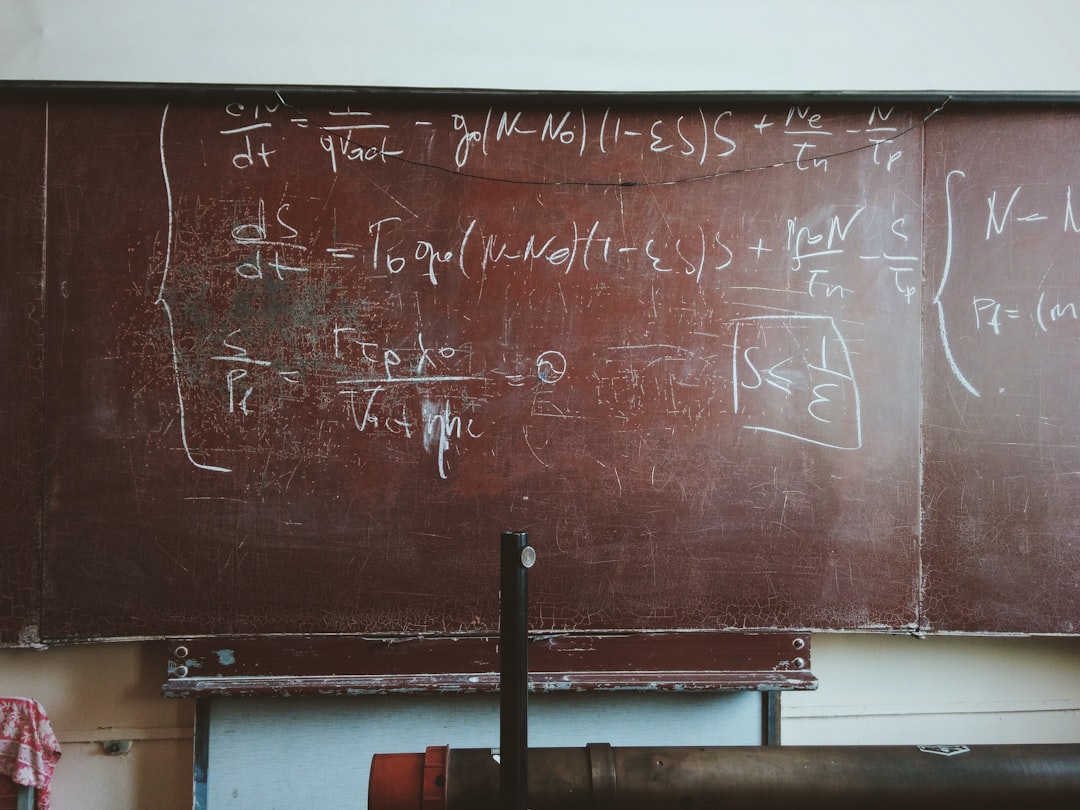
- The Tangible Versus the Ephemeral: Where Physics’ Records Meet Our Memories
The pursuit of knowledge in physics is a journey characterized by a constant interplay between objective, verifiable records and the subjective, often fallible tapestry of human memories. While the former endeavors to capture the universe in precise, universal terms, the latter shapes our personal understanding and engagement with those very principles. This listicle delves into the fascinating disjunction and unexpected synergy between the documented, measurable world of physics and the internalized, often emotionally charged recollections that define our individual experiences.
The Foundation of Scientific Truth: Physics’ Immutable Records
Scientific progress is built upon a bedrock of meticulously gathered and analyzed data. These records are the bedrock upon which theories are tested, paradigms shift, and our understanding of the cosmos is refined. They are the impartial witnesses to the universe’s workings, unswayed by individual belief or perception.
Experimental Data: The Raw Material of Discovery
The most fundamental form of physics’ records comes from experimental data. This encompasses everything from the precise measurements of particle collisions in accelerators like the Large Hadron Collider to the faint signals from distant galaxies detected by telescopes like the James Webb Space Telescope.
Reproducibility and Verification
Central to the integrity of these records is the principle of reproducibility. A scientific finding is only considered robust if other researchers, using similar equipment and methodologies, can independently replicate the results. This adversarial process of verification is crucial in filtering out errors, biases, and spurious correlations.
Instruments as Extensions of Observation
The instruments themselves—from Geiger counters to superconducting magnets—act as sophisticated extensions of human senses, capable of detecting phenomena far beyond our natural perceptual limits. The data they generate, whether as numerical readings, spectral lines, or photographic images, forms the raw, uninterpreted output that becomes a physical record.
Theoretical Frameworks: The Language of Explanation
Beyond raw data, the records of physics include the elegant and powerful theoretical frameworks that attempt to explain the observations. Equations, postulates, and mathematical models are not merely descriptive; they are prescriptive, offering predictive power and profound insights into the underlying mechanisms of the universe.
The Elegance of Mathematical Description
The conservation laws, Maxwell’s equations, Einstein’s field equations—these are all canonical records within physics. They represent distilled wisdom, honed over centuries of intellectual inquiry, providing a robust and consistent language to describe the behavior of matter and energy.
Peer Review and Scientific Consensus
The process of peer review acts as another layer of scrutiny, ensuring that theoretical contributions are sound and that the records are communicated effectively. Scientific consensus, built upon a body of evidence and theoretical agreement, represents a collective and evolving set of records.
Historical Documents: The Archive of Progress
Physical journals, lab notebooks, and published papers constitute a historical archive of physics’ records. These documents trace the evolution of ideas, the triumphs of discovery, and the dead ends encountered, offering a rich record of humanity’s quest for understanding.
- The Subjective Lens: The Nature of Human Memory in Physics
While physics strives for objectivity, our engagement with its principles is invariably filtered through the subjective lens of human memory. Our memories are not perfect replicas of physical reality; they are reconstructive, influenced by emotion, context, and cognitive biases, shaping how we recall and apply scientific knowledge.
In exploring the intriguing relationship between records and memories in physics, one can gain deeper insights by examining the article found at My Cosmic Ventures. This article delves into how physical records, such as data collected from experiments, can shape our understanding of the universe, while also considering the subjective nature of memories that scientists and observers bring to their interpretations. By contrasting these two concepts, the article highlights the complexities involved in the pursuit of knowledge within the realm of physics.
The Fragile Tapestry of Recollection: How We Remember Physics
Unlike the immutable records of physics, our memories are dynamic, malleable, and often incomplete. The way we recall concepts, experiments, and even the faces of pioneering scientists is a testament to the complex inner workings of the human mind.
Encoding, Storage, and Retrieval: The Cognitive Dance
The very process of forming a memory involves encoding information, storing it over time, and then retrieving it when needed. Each of these stages is prone to distortion, leading to a recall that may differ significantly from the original experience.
Elaboration and Meaning-Making
We tend to remember information that is meaningful to us. When we learn about quantum entanglement, for instance, the most vivid memories might be associated with the “spooky action at a distance” analogy or a particularly engaging lecture that connected it to something we already understood.
Emotional Resonance and Salience
Events imbued with strong emotions are more likely to be etched into our memories. A moment of profound awe witnessing a solar eclipse might be recalled with greater clarity and detail than a routine lesson on kinematics.
Schemas and Prior Knowledge
Our existing mental frameworks, or schemas, heavily influence how we interpret and store new information. If a student has a preconceived notion about particles being tiny billiard balls, they might struggle to accurately remember the probabilistic nature of quantum mechanics.
Reconstructive Nature of Memory: The Artist Within
Memory is not a passive recording device; it is an active, reconstructive process. When we recall an event, our brain pieces together fragments of information, filling in gaps with plausible details and potentially introducing inaccuracies.
The Influence of Suggestibility
The way questions are phrased or the information we are exposed to after an event can significantly alter our memories. If someone asks “Did you see the large asteroid?” rather than “Did you see an asteroid?”, it can implant a false memory.
Confabulation: Filling in the Blanks
Confabulation is the unconscious fabrication of false memories to fill gaps in recall. This can manifest in recalling details of an experiment that never actually occurred or misattributing a discovery.
The Illusion of Confidence
Individuals can be highly confident in their recalled memories, even when those memories are inaccurate. This disconnect between confidence and accuracy is a common phenomenon in human psychology.
- The Disconnect: When Physics Records and Our Memories Diverge
The inherent differences between objective physics records and subjective human memories often lead to fascinating divergences. These gaps can arise from misinterpretations, oversimplifications, or the sheer complexity of the physics itself.
Misinterpretations and Oversimplifications: The Gaps in Understanding
Our personal memories of physics concepts are often shaped by simplified explanations or analogies that, while helpful for initial learning, can lead to a distorted understanding of the underlying principles.
The “Billiard Ball” Model of Atoms
For generations, the atom was often described as a miniature solar system, with electrons orbiting a central nucleus. This analogy, while a useful starting point, is fundamentally inaccurate according to quantum mechanics and leads to memories that struggle to reconcile with later, more accurate models.
Classical Intuition vs. Quantum Reality
Our intuitive understanding, built upon macroscopic experiences, often clashes with the counter-intuitive nature of the quantum world. Memories of classical mechanics—where objects have definite positions and momenta—can be difficult to reconcile with the probabilistic and wave-like nature of subatomic particles.
The Persistence of Misconceptions
Once a misconception is embedded in memory, it can be remarkably persistent, even when presented with contradictory records. This highlights the challenge of not just learning physics, but unlearning inaccurate memories.
The Scale of the Universe: A Memory Challenge
The vast scales of the cosmos—both the unimaginably small and the immeasurably large—are incredibly difficult for our memories to truly grasp.
Time Scales of Cosmic Events
Recalling the billions of years involved in stellar evolution or the cosmic microwave background radiation poses a significant challenge. Our memories are more attuned to human lifespans, making these vast time scales abstract rather than concrete.
Spatial Distances in Astronomy
The sheer distances between stars and galaxies, measured in light-years, are phenomena that transcend our everyday experiences. While we might remember the term “light-year,” its true magnitude often escapes our internal, experiential understanding.
- The Synergy: How Memories Enhance Our Understanding of Physics
Despite the potential for disconnect, human memories are not merely impediments to understanding physics; they are also crucial facilitators. The act of remembering, contextualizing, and personalizing scientific knowledge can deepen our appreciation and application of physics’ records.
Personal Anecdotes and Experiential Learning
Our lived experiences, even those seemingly unrelated to formal physics education, can create powerful memories that connect us to physical principles.
Childhood Wonder and Observation
The memory of watching a ball arc through the air, the feeling of static electricity, or the sight of a rainbow can be the genesis of a lifelong fascination with physics. These early, sensory memories lay the groundwork for understanding concepts like projectile motion, electrostatics, and optics.
The Power of “Aha!” Moments
The exhilaration of a personal discovery, a moment when a complex concept suddenly clicks, creates a strong memory that reinforces learning. These “aha!” moments are often more potent than rote memorization of records.
Recalling Explanations and Mentorship
The memories of influential teachers, engaging lectures, or helpful mentors can be invaluable. The way a concept was explained by a beloved professor can be more easily recalled than a dry textbook definition.
Metaphorical Bridges
Effective use of analogies and metaphors in teaching, when successfully retained in memory, can create powerful bridges to understanding abstract physics concepts. For example, the analogy of water flow for electric current can help solidify memories of Ohm’s law.
The Narrative of Discovery
Human beings are storytellers. Memories of the historical narratives behind scientific discoveries—the struggles, the insights, the collaborative efforts—make the records of physics more engaging and memorable.
- Bridging the Divide: Harmonizing Records and Memories for Deeper Insight
The ultimate goal in physics education and communication is to bridge the gap between objective records and subjective memories. By understanding the strengths and limitations of both, we can cultivate a more profound and enduring comprehension of the physical world.
In the intriguing realm of physics, the debate between records and memories often surfaces, particularly in discussions about the nature of information and its implications for understanding the universe. A related article that delves deeper into this topic can be found at My Cosmic Ventures, where the author explores how the distinction between physical records and the subjective experience of memories can influence our comprehension of quantum mechanics and the fabric of reality itself. This exploration not only sheds light on fundamental concepts but also invites readers to ponder the philosophical implications of how we perceive and interpret the universe around us.
Strategies for Effective Learning and Communication
Consciously employing strategies that acknowledge both the objective nature of physics records and the subjective processing of human memories is key.
Active Recall and Spaced Repetition
Instead of passively rereading notes (relying on superficial memory), actively retrieving information from memory and revisiting it at increasing intervals (spaced repetition) strengthens long-term retention. This makes the abstract records more accessible.
Connecting to Prior Knowledge and Experience
When introducing new physics concepts, actively linking them to existing memories and everyday experiences can significantly enhance understanding. This transforms abstract records into relatable phenomena.
Using Real-World Examples
Demonstrating principles like Newton’s laws through everyday actions like pushing a shopping cart or throwing a frisbee creates vivid memories that anchor the more formal records.
Encouraging Analogical Thinking
Promoting the development of personal analogies, even if imperfect, can help learners create memories that are easier to recall and manipulate than pure abstract equations.
The Role of Visualization and Simulation
Tools that allow for the visualization of abstract phenomena—whether through diagrams, animations, or interactive simulations—can create powerful visual memories that complement the written records.
Virtual Laboratories
Simulations can provide the experience of conducting experiments without the physical limitations, creating memories of experimental setups and outcomes that would otherwise be inaccessible.
Conceptual Mapping
Creating visual maps that connect various physics concepts, highlighting their relationships and dependencies, helps build a more interconnected and robust network of memories.
Narrative and Storytelling in Science Communication
Framing physics concepts within compelling narratives—personal stories of scientists, accounts of groundbreaking discoveries, or even hypothetical scenarios—can make the records more engaging and memorable.
The Enduring Value of Both
Ultimately, physics thrives on the meticulous collection and verification of its records, providing the objective framework of our understanding. Yet, it is through the rich, albeit imperfect, tapestry of our memories that these records are internalized, elaborated upon, and become a part of our personal cosmos. The dance between the tangible and the ephemeral, between the universally verifiable and the uniquely experienced, is what makes the study of physics a perpetually fascinating and deeply human endeavor. The perfect memory might be a myth, but the pursuit of aligning it with the universe’s immutable records is the very essence of scientific progress and personal enlightenment.

Physics Just Proved Yesterday Never Happened
FAQs
What is the difference between records and memories in physics?
In physics, records refer to the data and measurements that are recorded and stored for future reference, while memories refer to the subjective experiences and interpretations of those records by individuals.
How do records and memories play a role in the study of physics?
Records are essential for the objective analysis and verification of physical phenomena, while memories can influence the interpretation and understanding of those records. Both are important in shaping our understanding of the natural world.
What are some examples of records in physics?
Examples of records in physics include experimental data, observations, measurements, and calculations that are recorded and stored in scientific journals, databases, and research papers.
How do memories impact the study of physics?
Memories can impact the study of physics by influencing the way individuals interpret and understand the records and data. Personal experiences, biases, and perspectives can shape how individuals perceive and interpret the objective records.
Why is it important to distinguish between records and memories in physics?
It is important to distinguish between records and memories in physics to maintain objectivity and accuracy in scientific research and analysis. Understanding the difference helps to ensure that subjective experiences do not overshadow the objective data and measurements.