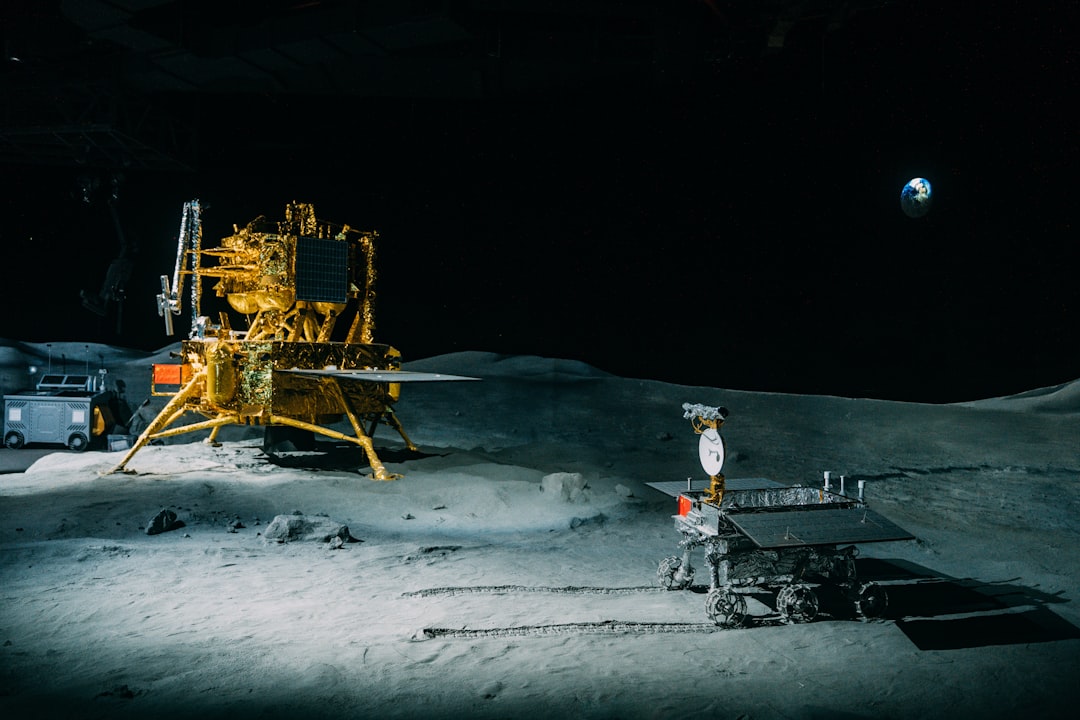
The Viking missions, a pinnacle of early Mars exploration, captivated the world with their ambitious goal of searching for life on the Red Planet. While the scientific findings and the iconic imagery are widely remembered, a crucial, and perhaps less glamorous, aspect of their success lay in the intricate control systems that governed the landers. Among these, the Sample Behavior Analysis (SBA) system played a vital role in ensuring the safe and precise handling of Martian soil. This article delves into the complexities of Viking Lander control, specifically focusing on the SBA’s operational parameters, challenges, and the invaluable data it provided.
The Viking landers, Viking 1 and Viking 2, were equipped with sophisticated robotic arms designed to collect and analyze Martian soil samples. The primary scientific objective driving this mechanical endeavor was the search for biosignatures – chemical or physical evidence of past or present life. This necessitated the collection of surface materials, a task fraught with unique challenges posed by the Martian environment. The SBA system was developed as a critical component of this sample handling process, designed to monitor, control, and interpret the behavior of the soil as it was being manipulated by the lander’s arm and instruments.
The Scientific Imperative for Sample Analysis
The initial scientific proposals for Viking included a suite of experiments specifically targeting biological activity. These experiments required intimate contact with the Martian regolith. To achieve this, the landers were equipped with a scoop on their robotic arms capable of collecting soil. This soil would then be transported to onboard instruments for analysis. The success of these analyses hinged on the ability of the landers to acquire representative samples and deliver them to the instruments without contamination or alteration of their intrinsic properties.
Engineering Challenges of Martian Soil Interaction
Martian soil, or regolith, presented a unique set of engineering challenges. Its physical properties, such as cohesiveness, abrasiveness, and the potential for electrostatic effects, were not fully understood prior to the missions. The robotic arm needed to be able to scoop, scoop, and deposit this material reliably in a vacuum environment, under extreme temperature variations, and with limited visual feedback. The SBA was conceived as a system to provide real-time feedback and control over this interaction, ensuring the arm’s actions were consistent with the observed behavior of the soil.
The Role of the Robotic Arm and Scoop
The Viking robotic arm was a marvel of engineering for its time. It possessed multiple degrees of freedom, allowing it to reach various points on the Martian surface within its operational radius. The scoop, attached to the end of the arm, was designed to be a versatile tool. It could dig, scrape, and hold soil. Attached to the scoop, or in close proximity, were sensors that fed data to the SBA. This data was crucial for understanding how the soil was interacting with the scoop and the arm.
The Viking lander missions of the 1970s provided invaluable insights into Martian soil and atmosphere, and understanding the control sample behavior of these landers is crucial for interpreting their data. For a deeper exploration of this topic, you can refer to the article on Martian soil analysis and its implications for astrobiology at My Cosmic Ventures. This article delves into the methodologies used by the Viking landers and discusses the significance of their findings in the context of potential life on Mars.
Operational Parameters of the Sample Behavior Analysis System
The SBA was not a standalone entity but rather an integrated part of the lander’s overall control architecture. Its operational parameters dictated how it interacted with the robotic arm and its sensors, and how it interpreted the incoming data. The system’s primary function was to ensure the integrity of the sample collection and delivery process, and to protect both the instruments and the lander itself from potential damage.
Sensor Integration and Data Acquisition
The SBA relied on a network of sensors to gather information about the soil and the mechanical interactions. These included:
Force and Torque Sensors
Located at the joints of the robotic arm, these sensors provided critical feedback on the forces being exerted and experienced during scooping and manipulation. This allowed the control system to detect resistance from the soil, indicating whether the scoop was successfully digging or encountering an obstruction. Excessive forces could trigger safety protocols to prevent damage to the arm or the scoop.
Strain Gauges
Similar to force sensors, strain gauges measured the deformation of the robotic arm components under load. This provided another layer of information about the forces at play, allowing for a more nuanced understanding of the interaction with the Martian regolith.
Proprioceptive Sensors
These sensors provided information about the position and orientation of the robotic arm and its end effector. This was essential for accurate navigation and for ensuring the scoop was positioned correctly for sampling.
Load Cells on the Scoop
Directly measuring the weight or mass of the material within the scoop was a key function. This allowed the system to determine if a sufficient quantity of soil had been collected and to monitor for any loss of material during transfer.
Control Algorithms and Feedback Loops
The heart of the SBA lay in its sophisticated control algorithms. These algorithms processed the sensor data in real-time and made decisions to adjust the robotic arm’s movements. The system operated on a series of feedback loops, constantly comparing the desired state with the actual state and making corrections.
Closed-Loop Control for Scooping
When the scoop was commanded to acquire a sample, the SBA would engage in closed-loop control. This meant that as the scoop dug into the soil, the force sensors would provide feedback. If the resistance increased beyond a predefined threshold, indicating a potential jam or a very hard material, the system could automatically adjust the digging depth or speed to avoid damage. Conversely, if the resistance was too low, it might indicate that the scoop was not making contact with solid material but was instead digging into loose dust.
Momentum Management and Deposit Control
Once a sample was collected, the SBA was responsible for its safe transfer. This involved carefully maneuvering the arm to the designated deposit location, often the inlet of an analytical instrument. The system had to account for the momentum of the collected soil within the scoop, ensuring that it was deposited smoothly and without spillage. Algorithms were in place to control the speed and trajectory of the arm during the deposit phase, minimizing any sudden movements that could cause the soil to be ejected.
Adaptive Motion Control
The SBA was designed to be adaptive. It could learn from the observed behavior of the Martian soil and adjust its control strategies accordingly. For example, if the soil proved to be more cohesive than initially anticipated, the system might employ different scooping techniques or slower deposit motions to ensure successful sample transfer.
Safety Protocols and Anomaly Detection
A significant aspect of the SBA’s operational parameters revolved around safety. The system was programmed to detect and respond to a wide range of anomalies.
Overload Protection
If the sensors detected forces or torques exceeding the operational limits of the robotic arm, the SBA would immediately halt all motion and initiate a fault-handling sequence. This prevented catastrophic damage to the expensive and irreplaceable lander.
Jam Detection and Recovery
The SBA monitored for signs of the scoop or arm becoming jammed. If a jam was detected, the system might attempt a series of predefined recovery maneuvers, such as gentle back-and-forth movements, to try and dislodge the obstruction. If these failed, it would report the condition to Earth for further analysis.
Instrument Protection
The SBA also played a role in protecting the sensitive analytical instruments. When depositing a sample, the system ensured that the soil was delivered within the designated intake area and at a controlled velocity, preventing damage to delicate internal components.
Analyzing Martian Soil Behavior: Insights from the SBA
The data collected by the SBA was not merely for operational control; it provided invaluable insights into the physical properties of the Martian regolith. This real-time analysis of soil behavior allowed mission controllers on Earth to understand the nuances of the Martian surface and to refine subsequent sampling operations.
Cohesiveness and Granularity
The way the soil responded to the scoop’s excavation provided direct evidence of its cohesiveness. Loose, powdery soil would behave very differently from granular or slightly sticky material. The SBA logged the forces required for digging and the amount of material that could be held in the scoop, offering indirect measures of these properties.
Resistance to Excavation
The force feedback from the robotic arm during scooping provided a measure of the resistance the soil offered. A lower resistance indicated loose, unconsolidated material, while higher resistance suggested more compacted or cohesive soil. This data was crucial for understanding the soil’s density and its ability to be disturbed.
Material Adhesion to the Scoop
The SBA monitored the amount of material retained in the scoop after a sampling attempt and during transfer. This indicated the level of adhesion between the soil particles and the scoop material. If a significant amount of soil remained adhered, it suggested a higher degree of cohesiveness or electrostatic attraction.
The Influence of Environmental Factors
The SBA’s observations were intrinsically linked to the Martian environment, including temperature, atmospheric pressure, and the presence of any moisture (even trace amounts).
Temperature Variations and Soil Properties
The extreme temperature fluctuations on Mars could affect the physical properties of the regolith. While the primary mechanism was mechanical, the SBA data was collected under a range of temperatures, allowing for some correlation to be drawn between temperature and soil behavior. For instance, extremely cold temperatures might make the soil more brittle.
Electrostatic Effects and Dust Adherence
Electrostatic forces are known to be significant on planetary bodies with thin atmospheres. The SBA likely logged instances of dust adhering to the scoop, even when the scoop was empty or being cleaned. This provided indirect evidence of electrostatic phenomena at play in the Martian regolith. The control system had to account for potential issues caused by static cling, which could lead to sample loss or incomplete transfer.
Deposit Behavior and Particle Flow
The manner in which the soil flowed from the scoop during deposit was also a key data point for the SBA. This provided insights into the particle size distribution and how the particles interacted with each other.
Flow Rate and Consistency
The speed and manner in which the soil left the scoop during a deposit operation provided information about its flowability. If the soil flowed freely, it suggested smaller, well-sorted particles. If it clumped or flowed slowly, it indicated larger particle sizes or a higher degree of cohesion.
Spillages and Loss of Material
Any instances of soil spilling during transfer were meticulously logged. Analyzing the trajectory and nature of these spillages helped engineers understand the forces involved in retaining and releasing the sample, and the impact of gravity and the scoop’s geometry on material containment.
Viking Lander Control: A Testament to Engineering Prowess
The successful operation of the Viking landers, including their intricate sample handling systems, stands as a testament to the ingenuity and foresight of the engineers who designed them. The SBA, though perhaps overshadowed by the groundbreaking scientific discoveries, was a critical enabler of those discoveries.
Redundancy and Robustness in System Design
The Viking landers were designed with an emphasis on redundancy and robustness. The SBA was no exception. Multiple sensors and fallback control strategies were incorporated to ensure that even if one component failed, the mission could continue.
Backup Sensor Systems and Fail-Safe Mechanisms
For critical functions, redundant sensors were often employed. If a primary sensor failed or provided anomalous readings, the system could switch to a backup sensor, ensuring continuity of operation. Fail-safe mechanisms were designed to bring the arm to a safe configuration in case of critical system failures.
Software and Hardware Interdependencies
The SBA’s algorithms were closely tied to the lander’s hardware capabilities. The control software managed the actuators (motors, gears) of the robotic arm, and the hardware provided the feedback necessary for the software to make informed decisions. This tight coupling was essential for precise control.
Post-Mission Analysis and Legacy of SBA Data
Even after the Viking missions concluded, the data generated by the SBA continued to be analyzed by scientists and engineers. The legacy of this data extends beyond the immediate scientific returns of the missions.
Improving Future Robotic Mission Design
The lessons learned from the Viking SBA have directly influenced the design of robotic arms and sample handling systems on subsequent Mars missions, such as Mars Pathfinder, Spirit, Opportunity, Curiosity, and Perseverance. Understanding the nuances of Martian regolith interaction from Viking’s experience allowed for more robust and efficient designs for later missions.
Simulation and Modeling of Martian Soil
The detailed data on soil behavior provided by the SBA enabled the creation of sophisticated simulation models of Martian regolith. These models are crucial for testing the capabilities of new robotic systems and for planning future exploration strategies. By understanding how the soil behaved under specific forces and movements, engineers could better predict how a new arm or scoop would perform.
Understanding the Martian Environment Through Mechanical Interaction
The SBA data offered a unique perspective on the Martian environment that could not be gathered by other instruments. The mechanical interaction with the soil provided direct, tangible evidence of its physical properties, complementing the data from imaging, atmospheric, and geological instruments.
The Viking lander missions provided invaluable insights into the behavior of Martian soil, particularly in how it interacts with various control samples. Researchers have conducted extensive studies to understand these interactions, leading to significant advancements in planetary science. For a deeper exploration of this topic, you can read more in this related article on the behavior of control samples during the Viking missions, which can be found here. This research continues to shape our understanding of the Martian environment and its potential for supporting life.
Challenges and Limitations of the Viking SBA
| Sample Behavior | Metrics |
|---|---|
| Temperature | Measured in Celsius |
| Pressure | Measured in Pascals |
| Humidity | Measured in percentage |
| Wind Speed | Measured in meters per second |
Despite its remarkable success, the Viking SBA also faced inherent challenges and limitations typical of early robotic exploration.
Limited Real-time Human Intervention
The significant communication delay between Earth and Mars meant that real-time human intervention in the SBA’s operations was impossible. The system had to be largely autonomous, making decisions based on pre-programmed logic and sensor feedback.
Communication Latency and Decision-Making Autonomy
The time it took for commands to reach the lander and for data to return meant that controllers on Earth could not actively guide the scoop’s every move. The SBA’s autonomy was therefore critical, but it also meant that the system had to be exceptionally reliable and capable of handling unexpected situations without immediate human guidance.
Pre-programmed Mission Profiles and Limited Adaptability
While the SBA was designed to be adaptive, its core behavior was dictated by pre-programmed mission profiles. Significant deviations from these profiles, or entirely unforeseen circumstances, could present challenges that the system was not explicitly designed to handle.
Sensor Resolution and Environmental Unknowns
The resolution and accuracy of the sensors, while advanced for their time, were still limited compared to modern instrumentation. Furthermore, the complete understanding of the Martian environment and its regolith was still in its nascent stages, meaning that unexpected behaviors could arise.
Imperfect Knowledge of Martian Regolith Properties
Even with extensive groundwork, the exact physical properties of Martian regolith at the landing sites were not fully known. This meant that some of the SBA’s control parameters had to be based on educated estimations, and unexpected interactions were possible.
Sensor Degradation and Calibration Issues
Over the course of long-duration missions, sensors could experience degradation, leading to inaccuracies. While efforts were made to account for this, it could introduce subtle challenges in the SBA’s control and data interpretation.
The Enduring Significance of Viking’s Sample Behavior Analysis
The Viking Lander Control: Sample Behavior Analysis system was more than just a set of algorithms and sensors; it represented a crucial step in humanity’s ability to interact with and understand other worlds through robotic means. The system’s ability to monitor, control, and interpret the physical interaction with Martian soil was fundamental to the success of the Viking missions.
Paving the Way for Advanced Robotics
The SBA laid the groundwork for the sophisticated robotic systems we see exploring Mars today. The principles of closed-loop control, sensor integration, and autonomous decision-making pioneered by the Viking SBA continue to be refined and implemented in newer generations of robotic explorers.
The Evolution of Robotic Arms and Scoops
The designs of robotic arms and scoops on subsequent Mars missions have directly evolved from the challenges and successes encountered by Viking. Engineers learned about optimal scoop shapes, material choices, and operational strategies through the SBA’s data.
Autonomous Operations and Machine Learning
The need for autonomy in the SBA foreshadowed the increasing reliance on autonomous operations and rudimentary forms of machine learning in space exploration. The system’s ability to adapt and react to its environment was a precursor to more advanced AI employed in later missions.
A Rich Dataset for Geologists and Engineers
The vast amount of data collected by the SBA, even if indirect, provided invaluable insights into the Martian surface for decades to come. This data enabled geologists to better understand the composition and formation of Martian regolith, and engineers to refine the design and control of future robotic systems.
Understanding Regolith Mechanics on Other Worlds
The SBA offered a unique case study in understanding regolith mechanics on another planet. This knowledge is transferable to the exploration of other extraterrestrial bodies, wherever soil or regolith exists.
Informing Future Sample Return Missions
The challenges and solutions related to sample handling and deposit control identified by the SBA were particularly relevant for the planning of future sample return missions, where the pristine collection and manipulation of Martian samples are paramount.
In conclusion, the Sample Behavior Analysis system on the Viking landers was a critical, yet often understated, component of their ambitious mission. Its intricate design, sophisticated control algorithms, and the invaluable data it provided underscore the profound engineering achievements of the Viking program. The SBA’s legacy continues to resonate in the ongoing exploration of Mars, a testament to its foundational role in humanity’s journey to understand the cosmos. The careful analysis of how Martian soil behaved, as observed and controlled by the SBA, not only ensured the success of the Viking experiments but also provided a crucial roadmap for all robotic explorers that have followed.

The NASA Lander That Found Life on Mars… and Was Told to Forget It
FAQs
What was the Viking Lander Control Sample Behavior study?
The Viking Lander Control Sample Behavior study was a scientific experiment conducted by NASA’s Viking mission in the 1970s. The study aimed to investigate the behavior of soil samples collected from the surface of Mars by the Viking landers.
What were the main findings of the Viking Lander Control Sample Behavior study?
The study found that the soil samples collected from the surface of Mars exhibited no signs of organic material or biological activity. This led scientists to conclude that the Martian soil was not capable of supporting life as we know it.
How did the Viking Lander Control Sample Behavior study contribute to our understanding of Mars?
The study provided valuable insights into the composition and characteristics of the Martian soil. It helped scientists better understand the potential habitability of Mars and informed future missions to the red planet.
What were the methods used in the Viking Lander Control Sample Behavior study?
The Viking landers used a robotic arm to collect soil samples from the surface of Mars. These samples were then analyzed using a suite of scientific instruments on board the landers, including a gas chromatograph-mass spectrometer and a gas exchange experiment.
What are the implications of the Viking Lander Control Sample Behavior study for future Mars exploration?
The study’s findings have influenced the design and objectives of subsequent Mars missions, including the search for signs of past or present life on the red planet. The study also highlighted the importance of careful sample collection and analysis in planetary exploration.