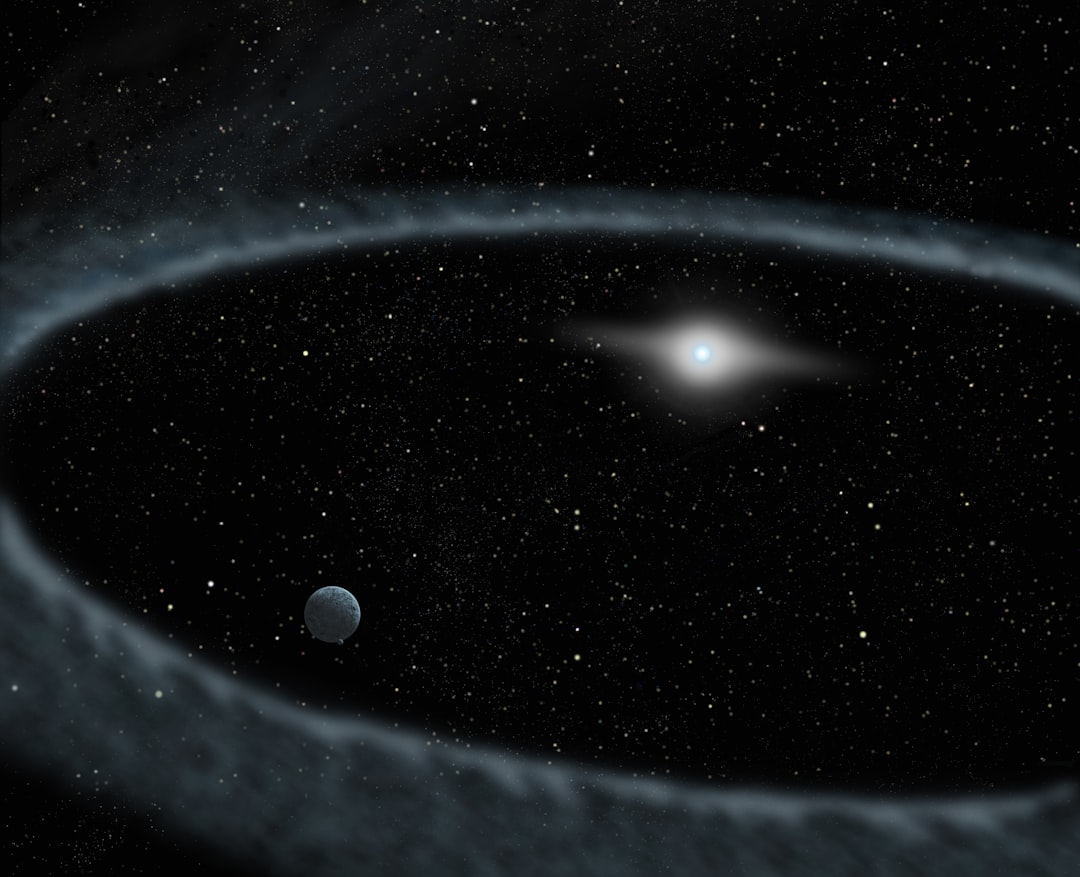
Proxima Centauri, the closest known star to the Sun, has captivated the imagination of astronomers and the general public alike. Located approximately 4.24 light-years away in the constellation of Centaurus, this red dwarf star is part of a three-star system that includes Alpha Centauri A and Alpha Centauri Its proximity to Earth makes it a prime candidate for study, as it offers insights into stellar evolution, planetary formation, and the potential for life beyond our solar system. The significance of Proxima Centauri extends beyond its mere distance; it serves as a gateway to understanding the cosmos and our place within it.
The allure of Proxima Centauri lies not only in its status as the nearest stellar neighbor but also in the mysteries it holds. As scientists continue to explore this celestial body, they uncover new information that challenges existing theories and expands the boundaries of human knowledge. The discovery of an exoplanet orbiting Proxima Centauri has further intensified interest in this star, prompting questions about the conditions that might support life and the implications for future interstellar exploration.
Key Takeaways
- Proxima Centauri is the closest known star to the Sun, located in the Alpha Centauri star system.
- Proxima Centauri was discovered in 1915 by Scottish astronomer Robert Innes.
- Characteristics of Proxima Centauri include being a red dwarf star with about 12% of the Sun’s mass and 0.17% of its luminosity.
- Proxima Centauri b is an exoplanet orbiting within the habitable zone of Proxima Centauri, making it a potential candidate for hosting life.
- The potential for life on Proxima Centauri b is a topic of ongoing research and speculation within the scientific community.
Discovery of Proxima Centauri
The discovery of Proxima Centauri dates back to 1915 when astronomer Robert Innes first identified it as a separate entity from the Alpha Centauri binary system. Innes was conducting research on the proper motion of stars when he noticed that this faint star was moving in a way that suggested it was much closer to Earth than previously thought. This revelation marked a significant milestone in astronomy, as it highlighted the existence of a nearby star that had gone unnoticed until then.
Innes’s discovery was not without its challenges. Proxima Centauri is a dim red dwarf star, making it difficult to observe with the technology available at the time. It wasn’t until later advancements in astronomical techniques that its true nature and characteristics could be studied in greater detail.
The star’s faintness and low luminosity meant that it was often overshadowed by its brighter companions, Alpha Centauri A and Nevertheless, Proxima Centauri’s identification opened new avenues for research and exploration, laying the groundwork for future studies of nearby stars and their potential planetary systems.
Characteristics of Proxima Centauri

Proxima Centauri is classified as a spectral type M5.5, which indicates that it is a red dwarf star with a relatively low mass and temperature compared to other types of stars. With a mass only about 12% that of the Sun and a surface temperature of approximately 3,050 Kelvin, Proxima Centauri is significantly cooler than our own star. Its low luminosity means that it emits only about 0.0017 times the brightness of the Sun, making it challenging to detect without specialized equipment.
Despite its diminutive size and brightness, Proxima Centauri exhibits fascinating characteristics that make it an intriguing subject for study. The star is known for its variability; it experiences flares that can increase its brightness temporarily, which can have implications for any planets orbiting within its habitable zone. Additionally, Proxima Centauri has a strong magnetic field, which is typical for red dwarfs and can influence the atmospheric conditions of its planets.
Understanding these characteristics is crucial for assessing the potential habitability of any exoplanets in its vicinity.
Proxima Centauri b: The Exoplanet
| Data/Metric | Value |
|---|---|
| Discovery Date | August 24, 2016 |
| Distance from Earth | 4.24 light years |
| Mass | 1.17 Earth masses |
| Radius | 1.1 times Earth’s radius |
| Surface Temperature | Estimated to be within the habitable zone |
In 2016, astronomers made a groundbreaking discovery when they announced the existence of Proxima Centauri b, an exoplanet orbiting within the habitable zone of its host star. This Earth-sized planet is located approximately 0.0485 astronomical units from Proxima Centauri, completing an orbit every 11.2 Earth days. The discovery was made using the radial velocity method, which detects variations in a star’s motion caused by the gravitational pull of an orbiting planet.
Proxima Centauri b has garnered significant attention due to its potential similarities to Earth. It is believed to have a rocky composition and may possess conditions suitable for liquid water to exist on its surface. The planet’s position within the habitable zone raises intriguing questions about its atmosphere and climate, making it a focal point for astrobiological research.
As scientists continue to analyze data from telescopes and space missions, they hope to uncover more about this enigmatic world and its capacity to support life.
Potential for Life on Proxima Centauri b
The potential for life on Proxima Centauri b has sparked considerable debate among scientists and researchers. Given its location within the habitable zone, there is a possibility that liquid water could exist on its surface, which is a critical factor for life as we know it. However, several challenges must be addressed before concluding that Proxima Centauri b could harbor life.
One significant concern is the stellar activity of Proxima Centauri itself. The star’s frequent flares could expose any atmosphere surrounding Proxima Centauri b to harmful radiation, potentially stripping away essential elements needed for life. Additionally, researchers are investigating whether the planet has retained an atmosphere capable of shielding its surface from such radiation.
Understanding these factors is crucial in assessing the planet’s habitability and determining whether it could support microbial life or even more complex organisms.
Proxima Centauri in Popular Culture

Proxima Centauri has not only captured the attention of scientists but has also made its mark in popular culture. Its status as the closest star system has inspired numerous works of fiction, ranging from literature to film and video games. Authors have often used Proxima Centauri as a backdrop for stories exploring themes of interstellar travel, alien life, and humanity’s quest for knowledge beyond Earth.
In films and television series, Proxima Centauri has been depicted as a destination for space exploration or as a home to extraterrestrial civilizations. These portrayals reflect humanity’s fascination with the cosmos and our desire to understand what lies beyond our own planet. As scientific discoveries continue to unfold regarding Proxima Centauri and its exoplanets, it is likely that this star will remain a prominent figure in science fiction narratives, inspiring future generations to dream about the possibilities of life among the stars.
Future Missions to Proxima Centauri
The exploration of Proxima Centauri and its planetary system is poised to advance significantly in the coming years through various planned missions and technological innovations. One notable initiative is the Breakthrough Starshot project, which aims to develop spacecraft capable of traveling at a fraction of the speed of light toward nearby stars, including Proxima Centauri. This ambitious endeavor seeks to send tiny, light-propelled probes that could reach their destination within a few decades.
In addition to Breakthrough Starshot, other missions are being proposed that focus on studying Proxima Centauri b directly. Future telescopes equipped with advanced imaging capabilities may allow scientists to analyze the planet’s atmosphere and surface conditions more closely. These missions hold the promise of providing invaluable data that could answer fundamental questions about habitability and the potential for life beyond Earth.
Proxima Centauri and the Search for Extraterrestrial Life
Proxima Centauri plays a pivotal role in humanity’s ongoing search for extraterrestrial life. Its proximity makes it an ideal target for astrobiological studies aimed at understanding whether life exists beyond our solar system. The discovery of Proxima Centauri b has intensified interest in this quest, as researchers explore not only the planet’s physical characteristics but also its potential biosignatures—indicators that could suggest biological activity.
The search for extraterrestrial intelligence (SETI) initiatives have also turned their attention toward Proxima Centauri, utilizing radio telescopes to listen for signals from potential alien civilizations residing within this nearby star system. The combination of advanced technology and growing knowledge about exoplanets positions Proxima Centauri as a focal point in humanity’s quest to answer one of the most profound questions: Are we alone in the universe?
Proxima Centauri’s Influence on Astrophysics
Proxima Centauri has significantly influenced various fields within astrophysics, particularly in understanding stellar evolution and planetary formation. As one of the most studied red dwarf stars, it provides valuable insights into how such stars behave over time and how they interact with their surrounding environments. The study of Proxima Centauri contributes to broader theories regarding stellar lifecycles and their impact on planetary systems.
Moreover, research on Proxima Centauri b has implications for theories related to habitability around different types of stars. By examining how planets orbiting red dwarfs can maintain stable climates and atmospheres despite their host stars’ variability, scientists can refine models predicting where life might exist elsewhere in the universe. This knowledge not only enhances understanding of our cosmic neighborhood but also informs future searches for habitable worlds beyond our solar system.
Proxima Centauri and the Possibility of Interstellar Travel
The proximity of Proxima Centauri has led to discussions about interstellar travel becoming more than just a theoretical concept. While current technology limits human exploration beyond our solar system, advancements in propulsion systems could one day make journeys to nearby stars feasible.
The idea of reaching Proxima Centauri raises numerous challenges, including technological limitations, resource requirements, and ethical considerations regarding long-duration space travel. However, as humanity continues to push boundaries in space exploration, discussions surrounding interstellar travel remain vibrant and hopeful. The prospect of visiting Proxima Centauri not only fuels scientific inquiry but also inspires dreams of what lies beyond our immediate reach.
The Significance of Proxima Centauri
Proxima Centauri stands as a beacon in humanity’s quest for knowledge about the universe and our place within it. Its status as the closest star system offers unparalleled opportunities for exploration and discovery, from studying its unique characteristics to investigating the potential habitability of its planets. The ongoing research surrounding Proxima Centauri b exemplifies humanity’s relentless pursuit of understanding life beyond Earth.
As scientists continue to unravel the mysteries surrounding this intriguing star system, they contribute not only to astrophysics but also to broader philosophical questions about existence and our connection to the cosmos. The significance of Proxima Centauri extends far beyond its physical distance; it represents hope, curiosity, and the enduring human spirit that seeks answers among the stars.
In recent years, the study of interstellar objects has gained significant attention, particularly with the discovery of ‘Oumuamua and 2I/Borisov, which are the first known interstellar objects to pass through our solar system. These discoveries have sparked a surge of interest in understanding the nature and origin of such objects.
For more information, you can read the article by visiting My Cosmic Ventures.
WATCH THIS! Scientists Found an Alien “Fingerprint” on 3I/ATLAS (The Nickel Anomaly)
FAQs
What is the closest interstellar object to Earth?
The closest interstellar object to Earth is the asteroid 1I/2017 U1, also known as ‘Oumuamua. It was discovered on October 19, 2017, by the Pan-STARRS1 telescope in Hawaii.
How close did ‘Oumuamua come to Earth?
‘Oumuamua came within about 15 million miles (24 million kilometers) of Earth in October 2017. This is relatively close in astronomical terms, but still a safe distance.
What is the significance of ‘Oumuamua being an interstellar object?
‘Oumuamua is significant because it is the first known interstellar object to pass through our solar system. Its unique characteristics and trajectory have provided scientists with valuable insights into the nature of interstellar objects.
What do we know about ‘Oumuamua’s origins?
‘Oumuamua’s origins are still not fully understood. It is believed to have originated from outside our solar system, possibly from a distant star system. Its unusual shape and trajectory have led to various theories about its composition and formation.
What have scientists learned from studying ‘Oumuamua?
Studying ‘Oumuamua has provided scientists with valuable data about the characteristics of interstellar objects. It has also sparked discussions about the potential for future interstellar missions and the search for other interstellar objects passing through our solar system.