The cosmos has long captivated humanity’s imagination, with its vastness and mysteries prompting countless inquiries about what lies beyond the confines of the solar system. Among the most intriguing phenomena are interstellar visitors—celestial objects that traverse the space between stars and occasionally make their way into the inner solar system. These visitors offer a unique glimpse into the conditions and materials present in other star systems, providing invaluable insights into the formation and evolution of planetary systems.
As astronomers continue to refine their observational techniques, the discovery of interstellar objects has become a focal point of research, igniting discussions about their origins, compositions, and potential implications for our understanding of the universe. The arrival of interstellar objects has not only expanded the catalog of known celestial bodies but has also raised profound questions about the nature of our galaxy. Each new discovery serves as a reminder of the dynamic and interconnected nature of the cosmos.
The study of these objects is not merely an academic pursuit; it holds the potential to reshape fundamental concepts in astrophysics and planetary science. As researchers delve deeper into the characteristics and behaviors of these enigmatic visitors, they uncover clues that may illuminate the processes that govern star formation, planetary development, and even the potential for life beyond Earth.
Key Takeaways
- Interstellar visitors are objects that originate from outside our solar system and travel through space.
- Oumuamua was the first interstellar object discovered in 2017, and it had a highly elongated shape.
- 3I/ATLAS is the second interstellar object discovered in 2019, and it exhibited a different trajectory and speed compared to Oumuamua.
- Size and shape comparisons between interstellar objects reveal their unique and diverse characteristics.
- Composition and surface features of interstellar objects provide valuable insights into their origins and evolution.
Oumuamua: The First Interstellar Object
In October 2017, astronomers made a groundbreaking discovery when they detected an object unlike any previously observed within our solar system. Named ‘Oumuamua, which means “scout” or “messenger” in Hawaiian, this elongated, cigar-shaped object was identified as the first known interstellar visitor. Its hyperbolic trajectory indicated that it originated from outside the solar system, sparking intense interest and debate among scientists and enthusiasts alike.
The object’s unusual shape and rapid speed raised questions about its composition and origin, leading to a flurry of research aimed at understanding its nature. ‘Oumuamua’s journey through the solar system was brief yet remarkable. As it approached the Sun, it exhibited unexpected acceleration, which could not be fully explained by gravitational forces alone.
This peculiar behavior led to various hypotheses regarding its composition, with some suggesting that it might be a fragment of a larger body or even an artificial construct. The lack of a visible cometary tail further complicated matters, as it defied conventional expectations for such objects. The mystery surrounding ‘Oumuamua has fueled ongoing discussions about the potential for other interstellar visitors and what they might reveal about the universe.
3I/ATLAS: The Second Interstellar Object
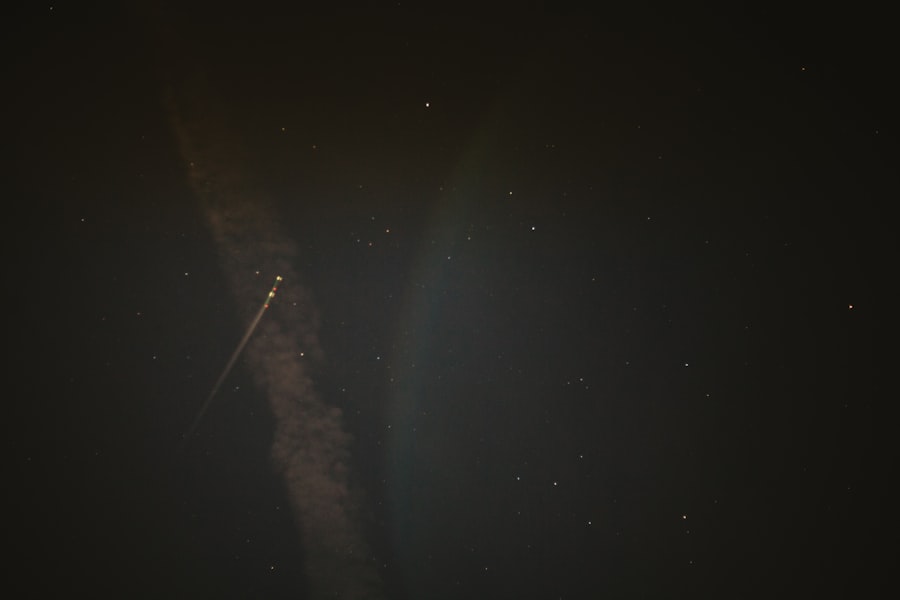
Following the historic encounter with ‘Oumuamua, astronomers were eager to identify additional interstellar objects that might pass through our solar system. Their efforts bore fruit in 2020 with the discovery of 3I/ATLAS, a second interstellar object that provided further opportunities for exploration and analysis. Detected by the Asteroid Terrestrial-impact Last Alert System (ATLAS), 3I/ATLAS exhibited characteristics similar to those of its predecessor but also presented unique features that distinguished it from ‘Oumuamua.
3I/ATLAS was observed to have a more pronounced cometary appearance, complete with a visible tail as it approached the Sun. This feature suggested that it was composed of volatile materials that were vaporizing due to solar heating. Unlike ‘Oumuamua, which had puzzled scientists with its lack of such features, 3I/ATLAS offered a more familiar profile for a celestial object.
Its trajectory indicated that it too originated from outside the solar system, reinforcing the notion that interstellar objects are not merely rare anomalies but rather part of a broader population of celestial bodies traversing the galaxy.
Size and Shape Comparison
| Object | Size | Shape |
|---|---|---|
| Circle | Equal radius | Round |
| Square | Equal sides | Four equal angles |
| Rectangle | Unequal sides | Four right angles |
| Triangle | Three sides | Three angles |
When comparing ‘Oumuamua and 3I/ATLAS, size and shape emerge as critical factors in understanding their respective natures. ‘Oumuamua’s elongated form was particularly striking; estimates suggested it measured approximately 800 meters in length and only 80 meters in width. This unusual aspect ratio led to speculation about its formation and whether it was a fragment of a larger body or an entirely unique entity.
The object’s shape may have influenced its trajectory and behavior as it interacted with solar radiation and gravitational forces. In contrast, 3I/ATLAS presented a more conventional appearance for a cometary body. While precise measurements were challenging due to its distance from Earth, initial observations indicated that it was smaller than ‘Oumuamua, with estimates placing its size at around 100 meters in diameter.
Its rounder shape and visible tail suggested a more typical cometary structure, which could provide insights into the processes that govern the formation of such objects in different environments across the galaxy.
Composition and Surface Features
The composition of interstellar objects is a key area of investigation for astronomers seeking to understand their origins and evolutionary histories. ‘Oumuamua’s surface features sparked considerable debate; its reddish hue suggested a composition rich in organic materials or metals, while its lack of a visible coma or tail led some researchers to propose that it might be composed of solid rock or metal rather than ice or gas. This ambiguity has prompted further studies aimed at determining whether ‘Oumuamua is representative of a new class of interstellar objects or if it is an outlier.
In contrast, 3I/ATLAS exhibited more familiar characteristics associated with comets. Observations revealed a distinct coma surrounding the nucleus, indicating that it was releasing gas and dust as it approached the Sun. This behavior suggested that 3I/ATLAS was composed of volatile materials such as water ice and carbon dioxide, which vaporized under solar heating.
The differences in composition between these two interstellar visitors highlight the diversity of materials present in different regions of space and underscore the importance of continued research into their properties.
Trajectory and Speed Analysis
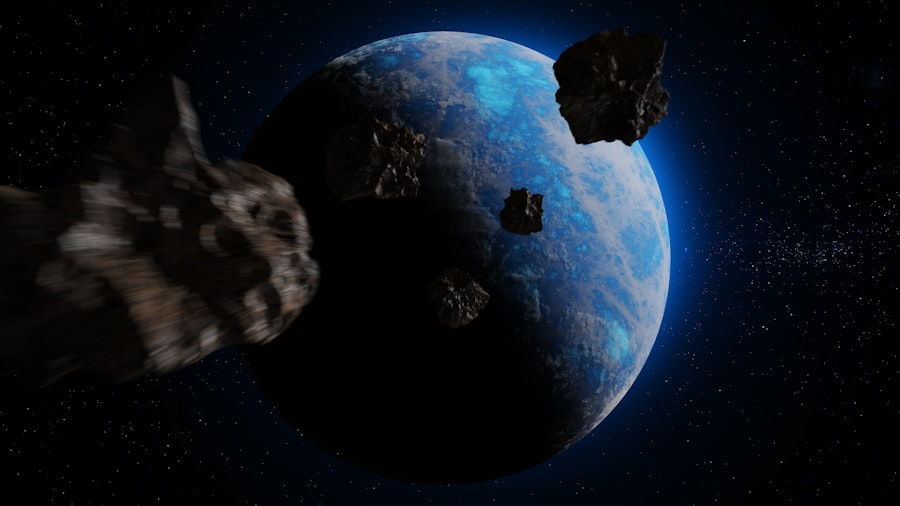
The trajectories of interstellar objects provide crucial information about their origins and interactions with celestial bodies. ‘Oumuamua’s hyperbolic path indicated that it was not bound by the gravitational pull of the Sun, confirming its status as an interstellar traveler. Its speed upon entering the solar system was remarkable; traveling at approximately 315,000 kilometers per hour (196,000 miles per hour), it quickly became apparent that this object was unlike any other previously observed.
3I/ATLAS also exhibited a hyperbolic trajectory but with notable differences in speed and approach angle. Its velocity upon detection was lower than that of ‘Oumuamua, suggesting different gravitational influences during its journey through space. The analysis of these trajectories not only aids in understanding how these objects navigate through the solar system but also provides insights into their potential origins within their respective star systems.
Origin and Journey through Space
Understanding the origins of interstellar objects is one of the most compelling aspects of their study. ‘Oumuamua’s trajectory suggested that it originated from the direction of the constellation Lyra, leading researchers to speculate about its home star system.
Similarly, 3I/ATLAS’s trajectory provided clues about its origin, although less is known about its specific home system compared to ‘Oumuamua. The discovery of both objects has led scientists to consider the possibility that many more interstellar visitors exist within our galaxy, each carrying unique stories about their formation and journeys through space. As telescopes become more advanced and capable of detecting fainter objects, researchers anticipate uncovering additional interstellar bodies that could further illuminate our understanding of galactic dynamics.
Scientific Discoveries and Research Findings
The discoveries surrounding ‘Oumuamua and 3I/ATLAS have spurred significant scientific inquiry across multiple disciplines within astrophysics. Researchers have employed various observational techniques to analyze these objects’ trajectories, compositions, and surface features, leading to new insights into their nature. For instance, studies on ‘Oumuamua have prompted discussions about potential new classes of celestial bodies that may exist beyond our solar system.
In addition to expanding knowledge about individual objects, these discoveries have also catalyzed advancements in observational technology and methodologies. The need for rapid response systems capable of detecting transient events has become increasingly apparent as astronomers seek to capture data on interstellar visitors before they exit the solar system. This urgency has led to collaborations between observatories worldwide, fostering an environment conducive to sharing data and resources in pursuit of common goals.
Potential Implications for Astrophysics
The implications of studying interstellar objects extend far beyond mere curiosity; they challenge existing paradigms within astrophysics and planetary science. The existence of bodies like ‘Oumuamua and 3I/ATLAS raises questions about how frequently such objects traverse our solar system and what this means for our understanding of galactic dynamics.
Moreover, these discoveries prompt considerations regarding the potential for life beyond Earth. If interstellar objects can carry organic materials or even microbial life across vast expanses of space, this opens up new avenues for exploring panspermia—the hypothesis that life can be distributed throughout the universe via comets or asteroids. As researchers continue to investigate these possibilities, they may uncover evidence that reshapes our understanding of life’s origins and distribution in the cosmos.
Future Missions and Observations
Looking ahead, astronomers are eager to enhance their capabilities for detecting and studying interstellar objects. Future missions may involve dedicated telescopes designed specifically for tracking transient events or capturing data on newly discovered visitors before they depart from our solar system. The development of advanced observational technologies will play a crucial role in expanding our knowledge base regarding these enigmatic bodies.
Additionally, international collaborations among space agencies could lead to ambitious missions aimed at intercepting or closely observing interstellar objects during their brief passages through our solar system. Such endeavors would provide unprecedented opportunities for direct analysis and could yield groundbreaking discoveries about the nature of these celestial travelers.
Conclusion and Implications for Understanding Interstellar Objects
The study of interstellar visitors like ‘Oumuamua and 3I/ATLAS represents a frontier in astrophysics that holds immense potential for expanding humanity’s understanding of the universe. These objects serve as messengers from distant star systems, offering insights into their origins, compositions, and behaviors as they traverse space. As researchers continue to investigate these phenomena, they are likely to uncover new knowledge that challenges existing theories while simultaneously opening doors to new questions.
Ultimately, interstellar objects remind humanity of its place within a vast cosmos filled with mysteries yet to be unraveled. Each discovery serves as a testament to human curiosity and ingenuity—a drive to explore beyond familiar horizons in search of answers about existence itself. As we stand on the brink of further exploration into this uncharted territory, one thing remains clear: interstellar visitors will continue to inspire awe and wonder for generations to come.
In the fascinating realm of interstellar objects, the differences between ‘Oumuamua and 3I/ATLAS have intrigued astronomers and sparked numerous discussions. While both are notable for being the first and second interstellar objects detected passing through our solar system, they exhibit distinct characteristics. ‘Oumuamua, discovered in 2017, has an elongated shape and exhibited non-gravitational acceleration, leading to various hypotheses about its nature. In contrast, 3I/ATLAS, identified in 2019, is more comet-like, with a visible coma and tail, suggesting a composition rich in volatile materials. For a deeper dive into the peculiarities of these interstellar visitors, you can explore a related article on the topic by visiting My Cosmic Ventures.
WATCH THIS! Scientists Found an Alien “Fingerprint” on 3I/ATLAS (The Nickel Anomaly)
FAQs
What is Oumuamua?
Oumuamua is the first known interstellar object to pass through our solar system. It was discovered in 2017 and is believed to have originated from outside our solar system.
What is 3I/ATLAS?
3I/ATLAS is another interstellar object that was discovered in 2019. It is also believed to have originated from outside our solar system.
What are the differences between Oumuamua and 3I/ATLAS?
One of the main differences between Oumuamua and 3I/ATLAS is their discovery dates. Oumuamua was discovered in 2017, while 3I/ATLAS was discovered in 2019. Additionally, Oumuamua was the first known interstellar object to pass through our solar system, while 3I/ATLAS is the second known interstellar object.
Are there any differences in the characteristics of Oumuamua and 3I/ATLAS?
Both Oumuamua and 3I/ATLAS have unique characteristics, but they also share some similarities. For example, they both have unusual shapes and trajectories, which has led to speculation about their origins and composition. However, further study is needed to fully understand their differences and similarities.