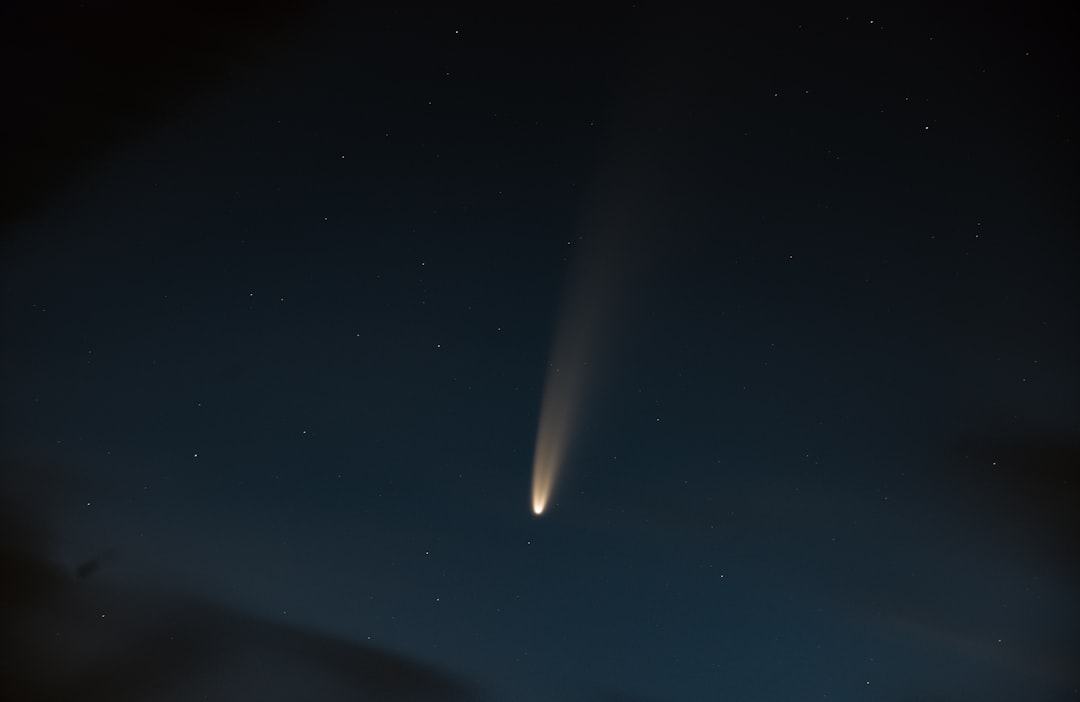
Comets have long fascinated humanity, capturing the imagination of astronomers and stargazers alike. These celestial bodies, often described as “dirty snowballs,” are composed of ice, dust, and rocky material.
Comet activity refers to the various phenomena that occur as a comet approaches the Sun, including the development of a coma and tail, which are the result of sublimation and the release of gas and dust. Understanding comet activity is crucial for comprehending not only the comets themselves but also the broader dynamics of our solar system. The study of comet activity has evolved significantly over the years, particularly with advancements in technology and space exploration.
Early observations were limited to naked-eye sightings, often leading to superstitions and myths. However, with the advent of telescopes and space missions, scientists have gained deeper insights into the behavior and composition of these enigmatic objects. As comets travel through the solar system, they provide valuable information about the early solar system’s conditions and the processes that shaped it.
This article will explore various aspects of comet activity, including their composition, the influence of solar radiation and gravitational forces, and their relationship with meteor showers.
Key Takeaways
- Comet activity is driven by the sublimation of volatile materials as the comet approaches the sun.
- Solar radiation plays a crucial role in driving comet activity by heating up the volatile materials and causing them to sublimate.
- Gravitational forces from the sun and other celestial bodies can influence the trajectory and activity of comets.
- The orbital dynamics of comets are closely related to their activity, with changes in orbit affecting the level of activity.
- Volatile sublimation is a key process in comet activity, where materials such as water, carbon dioxide, and ammonia turn from solid to gas.
- Dust and gas released from comets contribute to their activity and can form tails as they are pushed away by solar radiation.
- Comet activity is linked to meteor showers, as Earth passes through the debris left behind by comets during their orbits.
- Space missions have provided valuable insights into comet activity, with missions like Rosetta and Deep Impact studying comets up close.
- Understanding comet activity has implications for planetary science, shedding light on the formation and evolution of the solar system.
- Future research in comet activity aims to further unravel the mysteries of these celestial bodies and their impact on the solar system.
The Composition and Structure of Comets
Comets are primarily composed of a mixture of ices, dust, and rocky materials, which together form a nucleus that can range in size from a few hundred meters to tens of kilometers across. The nucleus is often surrounded by a cloud of gas and dust known as the coma, which can extend for thousands of kilometers into space. This coma forms when a comet approaches the Sun, causing the ices within the nucleus to sublimate—transitioning directly from solid to gas.
The composition of comets can vary significantly, with some containing more water ice, while others may have higher concentrations of carbon dioxide or ammonia. The structure of a comet is not uniform; it can exhibit a variety of features such as jets, which are streams of gas and dust ejected from the nucleus. These jets can create asymmetric shapes in the coma and influence the direction of the comet’s tail.
The tail itself is composed of two distinct parts: the ion tail, which is formed by charged particles that are pushed away from the comet by solar wind, and the dust tail, which is made up of larger particles that are affected by the comet’s motion through space. The interplay between these components creates the stunning visual displays that comets are known for.
The Role of Solar Radiation in Comet Activity
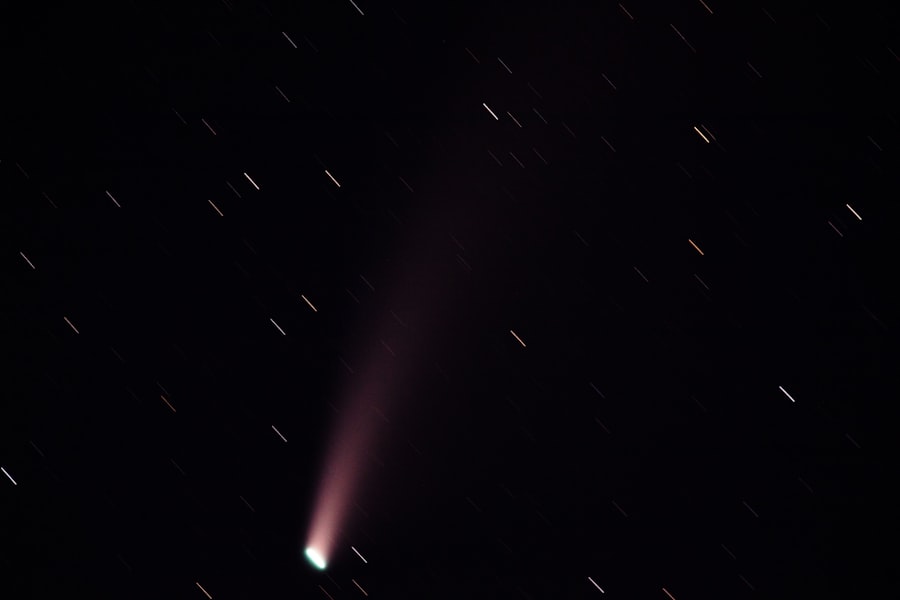
Solar radiation plays a pivotal role in driving comet activity. As a comet approaches the Sun, it experiences an increase in temperature that causes its icy components to vaporize. This process, known as sublimation, leads to the formation of the coma and tail.
The intensity of solar radiation varies depending on the distance from the Sun; thus, comets that venture closer experience more pronounced activity than those that remain farther away. This relationship highlights the dynamic nature of comets as they traverse their elliptical orbits. Moreover, solar radiation not only triggers sublimation but also influences the behavior of the gases released from the comet’s nucleus.
The interaction between solar wind—streams of charged particles emitted by the Sun—and the gases from the coma can create complex magnetic fields around the comet. These interactions can lead to phenomena such as ion tail formation, where charged particles are swept away from the comet in a direction opposite to that of the solar wind. Understanding these processes is essential for predicting comet behavior and assessing potential impacts on Earth.
The Influence of Gravitational Forces on Comet Activity
| Comet | Gravitational Force (N) | Activity Level |
|---|---|---|
| Halley’s Comet | 3.2 x 10^14 | High |
| Comet 67P/Churyumov-Gerasimenko | 1.2 x 10^13 | Low |
| Comet Hale-Bopp | 2.5 x 10^14 | Medium |
Gravitational forces exert a significant influence on comet activity, particularly during close encounters with larger celestial bodies such as planets. As comets travel through the solar system, they are subject to gravitational pulls that can alter their trajectories and affect their activity levels. For instance, when a comet passes near a planet, it may experience tidal forces that can lead to increased sublimation rates or even fragmentation of its nucleus.
These gravitational interactions can also result in changes to a comet’s orbit, potentially bringing it closer to the Sun or altering its path entirely. Such changes can lead to variations in activity levels over time. For example, a comet that has been relatively inactive may suddenly become more active if its orbit brings it into closer proximity to the Sun or if it encounters another celestial body that alters its trajectory.
This dynamic interplay between gravitational forces and comet activity underscores the complexity of their behavior within the solar system.
The Relationship Between Comet Activity and Orbital Dynamics
The relationship between comet activity and orbital dynamics is intricate and multifaceted. Comets typically follow highly elliptical orbits that bring them close to the Sun at perihelion and take them far into the outer reaches of the solar system at aphelion. This cyclical journey significantly influences their activity patterns.
During their approach to perihelion, comets often exhibit heightened activity due to increased solar heating, leading to enhanced sublimation and tail formation. Conversely, as comets move away from the Sun after perihelion, their activity tends to diminish as temperatures drop and sublimation rates decrease. This cyclical nature means that many comets have predictable periods of activity followed by extended dormancy.
Understanding these orbital dynamics is crucial for predicting when a comet will become active again and how its behavior may change over time. Additionally, studying these patterns can provide insights into the history and evolution of comets within our solar system.
The Impact of Volatile Sublimation on Comet Activity
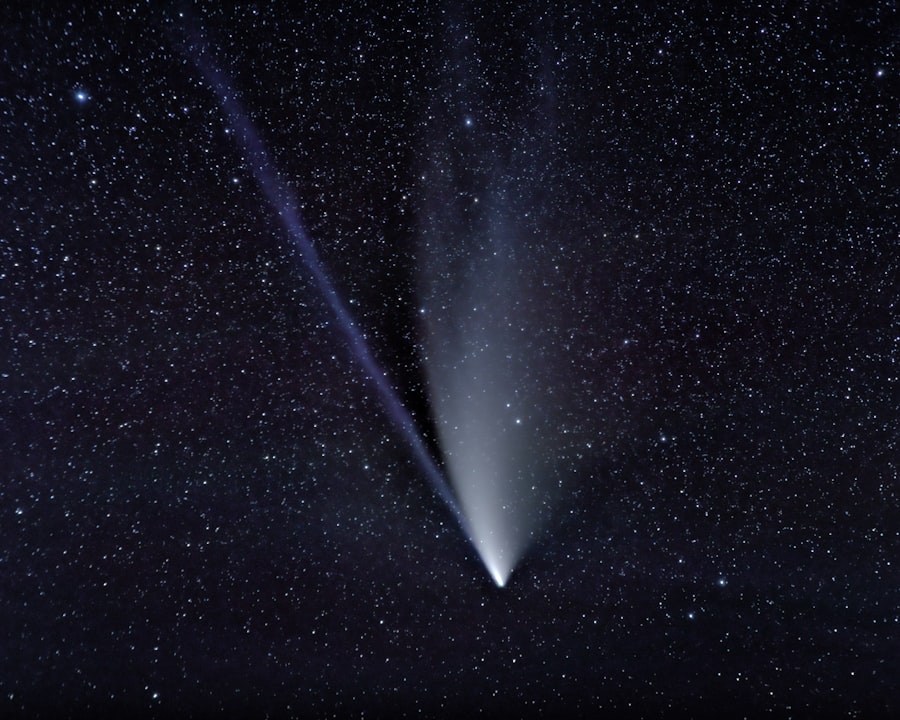
Volatile sublimation is a key process driving comet activity, as it directly influences how comets behave as they approach the Sun. When a comet nears our star, its surface temperature rises, causing ices such as water, carbon dioxide, and ammonia to vaporize rapidly. This process not only leads to the formation of a coma but also generates jets that can propel dust and gas away from the nucleus at high speeds.
The rate at which sublimation occurs depends on several factors, including the composition of the nucleus and its proximity to the Sun.
As ices sublimate, they can erode surface features and create new ones through processes such as outgassing and jet formation.
This continual reshaping can lead to significant changes in a comet’s appearance during its active phases. Furthermore, understanding how different volatiles behave under varying conditions can provide valuable insights into a comet’s history and its potential for future activity.
The Role of Dust and Gas in Comet Activity
Dust and gas are integral components of comet activity, contributing to both their visual spectacle and their physical behavior in space. As a comet approaches the Sun and undergoes sublimation, it releases not only gas but also fine particles of dust that have been trapped within its icy nucleus. This dust plays a crucial role in forming the visible tail that characterizes comets during their active phases.
The interaction between dust particles and solar radiation creates stunning displays that can be observed from Earth. Moreover, dust particles released from comets can have significant implications for planetary science. When these particles enter Earth’s atmosphere, they can contribute to meteor showers—an event where numerous meteors streak across the sky as they burn up upon entry.
Understanding how dust is released from comets helps scientists predict when meteor showers will occur and how intense they might be. Additionally, studying dust composition can provide insights into the primordial materials present in our solar system during its formation.
The Connection Between Comet Activity and Meteor Showers
The connection between comet activity and meteor showers is one of the most fascinating aspects of these celestial bodies. When comets pass close to Earth or other planets during their orbits, they leave behind trails of debris composed of dust and small particles. If Earth crosses one of these trails during its orbit around the Sun, it results in a meteor shower—a spectacular display where numerous meteors appear to radiate from a specific point in the sky.
Meteor showers are categorized based on their parent comets; for instance, the Perseids are associated with Comet Swift-Tuttle, while the Leonids originate from Comet Tempel-Tuttle. The intensity and frequency of meteor showers can vary depending on several factors, including how much debris a comet has shed during its active phases and how closely Earth intersects with its orbital path. Understanding this relationship not only enhances our appreciation for these celestial events but also provides valuable data for studying both comets and Earth’s atmosphere.
The Study of Comet Activity Through Space Missions
The study of comet activity has been greatly advanced by various space missions designed specifically to explore these enigmatic objects up close. Notable missions such as NASA’s Deep Impact and ESA’s Rosetta have provided unprecedented insights into comet composition, structure, and behavior during active phases. These missions have allowed scientists to observe comets in ways that were previously impossible, leading to groundbreaking discoveries about their physical properties and chemical makeup.
For instance, Rosetta’s rendezvous with Comet 67P/Churyumov-Gerasimenko enabled researchers to analyze surface features in detail while monitoring changes in activity as it approached perihelion. Such missions have not only enhanced understanding of individual comets but have also contributed to broader knowledge about how comets interact with solar radiation and gravitational forces throughout their journeys across space.
The Implications of Understanding Comet Activity for Planetary Science
Understanding comet activity has profound implications for planetary science as it sheds light on fundamental questions about our solar system’s formation and evolution. Comets are considered remnants from its early days—frozen time capsules containing primordial materials that date back billions of years. By studying their composition and behavior during active phases, scientists can gain insights into conditions present during the solar system’s infancy.
Furthermore, knowledge gained from studying comet activity can inform theories about planetary formation processes and even potential impacts on Earth itself. For example, understanding how comets interact with other celestial bodies can help assess risks associated with potential collisions or close encounters with Earth or other planets in our solar system.
Future Research Directions in Unlocking the Mystery of Comet Activity
As technology continues to advance, future research directions in unlocking the mysteries surrounding comet activity hold great promise for furthering scientific understanding. Upcoming missions aimed at exploring new comets or revisiting previously studied ones could yield valuable data regarding their behavior under varying conditions or during different phases of their orbits. Additionally, advancements in observational techniques—such as improved telescopes capable of capturing high-resolution images—will enhance our ability to monitor changes in comet activity over time.
Collaborative efforts among international space agencies may also lead to more comprehensive studies that integrate data from multiple missions for a holistic understanding of these fascinating celestial bodies. In conclusion, comprehending comet activity is essential not only for understanding these unique objects but also for gaining insights into broader planetary science concepts related to our solar system’s history and dynamics. As research continues to evolve through innovative missions and technological advancements, humanity stands poised on the brink of uncovering even more secrets hidden within these icy wanderers traversing our cosmic neighborhood.
In recent years, the study of comet activity has garnered significant attention from the scientific community, as researchers strive to understand the complex processes that govern these celestial bodies. A related article that delves into the intricacies of comet behavior can be found on My Cosmic Ventures. This article provides an in-depth analysis of the factors influencing comet activity, including solar radiation and gravitational interactions. For those interested in exploring this topic further, you can read more about it by visiting the following link: