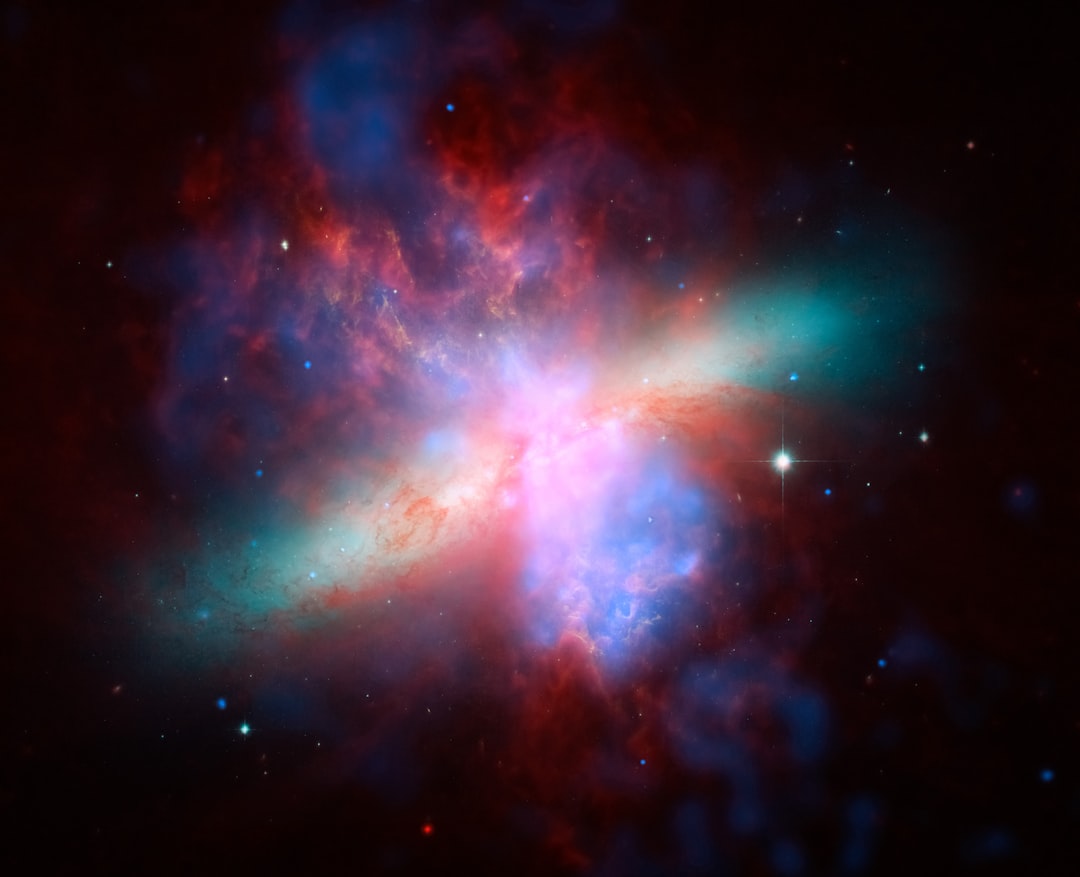
The universe, with its vastness and complexity, is a treasure trove of wonders that continually captivates the imagination of scientists and enthusiasts alike. Cosmic superlatives refer to the extreme characteristics of celestial bodies and phenomena that define the universe’s grandeur. From the largest galaxies to the most enigmatic black holes, these superlatives not only highlight the diversity of the cosmos but also challenge our understanding of physics and the fundamental laws governing existence.
As humanity’s quest for knowledge expands, so too does the list of cosmic extremes, revealing a universe that is both awe-inspiring and humbling. In this exploration of cosmic superlatives, one can delve into the remarkable features that set apart various celestial entities. Each category of superlative offers a glimpse into the intricate tapestry of the universe, showcasing the extremes of size, mass, temperature, and distance.
By examining these extraordinary characteristics, one can appreciate the scale and complexity of the cosmos, as well as the ongoing efforts to unravel its many mysteries. The journey through these cosmic extremes not only enriches our understanding of the universe but also ignites a sense of wonder about what lies beyond our planet.
Key Takeaways
- Introduction to Cosmic Superlatives:
- The universe is filled with extreme phenomena that push the boundaries of what we know and understand.
- The Largest Structures in the Universe:
- From galaxy clusters to superclusters, the universe is home to massive structures that boggle the mind.
- The Most Massive Objects in the Universe:
- Black holes and galaxy clusters are among the most massive objects in the universe, exerting immense gravitational forces.
- The Hottest and Brightest Stars:
- Some stars burn with such intensity that they are among the hottest and brightest objects in the universe.
- The Coldest and Darkest Places in the Universe:
- Deep space and the remnants of supernovae are among the coldest and darkest places in the universe, where temperatures approach absolute zero.
The Largest Structures in the Universe
Among the most astonishing features of the universe are its colossal structures, which dwarf even the most massive stars and galaxies. The largest known structure is the Hercules-Corona Borealis Great Wall, a vast galaxy filament that stretches over 10 billion light-years across. This immense formation is composed of thousands of galaxies bound together by gravity, forming a web-like structure that showcases the intricate organization of matter on a grand scale.
Such colossal formations challenge existing theories about the distribution of matter in the universe and raise questions about how these structures formed in the early stages of cosmic evolution. Another remarkable example is the Sloan Great Wall, which is a massive galaxy wall that spans approximately 1.37 billion light-years. This structure is a testament to the gravitational forces at play in the universe, as it consists of numerous galaxy clusters and superclusters that have coalesced over billions of years.
The study of these large-scale structures not only provides insights into the distribution of dark matter but also helps astronomers understand the evolution of galaxies and their interactions over cosmic time. As researchers continue to map these vast formations, they uncover new layers of complexity that deepen our understanding of the universe’s architecture.
The Most Massive Objects in the Universe
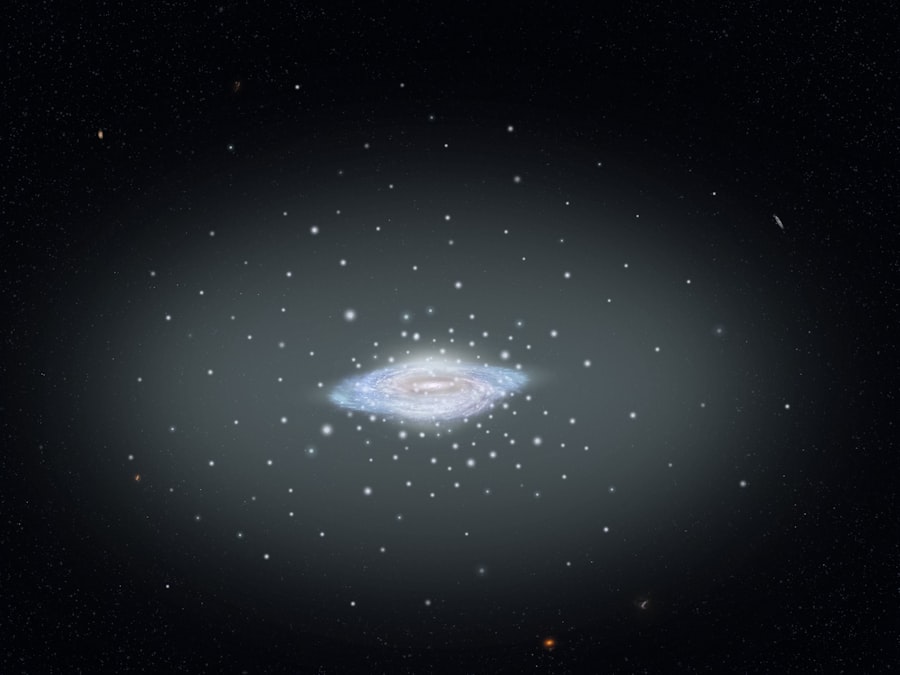
When it comes to mass, black holes reign supreme as some of the most massive objects known to exist. The supermassive black hole at the center of our Milky Way galaxy, known as Sagittarius A*, has a mass equivalent to approximately four million suns. However, even more astonishing are the black holes found in other galaxies, such as TON 618, which boasts an estimated mass of 66 billion solar masses.
These behemoths challenge our understanding of gravity and spacetime, as their immense gravitational pull can warp light itself, creating phenomena such as gravitational lensing. In addition to black holes, neutron stars also represent some of the densest objects in the universe. Formed from the remnants of supernova explosions, neutron stars are incredibly compact, with masses greater than that of our sun compressed into a sphere no larger than a city.
The density of these stars is so extreme that a sugar-cube-sized amount of neutron-star material would weigh about as much as all of humanity combined. The study of these massive objects not only sheds light on stellar evolution but also provides insights into fundamental physics, including the behavior of matter under extreme conditions.
The Hottest and Brightest Stars
| Star Name | Temperature (K) | Luminosity (L☉) |
|---|---|---|
| Sirius | 9,940 | 25.4 |
| Canopus | 7,420 | 13,500 |
| Alpha Centauri A | 5,790 | 1.52 |
| Rigel | 11,000 | 120,000 |
In terms of temperature and luminosity, certain stars stand out as cosmic giants. The hottest known star is WR 102, a Wolf-Rayet star located approximately 8,000 light-years away in the constellation Cygnus. With surface temperatures exceeding 210,000 degrees Celsius (over 378,000 degrees Fahrenheit), WR 102 emits an extraordinary amount of energy and radiation.
These stars are characterized by their rapid evolution and intense stellar winds, which can significantly influence their surrounding environments and contribute to the formation of new stars. On the other end of the spectrum lies UY Scuti, one of the largest stars known to humanity. This red supergiant star has a radius estimated to be over 1,700 times that of our sun and is located around 9,500 light-years away in the constellation Scutum.
Despite its immense size, UY Scuti is not as hot as WR 102; however, its sheer volume makes it one of the brightest stars visible from Earth. The study of such extreme stars provides valuable insights into stellar life cycles and helps astronomers understand how massive stars evolve and ultimately end their lives in spectacular supernova explosions.
The Coldest and Darkest Places in the Universe
While some regions of space are characterized by extreme heat and brightness, others are defined by their frigid temperatures and darkness. The Boomerang Nebula holds the title for being one of the coldest known places in the universe, with temperatures plummeting to just one degree above absolute zero (-273.15 degrees Celsius or -459.67 degrees Fahrenheit). This nebula is a protoplanetary nebula located about 5,000 light-years away from Earth and is in a phase where it is shedding its outer layers.
The extreme cold observed here provides valuable insights into the processes that govern star formation and molecular cloud dynamics. In contrast to these cold regions are vast voids in space that contain very few galaxies or matter—areas often referred to as cosmic deserts. One such void is the Bootes Void, which spans approximately 330 million light-years across and contains far fewer galaxies than expected based on typical cosmic density models.
These dark regions challenge astronomers’ understanding of cosmic structure formation and raise questions about how matter is distributed throughout the universe. Exploring these cold and dark areas not only enhances knowledge about cosmic evolution but also highlights the intricate balance between matter and voids in shaping the universe.
The Fastest Moving Objects in Space
Speed is another fascinating aspect when discussing cosmic superlatives. The fastest moving objects in space are typically found among certain astronomical phenomena such as pulsars and jets emitted by active galactic nuclei (AGN). For instance, some pulsars can rotate at astonishing speeds, with PSR J1748-2446ad being one of the fastest known, spinning at an incredible rate of 716 times per second.
These rapidly rotating neutron stars emit beams of radiation that sweep across space like lighthouse beams, allowing astronomers to detect them from vast distances. In addition to pulsars, relativistic jets produced by supermassive black holes are among the fastest-moving objects in the universe. These jets can travel at nearly the speed of light, carrying particles away from their source at incredible velocities.
For example, jets from quasars can extend thousands of light-years into space while maintaining speeds close to 99% that of light itself. The study of these high-velocity phenomena not only provides insights into black hole physics but also helps scientists understand how energy is transferred across vast distances in space.
The Most Energetic Events in the Universe
The universe is home to some of the most energetic events imaginable, with gamma-ray bursts (GRBs) standing out as one of the most powerful explosions observed in nature. These bursts release an extraordinary amount of energy in a fraction of a second—equivalent to what our sun will emit over its entire lifetime—making them detectable across vast cosmic distances. GRBs are believed to occur during catastrophic events such as supernova explosions or when neutron stars collide, resulting in intense radiation that can outshine entire galaxies for brief moments.
Another significant energetic event is a supernova explosion itself, which marks the death throes of massive stars. When a star exhausts its nuclear fuel, it undergoes a dramatic collapse followed by an explosive outburst that can briefly outshine entire galaxies. Supernovae play a crucial role in enriching interstellar space with heavy elements forged during stellar nucleosynthesis, contributing to the chemical evolution of galaxies and planetary systems.
Understanding these energetic events allows astronomers to piece together the life cycles of stars and their impact on galactic evolution.
The Oldest Objects in the Universe
The quest to uncover ancient celestial objects leads astronomers to some remarkable discoveries that provide insights into the early universe’s conditions.
” This ancient star is estimated to be around 13.7 billion years old—almost as old as the universe itself—and offers clues about stellar evolution during its formative years. Its age challenges existing models regarding stellar lifetimes and raises intriguing questions about how such ancient stars formed shortly after the Big Bang.
Another contender for ancient status includes globular clusters like M13 in Hercules or Omega Centauri, which contain some of the oldest stars known to exist. These clusters are tightly bound collections of stars that formed early in cosmic history and have remained relatively unchanged for billions of years. Studying these ancient objects allows astronomers to glean information about early star formation processes and provides context for understanding how galaxies evolved over time.
The Most Distant Objects in the Universe
As telescopes become more advanced, astronomers continue to push back the boundaries of what is known about distant celestial objects. One notable example is GN-z11, which holds the record for being one of the most distant galaxies ever observed, located approximately 13.4 billion light-years away from Earth. This galaxy existed just 400 million years after the Big Bang and provides valuable insights into galaxy formation during an era when the universe was still young.
In addition to distant galaxies, astronomers have also identified extremely distant quasars like ULAS J1120+0641, which is situated around 13 billion light-years away from Earth. Quasars are powered by supermassive black holes at their centers and emit tremendous amounts of energy as they consume surrounding material. Observing these distant objects allows scientists to study conditions in the early universe and understand how galaxies evolved over billions of years.
The Most Mysterious Phenomena in Space
The cosmos is filled with enigmatic phenomena that continue to baffle scientists and challenge existing theories about physics and cosmology. One such mystery is dark matter—an invisible substance that makes up approximately 27% of the universe’s total mass-energy content yet remains undetectable through conventional means. Its presence is inferred from gravitational effects on visible matter; however, its true nature remains elusive despite extensive research efforts.
Another intriguing phenomenon is dark energy—a mysterious force driving the accelerated expansion of the universe. Comprising about 68% of total energy density, dark energy’s properties are still poorly understood, leading to various hypotheses regarding its origin and implications for cosmic fate. As researchers delve deeper into these mysteries through observational studies and theoretical models, they hope to unlock answers that could reshape our understanding of fundamental physics.
The Endless Exploration of Cosmic Superlatives
The exploration of cosmic superlatives reveals a universe teeming with extremes that challenge human comprehension while igniting curiosity about what lies beyond our immediate experience. From colossal structures to enigmatic phenomena like dark matter and dark energy, each discovery adds another layer to humanity’s understanding of existence within this vast cosmos. As technology advances and observational techniques improve, astronomers will continue to uncover new wonders that redefine our place in this grand tapestry.
Ultimately, this journey through cosmic superlatives serves as a reminder that while much has been learned about our universe, countless mysteries remain unsolved—inviting future generations to embark on their own quests for knowledge and understanding amidst an ever-expanding frontier filled with awe-inspiring phenomena waiting to be discovered.
In the fascinating realm of cosmic superlatives, where the universe’s most extreme phenomena are explored, one can delve deeper into the subject by visiting a related article on My Cosmic Ventures. This platform offers a wealth of information on various astronomical topics, including the science behind cosmic superlatives. For those interested in expanding their knowledge, a particularly insightful article can be found on their website. To explore this further, check out the article on My Cosmic Ventures, where the mysteries of the universe are unraveled with engaging content and expert insights.
WATCH THIS! 🌌The Biggest Black Hole Is A LIE
FAQs
What is the science of cosmic superlatives?
The science of cosmic superlatives refers to the study of the most extreme and extraordinary phenomena in the universe, such as the largest stars, the most massive black holes, the brightest galaxies, and the most energetic cosmic events.
What are some examples of cosmic superlatives?
Examples of cosmic superlatives include the largest known star, UY Scuti; the most massive black hole, TON 618; the brightest galaxy, W2246-0526; and the most energetic cosmic event, gamma-ray bursts.
How do scientists study cosmic superlatives?
Scientists study cosmic superlatives using a variety of tools and techniques, including telescopes, space observatories, computer simulations, and mathematical models. They analyze data from these sources to understand the nature and behavior of these extreme cosmic phenomena.
Why is the study of cosmic superlatives important?
Studying cosmic superlatives helps scientists gain a deeper understanding of the fundamental processes and physical laws that govern the universe. It also provides insights into the evolution and behavior of celestial objects and phenomena, contributing to our overall knowledge of the cosmos.
What are some current areas of research in the science of cosmic superlatives?
Current areas of research in the science of cosmic superlatives include the search for even larger stars and more massive black holes, the investigation of ultra-bright and ultra-energetic galaxies, and the exploration of the most extreme cosmic events, such as supernovae and quasars.