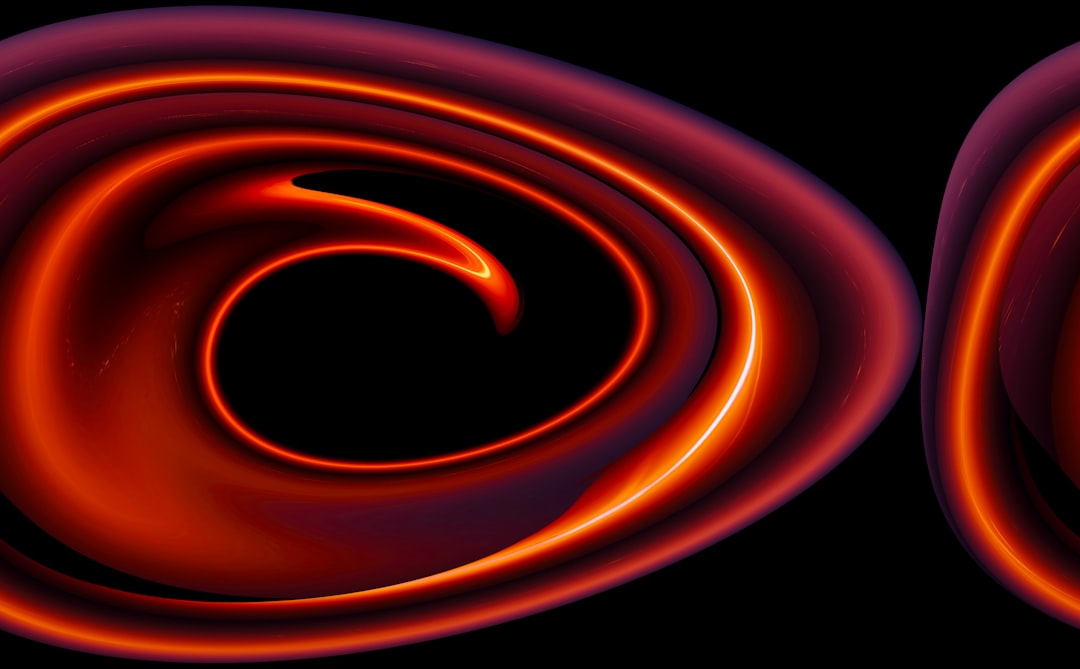
Black holes have long captivated the imagination of scientists and the public alike, serving as enigmatic entities that challenge the very fabric of our understanding of the universe. Defined as regions in space where the gravitational pull is so intense that nothing, not even light, can escape, black holes represent the ultimate consequence of gravitational collapse. Their existence was first predicted by Albert Einstein’s theory of general relativity, and since then, they have become a focal point of astrophysical research.
The study of black holes not only sheds light on the life cycles of stars but also offers insights into the fundamental laws governing the cosmos. The allure of black holes lies not only in their mysterious nature but also in their profound implications for cosmology and astrophysics. They serve as laboratories for testing theories of gravity and quantum mechanics, and their interactions with surrounding matter can lead to some of the most energetic phenomena in the universe.
As researchers delve deeper into the nature of black holes, they uncover a complex tapestry of relationships between these cosmic giants and the formation and evolution of galaxies, stars, and even the very structure of spacetime itself.
Key Takeaways
- Black holes are regions of spacetime where gravity is so strong that nothing, not even light, can escape from them.
- Black holes are thought to have formed in the early universe from the collapse of massive stars.
- Black holes can grow rapidly by accreting matter from their surroundings, such as gas and other stars.
- The rapid growth of black holes can be observed through the emission of high-energy radiation and the formation of quasars.
- Supermassive black holes play a crucial role in the formation and evolution of galaxies.
Formation of Black Holes in the Early Universe
The formation of black holes is a process that can be traced back to the early universe, shortly after the Big Bang. In those primordial moments, conditions were ripe for the creation of massive stars, which would eventually become black holes. As matter began to coalesce under the influence of gravity, dense regions formed, leading to the birth of stars.
When these massive stars exhausted their nuclear fuel, they underwent supernova explosions, leaving behind remnants that could collapse into black holes. There are two primary pathways through which black holes can form: stellar collapse and direct collapse. Stellar collapse occurs when a massive star runs out of fuel and succumbs to its own gravity, while direct collapse involves the rapid accumulation of mass in a dense region without forming a star first.
This latter process is particularly intriguing as it suggests that black holes could have formed much earlier in cosmic history than previously thought, potentially influencing the structure of galaxies from their inception.
The Rapid Growth of Black Holes
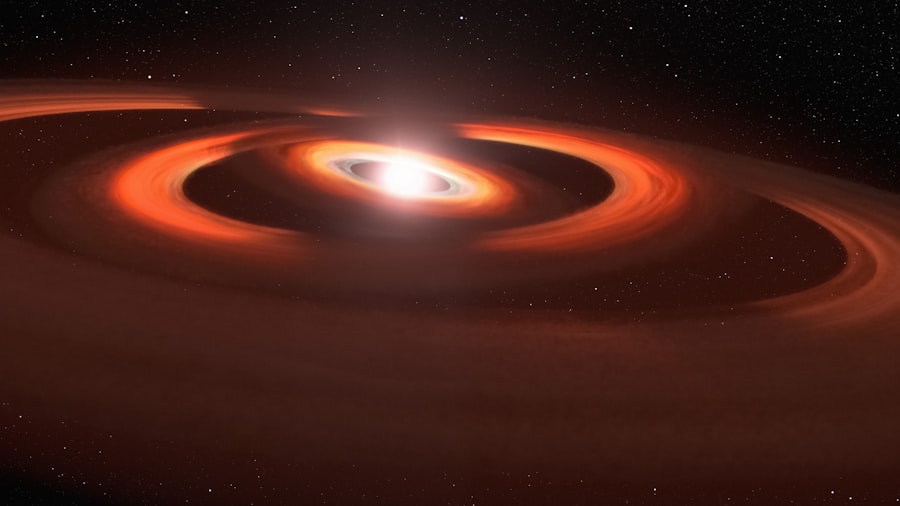
Once formed, black holes can experience rapid growth through a process known as accretion. This occurs when surrounding gas and dust fall into the black hole’s gravitational well, spiraling inward and heating up to extreme temperatures as they do so. The energy released during this process can be immense, often resulting in powerful jets and radiation that can outshine entire galaxies.
This rapid growth phase is crucial for understanding how black holes evolve over time and their role in shaping the universe. In addition to accretion, black holes can also grow by merging with other black holes or by capturing stars that venture too close to their event horizons. These interactions can lead to significant increases in mass and can even result in the formation of supermassive black holes, which are found at the centers of most galaxies.
Observing the Rapid Growth of Black Holes
| Black Hole Name | Mass (Solar Masses) | Distance from Earth (light years) |
|---|---|---|
| Cygnus X-1 | 15 | 6,070 |
| IC 10 X-1 | 24 | 1,800,000 |
| NGC 300 X-1 | 20 | 6,000,000 |
Observing black holes and their rapid growth presents unique challenges due to their nature; they do not emit light in a conventional sense. However, astronomers have developed innovative techniques to study them indirectly. One method involves observing the effects of a black hole’s gravity on nearby stars and gas clouds.
By tracking the motion of these objects, scientists can infer the presence and mass of a black hole. Another approach involves detecting the radiation emitted by material as it falls into a black hole. This radiation can span a wide range of wavelengths, from X-rays to radio waves, allowing astronomers to gather data across different parts of the electromagnetic spectrum.
Observatories equipped with advanced technology, such as the Event Horizon Telescope and space-based observatories like Chandra and Hubble, have provided invaluable insights into the behavior and growth patterns of black holes throughout cosmic history.
The Role of Supermassive Black Holes in Galaxy Formation
Supermassive black holes, which can contain millions to billions of times the mass of our Sun, play a pivotal role in galaxy formation and evolution. These colossal entities are typically found at the centers of galaxies, influencing their structure and dynamics. The presence of a supermassive black hole can regulate star formation within a galaxy by emitting powerful jets and winds that can either trigger or suppress star formation in surrounding regions.
The relationship between supermassive black holes and their host galaxies is often described as a co-evolutionary process. As galaxies merge and interact over cosmic time, their central black holes may also merge, leading to even larger supermassive black holes. This interplay between black hole growth and galaxy evolution is a key area of research, as it helps scientists understand how galaxies have evolved over billions of years and how they continue to change.
The Impact of Black Hole Growth on the Early Universe

The growth of black holes in the early universe had far-reaching consequences for cosmic evolution. As these entities grew rapidly through accretion and mergers, they contributed to the reionization of the universe—a period when neutral hydrogen atoms were ionized by intense radiation from early stars and black holes. This process played a crucial role in shaping the large-scale structure of the universe.
Moreover, the energy output from rapidly growing black holes likely influenced their surroundings significantly. The radiation emitted during accretion events could heat up nearby gas clouds, affecting star formation rates and altering the chemical composition of galaxies. Understanding these interactions is essential for piecing together the history of cosmic evolution and how it led to the universe we observe today.
The Relationship Between Black Holes and Dark Matter
The relationship between black holes and dark matter is an intriguing aspect of modern astrophysics. Dark matter, which makes up approximately 27% of the universe’s total mass-energy content, does not interact with electromagnetic forces, making it invisible to traditional observational techniques. However, its gravitational effects are evident in galaxy rotation curves and large-scale structures.
Some theories suggest that supermassive black holes may be linked to dark matter halos surrounding galaxies. These halos could provide the necessary gravitational framework for black holes to grow rapidly during their formative years. Additionally, understanding how dark matter influences black hole formation could offer insights into both phenomena’s roles in cosmic evolution.
Theoretical Models of Black Hole Growth in the Early Universe
Theoretical models play a crucial role in advancing our understanding of black hole growth during the early universe. Various simulations attempt to replicate conditions shortly after the Big Bang, exploring how density fluctuations could lead to black hole formation. These models consider factors such as gas dynamics, radiation pressure, and feedback mechanisms from stars and black holes themselves.
One prominent model suggests that primordial black holes could have formed from density fluctuations in the early universe before stars existed. These primordial entities would have different characteristics compared to stellar-mass black holes formed from collapsing stars. By studying these theoretical frameworks, researchers aim to bridge gaps in knowledge regarding how early black holes influenced cosmic evolution.
The Connection Between Black Hole Growth and Quasars
Quasars are among the most luminous objects in the universe and are powered by supermassive black holes actively accreting material. The connection between quasar activity and black hole growth is a focal point for astronomers seeking to understand how these massive entities evolve over time. During periods of intense accretion, quasars emit vast amounts of energy across multiple wavelengths, making them detectable across great distances.
The study of quasars provides valuable insights into the growth rates of supermassive black holes during different epochs in cosmic history. By examining quasar populations at various redshifts, researchers can trace how black hole growth has changed over time and its relationship with galaxy formation processes.
The Influence of Black Hole Growth on the Cosmic Microwave Background
The cosmic microwave background (CMB) represents a snapshot of the universe when it was just 380,000 years old, providing critical information about its early state. Recent studies suggest that growing black holes may have influenced fluctuations in the CMB through their energy output during periods of rapid growth. This influence could manifest as temperature variations or polarization patterns within the CMB.
Understanding how black hole growth impacts the CMB is an emerging field that could yield significant insights into both cosmology and astrophysics. By correlating observations from CMB studies with data on supermassive black holes, researchers hope to uncover new connections between these seemingly disparate aspects of cosmic evolution.
Future Research and Discoveries in Understanding Black Hole Growth
As technology advances and observational techniques improve, future research on black hole growth promises to unveil new discoveries that could reshape our understanding of these enigmatic entities. Upcoming missions such as NASA’s James Webb Space Telescope are expected to provide unprecedented views into distant galaxies and their central black holes, allowing scientists to probe their formation and growth more effectively than ever before.
As researchers explore these questions further, they will not only deepen our understanding of black holes but also illuminate broader aspects of our universe’s history and structure—ultimately bringing humanity closer to unraveling one of nature’s greatest mysteries.
In recent studies, scientists have been delving into the mysteries of black hole growth in the early universe, uncovering fascinating insights into how these cosmic giants formed and evolved. A related article on this topic can be found on My Cosmic Ventures, which explores the mechanisms that might have contributed to the rapid growth of black holes shortly after the Big Bang. This article provides a comprehensive overview of the latest research and theories in the field, shedding light on the complex processes that governed the early universe. For more detailed information, you can read the full article by visiting My Cosmic Ventures.
WATCH THIS! 🌌The Biggest Black Hole Is A LIE
FAQs
What are black holes?
Black holes are regions in space where the gravitational pull is so strong that nothing, not even light, can escape from them. They are formed when massive stars collapse at the end of their life cycle.
How do black holes grow in the early universe?
In the early universe, black holes grew through the accretion of gas and dust from their surrounding environment. As they consumed more matter, their mass and gravitational pull increased, allowing them to attract even more material.
What role do black holes play in the early universe?
Black holes are believed to have played a crucial role in the formation and evolution of galaxies in the early universe. Their gravitational influence on surrounding matter and their energy output from accretion processes have shaped the structure of the cosmos.
Can we observe black hole growth in the early universe?
Observing black hole growth in the early universe is challenging due to the vast distances involved and the limitations of current telescopes. However, astronomers use a variety of techniques, such as studying the radiation emitted from accreting material, to infer the presence and growth of black holes in the early universe.
What are the implications of studying black hole growth in the early universe?
Studying black hole growth in the early universe can provide valuable insights into the formation and evolution of galaxies, the interplay between black holes and their surrounding environment, and the overall structure of the cosmos. It also helps us understand the processes that shaped the universe as we know it today.