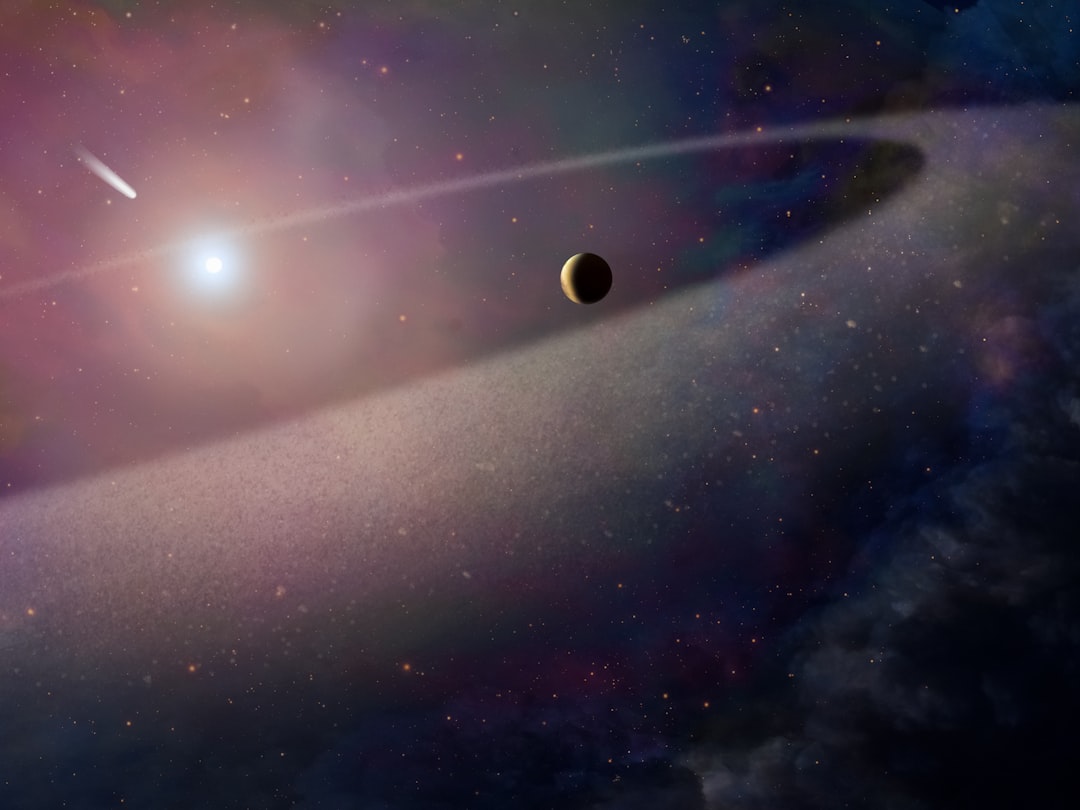
Interstellar space is not a vacuum of nothingness, but a fiercely unforgiving environment where existence is a constant, desperate struggle. The romanticized visions of sleek starships, benevolent alien encounters, and effortless journeys are a stark contrast to the brutal realities faced by any organism unfortunate enough to venture beyond the protective embrace of a planetary atmosphere. Survival on an interstellar scale is a test of resilience, ingenuity, and sheer luck against forces that are indifferent to life. This is not a frontier of boundless opportunity, but a gauntlet designed to extinguish all but the most adaptable.
The sheer emptiness of interstellar space is a pervasive and constant threat. It is an environment devoid of the comforting buffers that shield life on a planet. The absence of a substantial atmosphere means there is no protection from the relentless barrage of cosmic radiation. This radiation, composed of high-energy particles like protons and heavy ions, can wreak havoc on biological tissues at the cellular level. Imagine being perpetually exposed to a torrent of energetic bullets, capable of fracturing DNA, damaging cell membranes, and increasing the risk of mutations and cancer exponentially.
Cosmic Radiation and its Biological Impact
The universe is awash in charged particles originating from supernovae, active galactic nuclei, and other energetic cosmic phenomena. These particles travel at near light-speed, and when they encounter matter, they deposit their energy. For an unprotected organism, this means significant cellular damage. Even a short duration exposure at the wrong intensity can lead to acute radiation sickness, characterized by nausea, vomiting, and in severe cases, organ failure. Long-term exposure, even at lower doses, can lead to chronic health issues and a drastically shortened lifespan. The cumulative effects of this constant bombardment are a fundamental barrier to any biological entity attempting to traverse the interstellar medium.
The Spectrum of Radiation
Interstellar space is not uniform in its radiation profile. There are various forms of radiation, each with its own detrimental effects.
Energetic Particles (Protons, Alpha Particles, Heavy Ions)
These are the most damaging forms of radiation encountered. Their high mass and velocity allow them to penetrate deeply into tissues. Protons, the most abundant, are still highly energetic. Alpha particles, helium nuclei, are heavier and more damaging. Heavy ions, such as iron or carbon nuclei, possess even greater kinetic energy and can cause more extensive and irreparable damage to DNA.
Electromagnetic Radiation (X-rays, Gamma Rays)
While potentially less penetrating than high-energy particles when considering the vastness of interstellar distances, these forms of radiation are still incredibly energetic. X-rays and gamma rays are highly ionizing, meaning they have the capacity to strip electrons from atoms and molecules, initiating chain reactions of damage within cells.
The Vacuum of Space: A Different Kind of Pressure
The near-perfect vacuum of interstellar space is not just an absence of air; it’s an extreme pressure differential. On Earth, the atmospheric pressure is a constant, external force that our bodies are adapted to. In space, this external pressure is virtually non-existent.
Ebullism and its Consequences
This absence of pressure leads to a phenomenon known as ebullism. At extremely low pressures, liquids within the body, like blood and other bodily fluids, can begin to boil. This is not due to heat, but to the reduced atmospheric pressure lowering the boiling point of water. The rapid vaporization of fluids can cause swelling, tissue damage, and circulatory failure. The body would essentially inflate and burst from the inside if unprotected.
Decompression Sickness
Similar to the bends experienced by divers ascending too quickly from deep water, decompression sickness can occur in space. Dissolved gases in the body, primarily nitrogen, can come out of solution and form bubbles in the bloodstream and tissues. These bubbles can obstruct blood flow, cause severe pain, and lead to potentially fatal embolisms.
Extreme Temperatures: The Cold and the Heat
Interstellar space presents a dichotomy of extreme temperatures. While vast regions are incredibly cold, approaching absolute zero, proximity to stars, nebulae, or even residual heat from stellar formation can lead to intense localized heat.
The Crippling Cold
The average temperature of interstellar space is estimated to be around 2.7 Kelvin (-270.45 Celsius or -454.81 Fahrenheit), just above absolute zero. Any unprotected material or organism would rapidly lose heat to this frigid environment, leading to a complete cessation of biological processes. Freezing is not a question of if, but when.
Stellar Proximity and Radiation Heating
However, should an interstellar traveler venture too close to a star, they would face the opposite problem: intense heat. Coupled with the direct absorption of stellar radiation, this could lead to rapid overheating and incineration. The delicate balance that allows for life on Earth, with its regulated temperature, is utterly absent in the void.
Humans face numerous challenges when it comes to surviving in interstellar space, primarily due to the harsh environment and the limitations of our biological systems. For a deeper understanding of these challenges, you can explore the article on this topic at My Cosmic Ventures, which discusses the effects of radiation, the vacuum of space, and the vast distances that make interstellar travel a formidable endeavor for human beings.
Navigating the Unknown: The Challenges of Propulsion and Navigation
Reaching even the nearest star is an undertaking of unimaginable scale, demanding propulsion and navigation systems far beyond current capabilities. The distances involved are so vast that conventional notions of travel become meaningless.
The Tyranny of Distance: Light-Years of Emptiness
The nearest star system, Alpha Centauri, is over four light-years away. A light-year is the distance light travels in one year, approximately 9.46 trillion kilometers. Even if a spacecraft could travel at a significant fraction of the speed of light, reaching such a destination would still take years, decades, or even centuries.
The Relativistic Problem
At speeds approaching the speed of light, relativistic effects become significant. While time dilation might offer a perceived reduction in travel time for the occupants of a fast-moving spacecraft, the universe outside would continue to age normally. This means that for every year experienced by the travelers, decades or centuries could pass on their home planet, rendering return journeys impractical or even impossible.
The Need for Unprecedented Propulsion
Current propulsion methods, like chemical rockets, are woefully inadequate for interstellar travel. They rely on expelling mass to generate thrust, and the amount of propellant required to reach even a fraction of the speed of light would be astronomical, rendering the spacecraft itself unmanageably large and heavy.
Concepts Beyond Our Grasp
Concepts like warp drives, Alcubierre drives, or wormholes remain firmly in the realm of theoretical physics and science fiction. They propose bending spacetime to achieve faster-than-light travel, but the energy requirements and technological hurdles are so immense that they are not currently considered feasible. Fusion drives and antimatter propulsion offer more near-term, albeit still highly challenging, possibilities that could significantly reduce travel times, but still not eliminate the vastness of the void.
Precision Navigation in a Featureless Expanse
Navigating interstellar space requires an unprecedented level of precision. Without familiar landmarks, cosmic debris, or gravitational anchors to guide a journey, celestial bodies become the only reference points.
Stellar Drift and Celestial Mechanics
Stars themselves are not fixed points; they are in constant motion, orbiting the galactic center. Understanding these complex orbital mechanics and predicting their positions across vast timescales is crucial for accurate navigation. A slight miscalculation could result in a miss of the intended destination by millions of kilometers.
The Specter of Unseen Threats
Furthermore, interstellar space is not entirely empty. While vast regions are sparsely populated, there are nebulae, asteroid fields, and rogue celestial bodies that pose significant collision risks. Detecting these hazards at interstellar distances and having the ability to maneuver accordingly is a monumental challenge.
The Herculean Task of Life Support
Sustaining life in the absence of a planet’s natural support systems is perhaps the most complex and resource-intensive challenge of interstellar survival. Every breath, every drop of water, every calorie must be meticulously managed and, ideally, recycled.
Maintaining a Habitable Environment
The interior of a spacecraft must meticulously replicate Earth’s habitable conditions, a feat of engineering and resource management. This includes controlling atmospheric composition, pressure, temperature, and humidity.
Air Recycling and Carbon Dioxide Scrubbing
The air humans breathe will inevitably become laden with carbon dioxide and other byproducts of metabolism. Sophisticated life support systems are required to scrub carbon dioxide, replenish oxygen, and filter out other contaminants. The efficiency of these systems directly impacts the duration and feasibility of a mission.
Water Management: A Precious Commodity
Water is essential for life and also for many spacecraft systems. Recycling water from all possible sources – including human waste, sweat, and even atmospheric moisture – is critical. Even with advanced recycling, the initial supply of water would need to be immense, or alternative, sustainable sources would need to be identified and exploited.
Food Production: A Closed-Loop Ecosystem
Relying on stored food supplies for multi-generational interstellar journeys is not feasible. Therefore, spacecraft must essentially become self-sustaining ecosystems.
Hydroponics and Aeroponics
These soilless farming techniques are likely to be employed, allowing for the cultivation of crops in controlled environments. The challenge lies in optimizing growth conditions, managing nutrient cycles, and ensuring a diverse and balanced diet for the crew.
The Ethical and Practical Considerations of Artificial Food
While advanced food synthesis might be possible, the long-term psychological impact of consuming purely artificial food must be considered. Furthermore, the energy requirements for synthesizing complex organic molecules are substantial.
Psychological Well-being: The Human Factor
Beyond the physical needs, the mental and emotional well-being of individuals isolated in an enclosed environment for extended periods is a critical concern.
The Effects of Confinement and Isolation
Long-term confinement can lead to depression, anxiety, interpersonal conflicts, and a general deterioration of mental health. The lack of external stimuli and the relentless sameness of the environment can be profoundly detrimental.
The Need for Societal Structures and Purpose
Establishing clear social hierarchies, defined roles, and a strong sense of purpose for the mission is essential. Effective communication, conflict resolution strategies, and opportunities for recreation and personal growth must be integrated into the mission’s design.
The Specter of Mechanical Failure and Resource Depletion
Interstellar voyages would be incredibly long, pushing all technological systems to their absolute limits, and then some. The potential for mechanical failure is ever-present, and the consequences are often catastrophic when resources for repair and replenishment are scarce.
The Fragility of Technology in the Void
Spacecraft are complex machines, subjected to constant stress from radiation, temperature fluctuations, and micrometeoroid impacts. Even the most robust systems are susceptible to wear and tear.
The Absence of Easy Repairs
On Earth, a malfunctioning piece of equipment can often be relatively easily replaced or repaired with readily available parts and tools. In interstellar space, specialized tools, spare parts, and expertise would be crucial. The ability to fabricate complex components on demand using 3D printing or similar technologies would be paramount.
The Cascade Effect of Failure
A single component failure could trigger a cascade of other problems, leading to the malfunction of critical systems like life support, navigation, or propulsion. The ability to isolate failures and implement redundant systems is key, but even redundancy has its limits.
The Finite Nature of Resources
Every resource on an interstellar spacecraft – fuel, water, air, spare parts, even the food grown – is finite. The longer the journey, the more critical the conservation and efficient utilization of these resources becomes.
Fuel Consumption and the Interstellar Dilemma
Even with advanced propulsion, fuel is a significant constraint. Interstellar journeys are measured in light-years, and the fuel required for acceleration, deceleration, and course corrections would be immense. Running out of fuel in the vastness of space is a death sentence.
Material Degradation and Obsolescence
Materials degrade over time, especially under the harsh conditions of space. Components can become brittle, corrode, or lose their effectiveness. The risk of obsolescence, where technology becomes outdated and difficult to repair due to a lack of compatible parts, is also a significant concern for extremely long missions.
Humans face numerous challenges when it comes to surviving in interstellar space, primarily due to the harsh environment and lack of essential resources. For a deeper understanding of these challenges, you can explore an insightful article that discusses the various factors affecting human survival beyond our solar system. This article highlights the dangers of radiation, the absence of breathable air, and the immense distances involved. To learn more about these critical issues, check out this related article that delves into the complexities of space travel and human limitations.
The Biological Imperative: Adaptation and Evolution
| Reason | Description |
|---|---|
| Lack of Oxygen | Interstellar space is a vacuum with virtually no atmosphere, so there is no oxygen to breathe. |
| Radiation Exposure | Interstellar space is filled with high levels of cosmic radiation, which can be harmful to human cells and DNA. |
| Extreme Temperatures | Interstellar space can have extremely low temperatures close to absolute zero, making it impossible for humans to survive without proper protection. |
| Lack of Resources | Interstellar space lacks the necessary resources such as water, food, and shelter for human survival. |
| Isolation | Interstellar space is vast and empty, making it impossible for humans to receive help or support in case of emergencies. |
For life to truly conquer interstellar space, it must transcend its terrestrial origins and embrace the possibility of radical adaptation, potentially leading to evolutionary divergence.
The Limits of Earth-Based Biology
The physiology of terrestrial life, developed over billions of years in a specific planetary environment, is ill-suited for the rigors of interstellar travel. The radiation, the vacuum, the temperature extremes – all are mortal threats.
Genetic Engineering and Biological Augmentation
futuro humans or other life forms undertaking interstellar journeys may need to undergo significant genetic modification. This could involve enhancing radiation resistance, improving metabolic efficiency, or even developing entirely new sensory organs. The ethical implications of such modifications are profound and require careful consideration.
Artificial Life and Synthetic Organisms
The creation of artificial life forms or highly specialized synthetic organisms designed for specific interstellar roles might be a more practical solution. These entities could be engineered to withstand the harshness of space, perform complex tasks, and even reproduce in extraterrestrial environments, freeing biological life from some of its inherent limitations.
The Concept of Tardigrades as Inspiration
The humble tardigrade, or water bear, offers a glimpse into the potential for extreme resilience. These microscopic creatures can survive extreme dehydration, radiation, vacuum, and temperature fluctuations by entering a state of cryptobiosis. While not a direct solution for complex life, their biological mechanisms represent a frontier of research for enhancing survival in hostile environments.
Long-Term Evolutionary Pressures
Should life persist in interstellar space for generations, the selective pressures would inevitably lead to new forms of life. Evolution would favor traits that enhance survival in this unique cosmic arena. This could involve changes in body plan, metabolism, reproductive strategies, and even the development of collective consciousness or symbiotic relationships with technology. The journey through interstellar space is not merely a physical one; it is a crucible that forges new definitions of life itself.
FAQs
1. What are the main challenges of surviving interstellar space?
Interstellar space presents numerous challenges for human survival, including extreme cold temperatures, lack of breathable air, and exposure to high levels of radiation.
2. Can humans survive the vacuum of space?
While humans can survive in the vacuum of space for a short period of time with the proper equipment, the conditions in interstellar space, such as lack of oxygen and extreme temperatures, make long-term survival impossible without advanced technology.
3. How does radiation in interstellar space affect human health?
Interstellar space is filled with high levels of cosmic radiation, which can cause severe damage to human cells and DNA, leading to increased risk of cancer and other health problems.
4. What are the temperature extremes in interstellar space?
Interstellar space is extremely cold, with temperatures close to absolute zero (-273 degrees Celsius or -459 degrees Fahrenheit), making it impossible for humans to survive without adequate protection and heating systems.
5. Are there any potential technologies that could enable human survival in interstellar space?
Scientists are researching potential technologies, such as advanced spacecraft with radiation shielding, artificial gravity systems, and sustainable life support systems, that could potentially enable human survival in interstellar space in the future.