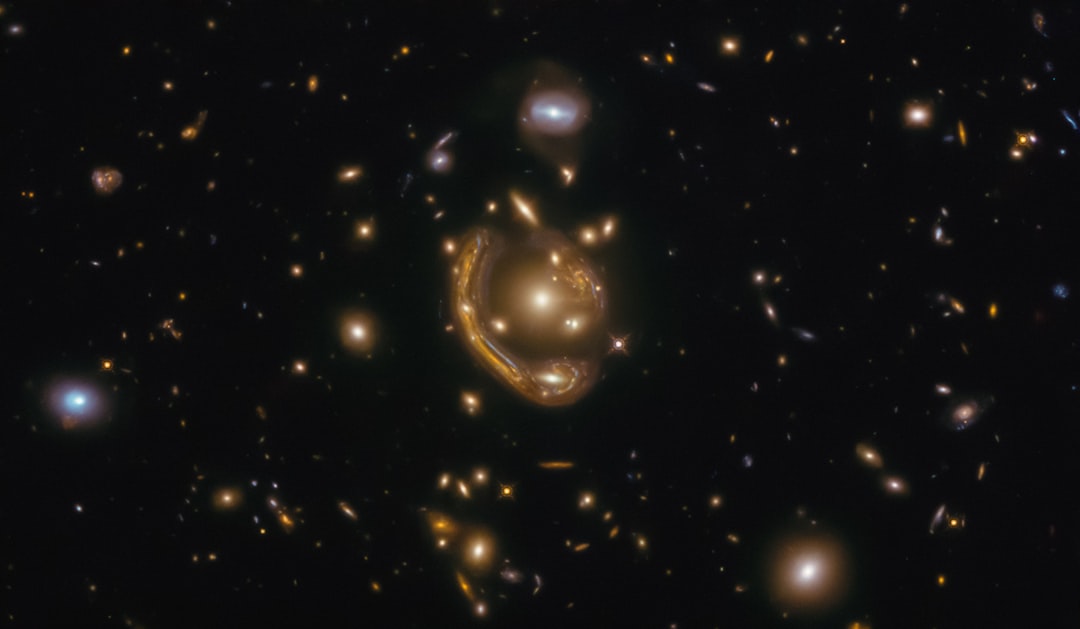
The question of whether the universe is compartmentalized by design is a profound one, touching on fundamental aspects of cosmology, physics, and even philosophy. It probes the very structure of reality, suggesting that what we observe might not be a seamless, all-encompassing whole, but rather a collection of distinct, perhaps even intentionally separated, domains. This article will explore various perspectives on this notion, considering scientific theories and philosophical implications without resorting to overly optimistic or deferential language.
The idea of compartmentalization, in a universal context, can manifest in several ways. It might refer to the observed separation of fundamental forces, the distinctness of spacetime regions, or even the conceptual boundaries we impose through our understanding of physics. The “by design” aspect then introduces intentionality, implying an architect or organizing principle behind this putative fragmentation.
The universe, as we currently understand it, is not a monolithic entity. Observations and theoretical frameworks point to significant divisions and unique characteristics in different regions and at different scales. Examining these perceived separations is the first step in assessing whether they suggest a deliberate compartmentalization.
The Four Fundamental Forces: A Case Study in Separation
Perhaps the most compelling evidence for inherent separation within the universe comes from the four fundamental forces: gravity, electromagnetism, the strong nuclear force, and the weak nuclear force. These forces govern all interactions and phenomena, yet they operate under vastly different principles and at distinct scales.
Gravity’s Dominion: The Large-Scale Architect
Gravity, described by Einstein’s theory of general relativity, is the force responsible for the large-scale structure of the cosmos. It binds planets to stars, stars to galaxies, and galaxies to clusters. Its weakness at the atomic level and its long-range influence make it unique. It is the dominant force in shaping the visible universe. The theories of gravity currently in vogue do not, however, explain its unification with the other fundamental forces at higher energy scales.
Electromagnetism: The Realm of Charged Particles
Electromagnetism governs interactions between electrically charged particles. It is responsible for the chemistry of matter, light, and all forms of electromagnetic radiation. While it has an infinite range, its strength diminishes with distance, and it is effectively screened by intervening matter. Its distinct mathematical description from gravity is a fundamental aspect of our current understanding of physics.
The Nuclear Forces: Short-Range Enigmas
The strong and weak nuclear forces are responsible for the structure of atomic nuclei and the processes of radioactive decay, respectively. They operate only over incredibly short distances, effectively confining their influence to the subatomic realm. Their inherent differences from gravity and electromagnetism, and from each other, present a significant challenge to a unified theory of physics.
The fact that these forces are described by distinct mathematical frameworks and operate under different conditions, rather than being unified into a single, all-encompassing interaction, could be interpreted as a form of compartmentalization. The question then arises: is this separation a natural consequence of cosmic evolution, or does it point to a more deliberate arrangement?
Spacetime: Not Uniform, But Fragmented?
The concept of spacetime, the four-dimensional fabric of the universe, also exhibits properties that might be construed as compartmentalization. While relativity describes spacetime as a continuous manifold, modern physics, particularly quantum mechanics, introduces phenomena that suggest localized or granular behavior.
Quantum Foam and Granularity: The Microscopic Divide
At the Planck scale, the smallest theoretically possible length, spacetime is predicted to be a turbulent “quantum foam.” This implies that the smooth, continuous nature of spacetime breaks down, potentially leading to a granular or discrete structure. If spacetime itself is not uniform but inherently choppy at its most fundamental level, this could be seen as a form of partitioning at the smallest scales.
Black Holes: Singularities as Cosmic Enclaves
Black holes represent extreme examples of spacetime distortion. Their event horizons act as one-way membranes, preventing anything, including information, from escaping. The singularity at the heart of a black hole represents a point where our current understanding of physics breaks down. Some theories suggest that the interior of a black hole could be a separate universe or a distinct spacetime region, effectively creating an isolated “compartment” within the larger cosmos.
The Horizon Problem: A Question of Cosmic Cohesion
The “horizon problem” in cosmology refers to the observation that widely separated regions of the observable universe have remarkably similar temperatures, despite having no causal connection in the early universe. This homogeneity suggests that these regions must have been in thermal contact at some point, which is difficult to explain within standard cosmological models without invoking a period of rapid expansion known as inflation. The very existence of such a problem highlights a potential disjunction in how different parts of the universe evolved and interacted.
The idea that spacetime might not be a perfectly integrated whole, but rather exhibits discontinuities or distinct regions with unique properties, fuels the notion of compartmentalization. The “by design” aspect would then suggest that these apparent breaks or isolated domains were intentionally created.
The question of whether the universe is compartmentalized by design has intrigued scientists and philosophers alike, prompting discussions about the nature of reality and existence. A related article that delves deeper into this topic can be found at My Cosmic Ventures, where various theories and perspectives are explored, offering insights into the potential structures and patterns that govern the cosmos.
Theoretical Frameworks Suggesting Partitioning
Beyond observational evidence, theoretical physics offers concepts that hint at a universe structured in distinct, possibly self-contained, domains. These frameworks, while speculative, provide intellectual scaffolding for the idea of cosmic compartmentalization.
The Multiverse Hypothesis: Islands of Reality
The multiverse hypothesis, in its various forms, directly proposes the existence of multiple universes, each potentially governed by different physical laws or constants. This is perhaps the most direct conceptualization of a compartmentalized universe.
Inflationary Multiverse: Bubbles of Existence
Cosmic inflation, the rapid expansion of the early universe, can lead to the formation of “bubble universes.” In this scenario, inflation might not have ended everywhere simultaneously. Regions where inflation continues could spawn new universes, each arising from a separate inflationary epoch and potentially possessing different physical properties. This creates an infinite landscape of distinct, causally disconnected universes.
String Theory and Brane Worlds: Intersecting Dimensions
String theory and its extensions, such as M-theory, suggest that our universe might exist on a “brane” (a multidimensional membrane) embedded within a higher-dimensional space known as the “bulk.” Other branes, representing other universes, could exist parallel to ours, potentially interacting weakly or not at all. This model inherently suggests a universe divided into multiple, potentially coexisting, but separated realities.
The Mathematical Universe Hypothesis: Reality as Pure Structure
The “mathematical universe hypothesis,” proposed by Max Tegmark, posits that all mathematically possible structures exist physically. This implies an ultimate reality that encompasses an unimaginably vast set of distinct universes, each defined by its own unique set of mathematical laws and properties. If true, this would represent the most profound form of compartmentalization imaginable, where existence itself is partitioned into discrete mathematical frameworks.
The appeal of these multiverse models lies in their ability to address certain cosmological puzzles, such as the fine-tuning of physical constants. However, they also introduce the concept of distinct, separate realities, directly supporting the idea of a compartmentalized universe. The “by design” aspect in this context could refer to the fundamental laws that govern the creation and characteristics of these separate universes.
Quantum Entanglement and Non-Locality: Connected Yet Apart?
Quantum mechanics presents a peculiar phenomenon: entanglement. Entangled particles remain connected in such a way that measuring the state of one instantaneously influences the state of the other, regardless of the distance separating them. This apparent connection across vast distances has led some to ponder whether the universe is, in some ways, less compartmentalized than our classical intuition suggests. However, it also raises questions about information transfer and the nature of separation.
The “Spooky Action at a Distance”: A Quantum Link
Einstein famously referred to quantum entanglement as “spooky action at a distance.” While this phenomenon demonstrates a correlation between distant particles, it does not allow for faster-than-light communication. The information about the measurement outcome is not transmitted; rather, the correlation is pre-existing. This paradoxically highlights both a deep interconnectedness and a fundamental limitation in what constitutes “separation” at the quantum level.
Information Paradoxes: Black Holes and the Loss of Uniqueness
Quantum information paradoxes, such as the black hole information paradox, touch upon the nature of information and its potential loss or compartmentalization. If information falling into a black hole is truly lost, as classical general relativity suggests, it violates a fundamental principle of quantum mechanics. Proposed solutions, such as Hawking radiation or the holographic principle, attempt to reconcile these seemingly disparate descriptions of reality. The very existence of these paradoxes implies that our understanding of how information is handled – whether it is preserved, transformed, or compartmentalized – is incomplete.
While entanglement suggests a non-local interconnectedness, the fundamental inability to use it for communication implies a practical form of separation. The paradoxes further highlight how our current theories struggle to reconcile seemingly distinct domains of physics, potentially hinting at deeper underlying principles of compartmentalization or unification.
Philosophical and Theological Considerations: The “Design” Element
The most contentious aspect of the proposition “Is the Universe Compartmentalized by Design?” is the “by design” element. This introduces intentionality, suggesting a creator or organizing intelligence. Exploring this aspect requires venturing into philosophical and, for some, theological territory.
The Argument from Fine-Tuning: A Deliberate Arrangement?
The anthropic principle, particularly its strong form, suggests that the physical constants and laws of the universe are remarkably fine-tuned for the existence of life. If even slight variations in these constants were made, life as we know it would be impossible. This observation has led some to argue that the universe must have been designed with such parameters precisely to allow for conscious observers.
Weak vs. Strong Anthropic Principle: Observation and Inference
The weak anthropic principle states that the observed values of physical constants are constrained by the fact that observers exist to measure them. The strong anthropic principle takes this further, suggesting that the universe must have properties that allow life to develop within it. The latter is often interpreted as evidence for design.
Design Inference: From Complexity to Creator
The argument for design often proceeds by analogy. Complex systems in nature, like biological organisms, are generally understood to arise from intelligent design. Extrapolating this, some argue that the immense complexity and apparent fine-tuning of the universe point to an intelligent designer.
The “compartmentalization” aspect within a design framework could then be seen as the intentional separation of physical laws, fundamental forces, or even different regions of spacetime to create specific conditions or enable particular outcomes. For example, distinct physical laws in different “compartments” might be seen as deliberate choices by the designer.
The Problem of Evil and Suffering: A Flawed Design?
If the universe is compartmentalized by design, an important challenge arises: the problem of evil and suffering. If a benevolent and omnipotent designer created the universe, why does it contain so much pain, injustice, and natural disaster? This question is particularly relevant if the compartmentalization itself contributes to these issues.
Natural Theology: Attempts at Reconciliation
Natural theology attempts to understand God’s existence and attributes through reason and observation of the natural world. Proponents of design have offered various explanations for suffering within a designed universe, such as free will, the necessity of natural laws that can lead to harm, or a larger, cosmic purpose that is beyond human comprehension.
Evolutionary vs. Intelligent Design Debates: Different Explanations for Complexity
The debate between evolutionary biology and intelligent design highlights different interpretations of complexity. Evolution offers a mechanism for gradual development and adaptation without invoking a designer. Intelligent design, conversely, posits irreducible complexity in certain biological systems as evidence for direct intervention. Applying this to cosmic compartmentalization, one could ask whether the apparent separations are products of a grand evolutionary-like cosmic process or deliberate, discrete acts of creation.
The philosophical implication of “by design” necessitates grappling with the implications of intentionality, purpose, and the potential flaws within any proposed design. If the universe is intentionally compartmentalized, the nature of that design and the intentions behind it become central.
The Limits of Human Comprehension: Our Perspective on Boundaries
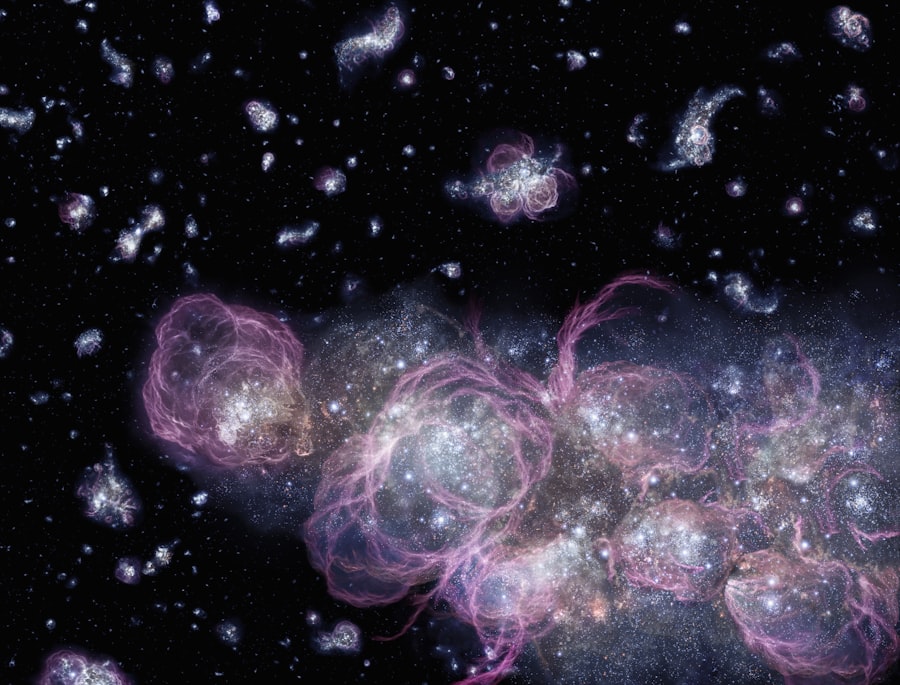
Ultimately, our understanding of the universe, and therefore any notion of its compartmentalization, is limited by our current scientific knowledge and our inherent cognitive frameworks. What appears as a boundary or separation from our current vantage point might be a seamless continuum from a different perspective or at a different level of reality.
The Observer Effect in Cosmology: Subjectivity and Objectivity
The act of observation itself can influence the reality being observed, particularly at the quantum level. While less direct in cosmology, our observational tools and theoretical models shape how we perceive and interpret the universe. What we define as a “compartment” or “boundary” might be a construct of our measurement techniques or our theoretical limitations.
Scale and Perspective: The Illusion of Separation
Our perception of the universe is inherently tied to scale. From the macroscopic perspective of galaxies, the quantum realm appears as a separate, albeit fundamental, domain. Conversely, from a quantum perspective, the vastness of space might seem irrelevant. The idea of compartmentalization could, therefore, be an artifact of our particular scale of observation.
The Pursuit of Unification: Bridging the Gaps
Much of modern physics is driven by the pursuit of unification. The quest for a “theory of everything” aims to reconcile general relativity and quantum mechanics, and to unify the fundamental forces. If successful, such a theory might reveal that what we perceive as compartmentalization is, in fact, a manifestation of a deeper, unified reality.
The Grand Unification Theories (GUTs) and the Theory of Everything (TOE): Towards Wholeness
The search for Grand Unification Theories (GUTs) and the more ambitious Theory of Everything (TOE) represents a scientific drive to overcome perceived separations. If these theories are successful, they may demonstrate that the forces we see as distinct are merely different manifestations of a single, underlying force, and that spacetime is not inherently fragmented but a unified whole. This would challenge any notion of deliberate, fundamental compartmentalization.
The limitations of human comprehension, coupled with the ongoing scientific endeavor to find unifying principles, suggest that our current perception of compartmentalization might be provisional. The “by design” aspect, in this context, becomes even more complex: was the compartmentalization designed to be perceived as such, or is our perception itself a consequence of a design that ultimately leads to unification?
The intriguing question of whether the universe is compartmentalized by design has sparked numerous discussions among scientists and philosophers alike. A related article that delves deeper into this topic can be found on My Cosmic Ventures, where they explore the interconnectedness of cosmic structures and the possibility of underlying patterns in the universe. For those interested in expanding their understanding of this concept, you can read more about it in this insightful piece here.
Conclusion: An Open Question of Structure and Intent
| Question | Answer |
|---|---|
| Is the universe compartmentalized by design? | Unknown, as it is still a topic of scientific debate and exploration. |
| Scientific Research | Various theories and studies suggest different perspectives on the structure of the universe. |
| Compartmentalization | Some theories propose that the universe may have distinct compartments or regions, while others argue for a more interconnected and homogeneous structure. |
| Further Exploration | Scientists continue to investigate and gather data to better understand the fundamental nature of the universe. |
The question of whether the universe is compartmentalized by design remains an open and complex one, drawing upon scientific observation, theoretical speculation, and philosophical inquiry. The evidence for distinct forces, fragmented spacetime, and the implications of multiverse theories lend credence to the idea of cosmic separations. The “by design” element, however, introduces a layer of intentionality that moves beyond purely empirical scientific explanation and into the realm of epistemology and metaphysics.
While scientific endeavors continue to seek unifying principles that might dissolve perceived compartmentalizations, the persistence of these apparent divisions, particularly the fundamental forces and the vastness of the cosmos, invites contemplation. Whether these separations are inherent features of a designed reality or emergent properties of a fundamentally unified, yet complex, existence is a question that continues to shape our understanding of the cosmos. The absence of definitive proof for either scenario leaves ample room for ongoing investigation and intellectual debate. The universe, in its vastness and complexity, continues to present these fundamental questions about its structure and the nature of its existence.
FAQs
What is the concept of compartmentalization in the universe?
Compartmentalization in the universe refers to the idea that different parts of the universe are separated or isolated from each other in some way, whether it be through physical barriers or distinct properties.
What evidence supports the idea of compartmentalization in the universe?
There is evidence of compartmentalization in the universe, such as the existence of distinct galaxies, star systems, and planetary bodies that are separated by vast distances of space. Additionally, the laws of physics and the properties of matter suggest that different parts of the universe may operate independently from each other.
Are there any theories or models that suggest the universe is compartmentalized by design?
Some theories and models in cosmology and physics propose that the universe may be compartmentalized by design, such as the multiverse theory, which suggests the existence of multiple separate universes with different properties and physical laws.
What are the implications of a compartmentalized universe?
If the universe is compartmentalized by design, it could have significant implications for our understanding of cosmology, physics, and the nature of reality. It could also impact our ability to explore and interact with other parts of the universe.
What are some ongoing areas of research related to the concept of compartmentalization in the universe?
Ongoing areas of research related to compartmentalization in the universe include the study of dark matter and dark energy, the search for evidence of parallel universes, and the exploration of the fundamental forces and particles that govern the behavior of matter and energy in different parts of the universe.