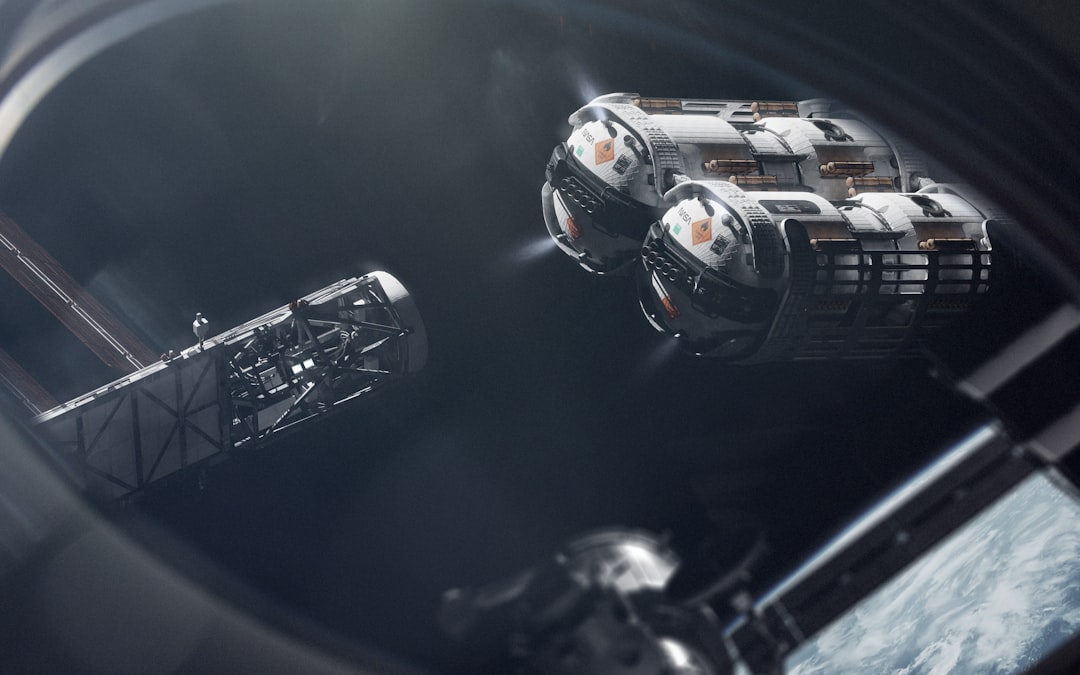
Earth’s inherent limitations present significant hurdles for the ambitious endeavor of interstellar missions. While humanity’s innate curiosity and technological progress have enabled us to venture beyond our planet’s atmosphere, the vast distances and fundamental physical constraints of the cosmos present challenges that are orders of magnitude greater than any previously encountered. These limitations span from the practicalities of propulsion and energy generation to the biological and psychological resilience of human crews.
The sheer immensity of interstellar space is perhaps the most fundamental and daunting limitation. The distances involved dwarf anything within our solar system, rendering conventional notions of travel time obsolete.
Light-Years as the New Yardstick
- Defining the Scale: A light-year, the distance light travels in one Earth year, is approximately 9.46 trillion kilometers (5.88 trillion miles). The nearest star system, Alpha Centauri, is over 4.3 light-years away, meaning even light, the fastest entity in the universe, would take over four years to reach it. This starkly contrasts with the minutes or hours of travel time to reach planets within our solar system.
- Implications for Travel Time: A journey to a star system within a manageable distance, say 20 light-years, would require centuries of travel for a spacecraft moving at even a significant fraction of the speed of light. This temporal disconnect has profound implications for mission planning, crew longevity, and the very concept of return.
The Speed Limit of the Universe
- Einstein’s Relativity: According to Einstein’s theory of special relativity, nothing with mass can travel at or exceed the speed of light in a vacuum. This fundamental physical law acts as an insurmountable barrier to instantaneous interstellar travel. Approaches that attempt to circumvent this, such as warp drives or wormholes, remain theoretical and face enormous speculative energy requirements and fundamental physics challenges.
- Achieving Relativistic Speeds: Even approaching the speed of light requires an exponential increase in energy input. Propelling a spacecraft to even 10% of the speed of light would demand energy levels far beyond our current capabilities. As speeds increase, the mass of the spacecraft also increases, further compounding the energy problem. This necessitates a radical rethinking of propulsion systems, moving beyond chemical rockets and towards more advanced, and currently hypothetical, technologies.
In exploring the challenges of interstellar missions, it’s essential to consider the limitations that Earth faces in supporting such ambitious endeavors. A related article discusses the technological, financial, and logistical hurdles that make interstellar travel a daunting task for humanity. For more insights on this topic, you can read the article here: Why Earth Can’t Help Interstellar Missions.
Propulsion Challenges: Bridging the Cosmic Chasm
The lack of a viable interstellar propulsion system is a primary bottleneck in humanity’s quest to reach other stars. Existing technologies are woefully inadequate for the distances involved.
The Inadequacy of Conventional Rocketry
- The Rocket Equation: The Tsiolkovsky rocket equation demonstrates that the achievable velocity of a rocket is dependent on the exhaust velocity of its propellant and the ratio of initial to final mass. For interstellar journeys, this equation reveals that an overwhelmingly large proportion of the spacecraft’s initial mass would need to be propellant, making the endeavor practically impossible with current chemical propulsion.
- Limited Exhaust Velocities: Chemical rockets, while effective for reaching orbit and interplanetary travel, have relatively low exhaust velocities. To achieve the speeds required for interstellar distances within a human lifetime, exhaust velocities approaching the speed of light would be necessary, something chemical reactions cannot provide.
Emerging but Untested Concepts
- Nuclear Propulsion: Concepts like nuclear thermal rockets (NTRs) and nuclear pulse propulsion (e.g., Project Orion) offer higher specific impulse and greater thrust than chemical rockets. However, NTRs are still limited by the amount of fissile material they can carry and the engineering challenges of sustained high-power operation. Project Orion, while theoretically capable of interstellar speeds, presents significant safety and ethical concerns due to its methodology of detonating nuclear bombs behind the spacecraft.
- Fusion Propulsion: Fusion power, a potential source of immense energy, could theoretically power advanced propulsion systems. However, achieving sustained and controlled fusion on Earth remains a monumental scientific and engineering challenge. If mastered, fusion rockets could offer significantly higher exhaust velocities, but the energy density and containment required for such systems are far from realized.
- Antimatter Propulsion: Antimatter annihilation offers the highest energy density of any known reaction, theoretically allowing for extremely efficient propulsion. However, the production and containment of antimatter are incredibly difficult and energy-intensive processes. The amounts of antimatter required for interstellar travel are currently beyond our technological grasp, and the safety protocols for storing and utilizing it are a significant concern.
- Exotic Propulsion Theories: Ideas like laser sails, solar sails, and beamed energy propulsion propose using external energy sources to propel spacecraft. Laser sails, for instance, could be accelerated by powerful ground-based lasers. While promising for reducing onboard fuel mass, these concepts require massive infrastructure and precise aiming over vast distances, and the acceleration would still be gradual, leading to long travel times.
Energy Requirements: A Bottomless Pit
The energy demands for interstellar missions are astronomical, exceeding anything currently conceived or sustained by human civilization.
The Insatiable Appetite for Power
- Kinetic Energy: To achieve even modest fractions of the speed of light, spacecraft would need to possess immense kinetic energy. The energy required to accelerate a few tons of spacecraft to, say, 10% of the speed of light, is comparable to the total energy consumption of a small nation for a year. Scaling this up for larger spacecraft and higher velocities quickly escalates beyond practical limits.
- Delta-v Budgets: In rocketry, delta-v (change in velocity) is a measure of the impulse needed to perform orbital maneuvers and accelerate a spacecraft. Interstellar missions demand colossal delta-v, which translates directly into enormous energy expenditure for acceleration and deceleration.
Onboard vs. External Power Sources
- Onboard Generation: Relying on onboard power sources such as nuclear reactors or fusion reactors presents challenges of mass, shielding, and sustained high-power output over decades or centuries. The sheer scale of energy generation required for interstellar propulsion would necessitate reactor designs far beyond our current capabilities.
- External Power Beaming: Concepts involving beaming energy from Earth or from massive orbital power stations might offer a solution for initial acceleration. However, the energy losses over interstellar distances would be significant, and the construction and maintenance of such infrastructure would be an undertaking of unprecedented scale and complexity. The beam itself would also need to remain precisely focused across light-years, a task of immense precision.
Biological and Psychological Resilience: The Human Factor
Beyond the engineering and physics, the limitations of the human body and mind pose significant challenges for interstellar voyages.
The Long-Term Effects of Space Travel
- Radiation Exposure: Deep space is bathed in cosmic rays and solar flares, which are highly energetic and damaging to biological tissues. Even with advanced shielding, prolonged exposure over decades increases the risk of cancer, genetic mutations, and neurodegenerative diseases. Current spacecraft offer limited protection, and effective long-term shielding solutions for interstellar missions are a major technological hurdle.
- Microgravity and Bone/Muscle Degradation: Extended periods in microgravity lead to significant loss of bone density and muscle mass. While countermeasures like artificial gravity or rigorous exercise regimes can mitigate some effects, their long-term efficacy on multi-generational voyages or for individuals who never return to a gravity well is uncertain.
- Psychological Strain and Isolation: The immense duration and isolation of interstellar travel would place extreme psychological pressure on crews. The lack of familiar stimuli, the confinement of a spacecraft, and the knowledge that Earth is impossibly distant can lead to depression, anxiety, interpersonal conflict, and cognitive decline. Maintaining mental well-being over decades or centuries is a profound challenge.
The Question of Generational Ships and Cryosleep
- Generational Ships: For journeys spanning centuries, the concept of generational ships, where multiple generations of humans live and die aboard the vessel, is often proposed. This model introduces complex societal, ethical, and biological challenges related to reproduction, education, social stability, and genetic diversity over extended periods.
- Cryosleep and Suspended Animation: Cryosleep offers a way to potentially bypass the long travel times by suspending animation. However, the scientific and medical challenges of reliably freezing and thawing human beings without cellular damage are immense. Current research is largely theoretical, and the successful application for interstellar travel remains speculative. The long-term effects of such prolonged stasis on human physiology and psychology are also unknown.
Interstellar missions present a myriad of challenges, and one significant reason Earth struggles to assist in these endeavors is the vast distances involved, which make communication and resource sharing incredibly difficult. For a deeper understanding of these challenges, you can explore a related article that discusses the limitations of our planet in supporting such ambitious space exploration efforts. This article highlights the technological and logistical hurdles that must be overcome for humanity to reach beyond our solar system. To read more about this topic, visit this insightful article.
Earth-Centric Limitations: Resource, Economic, and Societal Constraints
| Challenges | Reasons |
|---|---|
| Escape Velocity | Earth’s escape velocity of 11.2 km/s makes it difficult to launch spacecrafts into interstellar space. |
| Distance | Interstellar missions require traveling vast distances, which is beyond the capabilities of current propulsion systems. |
| Resources | Earth’s limited resources and energy make it challenging to sustain long-duration interstellar missions. |
| Radiation | Interstellar space is filled with high levels of cosmic radiation, which poses significant health risks to astronauts. |
Even if the technological hurdles were overcome, Earth itself presents significant constraints on undertaking interstellar missions.
The Economics of Interstellar Travel
- Prohibitive Costs: The financial investment required to develop and launch even a single interstellar mission would be staggering, likely far exceeding the annual GDP of most nations. The resources needed for propulsion, life support, shielding, and scientific instrumentation would be immense.
- Prioritization of Needs: On Earth, there are numerous pressing issues such as poverty, disease, climate change, and natural disasters that demand significant resource allocation. The justification for diverting such vast sums of money towards a speculative interstellar endeavor, especially when immediate terrestrial needs are unmet, would be a major societal and political hurdle.
Societal and Political Will
- Long-Term Commitment: Interstellar missions require a commitment that spans generations, far beyond typical political or economic cycles. Maintaining the necessary support and funding over such extended periods, through changing governments, economic downturns, and evolving societal priorities, is a considerable challenge.
- International Cooperation: The scale of an interstellar endeavor might necessitate unprecedented international cooperation and resource sharing. Achieving such a unified global effort, given the current geopolitical landscape, is a significant hurdle. Disagreements on goals, funding, and control could easily derail such ambitious projects.
- Risk Tolerance: Interstellar missions by their very nature are high-risk endeavors. The potential for catastrophic failure, loss of life, and immense financial waste would require a high degree of societal risk tolerance, which may not be readily available for such long-term, uncertain ventures.
In conclusion, Earth’s limitations in the realm of interstellar missions are multifaceted and deeply ingrained. They are not merely technological challenges to be solved with future innovations, but fundamental constraints imposed by the laws of physics, the vulnerabilities of biological systems, and the complexities of human society. While the allure of the stars remains powerful, a sober assessment of these limitations is crucial for setting realistic expectations and directing research efforts towards the most promising avenues for eventual, albeit distant, interstellar exploration.
FAQs
1. Why is Earth unable to help interstellar missions?
Earth is unable to help interstellar missions due to the vast distances involved in interstellar travel. The closest star system to Earth, Alpha Centauri, is over 4 light years away, making it currently impossible for our technology to reach such distances.
2. What are the limitations of Earth’s resources for interstellar missions?
Earth’s resources are limited in terms of the energy required for interstellar missions. Current propulsion systems are not capable of reaching the speeds necessary for interstellar travel, and the energy required for such missions is beyond our current capabilities.
3. How does Earth’s atmosphere affect interstellar missions?
Earth’s atmosphere poses a challenge for interstellar missions due to the need to escape the planet’s gravity and atmospheric drag. This requires significant energy and resources, making it difficult to launch interstellar missions from Earth.
4. What role does Earth’s position in the solar system play in interstellar missions?
Earth’s position in the solar system affects interstellar missions in terms of the trajectory and timing required to reach distant star systems. The gravitational pull of the sun and other planets can impact the path of interstellar spacecraft, adding complexity to mission planning.
5. Are there any potential solutions to Earth’s limitations for interstellar missions?
Potential solutions to Earth’s limitations for interstellar missions include advancements in propulsion technology, such as the development of more efficient and powerful propulsion systems. Additionally, the use of resources from space, such as mining asteroids for fuel, could help overcome some of Earth’s limitations for interstellar missions.