
Gravity, a fundamental force of nature, mediates interactions between objects possessing mass or energy. Its influence, though often subtle in everyday experiences, underpins the very structure and dynamics of the universe. From the delicate dance of celestial bodies to the prosaic falling of an apple, gravity’s reach is demonstrably infinite, a constant and pervasive presence shaping the cosmos on every conceivable scale.
At its core, gravity is understood as an attractive force between any two objects with mass. This seemingly simple premise gives rise to a universe of immense complexity. While Newton’s law of universal gravitation provided a remarkably accurate description of gravitational phenomena for centuries, it was Albert Einstein’s theory of general relativity that offered a more profound and comprehensive understanding.
Newtonian Gravity: The Classical Framework
Sir Isaac Newton’s formulation of gravitational law, published in 1687, revolutionized scientific thought. His insight was that the same force that caused an apple to fall to the Earth also kept the Moon in orbit around our planet and the planets in orbit around the Sun. Newton’s law states that the force of gravity between two objects is directly proportional to the product of their masses and inversely proportional to the square of the distance between their centers. Mathematically, this is expressed as:
$F = G \frac{m_1 m_2}{r^2}$
Where:
- $F$ is the gravitational force
- $G$ is the gravitational constant
- $m_1$ and $m_2$ are the masses of the two objects
- $r$ is the distance between the centers of the two objects
This formula, while elegantly simple, has been instrumental in predicting and explaining a vast array of astronomical observations, from the predictable orbits of planets to the tides of the oceans. Its predictive power allowed for significant advancements in navigation, engineering, and our understanding of the solar system. The concept of a universal force, acting equally everywhere and on all objects with mass, was a profound conceptual leap. Prior to Newton, the celestial realm was often seen as governed by different, more perfect laws than the terrestrial realm. Newton’s law unified these spheres under a single, consistent framework, demonstrating that the same physical principles applied across the vast expanses of space and the familiar ground beneath our feet.
Einstein’s General Relativity: Gravity as Spacetime Curvature
Einstein’s general theory of relativity, published in 1915, provided a radical new perspective on gravity. Instead of a force acting at a distance, Einstein proposed that gravity is a consequence of the curvature of spacetime. Massive objects warp the fabric of spacetime around them, and other objects move along these curves, which we perceive as the effect of gravity. This concept can be visualized by imagining a stretched rubber sheet. Placing a heavy ball on the sheet creates a dip; smaller marbles rolled nearby will curve towards the heavier ball, following the contour of the depression. Similarly, planets follow the curves in spacetime created by the Sun’s mass.
Key Concepts in General Relativity
- Spacetime: General relativity unifies space and time into a single four-dimensional continuum. Events occur at specific points in spacetime.
- Curvature: The presence of mass and energy causes spacetime to curve. The greater the mass or energy density, the greater the curvature.
- Geodesics: Objects in motion, under the influence of gravity, follow paths known as geodesics. These are the “straightest possible lines” in curved spacetime. In flat spacetime, geodesics are straight lines. In curved spacetime, they appear as curved paths.
- Equivalence Principle: This principle, a cornerstone of general relativity, states that the effects of gravity are indistinguishable from the effects of acceleration. This means that being in a gravitational field is equivalent to being in an accelerating frame of reference.
General relativity’s predictions have been rigorously tested and have accounted for phenomena that Newtonian physics could not, such as the anomalous precession of Mercury’s orbit and the bending of light by massive objects. This theoretical shift marked a fundamental redefinition of one of the universe’s most basic interactions.
Gravity, a fundamental force of nature, is known for its infinite reach across the universe, influencing the motion of celestial bodies and the structure of galaxies. For a deeper understanding of this phenomenon, you can explore the article on the topic at My Cosmic Ventures, which delves into the principles of gravitational attraction and how it operates over vast distances, shaping the cosmos as we know it.
The Reach of Gravity Across Cosmic Scales
The infinite reach of gravity becomes most evident when observing the universe on its grandest scales. Its persistent pull orchestrates the formation and evolution of galaxies, stars, and planetary systems, dictating the grand ballet of cosmic motion.
Gravitational Influence on Stellar Formation and Evolution
The birth of stars is a direct consequence of gravitational collapse. Vast clouds of gas and dust, known as nebulae, are dispersed throughout interstellar space. Within these clouds, slight variations in density exist. Denser regions experience a stronger gravitational pull, drawing in more surrounding material. As this material accumulates, the gravitational forces intensify, leading to a runaway collapse. The core of the collapsing cloud becomes increasingly dense and hot.
Collapse of Molecular Clouds
Giant molecular clouds, comprising primarily hydrogen and helium, are the stellar nurseries. Their immense mass allows gravity to overcome internal pressure and thermal motion. Regions within these clouds that reach a critical density become gravitationally unstable and begin to contract. This initial contraction is driven by gravity acting on the collective mass of the gas and dust particles.
Protostar Formation
As the cloud collapses, angular momentum conservation causes it to spin faster, flattening into a disk. The central region, accreting the majority of the infalling material, forms a protostar. The gravitational potential energy released during this accretion is converted into heat, causing the protostar’s temperature to rise.
Main Sequence Stars
When the core of the protostar reaches a critical temperature and pressure – approximately 10 million Kelvin – nuclear fusion ignites. Hydrogen atoms begin to fuse into helium, releasing enormous amounts of energy. This outward radiation pressure counteracts the inward pull of gravity, establishing a state of hydrostatic equilibrium. Stars spend the majority of their lives in this phase, known as the main sequence. The balance between the outward pressure from nuclear fusion and the inward pull of gravity is what defines a star’s stability.
Stellar Endpoints
The ultimate fate of a star is determined by its initial mass and, consequently, the interplay of gravity throughout its life and death. For stars similar to our Sun, gravity eventually overwhelms fusion in the core. They expand into red giants, shed their outer layers, and leave behind a dense white dwarf. More massive stars experience more dramatic gravitational collapse, leading to supernovas that can leave behind neutron stars or black holes. The gravitational forces within these stellar remnants are astonishingly strong.
Galactic Structure and Dynamics
Galaxies, the colossal islands of stars, gas, and dust, are held together by gravity. Their formation and ongoing evolution are fundamentally driven by gravitational interactions.
Galaxy Formation
The prevailing cosmological model suggests that galaxies formed from the gravitational collapse of primordial density fluctuations in the early universe. Over billions of years, these fluctuations grew, attracting surrounding matter to form the vast structures we observe today. The distribution of dark matter, an invisible form of matter that interacts gravitationally but not electromagnetically, plays a crucial role in the formation and clustering of galaxies. Its gravitational influence acts as scaffolding, guiding the formation of visible galactic structures.
Galactic Rotation Curves
A perplexing observation in galactic astronomy is the anomalous rotation speeds of stars and gas in the outer regions of galaxies. According to Newtonian gravity, objects further from the center of a galaxy, where most of the visible mass is concentrated, should orbit slower. However, observations show that the outer regions of galaxies rotate much faster than expected, indicating the presence of a significant amount of unseen mass – dark matter – distributed throughout the galactic halo. This discrepancy highlights the pervasive influence of gravity beyond what is immediately visible.
Galactic Collisions and Mergers
Galaxies are not static entities. They are constantly interacting and evolving through gravitational collisions and mergers. These events can dramatically reshape galaxies, triggering bursts of star formation and leading to the formation of larger, more complex structures. The gravitational pull between galaxies can distort their shapes, pull out tidal tails of stars and gas, and eventually lead to their complete amalgamation.
The Solar System: A Gravitational Symphony
Our own solar system is a prime example of gravity’s ordered influence. The Sun’s immense mass dominates the gravitational landscape, holding all the planets, asteroids, and comets in their orbits.
Orbital Mechanics
The planets orbit the Sun in predictable elliptical paths, a testament to Newton’s law of universal gravitation. These orbits are maintained by a precise balance between the Sun’s gravitational pull and the planets’ tangential velocity. Without gravity, the planets would fly off into interstellar space in straight lines. Conversely, if they possessed no velocity, they would spiral into the Sun.
Tidal Forces
Tides, the regular rise and fall of sea levels, are caused by the differential gravitational pull of the Moon and, to a lesser extent, the Sun. The side of the Earth facing the Moon experiences a stronger gravitational pull, resulting in a bulge of water. The opposite side of the Earth also experiences a bulge, albeit slightly weaker, due to inertial effects and the Moon’s pull on the Earth’s center. These tidal forces demonstrate how gravity, even from relatively distant objects, can exert significant influence.
Stability of Planetary Orbits
The long-term stability of the solar system’s planetary orbits is a complex problem that has been studied extensively. While the gravitational interactions between planets are generally stable over human timescales, over millions or billions of years, these cumulative forces can lead to subtle shifts and perturbations in the orbits.
Gravity’s Invisible Hand: Dark Matter and Dark Energy

While visible matter accounts for only a fraction of the universe’s mass-energy content, gravity’s influence extends far beyond what we can directly observe, suggesting the existence of unseen components.
The Enigma of Dark Matter
Dark matter is a hypothetical form of matter that does not emit, absorb, or reflect light, making it invisible to telescopes. However, its gravitational effects are evident in various astronomical phenomena, including galactic rotation curves and the structure of galaxy clusters. The presence of dark matter is inferred from its gravitational attraction to baryonic matter and its influence on the expansion of the universe.
Evidence for Dark Matter
- Galactic Rotation Curves: As mentioned, stars and gas in the outer regions of galaxies move faster than predicted by visible matter alone.
- Galaxy Clusters: The velocities of galaxies within clusters and the hot gas that permeates them indicate a much larger mass than can be accounted for by visible galaxies.
- Gravitational Lensing: The bending of light from distant objects as it passes by massive foreground objects (like galaxies or galaxy clusters) can reveal the distribution of unseen mass. Observations of gravitational lensing are consistent with the presence of significant amounts of dark matter.
- Cosmic Microwave Background Radiation: The patterns in the cosmic microwave background radiation, the afterglow of the Big Bang, constrain the abundance of dark matter in the early universe.
The Mysterious Force of Dark Energy
Dark energy is an even more enigmatic component of the universe, hypothesized to be responsible for the observed accelerated expansion of the universe. Unlike gravity, which tends to pull things together, dark energy acts as a repulsive force, pushing spacetime apart.
Accelerating Expansion
Observations of distant supernovae in the late 1990s provided compelling evidence that the universe’s expansion is not only ongoing but also accelerating. This discovery implied the existence of some form of energy with negative pressure, counteracting the attractive force of gravity.
Cosmological Constant and Beyond
The simplest explanation for dark energy is the cosmological constant, a term Einstein introduced into his equations of general relativity but later abandoned. However, other theoretical models for dark energy exist, suggesting that its nature might be more complex and potentially dynamic. The prevailing understanding is that dark energy constitutes about 68% of the total mass-energy density of the universe, with dark matter making up about 27%, and ordinary baryonic matter only about 5%.
Gravity’s Impact on Extreme Environments
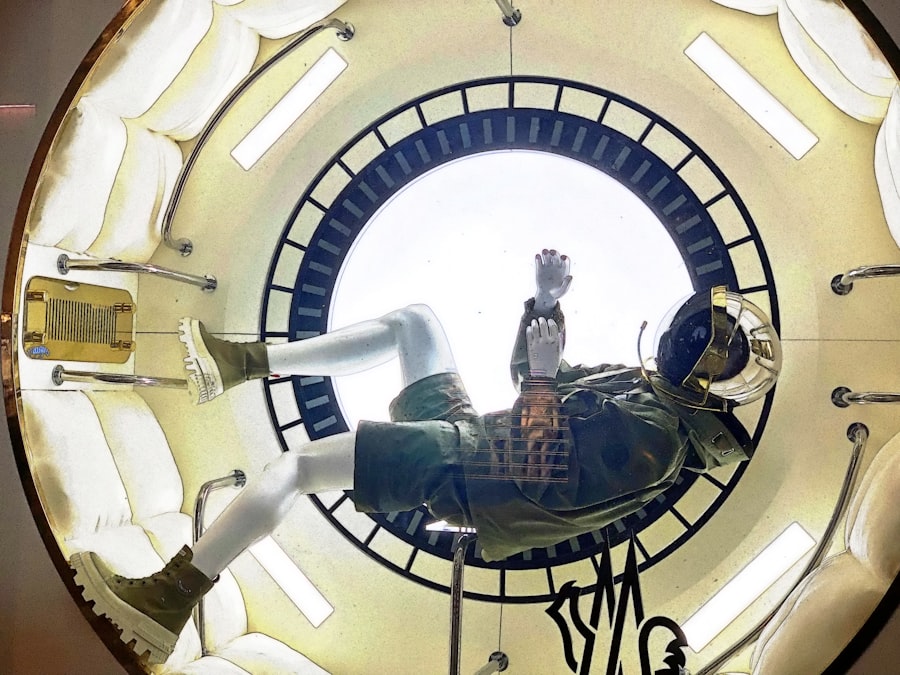
The profound influence of gravity is most dramatically revealed in extreme astronomical environments, where its power is unleashed in its most potent forms.
Black Holes: Singularities of Gravity
Black holes represent the ultimate triumph of gravity. When a massive star exhausts its nuclear fuel, it can collapse under its own gravity, forming a region of spacetime where gravity is so strong that nothing, not even light, can escape.
Event Horizon
The boundary beyond which escape is impossible is known as the event horizon. This is not a physical surface but rather a point of no return. Once an object crosses the event horizon, it is inexorably drawn towards the singularity at the center.
Singularity
At the heart of a black hole lies a singularity, a point of infinite density and spacetime curvature, where our current understanding of physics breaks down. The immense gravitational forces at this point are beyond comprehension.
Neutron Stars
Neutron stars are the incredibly dense remnants of supernova explosions of massive stars. They are composed almost entirely of neutrons, packed together at densities exceeding that of atomic nuclei. A teaspoon of neutron star material would weigh billions of tons. The immense gravity of a neutron star is balanced by the degeneracy pressure of neutrons.
Extreme Densities and Magnetic Fields
The gravitational forces within neutron stars confine matter into a state of unparalleled density. They also possess extraordinarily strong magnetic fields, generated by the electric currents within their conducting material. These magnetic fields can create powerful beams of radiation, observed as pulsars.
Gravitational Waves: Ripples in Spacetime
As predicted by general relativity, massive accelerating objects, such as merging black holes or neutron stars, create disturbances in the fabric of spacetime, propagating outwards as gravitational waves. These waves are incredibly weak by the time they reach Earth, but their detection by instruments like LIGO (Laser Interferometer Gravitational-Wave Observatory) has opened a new window into observing the universe.
Detection and Significance
The direct detection of gravitational waves in 2015 provided definitive confirmation of a major prediction of general relativity. It also allowed scientists to directly probe some of the most violent and energetic events in the cosmos, offering insights into the processes of black hole and neutron star mergers. This new observational tool promises to revolutionize our understanding of gravity and the universe’s most extreme phenomena.
Gravity, a fundamental force of nature, has an intriguing property: its influence extends infinitely across the universe. This phenomenon can be better understood by exploring the concept of gravitational waves and their role in cosmic interactions. For a deeper dive into this fascinating topic, you can read more in this related article on the nature of gravity and its endless reach. Discover how these waves propagate through space and time by visiting this insightful article.
The Pervasive Influence of Gravity in Everyday Life
| Reason | Explanation |
|---|---|
| Mass of Objects | Gravity is a force that is directly proportional to the mass of objects. Since all objects in the universe have mass, gravity has infinite reach across the universe. |
| Inverse Square Law | According to the inverse square law, the force of gravity decreases with distance squared. However, it never truly reaches zero, meaning it has infinite reach across the universe. |
| Space-time Curvature | Gravity is the curvature of space-time caused by mass and energy. This curvature extends infinitely across the universe, allowing gravity to have infinite reach. |
While the cosmic manifestations of gravity are awe-inspiring, its influence is also fundamental to our daily experiences, shaping our perception of reality and enabling countless natural processes.
Maintaining an Atmosphere
The Earth’s atmosphere is held in place by its gravitational pull. Without gravity, the gases that constitute our atmosphere would simply dissipate into space, rendering the planet devoid of life as we know it.
Composition and Retention
The Earth’s mass is sufficient to exert a strong enough gravitational force to retain a significant atmosphere, composed primarily of nitrogen and oxygen. The density of the atmosphere decreases with altitude due to this gravitational effect.
Biological Adaptations to Gravity
Life on Earth has evolved under the constant influence of gravity. Organisms have developed specific structures and physiological mechanisms to cope with this force.
Skeletal Structures
The skeletal systems of terrestrial animals provide support and rigidity, counteracting the downward pull of gravity. The strength and density of bones are directly related to the gravitational forces they must withstand.
Circulatory Systems
The heart and circulatory system of mammals are adapted to pump blood against gravity, ensuring adequate oxygen supply to all parts of the body, particularly the brain.
Earth’s Seasons and Day/Night Cycle
While not directly caused by gravity itself, the gravitational interactions between the Earth, Sun, and Moon play crucial roles in phenomena that dictate our experience of time and seasons.
Earth’s Orbit and Tilt
The Earth’s elliptical orbit around the Sun, a result of gravitational forces, combined with its axial tilt, is the primary driver of the seasons. The tilt causes different hemispheres to receive varying amounts of solar radiation throughout the year.
Lunar Phases and Tides
The Moon’s gravitational pull creates tides on Earth and, through its orbital motions, influences the cyclical changes we observe as lunar phases. These phenomena, while subtle in their effect on daily life, demonstrate the continuous interplay of gravitational forces.
The infinite reach of gravity, from its role in the formation of the universe to its fundamental influence on our everyday lives, underscores its status as a cornerstone of physical reality. Its pervasive presence, whether shaping galaxies or anchoring us to the ground, marks it as a truly universal force, dictating the rhythm and structure of the cosmos and the very fabric of our existence.
FAQs
1. What is gravity?
Gravity is a force of attraction that exists between any two masses, any two bodies, any two particles. It is the force that pulls objects towards each other.
2. How does gravity reach across the universe?
Gravity is a fundamental force of nature that has infinite reach across the universe. According to the theory of general relativity, gravity is the result of the curvature of spacetime caused by mass and energy. This curvature extends infinitely throughout the universe, allowing gravity to reach across vast distances.
3. Can gravity be blocked or stopped?
Gravity cannot be blocked or stopped by any known means. It is a fundamental force that acts on all objects with mass, and its effects cannot be shielded or negated.
4. What are the implications of gravity having infinite reach?
The infinite reach of gravity means that every object with mass in the universe is affected by the gravitational pull of every other object. This has profound implications for the structure and behavior of the universe, influencing the formation of galaxies, stars, and planetary systems.
5. How is gravity related to the expansion of the universe?
Gravity plays a key role in the expansion of the universe. While gravity is an attractive force that tends to pull matter together, the expansion of the universe is driven by dark energy, which counteracts the force of gravity on large scales. However, gravity still influences the formation of structures within the universe, such as galaxies and galaxy clusters.