
The Earth’s interior, a realm of crushing pressure and immense heat, harbors a surprising temporal peculiarity: it is, in a sense, younger than its surface. This phenomenon is not a matter of geological age in the traditional sense, but a consequence of Einstein’s theory of general relativity, specifically gravitational time dilation. The deeper one descends into the Earth’s gravitational well, the slower time passes relative to an observer at a lower gravitational potential, such as on the surface. Understanding this subtle yet profound interplay between gravity and time reveals a fundamental aspect of our universe.
Albert Einstein’s revolutionary theories of relativity fundamentally altered our understanding of space and time. Prior to his work, space and time were considered absolute, independent entities. Newton’s laws of physics operated within this framework. However, Einstein’s special and general relativity demonstrated that space and time are not separate but are intrinsically interwoven into a single, four-dimensional continuum: spacetime. Furthermore, spacetime is not a static backdrop but a dynamic entity, capable of being warped and curved by the presence of mass and energy.
Special Relativity and the Relativity of Time
Einstein’s special theory of relativity, published in 1905, introduced the groundbreaking concept that the speed of light in a vacuum is constant for all inertial observers, regardless of their motion. This seemingly simple postulate has profound implications. One of its most direct consequences is time dilation.
The Twin Paradox: A Thought Experiment
A classic illustration of time dilation is the “twin paradox.” Imagine two identical twins. One twin remains on Earth, while the other embarks on a space journey at a significant fraction of the speed of light. Upon the traveling twin’s return, it would be discovered that the traveling twin has aged less than the twin who remained on Earth. This discrepancy arises because time itself slows down for the traveler as their velocity increases. While this effect is related to motion, it highlights the non-absolute nature of time.
Time Dilation Due to Velocity
The mathematical formulation describing time dilation due to velocity is given by the Lorentz factor, $\gamma = 1 / \sqrt{1 – v^2/c^2}$, where $v$ is the relative velocity between the observers and $c$ is the speed of light. The dilated time interval $\Delta t’$ is related to the proper time interval $\Delta t$ (time measured in the moving frame) by $\Delta t’ = \gamma \Delta t$. As $v$ approaches $c$, $\gamma$ becomes larger, meaning that more time passes for the stationary observer than for the moving observer.
General Relativity: Gravity as Spacetime Curvature
Ten years later, in 1915, Einstein presented his general theory of relativity. This theory extended special relativity to include gravity. General relativity posits that gravity is not a force pulling objects together, but rather a manifestation of the curvature of spacetime caused by mass and energy. Massive objects warp the fabric of spacetime around them, and this curvature dictates how other objects, including light, move.
The Equivalence Principle
A cornerstone of general relativity is the equivalence principle. It states that the effects of gravity are indistinguishable from the effects of acceleration. For instance, an observer in a closed room on Earth experiences the pull of gravity, and this experience is identical to what an observer would feel if they were in a rocket accelerating upwards in deep space, far from any gravitational influence. This principle was crucial in linking acceleration to the geometry of spacetime.
Gravitational Potential and Spacetime Curvature
The more massive an object, the greater its gravitational pull and the more it warps spacetime. This warping is most pronounced in the vicinity of very massive objects, such as stars and black holes. However, even less massive objects, like planets and moons, create a noticeable, albeit smaller, curvature. The strength of the gravitational field is directly related to the curvature of spacetime.
The intriguing concept that the center of the Earth is younger than its surface is explored in greater detail in a related article found on My Cosmic Ventures. This article delves into the geological processes and radioactive decay that contribute to the age discrepancies between the Earth’s core and crust. For more insights on this fascinating topic, you can read the full article here: My Cosmic Ventures.
Gravitational Time Dilation: The Core Concept
Gravitational time dilation, as predicted by general relativity, is a direct consequence of spacetime curvature caused by mass. It dictates that time passes more slowly in regions of stronger gravitational potential. This means that clocks closer to a massive object will tick slower than clocks farther away. The Earth, being a massive object, exerts a gravitational influence that causes time to flow at different rates at different depths.
The Gravitational Potential Well
Imagine spacetime as a stretched rubber sheet. Placing a heavy ball on the sheet creates a dip or a well. This well represents the gravitational potential. Objects rolling across the sheet will be drawn towards the heavy ball. Similarly, mass warps spacetime, creating a gravitational potential well. The deeper one is within this well, the stronger the gravitational influence.
Understanding “Depth” in a Gravitational Well
When we speak of “depth” in a gravitational well, we are referring to the magnitude of the gravitational potential energy. In simpler terms, it’s how much work would be required to move an object from that position to infinity, where the gravitational potential is considered zero. Regions of lower gravitational potential (closer to the center of a massive object) correspond to a stronger gravitational field.
The Mathematical Description of Gravitational Time Dilation
The formula for gravitational time dilation, for weak gravitational fields and stationary observers, is given by:
$\Delta t_0 = \Delta t_f \sqrt{1 – \frac{2GM}{rc^2}}$
where:
- $\Delta t_0$ is the time interval measured by an observer at a greater distance from the mass (e.g., on Earth’s surface).
- $\Delta t_f$ is the time interval measured by an observer at a smaller distance from the mass (e.g., deeper within the Earth).
- $G$ is the gravitational constant.
- $M$ is the mass of the object creating the gravitational field (Earth in this case).
- $r$ is the radial distance from the center of the mass.
- $c$ is the speed of light.
This equation indicates that if $r$ is smaller (i.e., closer to the center of Earth), the term $2GM/rc^2$ becomes larger, leading to a smaller value beneath the square root. Consequently, $\Delta t_0$ will be larger than $\Delta t_f$, meaning more time passes for the observer higher up (on the surface) compared to the observer deeper down.
The Role of Proper Time and Coordinate Time
In the context of relativity, it’s important to distinguish between proper time and coordinate time. Proper time is the time measured by an observer’s own clock, and it is always the shortest possible time interval between two events. Coordinate time is the time measured by a hypothetical observer situated at a large distance from any significant gravitational influence, or effectively, by a clock that is not affected by the gravitational field. Gravitational time dilation means that the coordinate time will always be greater than the proper time measured in a stronger gravitational field.
Illustrating the Difference with Clocks
Imagine setting up two identical atomic clocks. One clock is placed on the summit of Mount Everest, and the other is placed at sea level. Due to the slightly weaker gravitational field at the summit (further from Earth’s center), the clock on Everest will tick infinitesimally faster than the clock at sea level. This difference, though minuscule, has been experimentally verified.
The Earth’s Interior: A Deeper Gravitational Well
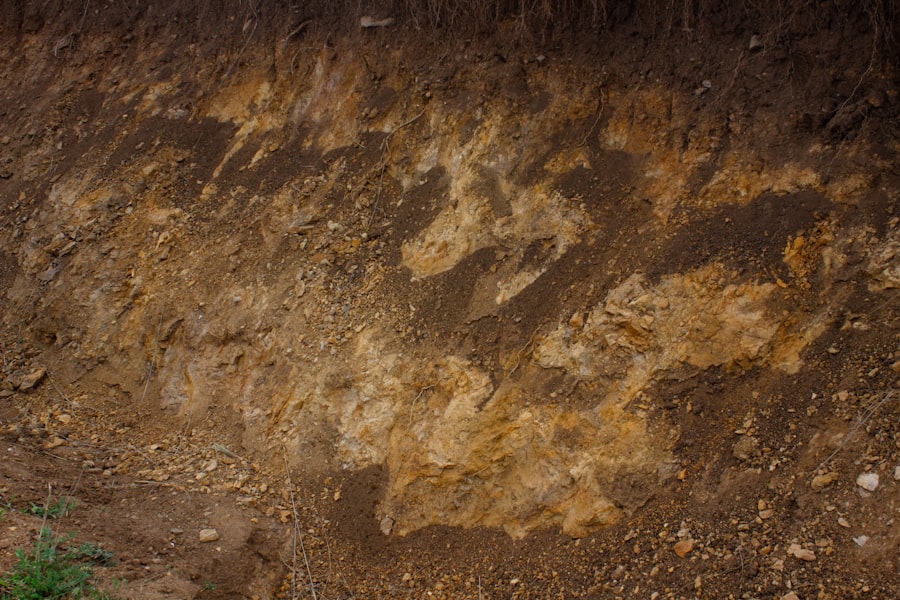
The Earth is not a uniform sphere of mass. Its density varies significantly from the crust to the core, with the densest materials concentrated towards the center. This non-uniformity means that the gravitational potential at different depths within the Earth is not a simple inverse square law relation. Nevertheless, the principle of gravitational time dilation holds: the deeper one goes into the Earth, the stronger the gravitational field and the slower time passes.
Layers of the Earth and Their Gravitational Influence
The Earth is broadly divided into several layers: the crust, the mantle, the outer core, and the inner core. Each layer possesses different densities and compositions, contributing to the overall gravitational field.
The Crust: Relatively Shallow Influence
The Earth’s crust, the outermost solid shell, is relatively thin compared to the planet’s radius. The variation in gravitational potential within the crust is minimal. Therefore, gravitational time dilation effects between different points on the surface or within the shallowest parts of the crust are exceedingly small.
The Mantle: Increasing Gravitational Gradients
The mantle, lying beneath the crust, is significantly thicker and denser than the crust. As one descends through the mantle, the mass above “cancels out” some of the gravitational pull from the center, but the increasing density closer to the core intensifies the gravitational field. This leads to a more significant difference in the rate at which time passes between the surface and deeper layers of the mantle.
The Core: The Deepest Gravitational Well
The Earth’s core, particularly the solid inner core, is the region of highest density and therefore the strongest gravitational potential. The immense pressure and heat here contribute to a significant warping of spacetime. Consequently, time passes at its slowest rate at the very center of the Earth.
Mass Distribution and Gravitational Potential
The gravitational potential at a point within a spherical object depends not only on the total mass enclosed within that point’s radius but also on the distribution of that mass. For a uniformly dense sphere, the gravitational potential at a distance $r$ from the center is proportional to $(-M/R)(3 – (r/R)^2)$, where $M$ is the total mass and $R$ is the radius of the sphere. However, the Earth’s density increases dramatically towards the center.
Density Models of the Earth
Seismological data and other geophysical measurements allow scientists to construct models of the Earth’s internal density distribution. These models reveal that the density increases from about 2.7 g/cm³ in the crust to over 13 g/cm³ in the inner core. This non-uniformity is crucial for calculating the precise gravitational potential at various depths.
Calculating Gravitational Potential at Depth
To accurately calculate the gravitational potential at a specific depth within the Earth, one would need to integrate the contributions from each infinitesimally thin spherical shell of mass. The formula for the gravitational acceleration $g(r)$ at a radius $r$ from the center of a spherically symmetric body with mass density $\rho(r)$ is:
$g(r) = \frac{4\pi G}{r^2} \int_0^r \rho(r’) r’^2 dr’$
The gravitational potential $\Phi(r)$ is then obtained by integrating $g(r)$ with respect to $r$, typically from infinity. The time dilation effect is directly related to this potential.
The “Younger” Earth’s Interior: A Temporal Discrepancy

The difference in the rate of time flow between the Earth’s surface and its interior means that for every moment that passes on the surface, slightly less time has passed at the core. This makes the interior of the Earth, in a relativistic sense, “younger.” While the difference is incredibly small, it is a real and measurable phenomenon.
Quantifying the Temporal Difference
The magnitude of this temporal difference is minuscule. Over the entire radius of the Earth, the difference in elapsed time between an observer at the surface and an observer at the center would be on the order of milliseconds over the Earth’s entire lifespan. However, its existence is significant from a theoretical perspective, as it confirms predictions of general relativity.
An Example Calculation
Consider the simplified case of Earth’s average density. The gravitational potential at the surface is approximately $-GM/R$, and at the center, it is approximately $-3GM/(2R)$. For Earth, $M \approx 5.972 \times 10^{24}$ kg and $R \approx 6.371 \times 10^6$ m. Placing these values into the time dilation formula (in its more precise general relativistic form for a spherical mass distribution) reveals a very small difference in time accumulation.
The Significance of Small Differences
While the absolute difference in age might be small, the fact that it exists is a profound confirmation of Einstein’s theories. It demonstrates that time is not an absolute constant but is influenced by the gravitational environment. This has had far-reaching implications for our understanding of the universe, from the behavior of light around massive stars to the operation of satellite navigation systems.
Practical Implications: GPS Satellites and Time Synchronization
The most prominent real-world application of gravitational time dilation and velocity-based time dilation working together is in the Global Positioning System (GPS). GPS satellites orbit the Earth at high altitudes and speeds.
Velocity Dilations vs. Gravitational Dilations
The satellites are moving at approximately 14,000 km/hour. According to special relativity, this high speed causes their internal atomic clocks to run slower than clocks on Earth. However, the satellites are also in a weaker gravitational field than receivers on Earth’s surface. According to general relativity, this weaker gravitational field causes their clocks to run faster.
The Net Effect and Corrections
The gravitational effect is stronger than the velocity effect for GPS satellites. This means that without corrections, the satellite clocks would gain approximately 38 microseconds per day relative to ground-based clocks. To ensure the accuracy of GPS positioning, these relativistic effects are meticulously calculated and accounted for. The clocks on the satellites are adjusted accordingly, and the receivers process the signals with these relativistic effects in mind. Without these corrections, GPS would become useless for navigation within minutes.
The intriguing concept that the center of the Earth is younger than its surface has been explored in various scientific discussions. This phenomenon can be attributed to the processes of radioactive decay and the heat generated from the planet’s formation, which contribute to the differentiation of materials within the Earth. For a deeper understanding of this topic, you can read a related article that delves into the geological implications and the fascinating dynamics of our planet’s interior. Check it out here.
Experimental Verification of Gravitational Time Dilation
| Reasons why the center of the earth is younger than the surface |
|---|
| 1. Gravitational time dilation: The intense gravitational forces at the center of the earth cause time to pass more slowly, making the center of the earth younger than the surface. |
| 2. Earth’s rotation: The rotation of the earth causes the surface to experience time dilation, making the center of the earth relatively younger. |
| 3. Geological processes: The heat and pressure at the center of the earth drive geological processes that can alter the age of rocks and materials, contributing to the relative youth of the center. |
| 4. Radioactive decay: The decay of radioactive elements within the earth’s interior can also contribute to the relative youth of the center compared to the surface. |
The predictions of gravitational time dilation have been rigorously tested and confirmed through various experiments. These confirmations provide strong evidence for the validity of general relativity.
Pound-Rebka Experiment (1959)
One of the earliest and most significant experimental confirmations was the Pound-Rebka experiment. This experiment measured the difference in the frequency of gamma rays emitted from the top of a tower and detected at the bottom, or vice versa.
Measuring Photon Energy Shift
The experiment involved emitting gamma rays from a source at the bottom of Harvard University’s Jefferson Tower and detecting them at the top. Due to gravitational time dilation, the photons traveling upwards would lose energy as they moved to a region of weaker gravity, resulting in a slight redshift. Conversely, photons traveling downwards towards a stronger gravitational field would gain energy, exhibiting a blueshift.
Precision and Confirmation
The experiment, conducted by Robert Pound and Glen Rebka Jr., was able to precisely measure this frequency shift, which matched the predictions of general relativity with remarkable accuracy. This experiment provided compelling evidence that gravity affects the energy of photons, which is directly linked to the rate of time flow.
Atomic Clocks at Different Altitudes
More recent experiments have utilized highly precise atomic clocks to demonstrate gravitational time dilation over much smaller altitude differences.
Intercontinental Clock Comparisons
Experiments involving synchronized atomic clocks placed at different altitudes on Earth have consistently shown that the clock at the higher altitude runs slightly faster, as predicted by theory. These experiments have achieved unprecedented levels of precision, further solidifying our confidence in general relativity.
The Limit of Human Perception
It is important to reiterate that these differences in time flow are incredibly subtle and imperceptible to human senses. They are detected and measured by highly sensitive scientific instruments. The notion of “youth” in this context is purely a relativistic phenomenon, not a difference in geological lifespan.
Conclusion: Time is Relative, Even Within Our Planet
The concept that different regions within the Earth experience time at slightly different rates is a profound implication of Einstein’s general theory of relativity. While the difference in age between the Earth’s core and its surface is minuscule in absolute terms, its existence underscores the dynamic and interconnected nature of spacetime. Gravity, far from being a simple force, is a geometric property of the universe that dictates the very flow of time.
The Universe as a Spacetime Tapestry
Our understanding of physics has evolved from viewing space and time as separate and absolute to recognizing them as a unified and flexible fabric. Mass and energy warp this fabric, influencing the paths of objects and the passage of time. The Earth itself, a massive celestial body, creates this warp within its own structure.
The Enduring Power of Verified Theory
The confirmation of gravitational time dilation through experiments like Pound-Rebka and countless subsequent atomic clock comparisons stands as a testament to the predictive power and accuracy of general relativity. These theories not only explain the universe but also enable technological advancements, such as GPS, that are indispensable to modern life.
Reflecting on Our Place in the Cosmos
Ultimately, the realization that time itself can be relative, even within our own planet, encourages a deeper contemplation of our place in the cosmos. It highlights the intricate laws that govern reality and the ongoing quest to unravel its mysteries. The Earth’s interior, a realm so alien and inaccessible, subtly reminds us that the universe is a place of profound and often counterintuitive phenomena.
FAQs
1. Why is the center of the Earth younger than the surface?
The center of the Earth is younger than the surface due to the effects of gravitational time dilation. According to Einstein’s theory of general relativity, time moves slower in stronger gravitational fields. As a result, the intense gravitational pull at the Earth’s core causes time to pass more slowly compared to the surface.
2. How much younger is the center of the Earth compared to the surface?
The age difference between the center of the Earth and the surface is estimated to be around 2.5 years. This means that if someone were to spend a significant amount of time at the Earth’s core and then return to the surface, they would have aged slightly less than someone who remained at the surface the entire time.
3. What evidence supports the idea that the center of the Earth is younger?
The evidence for the age difference between the center of the Earth and the surface comes from both theoretical calculations based on general relativity and experimental observations. For example, studies of the decay rates of radioactive elements in deep mines and boreholes have provided evidence of time dilation consistent with the predictions of general relativity.
4. How does this concept of time dilation at the Earth’s core impact our daily lives?
The time dilation effect at the Earth’s core has negligible impact on our daily lives. The difference in age between the center of the Earth and the surface is extremely small and not noticeable on human timescales. However, this concept has important implications for our understanding of fundamental physics and the behavior of gravitational fields.
5. Could time dilation at the Earth’s core have practical applications in the future?
While the time dilation effect at the Earth’s core is not currently utilized for practical applications, the principles of general relativity and time dilation have been applied in technologies such as GPS systems and satellite communication. In the future, a deeper understanding of time dilation effects could potentially lead to new technologies or advancements in fields such as space travel and high-precision timekeeping.