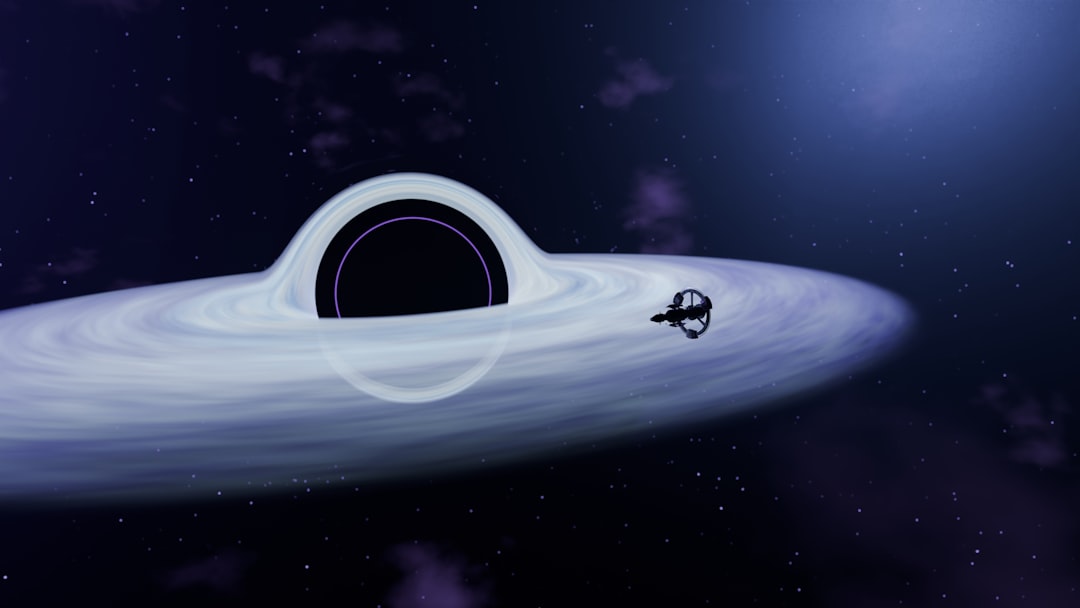
Measuring distant black holes is a critical endeavor in the field of astrophysics, as it provides insights into the formation and evolution of these enigmatic cosmic entities. Black holes, particularly supermassive ones, are believed to reside at the centers of most galaxies, including the Milky Way. Understanding their mass, spin, and growth history can shed light on the dynamics of galaxies and the universe’s overall structure.
By studying black holes that are billions of light-years away, scientists can trace back the history of the universe and gain a deeper understanding of how these massive objects influence their surroundings. Moreover, measuring distant black holes allows researchers to test fundamental theories of physics, including general relativity. The behavior of matter and energy in the extreme gravitational fields surrounding black holes can reveal discrepancies in current models and lead to new physics.
As such, the importance of measuring these distant objects extends beyond mere curiosity; it is a gateway to unraveling some of the most profound mysteries of the cosmos.
Key Takeaways
- Measuring distant black holes is important for understanding the formation and evolution of galaxies and the universe as a whole.
- Techniques such as gravitational lensing and observing the motion of stars near black holes are used to measure distant black holes.
- Telescopes, both ground-based and space-based, play a crucial role in measuring distant black holes by capturing high-resolution images and data.
- Challenges in measuring distant black holes include the extreme distances involved, as well as the need for advanced technology and precise measurements.
- Measuring distant black holes has a significant impact on our understanding of the universe, including the study of dark matter, galaxy formation, and the behavior of gravity in extreme conditions.
Techniques for Measuring Distant Black Holes
Various techniques have been developed to measure distant black holes, each with its own strengths and limitations. One of the most common methods involves observing the motion of stars and gas clouds orbiting around a black hole. By applying Kepler’s laws of motion and Newtonian mechanics, astronomers can infer the mass of the black hole based on the orbital velocities of these nearby objects.
This technique has been successfully employed in many cases, particularly in our own galaxy, where stars orbiting Sagittarius A* have provided crucial data. Another prominent method is gravitational lensing, which occurs when a massive object, such as a black hole, bends the light from a more distant source. This effect can magnify and distort the appearance of background galaxies, allowing astronomers to estimate the mass of the intervening black hole.
Gravitational lensing not only aids in measuring black holes but also helps in mapping dark matter distribution in the universe. These techniques, among others, form a comprehensive toolkit for scientists striving to measure and understand distant black holes.
The Role of Telescopes in Measuring Distant Black Holes

Telescopes play an indispensable role in the measurement of distant black holes, serving as the primary instruments through which astronomers gather data. Ground-based telescopes equipped with advanced adaptive optics can correct for atmospheric distortions, allowing for clearer images of celestial objects. These telescopes can capture high-resolution spectra that reveal the chemical composition and motion of stars near black holes, providing vital information about their mass and behavior.
Space-based telescopes, such as the Hubble Space Telescope and the upcoming James Webb Space Telescope, offer an even more significant advantage by bypassing Earth’s atmosphere entirely. These instruments can observe infrared and ultraviolet wavelengths that are often absorbed by atmospheric gases. By utilizing these telescopes, scientists can detect faint emissions from accretion disks around black holes and study their properties in unprecedented detail.
The synergy between ground-based and space-based telescopes enhances our ability to measure distant black holes effectively.
Challenges in Measuring Distant Black Holes
| Challenges | Details |
|---|---|
| Distance | Measuring the distance to distant black holes accurately is a major challenge due to their extreme distance from Earth. |
| Size | Obtaining precise measurements of the size of distant black holes is difficult due to their small apparent size from Earth. |
| Accretion Disk | Observing and measuring the properties of the accretion disk around distant black holes is challenging due to the complex interactions and variability. |
| Time Scales | Studying the time scales of distant black hole phenomena, such as variability and accretion, requires long-term observations and data collection. |
Despite advancements in technology and methodology, measuring distant black holes presents numerous challenges. One significant hurdle is the vast distances involved; many black holes are located billions of light-years away, making their light incredibly faint by the time it reaches Earth. This faintness complicates observations and requires highly sensitive instruments to detect even the slightest signals from these distant objects.
Additionally, distinguishing between different types of celestial objects can be problematic. For instance, some active galactic nuclei (AGN) may exhibit similar characteristics to those of black holes but are not necessarily indicative of their presence. This ambiguity necessitates careful analysis and often leads to uncertainties in measurements.
Furthermore, cosmic dust can obscure observations, further complicating efforts to accurately measure distant black holes.
The Impact of Measuring Distant Black Holes on Our Understanding of the Universe
The measurement of distant black holes has profound implications for our understanding of the universe. By studying these massive entities, scientists can gain insights into galaxy formation and evolution. The relationship between supermassive black holes and their host galaxies suggests that they co-evolve over cosmic time scales.
Understanding this relationship can help explain how galaxies grow and change over billions of years. Moreover, measuring distant black holes contributes to our knowledge of dark matter and dark energy—two mysterious components that make up a significant portion of the universe’s mass-energy content. The gravitational influence exerted by black holes can provide clues about the distribution of dark matter in galaxies.
As researchers continue to refine their measurements, they may uncover new connections between black holes and other cosmic phenomena, ultimately leading to a more comprehensive understanding of the universe’s structure and dynamics.
The Connection Between Measuring Distant Black Holes and Gravitational Waves
The advent of gravitational wave astronomy has opened new avenues for measuring distant black holes. When two black holes merge, they produce ripples in spacetime known as gravitational waves. These waves carry information about the masses and spins of the merging black holes, providing a complementary method for studying these elusive objects.
The detection of gravitational waves by observatories like LIGO has revolutionized astrophysics, allowing scientists to observe events that were previously undetectable through traditional electromagnetic observations. By correlating gravitational wave data with electromagnetic observations from telescopes, researchers can create a more complete picture of black hole populations across different epochs in cosmic history. This synergy between gravitational wave astronomy and traditional methods enhances our understanding of how black holes form and evolve over time.
As more gravitational wave events are detected, they will undoubtedly contribute significantly to our knowledge of distant black holes.
Measuring Distant Black Holes: The Search for Supermassive Black Holes
The quest to measure distant supermassive black holes is particularly intriguing due to their potential role in shaping galaxies. These colossal entities can have masses equivalent to millions or even billions of suns, exerting immense gravitational influence on their surroundings. By identifying and measuring supermassive black holes at various stages of cosmic evolution, scientists can piece together a timeline of galaxy formation and growth.
Quasars serve as beacons that illuminate their host galaxies, allowing astronomers to investigate their properties even at great distances. By measuring the redshift of quasars, researchers can determine how far back in time they are observing these objects, providing valuable insights into the early universe’s conditions and the formation processes of supermassive black holes.
The Future of Measuring Distant Black Holes: Advancements in Technology
The future of measuring distant black holes looks promising with ongoing advancements in technology. Next-generation telescopes equipped with cutting-edge instruments will enhance our ability to observe faint signals from these cosmic giants. Projects like the Extremely Large Telescope (ELT) aim to provide unprecedented resolution and sensitivity, enabling astronomers to study black holes with greater precision than ever before.
Additionally, developments in artificial intelligence and machine learning are poised to revolutionize data analysis in astrophysics. These technologies can sift through vast amounts of observational data more efficiently than traditional methods, identifying patterns and anomalies that may indicate the presence of distant black holes. As technology continues to evolve, it will undoubtedly lead to new discoveries and a deeper understanding of these fascinating cosmic phenomena.
The Collaboration of Scientists in Measuring Distant Black Holes
The measurement of distant black holes is not a solitary endeavor; it requires collaboration among scientists from various disciplines and institutions worldwide. Astrophysicists, astronomers, computer scientists, and engineers often work together on large-scale projects that involve complex data collection and analysis. This collaborative spirit fosters innovation and accelerates progress in understanding black holes.
International collaborations have become increasingly common in recent years, with projects like the Event Horizon Telescope (EHT) bringing together researchers from multiple countries to capture images of black holes’ event horizons. Such teamwork not only enhances scientific output but also promotes knowledge sharing and cross-disciplinary learning among scientists with diverse expertise.
The Fascinating Discoveries Made Through Measuring Distant Black Holes
The journey into measuring distant black holes has yielded numerous fascinating discoveries that challenge existing paradigms and expand our understanding of the universe. For instance, observations have revealed that some supermassive black holes grow at astonishing rates during certain periods in cosmic history, leading to questions about what drives this rapid growth. Additionally, studies have uncovered a surprising correlation between galaxy mass and supermassive black hole mass, suggesting a fundamental connection between these two components.
Moreover, measuring distant black holes has led to groundbreaking findings regarding their role in cosmic evolution.
These discoveries highlight the intricate interplay between black holes and their environments, underscoring their significance in shaping the cosmos.
The Ethical Considerations of Measuring Distant Black Holes
As with any scientific endeavor, measuring distant black holes raises ethical considerations that warrant careful reflection. One primary concern revolves around resource allocation; large-scale astronomical projects often require significant funding and resources that could be directed toward pressing issues on Earth. Balancing investment in fundamental research with immediate societal needs poses a challenge for policymakers and funding agencies.
Additionally, as technology advances, ethical questions arise regarding data privacy and ownership in collaborative projects involving multiple institutions and countries. Ensuring equitable access to data while fostering collaboration is essential for maintaining trust within the scientific community. As researchers continue to explore the mysteries surrounding distant black holes, it is crucial to navigate these ethical considerations thoughtfully to ensure that scientific progress benefits humanity as a whole.
In conclusion, measuring distant black holes is an essential pursuit that enriches our understanding of the universe while posing unique challenges and ethical considerations. Through innovative techniques and collaborative efforts among scientists worldwide, researchers continue to unveil the secrets held by these enigmatic cosmic entities, paving the way for future discoveries that may reshape our comprehension of reality itself.
In the quest to measure distant black holes, astronomers have developed innovative techniques that push the boundaries of our understanding of the universe. One such method involves the use of gravitational wave detectors, which can capture the ripples in spacetime caused by massive cosmic events. For a deeper dive into the fascinating world of black hole measurement and the technologies involved, you can explore a related article on this topic by visiting My Cosmic Ventures. This resource provides insights into the latest advancements and challenges faced by scientists in this intriguing field of study.
WATCH THIS! 🌌The Biggest Black Hole Is A LIE
FAQs
What are black holes?
Black holes are regions in space where the gravitational pull is so strong that nothing, not even light, can escape from them. They are formed when massive stars collapse under their own gravity.
How do scientists measure distant black holes?
Scientists measure distant black holes using a variety of techniques, including observing the effects of a black hole’s gravity on nearby objects, studying the radiation emitted by matter falling into a black hole, and using gravitational wave detectors to detect the ripples in spacetime caused by black hole mergers.
What are some of the tools and technologies used to measure distant black holes?
Tools and technologies used to measure distant black holes include telescopes (both ground-based and space-based), X-ray detectors, radio telescopes, and gravitational wave detectors such as LIGO and Virgo.
Why is it important to measure distant black holes?
Measuring distant black holes helps scientists better understand the nature of these mysterious objects, their role in the evolution of galaxies, and the fundamental laws of physics that govern their behavior. It also provides valuable insights into the formation and growth of black holes throughout the history of the universe.
What are some recent advancements in the measurement of distant black holes?
Recent advancements in the measurement of distant black holes include the detection of gravitational waves from black hole mergers, the imaging of the event horizon of a black hole using the Event Horizon Telescope, and the discovery of supermassive black holes at the centers of distant galaxies. These advancements have significantly expanded our knowledge of black holes and their properties.