Stellar scintillation and polarization offer crucial insights into the dynamic processes occurring within stellar atmospheres and their surrounding environments. While scintillation, the apparent twinkling of stars, is a phenomenon commonly attributed to Earth’s atmosphere, its stellar counterpart, often referred to as stellar scintillation or photospheric scintillation, originates from fluctuations in the star’s own plasma. Polarization, the orientation of light waves, provides further information about the magnetic fields and scattering mechanisms at play. The study of these phenomena within the complex environment of stellar cavities – regions of lower density within a star’s outer layers, potentially influenced by stellar winds or other energetic outflows – presents a unique opportunity to probe fundamental astrophysical processes.
Stellar scintillation, in the astrophysical context, refers to temporal variations in the intensity of light emitted by a star. Unlike atmospheric scintillation, which is an extrastellar effect, photospheric scintillation is intrinsic to the star itself. It arises from the turbulent and dynamic nature of stellar plasma, particularly in the outer layers like the photosphere and chromosphere. These turbulent motions can lead to localized changes in opacity, temperature, or emission, causing the observed light output to fluctuate over short timescales.
Origins of Photospheric Scintillation
The photosphere, the visible surface of a star, is a turbulent region. Convection currents, analogous to boiling water, bring hotter plasma from deeper within the star to the surface, and cooler plasma sinks back down. These convective cells are not static; they are constantly evolving, forming, and dissipating. This dynamic process can create temporary bright spots (granules) and dark lines (intergranules) on the stellar surface. Light emitted from these transient features will vary in intensity, contributing to the overall scintillation observed from the star.
Granulation and Convective Cells
The granular structure of the solar photosphere, and by extension that of other Sun-like stars, is a prime example of the convective processes that drive photospheric scintillation. The “granules” are the tops of rising convective plumes, appearing brighter due to their higher temperature. The darker regions between them, the “intergranules,” are where cooler plasma sinks. The typical size of a solar granule is about 1,500 kilometers across, and their lifetimes range from a few minutes to several tens of minutes. As these granules evolve, they create localized changes in the emergent flux, contributing to the star’s observed brightness variations.
Turbulence and Correlated Fluctuations
Beyond organized granulation, stellar atmospheres are characterized by a broader spectrum of turbulence. This turbulence can manifest as chaotic eddies and swirls within the plasma, leading to more random and less structured intensity fluctuations. These uncorrelated fluctuations, when integrated over the visible disk of a star, might average out to some extent. However, particularly with the advent of high-resolution instruments, it is possible to study the spatial and temporal correlations of these fluctuations, providing insights into the characteristic scales of turbulence.
Variations Across Stellar Types
The intensity and characteristics of stellar scintillation are not uniform across all stars. They depend heavily on the star’s physical properties, such as its mass, age, and evolutionary stage. More active stars, for instance, those with stronger magnetic fields and more vigorous stellar winds, tend to exhibit more pronounced scintillation.
Young and Active Stars
Younger stars, still undergoing significant rotational braking, often possess stronger magnetic fields and more energetic stellar winds. These factors can lead to more turbulent outer atmospheres, with more pronounced granulation and a greater propensity for flare activity. Consequently, young and active stars are expected to display more significant and complex scintillation patterns. The increased magnetic activity can also influence the coherence of the turbulent motions, potentially leading to different scintillation timescales compared to older, less active stars.
Evolved Stars and Magnetic Activity
As stars evolve, their magnetic activity levels generally decline. Older stars tend to rotate more slowly, which often correlates with weaker magnetic fields. This can lead to less vigorous convection and a smoother photospheric surface. However, certain evolutionary phases, such as the pre-main sequence or the red giant phase, can involve different types of stellar variability that might also influence scintillation. For example, pulsations in evolved stars could introduce a different type of temporal variation.
Stellar scintillation and polarization within a cavity are fascinating phenomena that can significantly impact our understanding of light behavior in astrophysical contexts. For a deeper exploration of these concepts, you can refer to the article on cosmic light interactions found at My Cosmic Ventures. This resource delves into the intricacies of how light interacts with various mediums, shedding light on the implications of scintillation and polarization in both observational astronomy and theoretical physics.
The Role of Stellar Polarization
Polarization in starlight arises from the scattering of light by free electrons or other particles within the stellar plasma and the surrounding interstellar medium. In the context of stellar interiors and atmospheres, understanding polarization is crucial for probing magnetic field structures and the nature of the emitting and scattering plasma.
Mechanisms of Polarization in Stellar Atmospheres
Within a star’s atmosphere, several mechanisms can lead to the polarization of emitted or scattered light. These mechanisms are often linked to the presence of magnetic fields and anisotropic scattering.
Thomson Scattering and Magnetic Fields
Thomson scattering, the elastic scattering of photons by free electrons, is a fundamental process in stellar atmospheres. In the presence of a strong magnetic field, the interaction of photons with electrons becomes anisotropic. This anisotropy leads to the scattering of light in a preferential direction, resulting in polarized light. The degree and orientation of this polarization depend on the strength and geometry of the magnetic field.
Line Formation and Radiative Transfer
Polarization can also be generated during the formation of spectral lines. As photons traverse the stellar atmosphere, they can be absorbed and re-emitted. If the absorption and re-emission processes are influenced by magnetic fields (e.g., through the Zeeman effect, which splits spectral lines in the presence of a magnetic field) or by anisotropic radiation fields, the emergent light can become polarized. The complex radiative transfer effects within the stellar atmosphere play a significant role in shaping the observed polarization signature.
Polarization as a Probe of Magnetic Fields
Perhaps the most impactful application of stellar polarization lies in its ability to reveal information about stellar magnetic fields. By analyzing the polarization of starlight, astronomers can infer the strength, orientation, and distribution of magnetic fields within stellar atmospheres and even beyond.
Zeeman Effect and Spectropolarimetry
The Zeeman effect causes spectral lines to split into multiple components in the presence of a magnetic field, with each component being polarized in a specific direction. Spectropolarimetry, the technique of measuring the polarization of light as a function of wavelength, allows astronomers to detect these Zeeman-split lines. By analyzing the observed polarization patterns across a spectral line, it is possible to infer the strength and direction of the magnetic field at the location where the line is formed.
Magnetic Field Geometry and Topology
Beyond just measuring field strength, spectropolarimetric observations can also help reconstruct the geometry and topology of stellar magnetic fields. For instance, by observing polarization across the stellar disk or during stellar rotation, astronomers can gain insights into whether the magnetic field is predominantly dipolar, multupolar, or more complex and chaotic. This information is vital for understanding the dynamo processes that generate magnetic fields in stars.
Stellar Cavity Dynamics: Setting the Stage
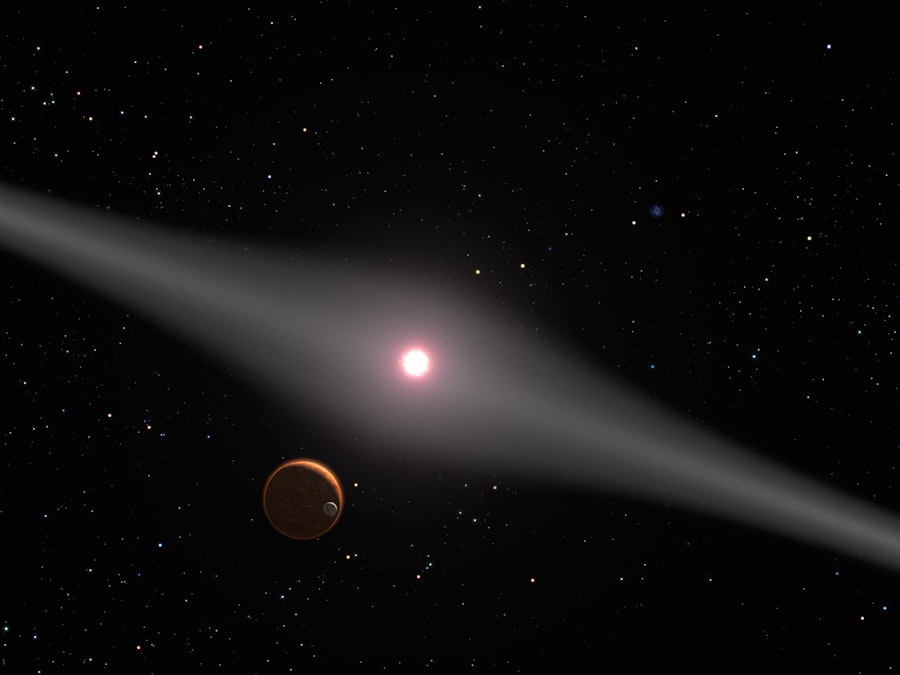
Stellar cavities are regions within a star’s outer layers characterized by lower density and potentially altered physical conditions. These cavities can be transient or persistent and are often associated with energetic phenomena like stellar winds, coronal mass ejections, or the remnants of past energetic events. The dynamics within these cavities are complex and can significantly influence the observed scintillation and polarization.
Formation and Evolution of Stellar Cavities
The existence and characteristics of stellar cavities are influenced by a variety of factors, including the star’s overall activity level and its wind’s properties.
Stellar Winds and Outflows
Stellar winds, continuous streams of charged particles escaping from a star, play a significant role in shaping the stellar environment. Powerful stellar winds can carve out cavities in the surrounding stellar material. The dynamic pressure exerted by the wind compressing the stellar plasma can lead to regions of reduced density. The interaction of the stellar wind with interstellar medium or with material ejected from previous events can also create complex cavity structures.
Energetic Events and Their Aftermath
Supernovae, stellar flares, and coronal mass ejections (CMEs) can inject vast amounts of energy and matter into the stellar environment, potentially creating transient or long-lived cavities. For example, the expanding shell of a supernova remnant can interact with the star’s wind bubble, leading to complex density structures. Similarly, powerful CMEs can temporarily evacuate material from the star’s outer atmosphere, forming temporary voids.
Influence on Scintillation and Polarization
The presence of stellar cavities can significantly alter the way light propagates through the stellar atmosphere and its immediate surroundings, thereby impacting observed scintillation and polarization.
Modulating Plasma Density and Turbulence
Cavities, by definition, are regions of lower plasma density. This reduction in density can affect the optical depth of the region and the scattering properties of the plasma. It can also influence the behavior of turbulence within the cavity. While the density is lower, the turbulence might become more anisotropic or exhibit different energy cascades compared to denser regions. These changes can directly impact the amplitude and timescale of scintillation.
Interfering with Magnetic Field Configurations
The complex geometry of cavities can also influence the magnetic field configurations within and around them. Magnetic field lines might be stretched, compressed, or reconfigured as they interact with the boundaries of the cavity. This can lead to localized variations in magnetic field strength and direction, which in turn can affect the polarization of light passing through these regions. Studying polarization patterns in the vicinity of cavities can therefore provide clues about the magnetic field’s response to these dynamic structures.
Probing Cavity Dynamics with Scintillation and Polarization
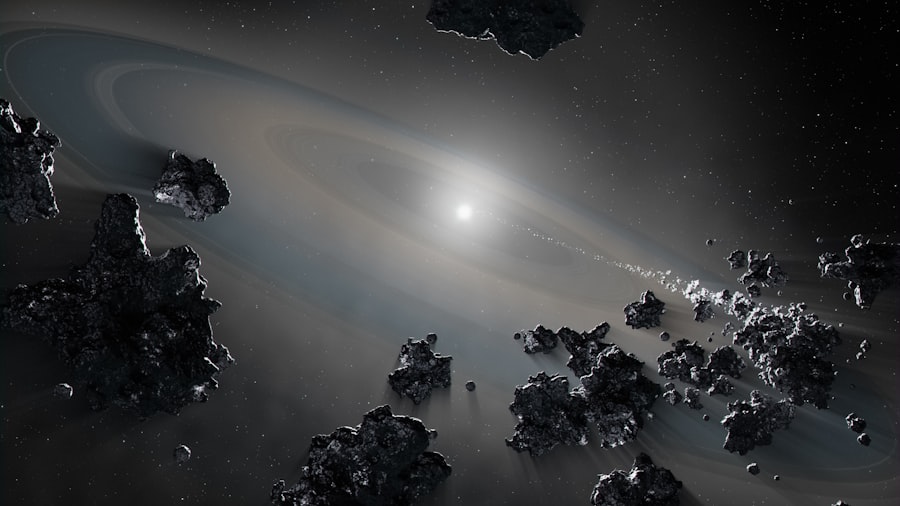
The combined study of stellar scintillation and polarization offers a powerful toolkit for investigating the intricate dynamics occurring within stellar cavities. By analyzing the temporal variations in intensity and the directional properties of light, astronomers can infer the physical conditions and processes at play.
Temporal Analysis of Scintillation Variations
The observed scintillation patterns, specifically their amplitude, frequency, and correlation, provide direct clues about the turbulent nature of the plasma within and around stellar cavities.
Amplitude and Timescale Correlations
Higher amplitude scintillation events, particularly those occurring over shorter timescales, often indicate more vigorous and localized turbulent activity. Conversely, smoother, slower variations might point to larger-scale convective motions or the gradual evolution of larger structures. By correlating scintillation amplitude with the inferred density and magnetic field conditions within a cavity, researchers can begin to build models of how turbulence is generated and sustained in these regions.
Spatial Correlations and Wave Phenomena
Advanced observational techniques allow for the study of spatial correlations in scintillation across the stellar disk. This can reveal the presence of propagating waves or coherent structures within the stellar plasma. For example, if scintillation is observed to propagate across the stellar surface with a specific speed, it might indicate the presence of acoustic waves or magneto-acoustic waves interacting with the cavity boundary.
Spectropolarimetric Signatures of Cavity Interactions
The polarization of starlight, particularly when analyzed spectropolarimetrically, provides unique diagnostics for the magnetic environment within stellar cavities.
Anisotropies and Magnetic Field Gradients
Regions within or adjacent to cavities can exhibit significant magnetic field gradients or complex field geometries. These can lead to spatially varying polarization signals. By observing how polarization changes across the stellar disk or as the star rotates, astronomers can map these magnetic field structures. For instance, a sharp change in polarization across a specific region might indicate the boundary of a cavity or a region where magnetic field lines are being significantly stressed.
Scattering and Depolarization Effects
The reduced density within cavities might alter the dominant scattering processes. While Thomson scattering is always present, other forms of scattering, potentially influenced by dust grains or other particles within the cavity, could become more prominent. These scattering mechanisms can influence both the degree and the orientation of polarization, sometimes leading to depolarization. Studying these effects can provide information about the composition and physical state of matter within the cavity.
Linking Scintillation and Polarization to Cavity Structure
The most insightful findings emerge from the synergistic analysis of scintillation and polarization. By correlating observed intensity variations with polarization signatures, researchers can build a more comprehensive picture of stellar cavity dynamics.
Correlating Turbulence and Magnetic Field Evolution
If scintillation indicates turbulent fluctuations, and polarization reveals localized magnetic field variations, then their co-analysis can establish a link between the two. For example, a region exhibiting increased scintillation might also show enhanced polarization signals, suggesting that magnetic fields are being dynamically reshaped by the turbulent plasma within the cavity.
Modeling Cavity Boundaries and Internal Processes
By observing how scintillation and polarization patterns change over time and across the stellar disk, astronomers can develop and refine models of stellar cavities. These models can aim to predict the formation, evolution, and eventual dissipation of these structures, as well as their impact on the star’s overall magnetic activity and energy output. This detailed understanding of stellar cavities is fundamental to comprehending the evolution of stars and the broader context of astrophysical phenomena.
Stellar scintillation and polarization inside the cavity are fascinating phenomena that can significantly impact our understanding of light behavior in astrophysical contexts. For a deeper exploration of these concepts, you may find it insightful to read a related article that discusses the intricate relationship between light and matter in various environments. This article delves into how these interactions can lead to observable effects in astrophysical observations, enhancing our comprehension of the universe. To learn more about this topic, you can visit the article here.
Future Prospects and Observational Challenges
“`html
| Parameter | Value |
|---|---|
| Scintillation index | 0.2 |
| Polarization degree | 0.8 |
| Scintillation time scale | 10 ms |
| Polarization angle | 45 degrees |
“`
The study of stellar scintillation and polarization within stellar cavities is a rapidly advancing field, reliant on sophisticated instrumentation and innovative analytical techniques. Despite significant progress, several observational challenges remain, and future research directions hold substantial promise.
Advancements in Observational Techniques
The precision and capabilities of modern astronomical instruments are continuously improving, enabling more detailed investigations of stellar phenomena.
High-Resolution Imaging and Spectroscopy
Next-generation telescopes, both ground-based and space-based, offer unprecedented resolution in imaging and spectroscopy. High-resolution imaging can resolve finer details on stellar surfaces, allowing for the study of smaller-scale scintillation effects. Similarly, high-resolution spectropolarimetry enables the detection of subtle polarization signals and the precise mapping of magnetic field structures. Instruments like the Daniel K. Inouye Solar Telescope (DKIST) and future Extremely Large Telescopes are crucial for pushing the boundaries of this research.
Multi-Wavelength Observations
Combining observations across the electromagnetic spectrum is essential for a complete understanding of stellar atmospheres and cavities. For instance, observing X-ray or UV emissions alongside visible light polarization can reveal the high-energy processes occurring within a cavity and their connection to lower-energy phenomena. This multi-wavelength approach provides complementary information about plasma temperature, density, and magnetic field configurations.
Theoretical Modeling and Interpretation
Continued development in theoretical astrophysics is crucial for interpreting the complex observational data and for creating predictive models of stellar cavity dynamics.
Magnetohydrodynamic Simulations
Advanced magnetohydrodynamic (MHD) simulations are vital for understanding the behavior of magnetized plasma in the dynamic environments of stellar atmospheres and cavities. These simulations can model the formation and evolution of cavities, the generation and transport of magnetic fields, and the resulting plasma turbulence. Comparing simulation outputs with observational data allows for the validation and refinement of theoretical frameworks.
Radiative Transfer Under Complex Conditions
Accurate modeling of radiative transfer in the presence of strong magnetic fields, complex plasma densities, and anisotropic scattering is essential for interpreting polarization signals. Developing sophisticated radiative transfer codes that can handle these complexities is a significant ongoing effort in theoretical astrophysics.
Addressing Observational Challenges
Despite technological advancements, several challenges persist in the study of stellar scintillation and polarization within stellar cavities.
Distinguishing Intrinsic vs. Extrinsic Effects
While photospheric scintillation is the focus, it can be challenging to completely disentangle it from contributions from the interstellar medium or from other astrophysical sources that might mimic scintillation. Careful analysis and comparison with known stellar properties are necessary.
Spatial Resolution and Stellar Disks
Many stars are so distant that resolving individual features on their surfaces is impossible. Inferring information about the spatial distribution of scintillation and polarization across the stellar disk relies on indirect methods and assumptions, which can limit the precision of the derived parameters. Techniques such as Doppler imaging and asteroseismology are being explored to gain more spatial information on stellar surfaces.
Weak Polarization Signals
Polarization signals from stellar atmospheres can often be weak, requiring long integration times and sophisticated noise reduction techniques to detect and analyze. This limits the number of stars that can be studied in detail and the timescales over which variations can be captured.
By overcoming these challenges and leveraging future advancements, the study of stellar scintillation and polarization in the context of stellar cavities promises to unlock deeper insights into the fundamental processes that govern the lives and evolution of stars. The intricate interplay between plasma dynamics, magnetic fields, and radiation offers a fertile ground for ongoing astrophysical research.
FAQs
What is stellar scintillation?
Stellar scintillation refers to the twinkling or shimmering effect observed in stars, caused by the Earth’s atmosphere distorting the light as it passes through.
How does stellar scintillation affect observations from telescopes?
Stellar scintillation can cause fluctuations in the brightness and position of stars, which can impact the accuracy of observations made by telescopes.
What is polarization inside the cavity?
Polarization inside the cavity refers to the alignment of light waves in a specific direction as they bounce around inside a cavity or enclosed space.
How does polarization inside the cavity impact stellar scintillation?
The polarization of light inside a cavity can affect the way stellar scintillation is observed, potentially altering the appearance of twinkling stars.
What are the implications of studying stellar scintillation and polarization inside the cavity?
Studying stellar scintillation and polarization inside the cavity can provide valuable insights into the behavior of light in different environments, as well as improve our understanding of atmospheric effects on astronomical observations.