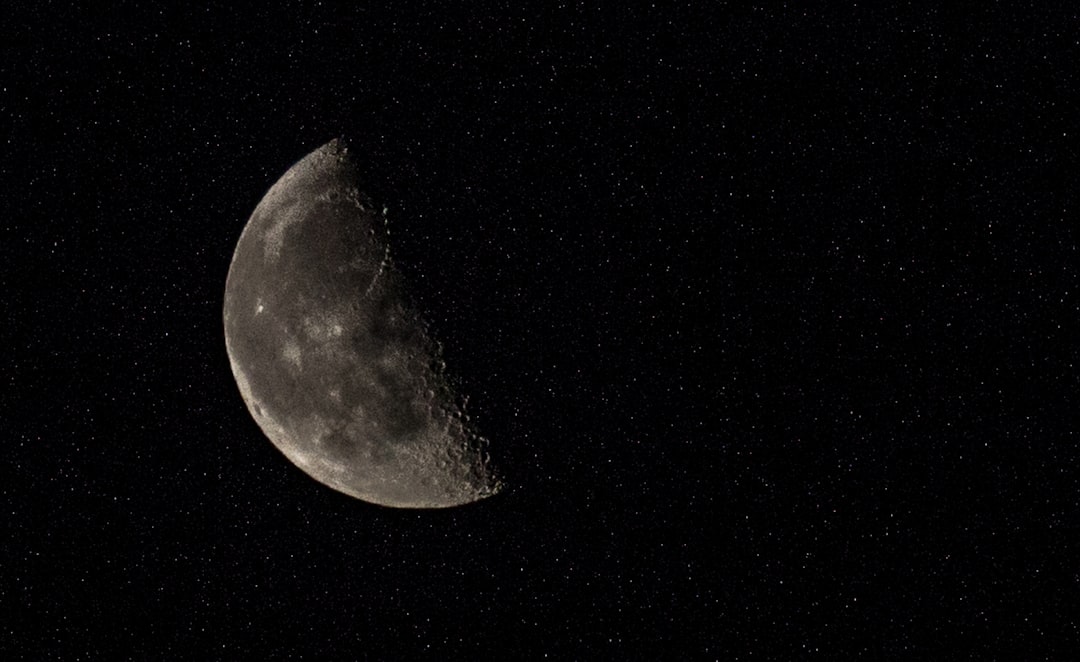
The celestial body that has captivated humanity for millennia, the Moon, has often been the subject of scientific inquiry. While its phases and apparent rotation are well-understood, phenomena that deviate from established patterns naturally pique the interest of researchers. One such enigma, the so-called “bell-like ring” of the Moon, has spurred debate and investigation. This article aims to explore the various hypotheses and scientific observations surrounding this phenomenon.
The concept of a “bell-like ring” associated with the Moon is not a modern scientific discovery, but rather a theoretical construct that emerged from early spectroscopic studies. Prior to the advent of lunar missions and advanced telescopic observations, scientists relied on analyzing the light that reflected off the Moon’s surface. Spectroscopy, the study of the interaction between matter and electromagnetic radiation, allows scientists to infer the composition of celestial bodies by examining the wavelengths of light they emit or reflect.
Early Spectroscopic Interpretations
In the early 20th century, astronomers, armed with increasingly sophisticated spectrographs, began to meticulously analyze the spectrum of moonlight. These instruments break down light into its constituent colors, revealing absorption lines and emission bands that correspond to specific chemical elements and molecules within the material reflecting the light. When this light originated from the Moon, the interpretation was that these lines and bands represented the composition of the lunar surface.
The Search for Atmospheric Signatures
A key driving force behind these early spectroscopic efforts was the persistent question of whether the Moon possessed an atmosphere. While visual observations of Earth at night showed no discernible atmospheric haze on the Moon, some scientists theorized that a tenuous or ephemeral atmosphere might exist, perhaps composed of gases that would be difficult to detect through direct visual means. Spectroscopic analysis offered a potential avenue to identify such atmospheric components, even in trace amounts. The detection of specific spectral lines associated with known gases would have been conclusive evidence for a lunar atmosphere.
Anomalous Spectral Features
During some of these early spectroscopic observations, researchers noted peculiar features in the lunar spectrum that did not readily align with the expected signatures of common lunar surface materials or known atmospheric gases. These anomalies were often subtle and could be attributed to various factors, including instrumental limitations, terrestrial atmospheric interference, or processing errors. However, a group of researchers, notably those exploring speculative theories about celestial bodies, began to interpret these anomalies as indicative of a non-standard lunar composition.
The “Bell-Like” Analogy
The term “bell-like ring” itself is a descriptive analogy, not a technical term derived directly from spectral data. It is believed to have originated from the visual representation of certain spectral graphs or from an imagined sonic analogy of what such a peculiar composition might produce if it were somehow capable of resonating. The visual appearance of certain spectral plots, particularly those with sharp peaks and troughs arranged in a somewhat symmetrical fashion, might have led to this comparison. Alternatively, some researchers might have proposed an exotic composition that they believed would, hypothetically, produce a resonant frequency when struck or agitated, thus evoking the image of a bell’s ring. It is crucial to understand that this was a theoretical interpretation, an attempt to make sense of unexplained data through analogy.
The phenomenon of the moon “ringing like a bell” has intrigued scientists and enthusiasts alike since the Apollo missions, where seismic data collected revealed unusual vibrations on the lunar surface. For a deeper understanding of this captivating subject, you can explore the article that discusses the implications of the Apollo data and the geological characteristics of the moon. To read more about this fascinating topic, visit this article.
Investigating Potential Explanations for Anomalies
The persistence of these debated spectral anomalies led to the formulation of several hypotheses, each attempting to provide a scientific basis for the “bell-like ring” phenomenon. These explanations ranged from the plausible to the highly speculative, reflecting the limited direct data available at the time.
The Presence of Exotic Elements
One of the more straightforward, though still unsubstantiated, explanations proposed that the Moon might contain unique elements or isotopes not commonly found on Earth in significant quantities. The theory suggested that these exotic elements, when interacting with sunlight, would produce a distinctive spectral signature that could be misinterpreted as a “bell-like ring.”
Isotopic Variations
The concept of isotopic variations played a role in this hypothesis. Isotopes of an element have the same number of protons but different numbers of neutrons, which can subtly alter their spectral properties. It was theorized that the Moon might possess a higher abundance of certain isotopes compared to Earth, leading to spectral lines that differed from expected terrestrial signatures.
Hypothetical Lunar Elements
On the more speculative end, some proponents of the “bell-like ring” theory posited the existence of elements entirely unknown to terrestrial science. These hypothetical elements, by their very nature, would have unique spectral characteristics, which might manifest as the observed anomalies. This line of reasoning, however, lacked any direct supporting evidence.
The Influence of Highly Compressed Volatiles
Another proposed explanation focused on the potential for highly compressed volatiles trapped within the lunar regolith. Volatiles, such as water or gases, are substances that readily vaporize. The idea was that under the extreme conditions present on the early Moon, perhaps due to impacts or internal heat, these volatiles could have been compressed into a dense, unusual state.
Trapped Gases Beneath the Surface
The theory suggested that these compressed gases might not be uniformly distributed but rather trapped in pockets or layers beneath the lunar surface. When sunlight interacts with these subsurface pockets, it could be refracted or reflected in a manner that alters the overall spectrum observed from Earth, potentially creating the “bell-like” pattern.
Sublimation Under Solar Radiation
It was also speculated that solar radiation could cause some of these trapped volatiles to sublimate, releasing gases. These ephemeral plumes or outgassings might then interact with sunlight, producing transient spectral signatures that were then interpreted as part of a more persistent “bell-like ring.” This explanation would account for the variability and subtle nature of some observed anomalies.
The Role of Crystalline Structures
The crystalline structure of lunar surface materials was also considered a potential factor. Minerals, with their defined atomic arrangements, exhibit specific ways of interacting with light. It was theorized that unique crystalline formations on the Moon, perhaps different from those found on Earth, could lead to unusual spectral reflections.
Unusual Mineral Formations
The hypothesis suggested that the Moon might possess mineral formations with lattice structures that cause light to be scattered or absorbed in a manner that produces a spectrally distinct signature. This could be related to the presence of specific mineral types or to extreme geological processes that created novel crystalline arrangements.
Bragg Scattering and Interference Patterns
In more technical terms, this explanation might involve phenomena like Bragg scattering, where X-rays or light reflect off atomic planes in a crystal lattice. If the Moon’s crystalline structures were arranged in a specific, repeating pattern, it could lead to constructive and destructive interference of light waves at certain wavelengths, resulting in a spectral profile that appeared “bell-like.” However, the direct evidence for such specific and unique crystalline structures on a scale that would produce such a global spectral effect remained elusive.
Scientific Advancements and the Demise of Exotic Theories
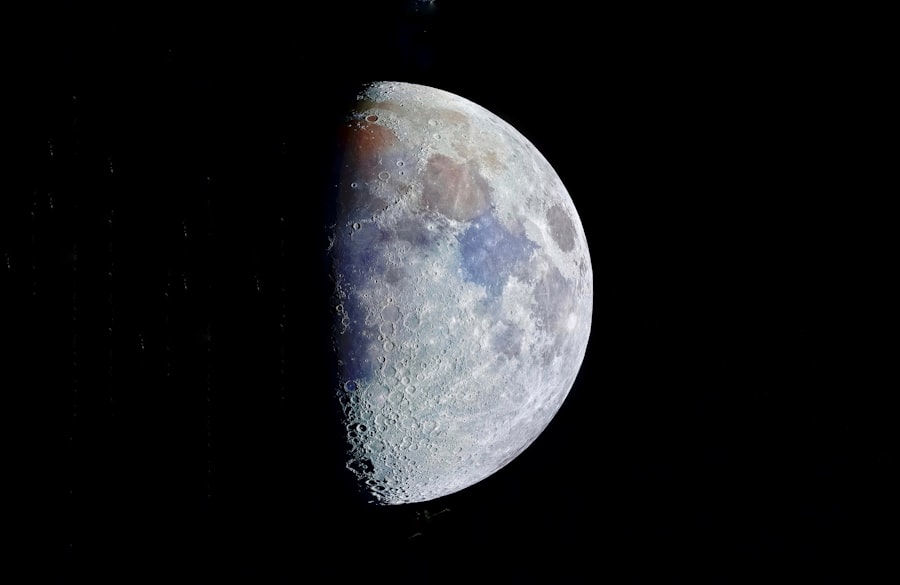
The advent of lunar exploration, beginning with the Apollo missions, revolutionized our understanding of the Moon. Direct sampling, in-situ measurements, and high-resolution imaging provided a wealth of data that allowed scientists to move beyond speculative interpretations of distant observation.
The Apollo Missions and Lunar Samples
The most significant contribution to debunking exotic theories came from the analysis of lunar samples brought back by the Apollo missions. Astronauts collected over 380 kilograms of lunar rocks, soil, and core samples, which were then subjected to rigorous examination in laboratories worldwide.
Comprehensive Chemical Analysis
These samples underwent exhaustive chemical analysis using a wide array of techniques, including mass spectrometry, X-ray fluorescence, and atomic emission spectroscopy. This direct analysis negated the need for indirect spectral interpretation to determine lunar composition. The results consistently showed that the Moon is primarily composed of silicate rocks, similar in many respects to Earth’s crust and mantle, but without the presence of any unknown or exotic elements.
Isotopic Ratios Confirmed
The isotopic ratios of the elements found on the Moon were also carefully measured. These ratios were found to be consistent with those expected from a body formed under similar conditions to Earth, particularly in the context of the giant impact hypothesis for the Moon’s formation. There was no evidence of unusual isotopic abundances that would explain the “bell-like ring.”
High-Resolution Telescopic Observations
Beyond sample analysis, advancements in telescopic technology also provided a much clearer picture of the Moon’s surface and optical properties. Modern telescopes, equipped with advanced sensors and adaptive optics, allowed for observations with unprecedented detail.
Surface Composition Verified
High-resolution spectroscopic observations from Earth-based telescopes and orbiting observatories like the Lunar Reconnaissance Orbiter (LRO) have provided detailed spectral maps of the lunar surface. These maps consistently show spectral features that are entirely consistent with known lunar minerals such as plagioclase feldspar, pyroxene, and olivine, along with various oxides. There are no anomalous spectral features that require recourse to exotic explanations.
Absence of Detectable Atmosphere
These advanced observations also definitively confirmed the absence of a significant lunar atmosphere. The extremely tenuous exosphere that exists is incapable of producing the kind of spectral phenomena implied by the “bell-like ring” hypothesis.
Re-evaluating the “Bell-Like Ring” Phenomenon

Given the overwhelming evidence from lunar samples and advanced telescopic observations, the “bell-like ring” hypothesis, as initially conceived, is now largely considered an artifact of early observational limitations and speculative interpretation. The anomalies that spurred the hypothesis can be explained by more mundane scientific principles.
Instrumental Artifacts and Noise
Early spectroscopic instruments, while groundbreaking for their time, were susceptible to various sources of error. These included:
Signal-to-Noise Ratio Issues
Spectroscopic measurements are always subject to a degree of statistical noise. In early observations, the signal from the Moon might have been weak, leading to a low signal-to-noise ratio. This could have resulted in apparent spectral features that were, in reality, just random fluctuations in the data, perceived as patterns by researchers looking for specific signatures.
Calibration Errors
The calibration of spectrographs was also a more complex process in the early days of the technology. Inaccurate calibration could lead to distortions in the spectral data, creating artificial peaks or dips that might have been misinterpreted.
Stray Light and Interference
Stray light within the instrument or interference from the Earth’s atmosphere at the time of observation could also have contaminated the lunar spectrum, introducing spurious features.
Atmospheric Earth Interference
The Earth’s own atmosphere is a significant source of spectral lines and bands due to the absorption and emission of light by its constituent gases. When observing the Moon from Earth, the sunlight reflected from the lunar surface must pass through the Earth’s atmosphere on its return journey.
Absorption Bands in Earth’s Atmosphere
Certain gases in the Earth’s atmosphere, such as water vapor and oxygen, have strong absorption bands at specific wavelengths. If these bands were not perfectly accounted for or removed during data processing, they could appear as dips in the lunar spectrum, potentially creating patterns that might be misconstrued.
Telluric Lines
These absorption lines from the Earth’s atmosphere are known as telluric lines. Early analysis might have struggled to differentiate between genuine lunar spectral features and these telluric lines, especially if the processing techniques were less sophisticated than modern methods.
Misinterpretation of Known Lunar Features
It is also possible that some of the interpreted “anomalies” were simply misinterpretations of the expected spectral signatures of known lunar materials, viewed through the lens of pre-existing theoretical biases.
Granular Variations in Surface Composition
The lunar surface is not perfectly uniform. While broadly composed of silicate rocks, there are variations in the proportions of different minerals across the surface. These variations, even if minor, could lead to subtle changes in the reflected spectrum that, when averaged or processed in certain ways, might appear unusual.
The Effect of Varying Illumination Angles
The angle at which sunlight illuminates the Moon and the angle from which it is observed can influence the apparent spectral characteristics due to shadowing and the way light reflects off rough surfaces. Early analyses might not have fully accounted for these geometric effects, leading to perceived anomalies.
The intriguing phenomenon of the moon ringing like a bell has captivated scientists and enthusiasts alike, prompting extensive research into the Apollo data collected during lunar missions. For a deeper understanding of this mysterious occurrence, you can explore a related article that delves into the seismic activity of the moon and its implications for our knowledge of lunar geology. This fascinating exploration can be found at My Cosmic Ventures, where you will discover insights that shed light on why the moon resonates in such an unusual manner.
The Legacy of the “Bell-Like Ring”
| Data/Metric | Description |
|---|---|
| Moonquake Data | Recorded seismic activity on the moon during the Apollo missions. |
| Seismic Measurements | Details of the vibrations and oscillations detected by seismometers on the moon. |
| Frequency Analysis | Study of the frequency at which the moon rang like a bell and its implications. |
| Geological Composition | Information about the moon’s geological structure and its relation to the ringing phenomenon. |
While the scientific community now largely dismisses the “bell-like ring” as a literal phenomenon of the Moon, its historical significance lies in its role as a catalyst for scientific inquiry and technological development.
Driving Early Spectroscopic Research
The pursuit of understanding these perceived anomalies pushed the boundaries of spectroscopic technology and observational techniques. Scientists were motivated to develop more sensitive instruments, more sophisticated data processing methods, and more accurate calibration procedures, all of which contributed to the advancement of astronomy.
Illustrating the Scientific Method
The case of the “bell-like ring” serves as a compelling example of the scientific method in action. Initial observations, leading to a hypothesis, followed by further investigation, data collection (through missions and advanced telescopes), and ultimately the refinement or rejection of the hypothesis based on new evidence. It highlights the iterative nature of scientific discovery.
The Importance of Direct Evidence
This historical episode underscores the critical importance of direct evidence in scientific understanding, particularly in astrophysics. While theoretical models and indirect observations are vital, direct sampling and high-resolution imaging often provide the definitive answers that resolve long-standing mysteries. The Moon’s samples and the images from modern lunar probes have provided an unparalleled level of certainty about its composition and nature.
The “bell-like ring” of the Moon, therefore, transforms from a supposed celestial oddity into a testament to the progress of scientific understanding. It is a reminder that even the most intriguing phenomena can often be explained by a deeper grasp of established scientific principles, once the necessary tools and data become available. The cosmos continually invites exploration, and the journey to uncover its secrets is as fascinating as the discoveries themselves.
FAQs
What is the “Why the Moon Rang Like a Bell” Apollo data article about?
The article discusses the findings from the Apollo missions that suggest the moon “rang like a bell” after being struck by a lunar module ascent stage.
What data from the Apollo missions supports the claim that the moon “rang like a bell”?
Seismic data collected by seismometers placed on the moon’s surface by the Apollo missions showed that the moon vibrated for several hours after being struck by the lunar module ascent stage.
What are the implications of the moon “ringing like a bell” for our understanding of the moon’s interior?
The moon’s “ringing” suggests that its interior is more complex than previously thought, with a potentially solid inner core and a partially molten outer core.
How does the “ringing” of the moon provide insight into its formation and evolution?
Studying the moon’s vibrations can help scientists understand its early history, including how it formed and how it has evolved over time.
What further research is needed to better understand the moon’s “ringing” and its implications?
Further missions to the moon, as well as continued analysis of Apollo data and development of new technologies, are needed to better understand the moon’s “ringing” and its implications for lunar science.