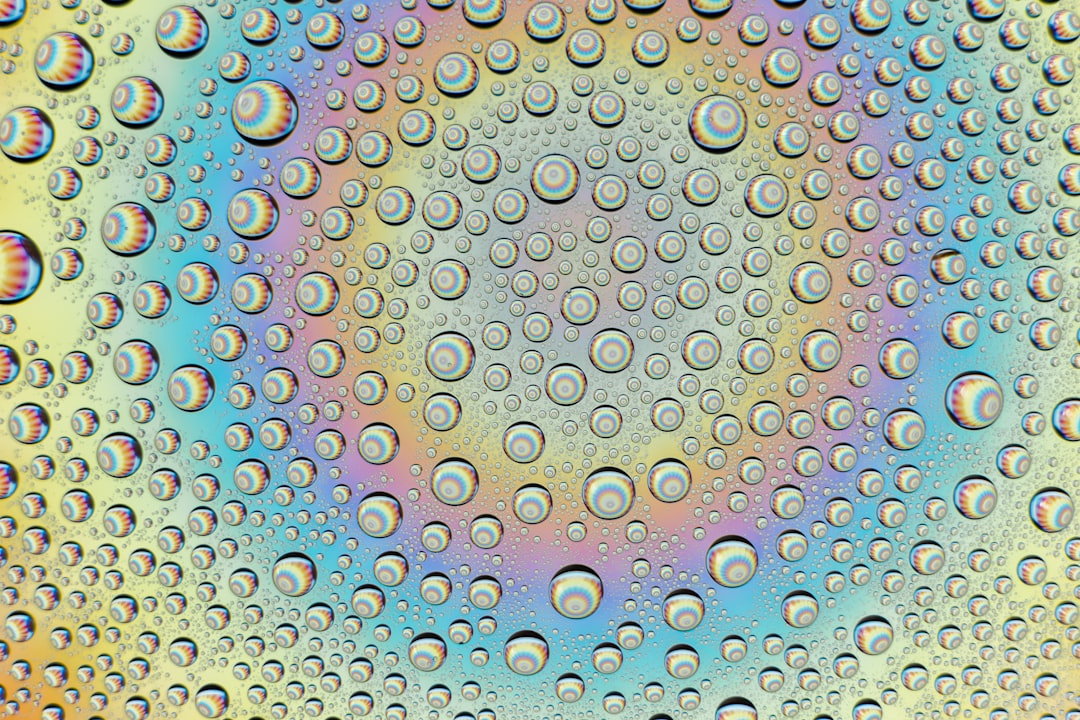
Understanding the dynamic behavior of bubble walls, particularly the phase changes and instabilities they undergo, is crucial for a wide range of scientific and engineering applications. From the boiling of liquids and the formation of cavitation bubbles to the behavior of materials under extreme pressure or during cosmological phase transitions, the intricate dance of a bubble wall plays a significant role. This article delves into the fundamental physics governing these phenomena, exploring the various stages of bubble wall evolution and the conditions that trigger instabilities.
The genesis of a bubble, a localized region of vapor or a different phase within a surrounding liquid or solid, is a process rooted in thermodynamics. For a bubble to form and persist, energy considerations are paramount.
Nucleation Mechanisms
The formation of a new phase, often a vapor bubble within a liquid, typically requires overcoming an energy barrier. This barrier arises from the creation of new surfaces at the interface between the two phases.
Homogeneous Nucleation
In the absence of pre-existing surfaces or defects, nucleation arises purely from spontaneous fluctuations in the local density of the parent phase. While theoretically possible, homogeneous nucleation typically requires conditions of substantial supersaturation or supercooling, far beyond what is generally encountered in everyday scenarios. The probability of a cluster of molecules reaching the critical size for stable growth through random fluctuations is exceedingly low.
Heterogeneous Nucleation
In practice, bubble nucleation almost invariably occurs heterogeneously. This process is facilitated by the presence of surfaces, such as the walls of a container, impurities within the liquid, or microscopic defects. These sites provide a more favorable energetic pathway for bubble formation. The curvature and surface properties of these nucleation sites can significantly reduce the energy barrier, making bubble nucleation far more probable at achievable superheating or undercooling levels. For instance, gas bubbles in a liquid often nucleate at microscopic cavities on a solid surface, where gas can accumulate.
The Critical Radius and Energy Barrier
The formation of a stable bubble germ is contingent upon reaching a critical radius. Below this radius, the surface tension forces dominate, causing the nascent bubble to collapse. Above this critical radius, the rate of growth due to internal pressure exceeding external pressure, or due to phase transformation, begins to outweigh the surface tension effects, leading to sustained expansion. The energy barrier associated with forming a bubble of a specific radius is a direct consequence of the work done against surface tension and the change in bulk free energy.
In the study of phase changes and instabilities in bubble walls, a fascinating article can be found that delves into the dynamics of these phenomena and their implications for various physical systems. This research highlights how bubble walls can exhibit complex behavior during phase transitions, leading to instabilities that affect the overall system dynamics. For more in-depth insights, you can read the related article at My Cosmic Ventures.
Bubble Wall Dynamics: Expansion and Contraction
Once a bubble has exceeded its critical radius, its wall begins to evolve dynamically. This evolution is governed by the interplay of pressure gradients, surface tension, inertia, and thermodynamic processes occurring at the interface.
Growth Regimes
The rate at which a bubble wall expands is not constant and can be categorized into different regimes depending on the driving forces and the properties of the surrounding medium.
Inertial Growth
In the initial stages of rapid bubble growth, particularly when driven by a significant pressure differential, the inertia of the surrounding liquid plays a dominant role. The liquid must be accelerated to accommodate the expanding bubble volume. This inertial resistance limits the growth rate. The characteristic timescale for inertial growth is often related to the density of the liquid and the pressure difference.
Viscous Growth
As the bubble continues to expand, viscous forces within the liquid become more significant, especially for larger bubbles or in more viscous fluids. Viscosity acts to dissipate energy and resist the expansion. The growth rate in this regime is often limited by the resistance of the liquid to shear flow.
Heat or Mass Transfer Controlled Growth
In many scenarios, bubble growth is not purely a mechanical process but is also influenced by the transfer of heat or mass across the bubble interface.
Boiling and Evaporation
During boiling, heat transfer from the heated surface to the liquid at the bubble interface is the primary driver of vaporization and thus bubble growth. Similarly, in an evaporating liquid, the supply of latent heat of vaporization dictates the rate at which the liquid phase transforms into vapor. The thermal conductivity of the liquid and the temperature gradients near the bubble wall are crucial factors.
Dissolution and Condensation
Conversely, bubble walls can also contract due to dissolution of the gas within the bubble into the surrounding liquid or due to condensation of vapor into liquid. These processes are driven by partial pressure differences and solubility characteristics.
Contraction and Collapse
Bubble walls can also experience vigorous contraction and eventual collapse. This can be triggered by a sudden increase in external pressure, a decrease in temperature, or changes in the composition of the surrounding medium leading to condensation.
Inertial Collapse
Similar to inertial growth, the collapse of a bubble is also an inertial process. The surrounding liquid rushes in to fill the void, and the inertia of this in-falling liquid can lead to extremely high velocities and pressures at the point of collapse.
Adiabatic vs. Isothermal Processes
The thermodynamic nature of the gas or vapor within the bubble during collapse is important. If the process is rapid, it can approximate an adiabatic process, where little heat is exchanged with the surroundings, leading to significant temperature and pressure increases within the collapsing bubble. In slower processes, heat exchange might allow for near-isothermal compression.
Instabilities in Bubble Walls

The seemingly smooth expansion or contraction of a bubble wall is not always the case. Various instabilities can arise, leading to complex and often violent phenomena. These instabilities are typically driven by the non-uniformities in pressure, temperature, or velocity fields around the bubble.
Rayleigh-Taylor Instability
A classic example of a bubble wall instability is the Rayleigh-Taylor instability. This occurs at the interface between two fluids of different densities, when the lighter fluid is accelerated into the heavier fluid. In the context of bubbles, this can happen under significant acceleration, for instance, during rapid bubble growth driven by a strong pressure gradient or during the collapse of a large bubble where the surrounding liquid is accelerating inwards. The interface becomes unstable, leading to the formation of characteristic fingers or plumes as the lighter phase penetrates the heavier phase.
Rayleigh-Plesset Model and its Extensions
The Rayleigh-Plesset equation provides a fundamental description of the radial dynamics of a spherical bubble in an incompressible liquid. While originally developed for a simple vacuum bubble, it has been extended to incorporate various physical effects, including surface tension, viscosity, heat transfer, and non-condensable gases. These extensions are critical for understanding the complex behaviors that can emerge.
Effects of Compressibility
The basic Rayleigh-Plesset equation assumes an incompressible liquid. However, in many scenarios, especially during rapid bubble collapse or under extreme pressures, liquid compressibility becomes a significant factor. Incorporating compressibility into the models is essential for accurately predicting the pressures and temperatures generated, particularly the shock waves that can form.
Phase Change Dynamics
The phase change of the liquid/vapor at the bubble wall is a major source of complexity and potential instability. The rate of evaporation or condensation is not instantaneous and depends on local thermodynamic conditions. This can lead to phenomena like “flash evaporation” or “condensation shock waves” that propagate along the bubble wall.
Marangoni Instability
The Marangoni effect describes the phenomenon of fluid flow driven by surface tension gradients. If there are variations in surface tension along the bubble wall, for example, due to non-uniform temperature or solute concentration, this can induce flows that can destabilize the interface. Surface impurities or gradients in dissolved substances can lead to instabilities that deform the bubble shape, even if the overall bubble is relatively stable.
Phase Changes at the Bubble Wall

The interface of a bubble is a dynamic region where phase transitions occur. The nature of these transitions—whether driven by heat, mass transfer, or pressure changes—profoundly influences the bubble wall’s behavior.
Evaporation and Condensation Dynamics
The rate at which vapor is generated or consumed at the bubble wall is a critical factor in bubble growth and collapse.
Kinetic Theory of Evaporation/Condensation
Molecular kinetic theory provides a framework for understanding the flux of molecules crossing the interface. Under equilibrium conditions, the rates of evaporation and condensation are equal. However, under non-equilibrium conditions, such as a superheated liquid, evaporation dominates, leading to growth. Conversely, in a subcooled liquid, condensation occurs, causing collapse.
Non-equilibrium Effects and Condensation Coefficients
The actual rates of phase change can be influenced by non-equilibrium effects and accommodation (or condensation) coefficients, which describe the probability that a molecule striking the interface will undergo the phase transition. Low condensation coefficients can lead to significant interfacial slip and can influence the speed of bubble collapse.
Boiling Crisis and Critical Heat Flux
In convective boiling, a phenomenon known as the boiling crisis can occur, characterized by a sudden and dramatic decrease in heat transfer efficiency as the heat flux exceeds a critical value. This is often associated with the breakdown of nucleate boiling and the transition to film boiling, where a vapor layer insulates the heated surface. The instabilities in bubble nucleation, growth, and interaction at the wall can contribute to the onset of this crisis.
Subcooled Boiling
In subcooled boiling, the bulk liquid is at a temperature below its saturation point, but heat is being supplied at the wall. Bubbles nucleate and grow, but often condense rapidly as they detach from the heated surface and move into the cooler bulk liquid. The interplay of local superheating, nucleation, growth, and condensation creates complex interfacial dynamics.
Phase changes and instabilities in bubble walls are crucial topics in understanding various physical phenomena, particularly in the context of cosmology and material science. For a deeper exploration of these concepts, you might find the article on bubble dynamics and their implications in phase transitions quite insightful. It discusses how the behavior of bubble walls can lead to significant changes in the surrounding environment. You can read more about it in this related article.
Experimental and Computational Approaches
| Phase Changes and Instabilities in Bubble Walls | |
|---|---|
| Phase changes | Instabilities in bubble walls |
| Temperature | Pressure |
| Energy transfer | Surface tension |
| Nucleation | Growth and collapse |
Investigating the intricate processes of phase changes and instabilities in bubble walls requires sophisticated experimental techniques and advanced computational methods.
High-Speed Imaging and PIV
High-speed cameras are indispensable for capturing the rapid evolution of bubble walls. Techniques like Particle Image Velocimetry (PIV) can be used in conjunction with imaging to measure velocity fields in the liquid surrounding the bubble, providing insights into the fluid dynamics associated with growth and collapse.
Schlieren and Interferometry
Optical methods such as Schlieren and interferometry are useful for visualizing density gradients, which can reveal shock waves and thermal boundary layers associated with bubble dynamics, particularly during rapid collapse or phase transitions.
Laser-Induced Nucleation and Bubble Generation
Precisely controlling bubble nucleation and growth can be achieved through focused laser pulses. This allows researchers to initiate cavitation bubbles under well-defined conditions and study their subsequent behavior with high resolution.
Computational Fluid Dynamics (CFD)
CFD simulations play a vital role in modeling and understanding bubble wall dynamics. These simulations can solve the governing equations of fluid flow, heat transfer, and phase change, allowing for detailed investigations of phenomena that are difficult to observe experimentally.
Interface Tracking Methods
Various numerical techniques, such as Volume of Fluid (VOF) or Level Set methods, are employed to track the complex interface between the liquid and vapor phases during bubble evolution.
Microscopic and Molecular Dynamics Simulations
For understanding phenomena occurring at the fundamental molecular level, such as evaporation/condensation coefficients or the initial stages of nucleation, microscopic simulations like Molecular Dynamics (MD) are employed. These simulations can provide insights into the kinetic processes at the interface.
Understanding bubble walls is not merely an academic pursuit. The ability to predict and control phase changes and instabilities in bubble walls has direct implications for the design of more efficient heat exchangers, the mitigation of cavitation damage in turbomachinery and medical devices, the development of advanced materials processing techniques, and even for unraveling fundamental questions in astrophysics and cosmology. The continued pursuit of knowledge in this area promises significant advancements across a broad spectrum of scientific and technological frontiers.
FAQs
What are phase changes in bubble walls?
Phase changes in bubble walls refer to the transition of the bubble wall material from one phase to another, such as from a liquid to a gas or from a solid to a liquid. These phase changes can occur due to changes in temperature, pressure, or other external factors.
What are instabilities in bubble walls?
Instabilities in bubble walls refer to the tendency of the bubble wall material to undergo sudden and unpredictable changes in its structure or behavior. These instabilities can lead to the formation of irregularities, fluctuations, or even the complete collapse of the bubble wall.
What causes phase changes and instabilities in bubble walls?
Phase changes and instabilities in bubble walls can be caused by a variety of factors, including changes in temperature, pressure, composition of the bubble wall material, and external disturbances. These factors can disrupt the equilibrium of the bubble wall and lead to phase changes and instabilities.
What are the implications of phase changes and instabilities in bubble walls?
Phase changes and instabilities in bubble walls can have significant implications for various applications, such as in the fields of materials science, fluid dynamics, and engineering. Understanding and controlling these phenomena is crucial for the development of advanced technologies and materials.
How are phase changes and instabilities in bubble walls studied and analyzed?
Phase changes and instabilities in bubble walls are studied and analyzed using a combination of experimental techniques, theoretical models, and numerical simulations. These approaches help researchers to understand the underlying mechanisms and dynamics of phase changes and instabilities in bubble walls.