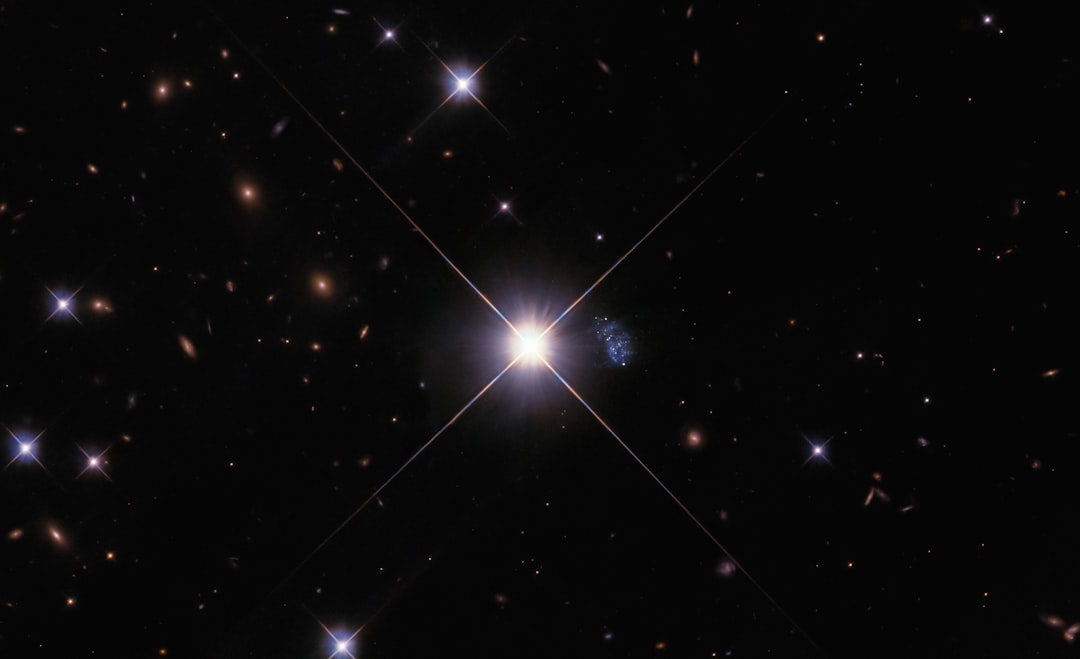
The star designated HD 140283, colloquially known as the Methuselah Star, presents a peculiar challenge to our understanding of stellar evolution and cosmology. Its surprisingly old age, estimated to be close to the age of the universe itself, has led to what is often termed the “Methuselah Star age paradox.” This celestial object, visible to the naked eye under good conditions, has become a focal point for astrophysicists seeking to refine their models of how stars form and how the universe has evolved over billions of years.
A Glimpse into the Early Universe
The Methuselah Star was not discovered as a peculiar anomaly. Like many other stars, its existence was noted in astronomical surveys. However, its extremely low metallicity – the abundance of elements heavier than hydrogen and helium – quickly marked it as an ancient object. Stars born in the early universe would have had very little of these heavier elements, as they were forged later in the cores of stars and dispersed through supernova explosions. HD 140283’s composition, with metallicity measurements significantly lower than most stars in our galaxy, pointed towards an origin in a time when the universe was still a cosmic infant.
Early Age Estimates and the Emergence of a Paradox
Initial attempts to determine the age of HD 140283 relied on its position on the Hertzsprung-Russell (H-R) diagram. This diagram plots stars based on their luminosity and surface temperature, and the evolutionary stage of a star can be inferred from its position. By comparing observations of HD 140283 with theoretical stellar evolution models, astronomers began to assign an age. These early estimates were already pushing the boundaries of the then-accepted age of the universe, but the starkest contradiction emerged with more refined measurements. As measurement techniques improved and more precise data became available, the age estimates for HD 140283 grew, eventually surpassing the universally accepted age of the cosmos. This discrepancy, the observation of a star that appeared older than the universe itself, became the core of the Methuselah Star age paradox.
The Methuselah star age paradox has intrigued astronomers for years, as it challenges our understanding of stellar evolution and the age of the universe. A related article that delves deeper into this fascinating topic can be found at My Cosmic Ventures, where researchers explore the implications of the Methuselah star’s age and its potential impact on our cosmic timeline. This article provides insights into the methods used to determine stellar ages and discusses the ongoing debates within the scientific community regarding the universe’s true age.
The Age Paradox: A Cosmic Conundrum
Defining the Paradox
The age paradox of the Methuselah Star can be succinctly stated: current estimates for its age exceed the age of the universe. The universe is estimated to be approximately 13.8 billion years old, based on observations of the cosmic microwave background radiation and other cosmological data. However, the age of HD 140283, derived from its stellar properties, has been calculated to be around 14.3 billion years, with a significant margin of error that has historically made it difficult to reconcile with the cosmological age. This implies that a star existed before the universe in which it resides, a notion that defies fundamental principles of physics and cosmology.
Implications for Stellar Evolution Models
The Methuselah Star’s age poses a direct challenge to our established models of stellar evolution. These models describe how stars form, evolve, and eventually die, based on fundamental physical laws such as nuclear fusion, gravity, and thermodynamics. If the Methuselah Star is indeed older than the universe, it suggests that either our understanding of stellar aging is fundamentally flawed, or there are factors influencing stellar evolution that are not accounted for in current models. Astronomers and physicists have meticulously scrutinized these models, exploring potential inaccuracies in the input parameters or the underlying physics.
Implications for Cosmological Models
Equally, the paradox has profound implications for our cosmological models, which describe the origin, evolution, and large-scale structure of the universe. The age of the universe is a cornerstone of these models, derived from observations of the expansion rate, the composition of matter and energy, and the patterns in the cosmic microwave background. If a star is found to be older than the universe, it calls into question the accuracy of these cosmological age estimates. This could mean that the expansion rate of the universe, or the fundamental constants governing its evolution, are not as well understood as currently believed.
Investigating the Age of HD 140283
Stellar Parameters and Their Influence on Age
The age of a star is not directly measured; it is inferred from a combination of its observable properties. For HD 140283, key parameters include its luminosity, surface temperature, and chemical composition.
Luminosity and Temperature
The surface temperature of a star is correlated with its color (hotter stars are bluer, cooler stars are redder), and its luminosity is related to its intrinsic brightness. By plotting these on the H-R diagram, astronomers can estimate a star’s mass and evolutionary stage. For very old stars, particularly those far along their evolutionary paths (e.g., on the red giant branch), their temperature and luminosity change predictably over time.
Metallicity and its Role
As mentioned earlier, the low metallicity of HD 140283 is a crucial indicator of its ancient origin. However, the precise abundance of various elements can also subtly influence stellar evolution. If the models used to calculate age are sensitive to exact metallicity values, then even small uncertainties in these measurements could lead to significant variations in the estimated age.
The Role of Distance and Opacity
Accurate distance measurements to a star are vital for determining its de facto luminosity. If the distance is miscalculated, the inferred luminosity will be incorrect, leading to an inaccurate placement on the H-R diagram and, consequently, a flawed age estimate. Similarly, a star’s opacity – its resistance to the passage of radiation – plays a role in how energy is transported from its core to its surface. Inaccuracies in the opacity calculations within stellar models can also impact age determinations.
Uncertainties in Stellar Models
Despite decades of refinement, stellar evolution models are still simplifications of incredibly complex physical processes. These models rely on approximations for phenomena such as convection, diffusion, and the nuclear reaction rates of various isotopes.
Nuclear Reaction Rates
The rate at which nuclear fusion occurs in a star’s core is a primary driver of its evolution and energy output. Uncertainties in the precise values of these reaction rates, especially for isotopes that are rare or have difficult-to-measure cross-sections, can propagate into significant uncertainties in stellar ages.
Convection and Energy Transport
Convection is the process by which heat is transferred in a star’s outer layers through the movement of fluids. The efficiency of convection can be influenced by various factors, and modeling it accurately is a known challenge in stellar astrophysics. Different parameterizations of convection in stellar models can lead to slightly different evolutionary tracks and thus different age estimates.
Reconciling the Ages: Recent Findings and Refinements
Improved Observational Data
Advancements in telescope technology and observational techniques have allowed for more precise measurements of stellar properties. New observatories, both ground-based and space-based, have provided higher-resolution spectra and more accurate photometry, leading to refined estimates of HD 140283’s temperature, luminosity, and chemical composition.
Adjustments to Stellar Evolution Models
In response to challenges like the Methuselah Star paradox, astrophysicists have been actively refining their stellar evolution models. This involves incorporating new nuclear physics data, improving the treatment of convection and other physical processes, and exploring the impact of initial metallicity variations.
The Role of Uncertainty Margins
Crucially, the age estimates for HD 140283 have always come with significant uncertainty margins. While early estimates might have placed it just slightly older than the universe, more recent calculations, particularly those that carefully account for all sources of error, have shown that the upper bound of its age can indeed fall within the age of the universe.
Statistical Analysis of Errors
Sophisticated statistical methods are now employed to propagate errors from individual measurements (like temperature, luminosity, and composition) through the entire stellar model. This provides a more robust estimate of the overall uncertainty in the calculated age.
Bayesian Approaches
Bayesian statistical frameworks are increasingly used to combine observational data with theoretical models. This allows for a more holistic approach to determining the most probable age and its associated uncertainties.
The Consensus: A Star Within the Universe’s Age
With these improvements in data and modeling, the scientific consensus has largely moved away from a true paradox. While HD 140283 remains a remarkably old star, its age, when considering the full range of uncertainties, is now considered compatible with the established age of the universe. The paradox has thus transformed from a fundamental contradiction to a testament to the ongoing refinement of our astronomical knowledge.
The Methuselah star age paradox has intrigued astronomers for years, as it challenges our understanding of stellar evolution and the age of the universe. Recent studies have attempted to reconcile the discrepancies in age measurements, shedding light on this cosmic mystery. For those interested in exploring this topic further, a related article discusses the implications of these findings and offers insights into the ongoing debate within the scientific community. You can read more about it in this fascinating article that delves into the complexities surrounding the Methuselah star and its significance in astrophysics.
Broader Implications and Future Research
| Star Age Paradox | Description |
|---|---|
| Methuselah Star | Astronomers have discovered a star in the Milky Way galaxy that is estimated to be about 14.5 billion years old, which is older than the universe itself according to current scientific understanding. |
| Paradox | This discovery challenges the current understanding of star formation and the age of the universe, leading to a paradox known as the “Methuselah Star Age Paradox”. |
| Implications | If confirmed, this paradox could lead to a reevaluation of our understanding of stellar evolution, cosmology, and the age of the universe. |
Pushing the Boundaries of Stellar Astrophysics
The Methuselah Star has served as a powerful impetus for the field of stellar astrophysics. The process of confronting and resolving this apparent paradox has driven innovation in observational techniques, theoretical modeling, and the understanding of fundamental stellar physics. It has highlighted areas where our understanding is less secure, prompting further investigation into processes such as early nucleosynthesis and stellar evolution in low-metallicity environments.
Testing Cosmological Models
While the immediate paradox has been largely resolved in terms of a direct conflict with the age of the universe, the star’s ancient nature still provides a unique benchmark for cosmological models. Its survival and characteristics offer clues about the conditions of the early universe and the processes that governed its evolution. Any refinements in our understanding of stellar ages, therefore, indirectly test the robustness of our cosmological frameworks.
The Search for Other Ancient Stars
The Methuselah Star is not likely to be unique. The discovery of HD 140283 motivates the search for other stars with similarly low metallicities and potentially extreme ages. Identifying and characterizing these ancient objects can provide a larger sample size for studying the early universe and testing stellar and cosmological models. Future large-scale sky surveys will undoubtedly uncover more such celestial time capsules.
Continuous Refinement of Age Dating
The Methuselah Star’s history underscores the dynamic nature of scientific understanding. Age dating, especially for such ancient objects, is an ongoing process of refinement. Future improvements in elemental abundance measurements, detailed understanding of nuclear reaction rates, and more sophisticated stellar evolution models will continue to narrow the uncertainties and provide even more precise age estimates for stars like HD 140283. This continuous quest for accuracy remains a hallmark of scientific inquiry.
FAQs
What is the Methuselah Star Age Paradox?
The Methuselah Star Age Paradox refers to the discrepancy between the age of the oldest known star in the Milky Way, known as the Methuselah star, and the age of the universe as calculated by the cosmic microwave background radiation.
How old is the Methuselah Star?
The Methuselah Star, officially known as HD 140283, is estimated to be about 14.46 billion years old, making it one of the oldest known stars in the Milky Way galaxy.
What is the age of the universe according to the cosmic microwave background radiation?
The age of the universe, as calculated by the cosmic microwave background radiation, is approximately 13.8 billion years old.
What are some proposed explanations for the Methuselah Star Age Paradox?
Some proposed explanations for the Methuselah Star Age Paradox include uncertainties in the measurements of the star’s age, inaccuracies in the models used to calculate the age of the universe, and the possibility of the star being a second-generation star formed from material enriched by an earlier generation of stars.
What are the implications of the Methuselah Star Age Paradox?
The Methuselah Star Age Paradox challenges our current understanding of stellar evolution and the age of the universe. Resolving this paradox could lead to new insights into the formation and evolution of stars, as well as the overall timeline of cosmic history.