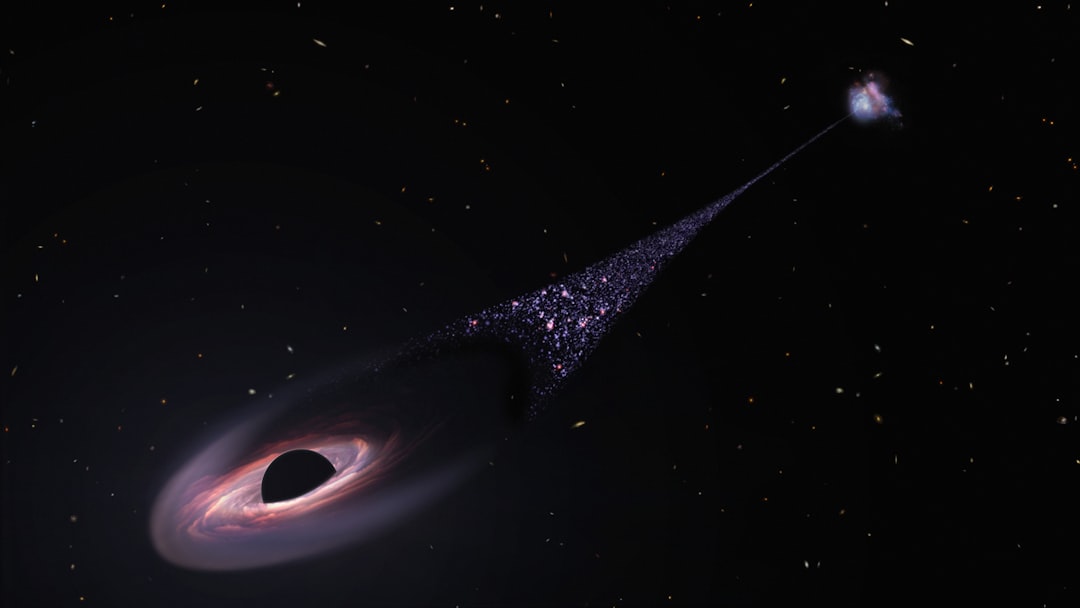
Black holes have long captivated the imagination of scientists and the general public alike. These enigmatic cosmic entities, formed from the remnants of massive stars that have undergone gravitational collapse, possess gravitational fields so intense that nothing, not even light, can escape their grasp. The concept of a black hole challenges the very fabric of our understanding of physics, particularly the laws of gravity and the nature of space-time.
As researchers delve deeper into the mysteries of the universe, black holes emerge as pivotal players in the cosmic drama, influencing the evolution of galaxies and the behavior of matter in extreme conditions. The study of black holes has evolved significantly since their theoretical inception in the early 20th century. Initially dismissed as mere mathematical curiosities, they have since been confirmed through various observational techniques.
The advent of advanced telescopes and detection methods has allowed astronomers to identify and study these celestial phenomena in greater detail. As a result, black holes are no longer just theoretical constructs; they are now recognized as fundamental components of the universe, with implications that extend far beyond their immediate vicinity.
Key Takeaways
- Black holes are mysterious and fascinating cosmic entities that have captured the imagination of scientists and the public alike.
- The discovery of the biggest black hole, located in the galaxy Holm 15A, has opened up new avenues for research and exploration in the field of astrophysics.
- The biggest black hole is estimated to have a mass equivalent to 40 billion times that of the Sun, making it a truly colossal and unique object in the universe.
- Theories and speculations surrounding the biggest black hole include its potential impact on the surrounding galaxy and the nature of its formation.
- Observing the effects of the biggest black hole on its surroundings can provide valuable insights into the dynamics of galaxies and the role of black holes in shaping the cosmos.
The Discovery of the Biggest Black Hole
The quest to identify the largest black hole in the universe has been a monumental undertaking for astrophysicists. In recent years, researchers have made significant strides in this area, culminating in the discovery of a supermassive black hole that dwarfs its counterparts. This colossal entity, located at the center of a distant galaxy, has been measured to possess a mass equivalent to billions of suns.
The discovery was made possible through a combination of advanced observational techniques, including the use of powerful telescopes and sophisticated imaging technology. The identification of this massive black hole has not only expanded our understanding of black hole formation but has also raised intriguing questions about the dynamics of galaxies. The sheer scale of this black hole challenges existing theories about how such enormous structures can form and evolve over time.
As researchers continue to gather data and refine their models, they are uncovering new insights into the processes that govern these cosmic giants and their role in shaping the universe.
Characteristics of the Biggest Black Hole
The characteristics of the largest known black hole are as fascinating as they are complex. This supermassive black hole, often referred to by its designated name, exhibits a mass that is several billion times greater than that of our Sun. Its immense gravitational pull influences not only its immediate surroundings but also extends to the entire galaxy in which it resides.
The black hole’s event horizon, the boundary beyond which nothing can escape its gravitational grip, is a critical feature that defines its nature. In addition to its mass, this black hole is characterized by its accretion disk—a swirling mass of gas and dust that spirals into the black hole at incredible speeds. As matter falls into this disk, it heats up and emits intense radiation, making it one of the brightest objects in the universe.
This phenomenon allows astronomers to detect and study black holes indirectly, providing valuable information about their properties and behavior.
Theories and Speculations Surrounding the Biggest Black Hole
| Theory/Speculation | Description |
|---|---|
| Primordial Black Holes | Hypothesized to have formed in the early universe from density fluctuations. |
| Supermassive Black Holes | Believed to exist at the center of most galaxies, including the Milky Way. |
| Black Hole Mergers | Speculated to occur when two black holes orbit each other and eventually merge into a single black hole. |
| Black Hole Information Paradox | Debate over whether information that falls into a black hole is lost forever or can be preserved. |
The discovery of the largest black hole has sparked a flurry of theories and speculations among astrophysicists. One prevailing theory suggests that such massive black holes may have formed through a series of mergers between smaller black holes over billions of years. This process could explain how they reached their current size and mass.
Additionally, some researchers propose that these supermassive black holes may have originated from primordial black holes—hypothetical entities formed shortly after the Big Bang. Another area of speculation revolves around the relationship between supermassive black holes and galaxy formation. Some scientists theorize that these colossal entities play a crucial role in regulating star formation within their host galaxies.
The energy emitted by accreting matter could influence gas dynamics, potentially triggering or suppressing star formation in surrounding regions. This intricate interplay raises profound questions about the evolution of galaxies and the role that supermassive black holes play in shaping cosmic structures.
Observing the Effects of the Biggest Black Hole
Observing the effects of the largest black hole provides valuable insights into its nature and influence on its surroundings. One method employed by astronomers involves studying the motion of stars and gas clouds near the black hole’s event horizon. By analyzing their trajectories, researchers can infer the gravitational pull exerted by the black hole, allowing them to estimate its mass with remarkable precision.
This technique has proven instrumental in confirming the existence of supermassive black holes at the centers of galaxies. Moreover, astronomers utilize various wavelengths of light to observe phenomena associated with black holes. For instance, X-ray emissions from accretion disks can reveal crucial information about temperature and density conditions near the event horizon.
Additionally, radio waves emitted by jets—powerful streams of particles ejected from regions near black holes—offer further clues about their behavior and interactions with surrounding matter. These observations collectively contribute to a more comprehensive understanding of how supermassive black holes operate within their galactic environments.
The Impact of the Biggest Black Hole on its Surroundings
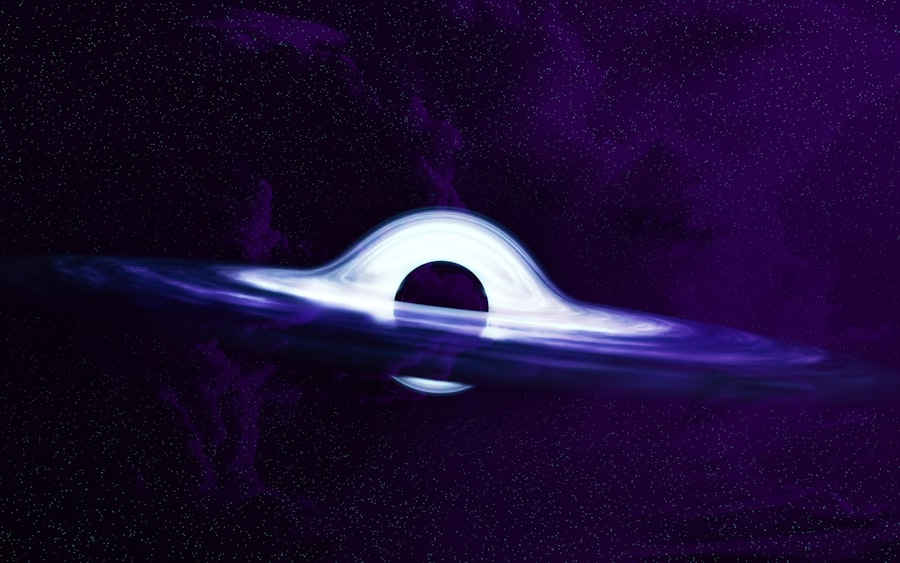
The impact of the largest black hole extends far beyond its immediate vicinity; it plays a significant role in shaping its host galaxy and influencing cosmic evolution. The immense gravitational pull exerted by this supermassive entity affects star formation rates within its galaxy, often leading to complex interactions between stars and gas clouds. In some cases, regions close to the black hole may experience accelerated star formation due to gravitational instabilities triggered by its presence.
Conversely, the energy released during accretion processes can have a suppressive effect on star formation in other areas. The intense radiation emitted from accreting matter can heat surrounding gas, preventing it from collapsing into new stars. This duality highlights the intricate balance between creation and destruction that supermassive black holes maintain within their host galaxies.
Understanding these dynamics is crucial for unraveling the broader implications of black holes on galactic evolution.
Unraveling the Formation of the Biggest Black Hole
The formation of supermassive black holes remains one of the most intriguing puzzles in astrophysics. Several theories attempt to explain how such colossal entities come into existence, but no consensus has yet emerged. One prominent hypothesis suggests that they may form from direct collapse scenarios involving massive gas clouds in the early universe.
In this model, rapid gravitational collapse could lead to the creation of a supermassive seed black hole that grows over time through accretion and mergers. Another theory posits that supermassive black holes could arise from the merger of smaller black holes or from clusters of stars collapsing under their own gravity. This process could result in a chain reaction where smaller black holes coalesce into larger ones over cosmic timescales.
As researchers continue to gather observational data and refine their models, they inch closer to unraveling the complexities surrounding black hole formation and evolution.
The Significance of Studying the Biggest Black Hole
Studying the largest known black hole holds profound significance for our understanding of fundamental astrophysical processes. These supermassive entities serve as natural laboratories for testing theories related to gravity, relativity, and high-energy physics. By examining their properties and behaviors, scientists can gain insights into extreme conditions that cannot be replicated on Earth.
Furthermore, understanding supermassive black holes is crucial for comprehending galaxy formation and evolution on a cosmic scale. Their influence extends beyond individual galaxies; they are believed to play a pivotal role in shaping large-scale structures within the universe.
Challenges in Studying the Biggest Black Hole
Despite significant advancements in observational techniques, studying supermassive black holes presents numerous challenges for astrophysicists. One major hurdle lies in their distance from Earth; many known supermassive black holes are located billions of light-years away, making direct observation difficult. Astronomers must rely on indirect methods to infer their properties, which can introduce uncertainties into measurements.
Additionally, the extreme environments surrounding these black holes pose challenges for observation. The intense radiation emitted from accretion disks can obscure other signals, complicating efforts to gather comprehensive data. Researchers must employ sophisticated techniques to filter out noise and isolate relevant information about these cosmic giants.
Overcoming these challenges requires innovative approaches and collaboration across various fields within astrophysics.
Potential Future Discoveries Related to the Biggest Black Hole
As technology continues to advance, future discoveries related to supermassive black holes hold great promise for expanding our understanding of these enigmatic entities. Upcoming space missions equipped with cutting-edge instruments may provide unprecedented insights into their properties and behaviors. For instance, next-generation telescopes capable of observing at various wavelengths could reveal new details about accretion processes and jet formations.
Moreover, ongoing research into gravitational waves—ripples in space-time caused by massive cosmic events—may shed light on black hole mergers and interactions with other celestial bodies. These discoveries could enhance our understanding of how supermassive black holes evolve over time and their role in shaping galaxies throughout cosmic history.
The Ongoing Quest to Understand the Biggest Black Hole
The journey to comprehend the largest known black hole is an ongoing quest that continues to challenge scientists across disciplines. As researchers unravel its mysteries through observation and theoretical modeling, they contribute to a broader understanding of fundamental astrophysical processes that govern our universe. Each discovery brings new questions to light, fueling curiosity and inspiring future generations to explore the cosmos.
In this age of rapid technological advancement and collaborative research efforts, humanity stands on the brink of potentially groundbreaking revelations about supermassive black holes and their significance within our universe. As we venture further into this uncharted territory, one thing remains clear: understanding these cosmic giants is not just an academic pursuit; it is a journey that connects us all to the very fabric of existence itself.
In the fascinating realm of astrophysics, the discovery and explanation of the biggest black hole have captivated scientists and enthusiasts alike. This colossal cosmic entity challenges our understanding of the universe’s boundaries and the nature of space-time. For those intrigued by the mysteries of the cosmos, a related article on the topic can be found on My Cosmic Ventures. This article delves deeper into the intricacies of black holes and their significance in the cosmic landscape. To explore more about this captivating subject, you can read the article by visiting My Cosmic Ventures.
WATCH THIS! 🌌The Biggest Black Hole Is A LIE
FAQs
What is the biggest black hole?
The biggest black hole currently known is located in the galaxy Holm 15A, and it has a mass equivalent to 40 billion times that of our sun.
How do black holes form?
Black holes are formed when massive stars collapse under their own gravity at the end of their life cycle. This collapse causes the star to become extremely dense, creating a gravitational pull so strong that not even light can escape.
What are the characteristics of the biggest black hole?
The biggest black hole, located in the galaxy Holm 15A, has a mass equivalent to 40 billion times that of our sun and a diameter of about 790 astronomical units.
What are the implications of the discovery of the biggest black hole?
The discovery of the biggest black hole provides valuable insights into the formation and evolution of supermassive black holes, as well as the dynamics of galaxies and the universe as a whole.
How do scientists study black holes?
Scientists study black holes using a variety of methods, including observing the effects of their gravitational pull on nearby objects, analyzing the radiation emitted from the accretion disk around them, and using simulations and mathematical models to understand their behavior.