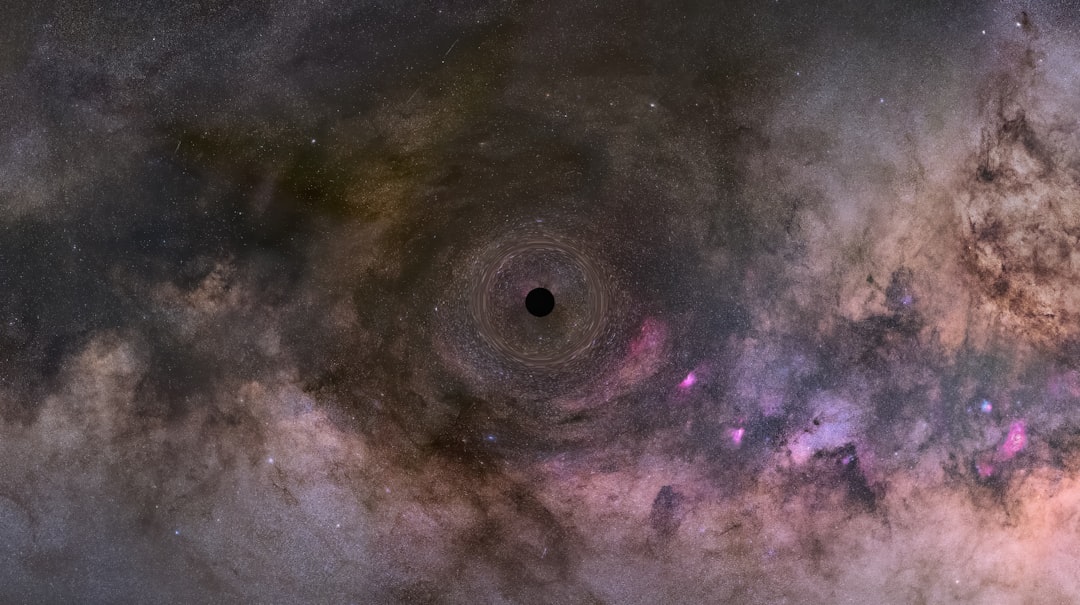
Black holes have long captivated the imagination of scientists and the general public alike. These enigmatic cosmic entities, formed from the remnants of massive stars that have undergone gravitational collapse, possess gravitational fields so intense that nothing, not even light, can escape their grasp. The concept of a black hole challenges the very fabric of our understanding of physics, particularly in the realms of general relativity and quantum mechanics.
The study of black holes has evolved significantly since their theoretical inception in the early 20th century. Initially dismissed as mere mathematical curiosities, they have since been confirmed through various observational techniques.
The event horizon, the boundary beyond which nothing can escape, serves as a defining feature of these celestial phenomena. As scientists continue to explore the universe, black holes remain a focal point of inquiry, raising profound questions about the nature of reality and the limits of human understanding.
Key Takeaways
- Black holes are mysterious and fascinating cosmic entities that have captured the imagination of scientists and the public alike.
- The discovery of the biggest black hole, located in the galaxy Holm 15A, has challenged previous assumptions about the upper limit of black hole size.
- Characteristics of black holes include their immense gravitational pull, ability to trap light, and the event horizon beyond which nothing can escape.
- The debate over the existence of the biggest black hole centers on the methods used to measure its size and the accuracy of the data.
- Observations and evidence supporting the existence of the biggest black hole include the movement of stars and gas around it, as well as the mass of the galaxy it resides in.
The Discovery of the Biggest Black Hole
The quest to identify the largest black hole in the universe has led astronomers on a remarkable journey through space and time. In recent years, researchers have made significant strides in pinpointing these colossal entities, with one particular discovery capturing widespread attention. This black hole, located in the center of a distant galaxy, is estimated to be several billion times more massive than the Sun, making it a prime candidate for the title of the biggest black hole known to date.
The discovery was made possible through advanced observational techniques, including the use of powerful telescopes equipped with cutting-edge technology. By analyzing the motion of stars and gas surrounding this black hole, astronomers were able to infer its mass and size. The findings not only shed light on the characteristics of this specific black hole but also provided valuable insights into the formation and growth of supermassive black holes throughout the universe.
As researchers continue to refine their methods and gather more data, the understanding of these cosmic giants is expected to evolve further.
Characteristics of Black Holes
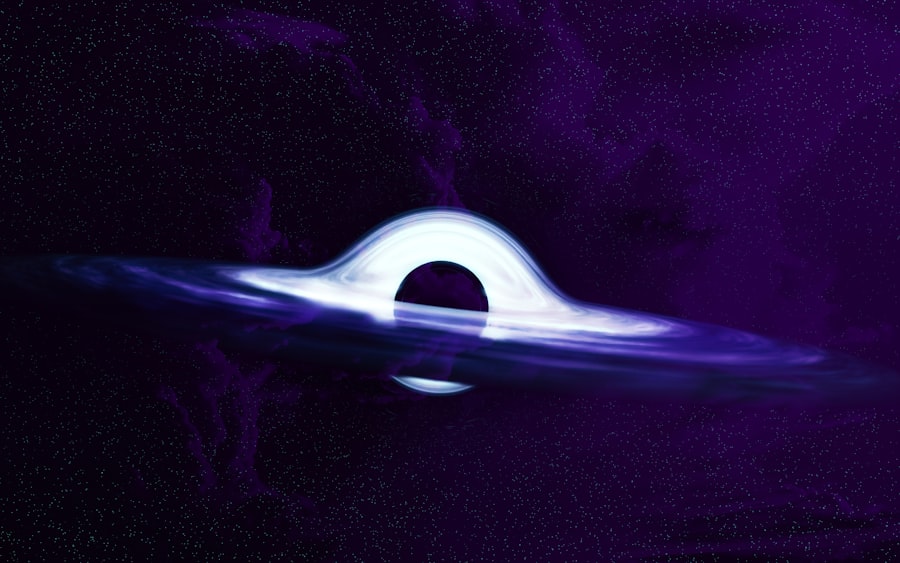
Black holes exhibit a range of intriguing characteristics that set them apart from other celestial objects. One of their most defining features is their mass, which can vary dramatically from stellar black holes, formed from collapsing stars, to supermassive black holes found at the centers of galaxies. The mass of a black hole directly influences its gravitational pull, dictating how it interacts with surrounding matter and light.
This gravitational influence can lead to phenomena such as accretion disks, where matter spirals into the black hole, emitting intense radiation in the process. Another notable characteristic is the event horizon, which marks the point of no return for any object approaching a black hole. Once an object crosses this boundary, it becomes impossible for it to escape the black hole’s gravitational pull.
The nature of time and space also undergoes dramatic changes near a black hole; time appears to slow down for an observer approaching the event horizon compared to someone far away. These peculiarities challenge conventional notions of physics and continue to inspire research into the fundamental laws governing the universe.
Debate over the Existence of the Biggest Black Hole
| Black Hole | Size | Evidence |
|---|---|---|
| M87* | 6.5 billion solar masses | Observations from Event Horizon Telescope |
| Ton 618 | 66 billion solar masses | Based on mass estimates |
| SDSS J0100+2802 | 12 billion solar masses | Based on mass estimates |
Despite significant advancements in observational astronomy, debates persist regarding the existence and nature of the biggest black hole. Skeptics argue that some measurements may be influenced by factors such as observational biases or misinterpretations of data. The sheer scale and mass attributed to this black hole raise questions about its formation and growth mechanisms.
Critics contend that existing models may not adequately account for such an enormous entity, leading to ongoing discussions within the scientific community. Furthermore, alternative theories have emerged that challenge conventional wisdom about black holes. Some researchers propose that what has been identified as a black hole could instead be a different type of astronomical object or phenomenon altogether.
This ongoing debate underscores the complexity of astrophysical research and highlights the need for continued scrutiny and investigation into these cosmic giants.
Observations and Evidence Supporting the Existence of the Biggest Black Hole
Despite skepticism surrounding its existence, a wealth of observational evidence supports the claim that the biggest black hole is indeed real. Astronomers have utilized various methods to gather data on its mass and behavior, including monitoring the orbits of stars in close proximity to this massive entity. By applying Kepler’s laws of motion, researchers can calculate the gravitational influence exerted by the black hole on these stars, providing compelling evidence for its existence.
Additionally, observations from advanced telescopes have revealed high-energy emissions associated with matter falling into the black hole. These emissions are often detected in X-ray wavelengths and serve as a signature of accretion processes occurring around supermassive black holes. Such findings not only bolster claims regarding this particular black hole but also contribute to a broader understanding of how these cosmic giants interact with their environments.
Theoretical Challenges to the Existence of the Biggest Black Hole
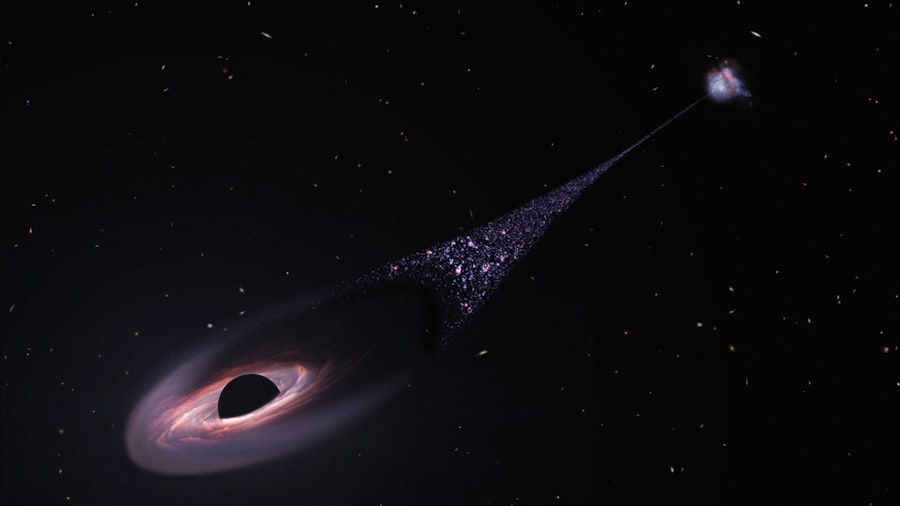
While observational evidence lends support to the existence of the biggest black hole, theoretical challenges remain that complicate our understanding. One significant issue is reconciling its immense mass with current models of galaxy formation and evolution. Theories suggest that supermassive black holes grow over time through processes such as mergers with other black holes or accreting gas from their surroundings.
However, questions arise about how such a massive entity could form in a relatively short time frame after the Big Bang. Moreover, some physicists argue that existing theories may not fully capture the complexities involved in black hole formation and growth. Alternative models propose different mechanisms for creating supermassive black holes that could potentially explain their existence without relying on traditional frameworks.
These theoretical challenges highlight the dynamic nature of astrophysical research and underscore the importance of continued exploration into the fundamental principles governing these enigmatic objects.
Other Potential Explanations for the Observations
In light of ongoing debates regarding the biggest black hole’s existence, researchers have explored alternative explanations for observed phenomena associated with it. Some scientists suggest that certain observations attributed to a black hole could instead be explained by other astrophysical processes or objects. For instance, high-energy emissions might arise from interactions between neutron stars or other compact objects rather than from matter falling into a supermassive black hole.
Additionally, some theories propose that what has been identified as a black hole could be a massive cluster of stars or an exotic form of matter that does not conform to traditional definitions. These alternative explanations challenge conventional thinking and encourage scientists to consider a broader range of possibilities when interpreting observational data. As research continues to evolve, it remains crucial for astronomers to remain open-minded about potential explanations for complex cosmic phenomena.
Implications of the Biggest Black Hole’s Existence
The existence of the biggest black hole carries profound implications for our understanding of cosmology and astrophysics.
This could lead to new insights into how galaxies grow and interact with one another throughout their lifetimes.
Moreover, studying such an enormous black hole could provide valuable information about fundamental physics, particularly in relation to gravity and spacetime. Understanding how these colossal entities operate may shed light on unresolved questions surrounding dark matter and dark energy—two mysterious components that constitute much of the universe’s mass-energy content. The implications extend beyond mere academic curiosity; they touch upon humanity’s quest for knowledge about its place in an ever-expanding cosmos.
Future Observations and Research
As technology continues to advance, future observations promise to deepen our understanding of black holes and their role in shaping the universe. Upcoming missions involving next-generation telescopes and observatories aim to gather more precise data on supermassive black holes, including their formation mechanisms and interactions with surrounding matter. These efforts will likely involve collaborations across multiple disciplines within astrophysics, fostering a more comprehensive approach to studying these enigmatic entities.
Additionally, researchers are exploring innovative methods for detecting gravitational waves generated by merging black holes or other cataclysmic events involving these cosmic giants. Such observations could provide unprecedented insights into their properties and behaviors while also offering new avenues for testing existing theories in physics. As scientists continue to push boundaries in observational astronomy, they remain hopeful that future discoveries will illuminate some of the most profound mysteries surrounding black holes.
The Role of Black Holes in the Universe
Black holes play a crucial role in shaping the structure and dynamics of galaxies throughout the universe. Their immense gravitational pull influences star formation rates within galaxies while also regulating gas dynamics in galactic centers. Supermassive black holes are believed to be integral components in galaxy evolution; they can affect how galaxies merge and interact over time.
Furthermore, black holes serve as natural laboratories for testing fundamental theories in physics under extreme conditions. The study of their properties challenges existing paradigms while also providing opportunities for new discoveries related to gravity, spacetime, and quantum mechanics. As researchers continue to unravel these cosmic mysteries, they gain deeper insights into not only black holes themselves but also broader questions about our universe’s origins and ultimate fate.
The Current State of Knowledge about the Biggest Black Hole
The exploration of black holes remains one of modern astrophysics’ most exciting frontiers. While significant progress has been made in identifying and characterizing these enigmatic entities—particularly regarding claims surrounding the biggest black hole—debates persist within scientific circles about their nature and implications. Observational evidence supports their existence; however, theoretical challenges continue to prompt discussions about alternative explanations for observed phenomena.
As research advances and new technologies emerge, scientists remain optimistic about uncovering further insights into these cosmic giants’ mysteries. The ongoing quest for knowledge surrounding black holes not only enriches humanity’s understanding of fundamental physics but also deepens our appreciation for the vastness and complexity of the universe itself. In this ever-evolving field, each discovery brings with it new questions—ensuring that black holes will continue to captivate minds for generations to come.
In the fascinating realm of astrophysics, the existence of the biggest black hole has sparked numerous debates and discussions among scientists and enthusiasts alike. A related article that delves into the mysteries of these cosmic giants can be found on My Cosmic Ventures. This article explores the latest discoveries and theories surrounding black holes, providing insights into their formation, size, and the potential implications for our understanding of the universe. For more in-depth information, you can read the full article by visiting My Cosmic Ventures.
WATCH THIS! 🌌The Biggest Black Hole Is A LIE
FAQs
What is the biggest black hole?
The biggest black hole is known as TON 618, which is located in the constellation of Canes Venatici. It is estimated to have a mass of 66 billion times that of the Sun.
How do scientists determine the size of a black hole?
Scientists determine the size of a black hole by measuring its mass, which can be calculated based on the gravitational effects it has on nearby objects and the radiation it emits.
Is TON 618 the biggest black hole known to exist?
As of now, TON 618 is considered to be one of the largest black holes known to exist, but there may be even larger black holes that have not yet been discovered.
What are the implications of the discovery of such a massive black hole?
The discovery of a massive black hole like TON 618 can help scientists better understand the formation and evolution of galaxies, as well as the role of supermassive black holes in the universe.