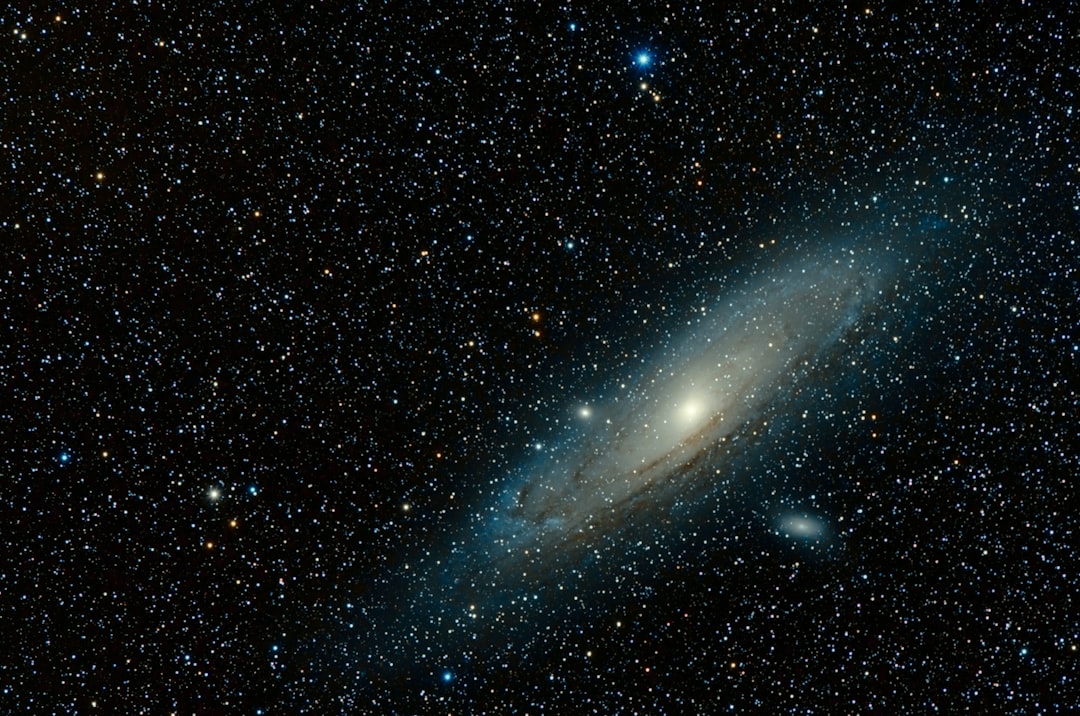
The Boötes Void, a vast expanse of space, presents a stark contrast to the bustling cosmic neighborhoods typically depicted in astronomical discourse. This immense, nearly empty region, also known as the Great Void, is located approximately 250 million light-years away in the direction of the constellation Boötes. Its discovery, by Iowa State University graduate student Robert Fisher and his advisor, Jack Burns, in 1988, fundamentally altered our understanding of the large-scale structure of the universe. What was once thought to be a relatively uniform distribution of galaxies has been revealed to possess significant voids, with Boötes being the most prominent example discovered to date.
The identification of the Boötes Void was not a singular, serendipitous event but rather the culmination of decades of systematic astronomical observation and the development of increasingly sophisticated cataloging techniques. Early astronomers cataloged stars and nebulae, but understanding the three-dimensional distribution of the universe required mapping the distances to these celestial objects.
Early Galactic Surveys and the Redshift Revolution
The foundations for understanding cosmic structure were laid through projects like the Shapley-Ames Catalog of Bright Galaxies. However, it was the advent of redshift measurements that truly unlocked the universe’s spatial dimensions. Redshift, the stretching of light waves from receding celestial objects, serves as a proxy for distance due to the expansion of the universe. As galaxies move away from us, their emitted light is shifted towards longer, redder wavelengths. By measuring this redshift, astronomers could estimate the recession velocity of a galaxy, and consequently, its distance.
The CfA Redshift Survey and the Emerging Picture
A pivotal moment in this endeavor was the Harvard/Smithsonian Center for Astrophysics (CfA) Redshift Survey, led by John Huchra and Margaret Geller. This ambitious project aimed to measure the redshifts of thousands of galaxies, creating a three-dimensional map of a significant portion of the local universe. As data was compiled and visualized, patterns began to emerge. Galaxies were not randomly scattered; they appeared to form filaments and walls, interspersed with vast, underdense regions.
The Boötes Void, often referred to as one of the largest known voids in the universe, has intrigued astronomers for years due to its vast emptiness and the surprisingly low number of galaxies it contains. A related article that delves deeper into the mysteries of the Boötes Void and explores the implications of its scarcity of galaxies can be found at this link. This article provides insights into the formation of cosmic structures and the significance of such voids in our understanding of the universe’s evolution.
Characterizing the Boötes Void: Dimensions and Contents
The Boötes Void is characterized by its immense size and its relative lack of luminous matter. Its boundaries are not sharply defined but represent regions where the density of galaxies is significantly lower than the cosmic average.
Defining the Boundaries of Nothingness
Estimates of the Boötes Void’s diameter vary slightly depending on the survey data and the methods used for analysis. However, it is generally accepted to be around 250 to 300 million light-years across. This is an extraordinary scale, dwarfing the sizes of individual galaxies and even galaxy clusters. To put it in perspective, the Milky Way galaxy is about 100,000 light-years in diameter. The void is so large that light itself takes hundreds of millions of years to traverse its expanse.
The Sparse Inhabitants: A Cosmic Oasis?
While referred to as a “void,” this region is not entirely devoid of matter. Within its vast expanse, astronomers have identified approximately 60 galaxies. This number might seem substantial in isolation, but when compared to other regions of similar volume in the universe, it represents an exceptionally low density. For instance, a comparable volume in a supercluster or a galactic filament might contain thousands or even millions of galaxies. These 60 galaxies are not clustered together but are spread out within the void, forming isolated systems or very small groupings.
Galaxy Types Within the Void
The galaxies found within the Boötes Void are a subject of continued study. Initial observations suggested a prevalence of smaller, less luminous galaxies, potentially including dwarf galaxies and low-surface-brightness galaxies. The harsh environment of the void, with its limited gravitational influence from massive structures, might favor the formation and survival of these less massive systems. However, more detailed surveys are needed to definitively characterize the population of galaxies and understand any potential environmental influences on their morphology and evolution.
Cosmic Structure and the Cosmic Web
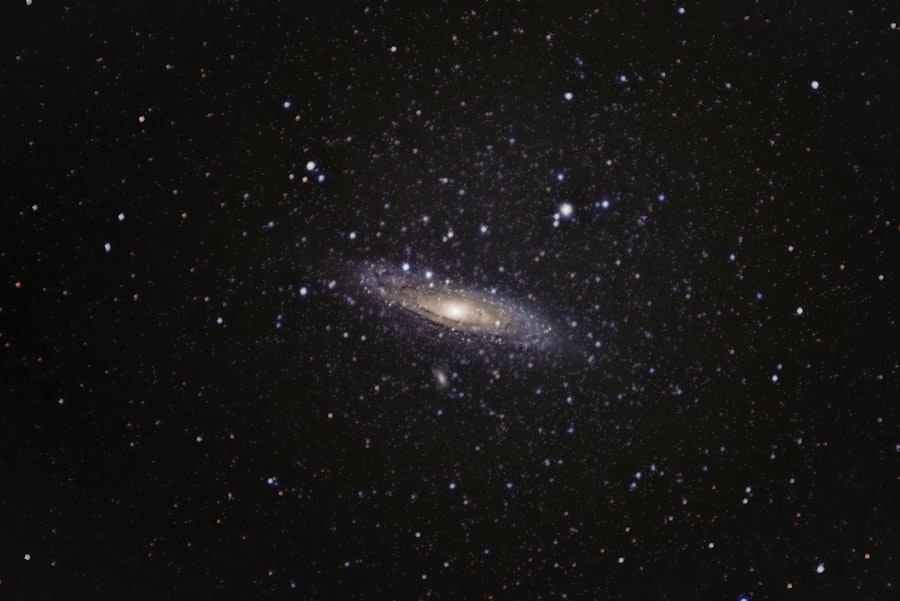
The existence of the Boötes Void, alongside the filaments and clusters that punctuate the universe, provides crucial evidence for the prevailing cosmological model, which describes the large-scale structure of the universe as a “cosmic web.”
The Cosmological Principle and its Challenge
The cosmological principle, a cornerstone of modern cosmology, posits that on large scales, the universe is homogeneous and isotropic. This means that the universe looks the same everywhere and in every direction. The discovery of structures like the Boötes Void, while undeniably significant, does not necessarily contradict this principle. The principle applies to scales much larger than that of the void. The vast distances involved ensure that, when averaged over sufficiently large volumes, the universe’s density and properties remain consistent.
Filaments, Walls, and Voids: The Cosmic Tapestry
The cosmic web is envisioned as a network of interconnected filaments and walls of galaxies and dark matter, surrounding vast, underdense regions known as voids. Galaxy clusters, the most massive gravitationally bound structures in the universe, reside at the nodes where filaments intersect. The Boötes Void represents a particularly well-defined and expansive inter-filamentary region. Its existence is a natural consequence of the gravitational collapse and large-scale structure formation processes described by cosmological models.
The Role of Dark Matter and Dark Energy
The formation of the cosmic web, including voids, is intimately linked to the interplay of dark matter and dark energy. Dark matter, which interacts gravitationally but not electromagnetically, provides the scaffolding for structure formation. Its gravitational pull attracts ordinary matter, leading to the formation of filaments and clusters. Dark energy, on the other hand, is responsible for the accelerated expansion of the universe, which drives the voids further apart and dictates the overall evolution of the cosmic web.
Formation Theories of the Boötes Void
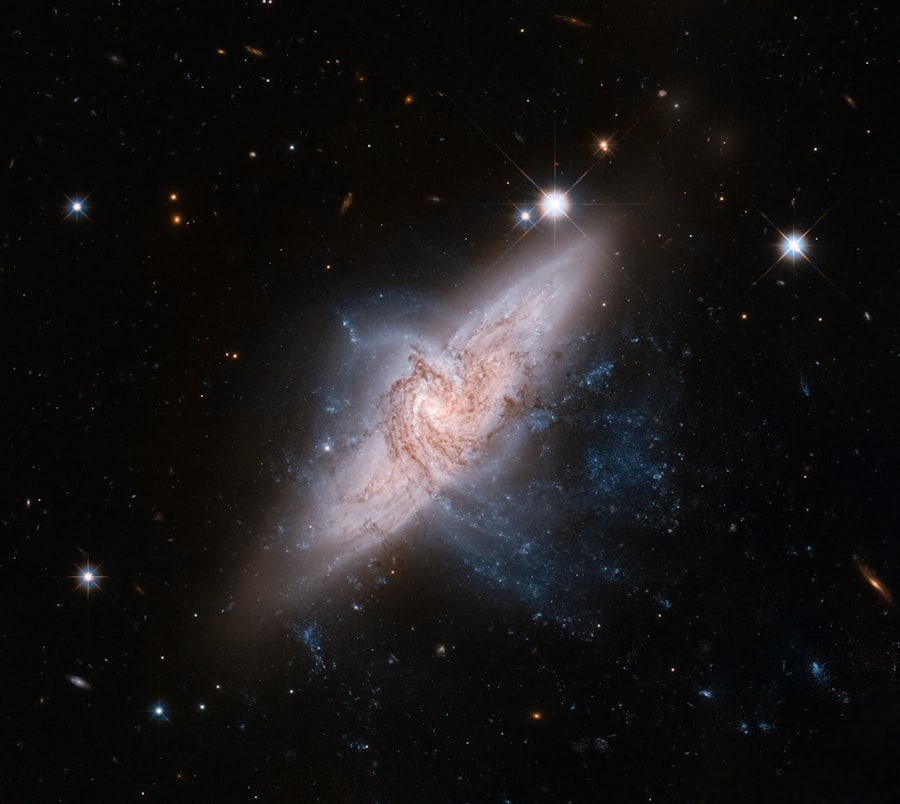
The formation of such a massive void is not attributed to a single, singular event but rather to the gradual accumulation of cosmic evolution processes over billions of years. Current cosmological models provide a framework for understanding its genesis.
Gravitational Collapse and Accretion
The standard model of cosmology, Lambda-CDM (Lambda-Cold Dark Matter), explains the formation of large-scale structures through the initial, minuscule density fluctuations present in the early universe. Regions with slightly higher densities attracted more matter through gravity, leading to the formation of filaments and clusters. Conversely, regions with slightly lower densities experienced less gravitational attraction and, due to the expansion of the universe, became even less dense over time, eventually evolving into voids.
The Influence of Initial Conditions
The specific properties of the Boötes Void, such as its size and the distribution of galaxies within it, are thought to be a consequence of the initial conditions of the universe. Small variations in the primordial density field, as imprinted by the Big Bang, would have dictated where structures would form and where voids would ultimately emerge. The Boötes Void likely represents a region that was, from the outset, gravitationally unfavored for the accumulation of large amounts of matter.
Simulated Universes and Void Formation
Cosmological simulations are powerful tools for testing these formation theories. By simulating the evolution of the universe on vast computational scales, astronomers can recreate the conditions of the early universe and observe how structures, including voids, form over cosmic time. These simulations, when compared to observational data from galaxy surveys like the Sloan Digital Sky Survey (SDSS), provide strong support for the gravitational collapse and accretion model as the primary mechanism for void formation.
The Boötes Void, often referred to as one of the largest known voids in the universe, has sparked significant interest among astronomers regarding the number of galaxies it contains. Recent studies suggest that this vast region may hold far fewer galaxies than typical cosmic structures, leading to intriguing questions about the formation and distribution of galaxies in the universe. For a deeper understanding of this phenomenon, you can explore a related article that delves into the mysteries of cosmic voids and their implications for our understanding of the universe at My Cosmic Ventures.
The Boötes Void in the Broader Cosmic Context
| Boötes Void | Galaxies |
|---|---|
| Estimated Number | 60 galaxies |
| Size | 250 million light-years in diameter |
| Distance from Earth | Approximately 700 million light-years |
The Boötes Void is not an isolated anomaly but an integral part of the universe’s grand architecture. Its study offers valuable insights into the fundamental properties of the cosmos and the processes that shape it.
Testing Cosmological Models
The observed properties of the Boötes Void, including its size, the number and distribution of its galaxies, and the distribution of matter within and around it, provide crucial data points for testing and refining cosmological models. Any significant discrepancies between observational data and theoretical predictions would necessitate adjustments to our understanding of gravity, dark energy, or the early universe.
The Role of Dark Energy in Void Expansion
The ongoing expansion of the universe, driven by dark energy, plays a significant role in the evolution of voids. As the universe expands, the distances between galaxies increase, and the underdense regions of voids become even more pronounced. The accelerated expansion, in particular, suggests that voids will continue to grow over time, potentially consuming more matter from surrounding filaments.
Future Exploration and Understanding
The ongoing efforts in galaxy redshift surveys, such as the Dark Energy Spectroscopic Instrument (DESI) and the Euclid mission, are aimed at mapping the universe with unprecedented precision. These missions will provide more detailed information about the Boötes Void and other cosmic voids, allowing astronomers to study their properties with greater accuracy. Future studies will focus on understanding the precise composition of galaxies within voids, the distribution of dark matter, and the influence of the void environment on galaxy evolution. The Boötes Void, a testament to the vastness and complexity of the universe, continues to be a fascinating subject for scientific inquiry, pushing the boundaries of our cosmic understanding.
FAQs
1. What is the Boötes Void?
The Boötes Void is a vast, empty region of space located in the constellation of Boötes. It is known for its extremely low density of galaxies and other cosmic structures.
2. How many galaxies are estimated to be in the Boötes Void?
Estimates suggest that there are very few, if any, galaxies within the Boötes Void. The void is so large that it is thought to contain only a handful of galaxies, if any at all.
3. How does the Boötes Void compare to other voids in the universe?
The Boötes Void is one of the largest known voids in the universe, spanning approximately 250 million light-years in diameter. It is significantly larger than most other cosmic voids.
4. What are the implications of the Boötes Void for our understanding of the universe?
The existence of the Boötes Void challenges our current understanding of the distribution of matter in the universe. It raises questions about the formation and evolution of cosmic structures and the nature of dark matter and dark energy.
5. How is the Boötes Void studied by astronomers?
Astronomers study the Boötes Void using telescopes and other observational tools to analyze the distribution of galaxies and other cosmic structures in and around the void. They also use computer simulations and theoretical models to better understand its properties and implications for cosmology.