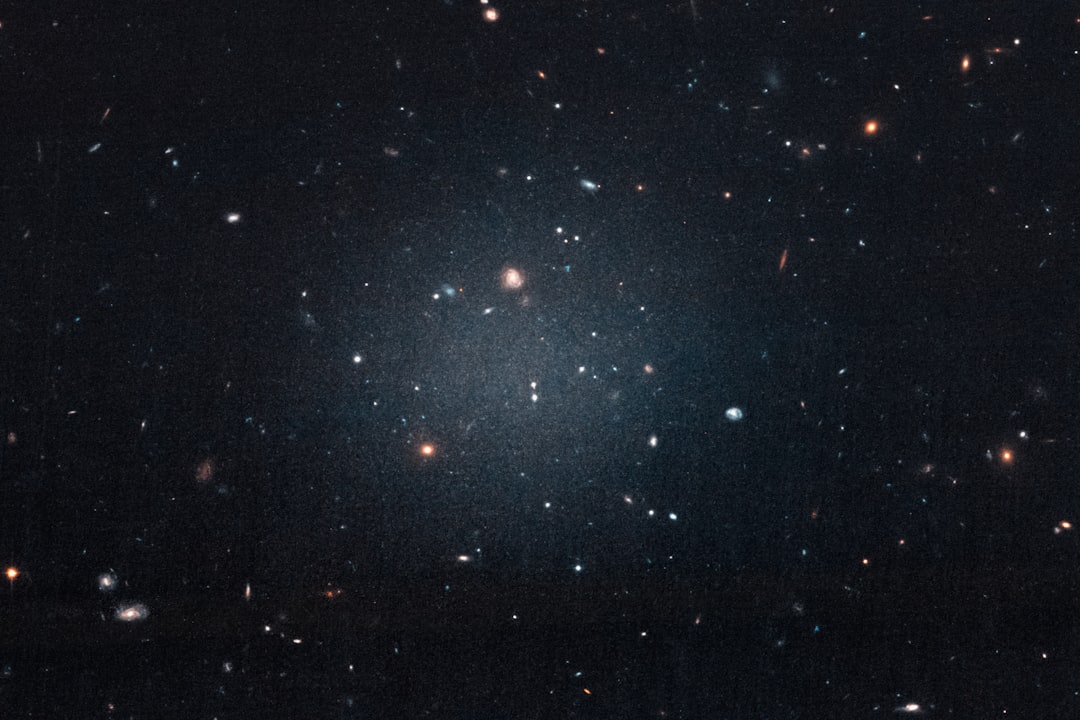
The fundamental constituents of the universe and their interactions remain a subject of intense scientific inquiry. While the Standard Model of particle physics successfully describes the behavior of visible matter, a significant portion of the universe’s mass-energy content is not accounted for by this framework. This unseen component, dubbed “dark matter,” plays a crucial role in the formation and evolution of large-scale structures like galaxies and galaxy clusters. Understanding the nature of dark matter is paramount to a comprehensive cosmological picture.
The existence of dark matter is not a theoretical construct dreamed up in isolation; it is a consequence of numerous astronomical observations that cannot be explained by the gravitational effects of visible baryonic matter alone. These observations span a wide range of scales, from the rotation of individual galaxies to the distribution of matter across the vast cosmic web.
Galactic Rotation Curves
One of the earliest and most compelling pieces of evidence for dark matter came from the study of galaxy rotation curves. Jan Oort, in the 1930s, noted that stars in the outer regions of the Milky Way appeared to be moving faster than expected based on the visible mass. Later, Vera Rubin and her colleagues meticulously measured the rotation speeds of stars in numerous spiral galaxies. They found that orbital velocities did not decrease with increasing distance from the galactic center as predicted by Keplerian dynamics, which would be the case if mass were concentrated within the visible stars and gas. Instead, the rotation curves remained “flat” at large radii, implying the presence of a substantial amount of unseen mass extending far beyond the luminous disk. This “dark halo” of matter was inferred to exert the necessary gravitational pull to keep these outer stars in their rapid orbits.
Galaxy Clusters
Further evidence for dark matter emerged from observations of galaxy clusters, massive gravitational bound systems containing hundreds or even thousands of galaxies. Fritz Zwicky, in the 1930s, studied the Coma Cluster and observed that the velocities of individual galaxies within the cluster were much higher than what could be attributed to the cluster’s visible mass. He concluded that a significant amount of “missing mass” must be present to hold the cluster together gravitationally. Modern studies of galaxy clusters confirm this discrepancy through various means.
Velocity Dispersions
The kinetic energy of galaxies within a cluster, reflected in their velocity dispersions, provides a measure of the cluster’s total gravitational mass. When these velocities are significantly higher than expected from the luminous galaxies and hot gas (intracluster medium, ICM) observed, it points to the presence of additional, non-luminous matter.
Gravitational Lensing
Another powerful probe of dark matter in galaxy clusters is gravitational lensing. Massive objects, including galaxy clusters, warp the fabric of spacetime, bending the light from more distant background objects. The degree of this bending, or lensing, is directly proportional to the total mass of the lensing object. Observations of lensing around galaxy clusters reveal a distribution of mass that is far more extended and substantial than the visible matter alone can account for. This technique allows for the mapping of the dark matter distribution within these structures.
Hot Gas Entrapment
Galaxy clusters are filled with extremely hot, X-ray emitting gas. The temperature and distribution of this gas are governed by the gravitational potential of the cluster. The observed confinement of this hot gas requires a much deeper gravitational potential well than can be provided by the visible baryonic matter. This suggests that dark matter forms the dominant component of the gravitational potential in galaxy clusters, trapping the baryonic gas in place.
Cosmic Microwave Background (CMB)
The Cosmic Microwave Background (CMB) radiation, a relic from the early universe, provides a snapshot of the universe when it was approximately 380,000 years old. The intricate pattern of temperature fluctuations in the CMB encodes information about the composition and evolution of the early universe.
Anisotropies and Power Spectrum
The amplitude and distribution of these anisotropies, particularly as revealed by their power spectrum, are exquisitely sensitive to the relative abundances of different components in the early universe. Specifically, the peaks and troughs in the CMB power spectrum strongly constrain the baryonic matter density, the dark matter density, and the dark energy density. The observed features of the CMB are best explained by a cosmological model that includes a significant component of non-baryonic dark matter. Without dark matter, the gravitational perturbations in the early universe would not have had sufficient time to grow into the structures we observe today by the present epoch.
Recent advancements in our understanding of dark matter models have significant implications for large-scale structure formation in the universe. A related article that delves into these developments can be found at My Cosmic Ventures, where researchers explore various theoretical frameworks and their impact on cosmic evolution. This resource provides valuable insights into how different dark matter scenarios can influence the distribution of galaxies and the overall architecture of the cosmos.
Theoretical Candidates for Dark Matter
The observational evidence for dark matter is robust and multifaceted. However, the exact nature of this elusive substance remains unknown. A wide array of theoretical candidates has been proposed, each with its own set of properties and implications. These candidates can be broadly categorized based on their interaction properties and mass.
Weakly Interacting Massive Particles (WIMPs)
Weakly Interacting Massive Particles (WIMPs) have been a leading class of dark matter candidates for decades. The theoretical motivation for WIMPs arises from the “WIMP miracle,” a coincidence where a particle with a mass around the electroweak scale and interactions governed by the weak nuclear force would naturally be produced in the early universe in the correct abundance to explain the observed dark matter density.
Supersymmetric Partners
Many extensions to the Standard Model of particle physics, such as Supersymmetry (SUSY), predict the existence of new particles. The lightest supersymmetric particle (LSP) in many SUSY models is a stable, weakly interacting particle that fits the profile of a WIMP. Examples include the neutralino.
Direct Detection Strategies
Direct detection experiments aim to observe the rare elastic scattering events between a WIMP from the galactic halo and the nuclei of atoms within sensitive detectors. These experiments are typically located deep underground to shield them from cosmic ray background. Detectors utilize technologies like cryogenic bolometers, noble liquid time projection chambers (TPCs), and noble gas detectors to register the faint recoil energy deposited by a WIMP interaction.
Indirect Detection Strategies
Indirect detection experiments search for the products of WIMP annihilation or decay. If WIMPs are their own antiparticles, they can annihilate with each other, producing detectable Standard Model particles such as gamma rays, neutrinos, or positrons. Astronomical observatories, including gamma-ray telescopes like Fermi-LAT and Cherenkov telescopes, and neutrino detectors like IceCube, are used to search for these annihilation signals from regions expected to be rich in dark matter, such as the galactic center or dwarf galaxies.
Production Cross-Section and Mass
The predicted cross-section for WIMP scattering and annihilation, along with their expected mass range, dictates the sensitivity requirements for both direct and indirect detection experiments. Current experimental limits have placed strong constraints on the WIMP parameter space, pushing the focus towards lighter or more strongly interacting candidates if WIMPs are indeed the dominant component of dark matter.
Recent advancements in our understanding of dark matter models have significantly influenced the study of large scale structure in the universe. Researchers are exploring various theoretical frameworks to explain the distribution of galaxies and cosmic filaments, which are crucial for comprehending the universe’s evolution. For a deeper insight into these models and their implications, you can read a related article that discusses the latest findings and theories in this field. Check it out here.
Axions and Axion-Like Particles (ALPs)
Axions are hypothetical particles originally proposed to solve the strong CP problem in Quantum Chromodynamics (QCD). The strong CP problem arises from the fact that QCD allows for a term in its Lagrangian that would lead to a violation of CP symmetry (charge-parity symmetry) in the strong interactions, yet no such violation has been experimentally observed. The Peccei-Quinn mechanism introduces a new global symmetry that is spontaneously broken, leading to the existence of a very light, weakly interacting particle—the axion—which effectively suppresses the CP-violating term.
The Strong CP Problem
The absence of electric dipole moments (EDMs) for fundamental particles, particularly the neutron, suggests that the QCD vacuum possesses a high degree of CP symmetry. The standard formulation of QCD allows for a dimension-four operator that violates CP symmetry, and without a mechanism to suppress its contribution, experimental limits would be easily violated. The Peccei-Quinn mechanism provides such a mechanism, predicting the existence of a new particle, the axion, whose interactions are suppressed by a very large energy scale.
Experimental Searches for Axions
Experimental searches for axions typically exploit their predicted weak coupling to photons. One common approach involves using strong magnetic fields to convert axions into detectable photons. The ADMX (Axion Dark Matter eXperiment) is a prominent example, using a resonant cavity within a strong magnetic field to search for axions in specific mass ranges. Other experiments employ different techniques, such as helioscopes that search for solar axions or experiments looking for axion-induced signals in astrophysical environments.
Axion-Like Particles (ALPs)
The concept of axions has been generalized to axion-like particles (ALPs), which share similar properties but are not necessarily tied to the strong CP problem. ALPs can arise from various theoretical frameworks, including string theory, and may have different mass ranges and coupling strengths compared to QCD axions. Searches for ALPs often overlap with those for axions, utilizing similar experimental techniques.
Sterile Neutrinos
While the Standard Model includes three types of active neutrinos (electron, muon, and tau neutrinos), sterile neutrinos are hypothetical particles that do not interact via the weak nuclear force, only through gravity. Their existence could potentially explain the observed mass ordering of active neutrinos and, crucially, could also contribute to dark matter.
Neutrino Oscillations and Mass Hierarchy
The phenomenon of neutrino oscillations, where neutrinos change flavor as they propagate, implies that neutrinos have non-zero masses and that these masses are unequal. The precise mass hierarchy and mixing angles are actively studied. Sterile neutrinos, if they exist, could interact with active neutrinos through “mixing,” which could lead to observable effects.
Detection Signatures
Sterile neutrinos in the dark matter mass range could decay into active neutrinos and photons. Such decays might produce a detectable X-ray line. Searches for such X-ray signals from regions with high dark matter density, like galaxy clusters, have been conducted, placing constraints on the mass and mixing parameters of sterile neutrino dark matter. However, these searches have also yielded some intriguing, though not conclusive, signals.
Primordial Black Holes (PBHs)
Primordial Black Holes (PBHs) are hypothetical black holes that could have formed from the gravitational collapse of overdense regions in the very early universe, shortly after the Big Bang. Unlike stellar-mass black holes that form from the collapse of massive stars, PBHs could have a wide range of masses, from asteroid-mass to thousands of solar masses.
Formation Mechanisms and Mass Spectrum
The formation of PBHs depends on the density fluctuations present in the early universe. If these fluctuations were sufficiently large, gravitational collapse could lead to the formation of black holes. The mass spectrum of PBHs is directly related to the scale of these initial fluctuations.
Astrophysical Constraints
The abundance and mass distribution of PBHs are constrained by various astrophysical observations. Their gravitational influence could affect the dynamics of star clusters and galaxies. Moreover, if PBHs are sufficiently abundant and compact, they could contribute to gravitational microlensing events. Evaporation of small PBHs via Hawking radiation could also lead to detectable gamma-ray signals. Current constraints significantly limit the fraction of dark matter that can be composed of PBHs within certain mass windows.
Implications of Dark Matter Models for Large-Scale Structure Formation
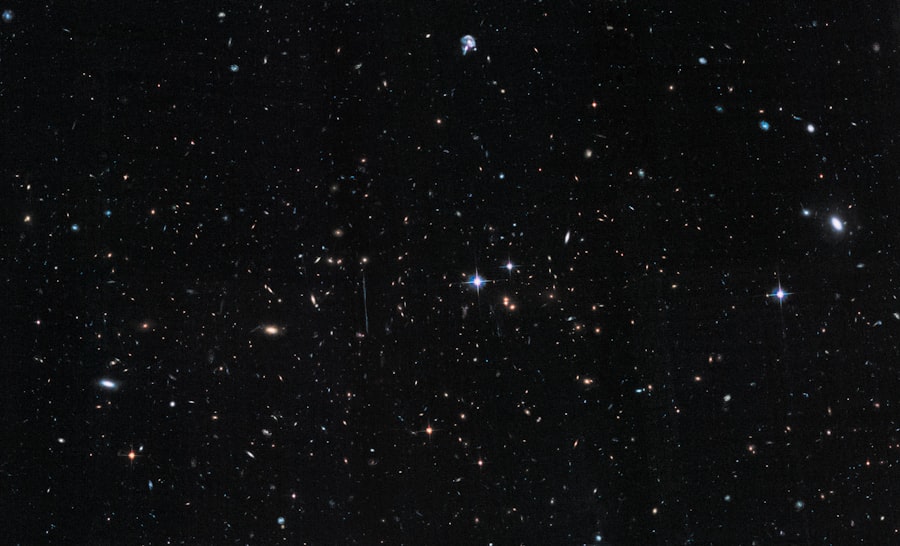
The nature of dark matter has profound implications for how large-scale structures in the universe form and evolve. The gravitational influence of dark matter is the primary driver behind the hierarchical assembly of cosmic structures.
Cold Dark Matter (CDM) Paradigm
The prevailing cosmological model, known as the Lambda-CDM (ΛCDM) model, posits that dark matter is “cold,” meaning that its constituent particles were moving non-relativistically at the time of structure formation. This characteristic is crucial for the successful formation of structures.
Structure Formation Hierarchically
In the CDM paradigm, small density fluctuations in the early universe, imprinted in the CMB, grow over time due to gravitational instability. Dark matter, being the dominant gravitational component, collapses first into halos. Baryonic matter, though initially coupled to photons and unable to collapse directly, falls into these dark matter potential wells once the universe cools sufficiently. This process leads to the hierarchical formation of structures, where smaller halos merge to form larger ones, ultimately building up galaxies and galaxy clusters.
Baryon Acoustic Oscillations (BAOs)
The early universe was a plasma of photons and baryons. Sound waves (acoustic oscillations) propagated through this plasma. When recombination occurred, these sound waves froze out, leaving an imprint on the distribution of matter. This imprint manifests as a preferred separation scale in the distribution of galaxies, known as Baryon Acoustic Oscillations (BAOs). The amplitude and characteristic scale of BAOs are sensitive to the amount of baryonic matter and the overall expansion history of the universe, and are consistent with the CDM model.
Warm Dark Matter (WDM)
Warm dark matter (WDM) refers to dark matter particles that were relativistic at early times but had relaxed to non-relativistic speeds by the epoch of structure formation, but not as early as CDM. This “warmness” has important consequences for the early stages of structure formation due to the free-streaming of WDM particles.
Free-Streaming and Suppression of Small-Scale Structures
The thermal motion of WDM particles causes them to “free-stream” out of small overdensities, potentially smoothing them out. This suppression of early structure formation can lead to fewer and less massive small-scale structures (like dwarf galaxies) compared to CDM. Observations of the low abundance of faint dwarf galaxies around the Milky Way and Andromeda have been used to place constraints on the WDM particle mass, favoring particles sufficiently massive to avoid excessive suppression of small-scale structure.
Implications for Galaxy Halos
The free-streaming of WDM particles can also affect the shapes and internal structure of dark matter halos. Specifically, it can lead to a smoother distribution of dark matter at the centers of halos, potentially resolving some discrepancies observed between CDM simulations and observations of satellite galaxy populations.
Self-Interacting Dark Matter (SIDM)
Self-interacting dark matter (SIDM) proposes dark matter particles that not only interact gravitationally but also interact with each other through a non-gravitational force. This interaction can significantly alter the dynamics of dark matter halos, particularly within their cores.
Core-Cusp Problem
One of the persistent challenges for the CDM model is the “core-cusp problem.” N-body simulations of CDM predict that dark matter halos should have cuspy density profiles at their centers, with density increasing sharply towards the galactic center. However, observations of the density profiles of some dwarf galaxies and low-surface-brightness galaxies suggest that their dark matter halos are more “cored,” with a flatter density distribution in their central regions. SIDM models, with their collisional nature, can naturally produce these flattened cores through self-interactions that effectively scatter dark matter particles away from the central region.
Halo Structure and Mergers
The self-interaction cross-section of SIDM particles influences the degree to which halos are cored and can also affect the dynamics of halo mergers. If dark matter particles interact strongly enough, they can scatter off each other during a merger, leading to a less violent and more diffuse interaction compared to collisionless CDM.
Challenges and Future Directions in Dark Matter Research
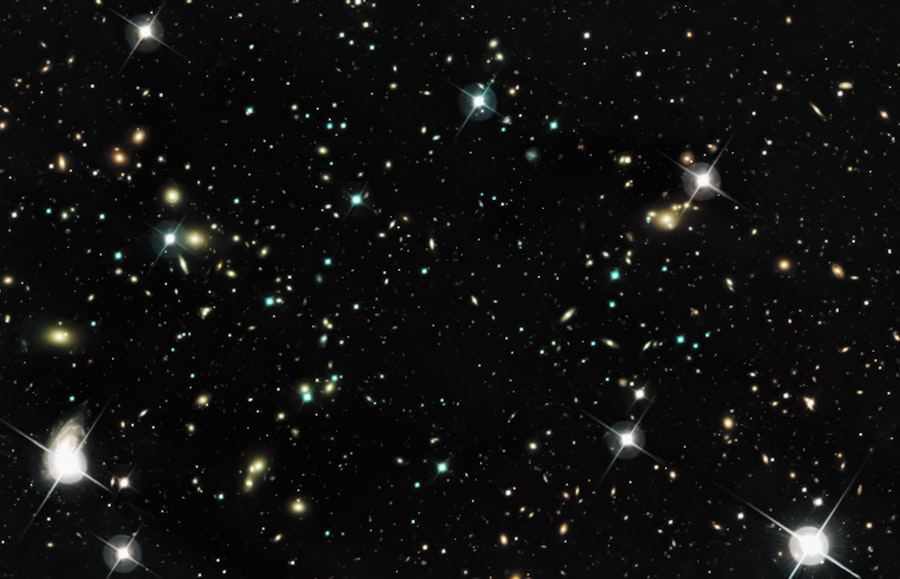
Despite decades of dedicated research, the nature of dark matter remains one of the most significant puzzles in modern physics and cosmology. The ongoing quest to unravel its identity presents substantial challenges and necessitates innovative approaches.
The Null Results Problem and Experimental Sensitivity
Numerous direct and indirect detection experiments have been conducted with increasing sensitivity, yet a definitive detection of dark matter particles has remained elusive. The absence of clear signals in many of these experiments, particularly for WIMPs within certain mass and interaction strength ranges, has led to a “null results problem.” This has prompted a re-evaluation of preferred WIMP parameter spaces and has boosted interest in alternative dark matter candidates, such as lighter or more weakly interacting particles, and axions.
Theoretical Puzzles and Discrepancies
While the CDM paradigm has been remarkably successful in describing large-scale structure formation on cosmological scales, there are persistent tensions with observations on smaller scales. These include:
The “Small-Scale Crisis”
As mentioned earlier, the “small-scale crisis” encompasses several discrepancies between CDM predictions and observations on galactic scales, including the core-cusp problem, the “missing satellites problem” (the predicted abundance of small dark matter halos containing faint satellite galaxies being higher than observed), and the “too-big-to-fail problem” (the observation that some of the most massive predicted subhalos around the Milky Way appear to be too dense to contain the observed satellite galaxies). These discrepancies suggest that either the CDM model requires modification, or our understanding of baryonic physics within dark matter halos is incomplete.
The Hubble Tension
Another significant challenge is the “Hubble tension,” the persistent discrepancy between the expansion rate of the universe (the Hubble constant, H₀) as measured locally (e.g., using supernovae) and as inferred from early universe observations (e.g., the CMB). While dark matter itself is not the primary driver of this tension, a more complete understanding of dark matter’s properties and its interplay with dark energy could potentially offer insights or require adjustments to cosmological models that affect H₀ measurements.
Advancing Detection Techniques and Multi-Messenger Astronomy
Future progress in unraveling dark matter models depends heavily on advancements in detection technologies and the increasing power of multi-messenger astronomy. New detector designs with improved sensitivity, reduced background noise, and the ability to probe wider mass ranges are crucial for direct and indirect detection efforts.
Next-Generation Detectors
The development of next-generation detectors with larger target masses, ultra-low thresholds, and enhanced background rejection capabilities is essential. For WIMPs, this means pushing towards larger noble liquid detectors, more sensitive cryogenic bolometers, and novel detector technologies. For axions, this involves exploring larger resonant cavities, improved magnetic field strengths, and novel detection schemes.
Synergy with Other Astrophysical Probes
The era of multi-messenger astronomy, where observations from different types of telescopes (electromagnetic, gravitational wave, neutrino) are combined, offers a powerful new avenue for dark matter research. For instance, correlating potential dark matter annihilation signals with the detection of gravitational waves from merging compact objects, or combining X-ray observations with gamma-ray surveys, could provide complementary evidence and help disentangle dark matter signals from other astrophysical phenomena. The combined insights from these diverse observational approaches are fundamental to developing and refining our models of dark matter and its role in the cosmos.
FAQs
What is dark matter?
Dark matter is a hypothetical form of matter that is thought to make up approximately 27% of the universe. It does not emit, absorb, or reflect light, making it invisible and detectable only through its gravitational effects on visible matter.
What are dark matter models for large scale structure?
Dark matter models for large scale structure are theoretical frameworks used to explain the distribution and behavior of dark matter on the largest scales in the universe. These models aim to account for the observed structures such as galaxies, galaxy clusters, and cosmic web.
How do dark matter models for large scale structure differ from other models?
Dark matter models for large scale structure differ from other models in that they specifically focus on the behavior and distribution of dark matter on the largest scales in the universe, as opposed to smaller scales such as individual galaxies or clusters.
What are some of the key dark matter models for large scale structure?
Some of the key dark matter models for large scale structure include the Cold Dark Matter (CDM) model, Warm Dark Matter (WDM) model, and Self-Interacting Dark Matter (SIDM) model. Each of these models makes different predictions about the distribution and behavior of dark matter on large scales.
Why are dark matter models for large scale structure important?
Dark matter models for large scale structure are important because they help scientists understand the formation and evolution of the universe. By studying the distribution and behavior of dark matter on large scales, researchers can gain insights into the underlying physics that govern the universe’s structure and dynamics.