
Satellite orbits are a fundamental aspect of modern technology, enabling a wide array of services that range from global communications to weather forecasting. These orbits are paths that satellites follow around celestial bodies, primarily Earth, and are determined by the balance between gravitational forces and the satellite’s velocity. The characteristics of these orbits—such as altitude, inclination, and eccentricity—play a crucial role in the functionality of satellites.
For instance, geostationary satellites maintain a fixed position relative to the Earth’s surface, making them ideal for communication purposes, while low Earth orbit (LEO) satellites are better suited for imaging and reconnaissance due to their proximity to the planet. Understanding satellite orbits is essential not only for the deployment of new satellites but also for the ongoing management of existing ones. As the number of satellites in orbit continues to grow, so does the complexity of maintaining their trajectories.
The dynamics of satellite orbits are influenced by various factors, including gravitational interactions with other celestial bodies, atmospheric drag, and even solar radiation pressure. As such, the study of satellite orbits is a multidisciplinary field that encompasses physics, engineering, and environmental science.
Key Takeaways
- Satellite orbits are the paths that satellites follow as they orbit around the Earth.
- Causes of satellite orbits failing include gravitational forces from other celestial bodies, atmospheric drag, and solar radiation pressure.
- Failing satellite orbits can lead to communication disruptions, GPS inaccuracies, and potential collisions with other satellites or space debris.
- Communication and navigation systems can be severely impacted by failing satellite orbits, leading to disruptions in telecommunications, weather forecasting, and military operations.
- Challenges in monitoring and predicting satellite orbits include the sheer number of satellites in orbit, the dynamic nature of the Earth’s atmosphere, and the presence of space debris.
Causes of Satellite Orbits Failing
The failure of satellite orbits can be attributed to several interrelated factors. One primary cause is the degradation of a satellite’s propulsion system, which is essential for maintaining its intended orbit. Over time, the fuel reserves that power these systems can diminish, leading to an inability to perform necessary orbital adjustments.
This degradation can result from a variety of issues, including mechanical failures or design flaws that were not apparent during initial testing phases. When a satellite can no longer adjust its orbit, it risks drifting into an unstable trajectory that could lead to collision with other objects in space. Another significant factor contributing to the failure of satellite orbits is atmospheric drag.
Satellites in low Earth orbit are particularly susceptible to this phenomenon, as they encounter residual atmospheric particles that exert drag on their surfaces. This drag gradually reduces their altitude and can lead to premature re-entry into the Earth’s atmosphere. Variations in solar activity can exacerbate this issue; during periods of heightened solar activity, the atmosphere expands, increasing drag on satellites and accelerating their orbital decay.
Consequently, understanding these environmental influences is crucial for predicting and mitigating potential failures.
Effects of Satellite Orbits Failing

The effects of failing satellite orbits can be far-reaching and multifaceted. One immediate consequence is the loss of functionality for the affected satellite. For instance, if a communication satellite drifts out of its designated orbit, it may no longer be able to relay signals effectively, disrupting services for users on Earth.
This disruption can have cascading effects on various sectors, including telecommunications, broadcasting, and even emergency services that rely on satellite communications for coordination and response. In addition to service disruptions, failing satellite orbits can also pose significant risks to other operational satellites. As satellites drift from their intended paths, they increase the likelihood of collisions with other objects in space.
Such collisions can generate space debris, which further complicates the already challenging environment of orbital space. The creation of debris not only threatens existing satellites but also poses risks to future missions and increases the costs associated with space operations due to the need for enhanced tracking and avoidance measures.
Impact on Communication and Navigation Systems
| Impact on Communication and Navigation Systems | Metrics |
|---|---|
| Signal Interference | Percentage of signal disruption |
| System Downtime | Number of hours or minutes of system unavailability |
| Accuracy Degradation | Percentage of decrease in accuracy |
| Communication Delay | Number of seconds or milliseconds of delay |
The impact of failing satellite orbits on communication and navigation systems cannot be overstated. Modern society relies heavily on satellites for a multitude of services, including GPS navigation, internet connectivity, and television broadcasting. When satellites fail to maintain their orbits, users may experience degraded service quality or complete outages.
For example, GPS systems depend on a constellation of satellites maintaining precise orbits; any significant deviation can lead to inaccuracies in location data, affecting everything from personal navigation devices to large-scale logistics operations. Moreover, the implications extend beyond individual users to entire industries that depend on reliable satellite services. The aviation sector relies on satellite navigation for flight safety and efficiency; disruptions in these systems can lead to delays and increased operational costs.
Similarly, maritime navigation systems depend on accurate satellite data for safe passage through international waters. The ripple effects of failing satellite orbits can thus impact economic activities on a global scale, highlighting the critical need for robust management strategies.
Challenges in Monitoring and Predicting Satellite Orbits
Monitoring and predicting satellite orbits presents a complex set of challenges that require advanced technology and expertise. One major difficulty lies in accurately tracking the vast number of satellites currently in orbit. With thousands of active satellites and an increasing amount of space debris, maintaining an up-to-date catalog of orbital positions is a monumental task.
Ground-based radar systems and telescopes play a crucial role in this endeavor; however, their effectiveness can be limited by factors such as weather conditions and the inherent limitations of observational technology. In addition to tracking existing satellites, predicting their future trajectories involves sophisticated modeling techniques that account for various perturbative forces acting on them. These forces include gravitational interactions with other celestial bodies and atmospheric drag, which can vary based on solar activity and other environmental factors.
The dynamic nature of these influences makes it challenging to provide accurate predictions over extended periods.
Technological Advances to Prevent Satellite Orbits Failing
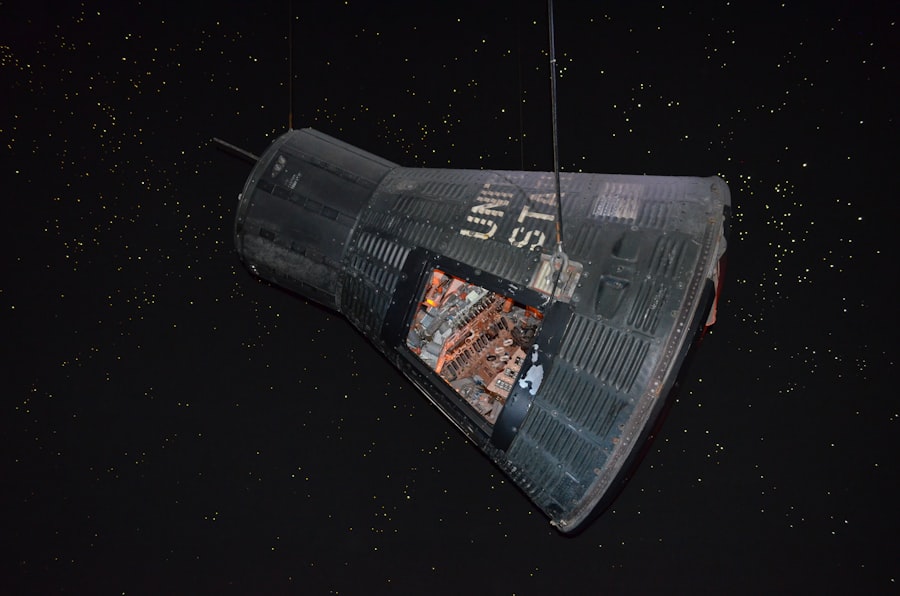
In response to the challenges associated with failing satellite orbits, significant technological advances have been made in recent years aimed at enhancing orbital stability. One promising development is the implementation of more efficient propulsion systems that allow for precise orbital adjustments with minimal fuel consumption. These systems enable satellites to maintain their intended paths more effectively over extended periods, reducing the risk of drift due to fuel depletion.
Additionally, advancements in artificial intelligence (AI) and machine learning are being leveraged to improve predictive modeling and monitoring capabilities. By analyzing vast amounts of data from various sources—such as ground-based tracking stations and onboard sensors—AI algorithms can identify potential issues before they escalate into failures. This proactive approach allows operators to take corrective actions in a timely manner, thereby enhancing the overall reliability of satellite operations.
Environmental Factors Affecting Satellite Orbits
Environmental factors play a significant role in influencing satellite orbits and their stability over time. One key factor is solar activity, which can lead to fluctuations in atmospheric density at altitudes where many satellites operate. During periods of heightened solar activity, such as solar flares or coronal mass ejections, the Earth’s atmosphere expands due to increased energy input from the sun.
This expansion results in greater atmospheric drag on low Earth orbit satellites, accelerating their orbital decay and increasing the likelihood of re-entry. Another environmental consideration is space weather phenomena that can affect satellite electronics and systems. High-energy particles from solar events can interfere with onboard electronics, leading to malfunctions that may compromise a satellite’s ability to maintain its orbit.
Understanding these environmental influences is crucial for designing resilient satellites capable of withstanding such challenges while ensuring continued operational effectiveness.
Space Debris and its Role in Satellite Orbits Failing
Space debris has emerged as a critical concern in the context of satellite orbits failing. As more satellites are launched into orbit, the risk of collisions increases exponentially. When two objects collide in space, they can generate thousands of pieces of debris that pose threats not only to other operational satellites but also to future missions.
This debris can travel at incredibly high speeds, making even small fragments capable of causing catastrophic damage upon impact. The presence of space debris complicates the already challenging task of monitoring satellite orbits. Operators must constantly assess potential collision risks and make real-time adjustments to avoid debris fields.
The growing population of debris necessitates international cooperation and regulatory frameworks aimed at mitigating its proliferation and ensuring long-term sustainability in space operations.
International Cooperation in Satellite Orbit Management
Given the global nature of satellite operations and the shared challenges posed by failing orbits and space debris, international cooperation is essential for effective management strategies. Various organizations and treaties have been established to promote collaboration among nations in addressing these issues. For instance, the United Nations Office for Outer Space Affairs (UNOOSA) plays a pivotal role in fostering dialogue among member states regarding space sustainability practices.
Additionally, initiatives such as the Inter-Agency Space Debris Coordination Committee (IADC) bring together space agencies from around the world to share best practices for debris mitigation and develop guidelines for responsible satellite operations. By working together, countries can enhance their collective ability to monitor orbital environments and implement measures that reduce risks associated with failing satellite orbits.
Future Prospects for Satellite Orbit Stability
Looking ahead, the prospects for satellite orbit stability hinge on continued advancements in technology and international collaboration. As new propulsion technologies emerge and AI-driven monitoring systems become more sophisticated, operators will be better equipped to manage their satellites’ trajectories effectively. Furthermore, ongoing research into debris mitigation strategies will play a crucial role in ensuring that future generations of satellites can operate safely without contributing significantly to space debris.
The development of innovative solutions such as active debris removal technologies also holds promise for addressing existing challenges posed by space debris. By actively removing defunct satellites and fragments from orbit, it may be possible to create a safer environment for operational satellites while preserving access to space for future missions.
The Importance of Addressing Satellite Orbits Failing
In conclusion, addressing the issue of failing satellite orbits is paramount for ensuring the continued functionality of critical communication and navigation systems that modern society relies upon. The causes of these failures are multifaceted, ranging from propulsion system degradation to environmental influences such as atmospheric drag and space weather phenomena. The consequences extend beyond individual service disruptions; they pose risks to entire industries and contribute to the growing problem of space debris.
As technology advances and international cooperation strengthens, there is hope for improved management strategies that will enhance satellite orbit stability.
The importance of this endeavor cannot be overstated; it is essential not only for maintaining current services but also for paving the way toward a more secure and sustainable future in space exploration and utilization.
Satellites falling out of orbit is a growing concern in the field of space exploration and technology. This phenomenon can be attributed to several factors, including atmospheric drag, gravitational perturbations, and the natural decay of satellite orbits over time. As satellites descend, they can pose risks to other operational satellites and even to life on Earth if they re-enter the atmosphere uncontrollably. For a deeper understanding of the challenges and solutions related to this issue, you can explore a related article on the topic by visiting this page. This article delves into the technical aspects and potential strategies to mitigate the risks associated with satellites falling out of orbit.
🌌 WATCH THIS! The Billion-Dollar Satellite That Will Trap Humanity on Earth
FAQs
What causes satellites to fall out of orbit?
Satellites can fall out of orbit due to a variety of factors, including atmospheric drag, gravitational forces from the Earth and other celestial bodies, and collisions with space debris.
How does atmospheric drag affect satellites in orbit?
Atmospheric drag, caused by the thin layer of gases in the Earth’s atmosphere, can gradually slow down a satellite’s speed and cause it to fall out of orbit over time.
What role do gravitational forces play in satellites falling out of orbit?
Gravitational forces from the Earth and other celestial bodies can perturb a satellite’s orbit, causing it to deviate from its intended path and potentially fall out of orbit.
Can collisions with space debris cause satellites to fall out of orbit?
Yes, collisions with space debris can damage a satellite’s propulsion system or alter its trajectory, leading to a potential loss of orbit.
What happens to satellites when they fall out of orbit?
When satellites fall out of orbit, they can re-enter the Earth’s atmosphere and burn up upon re-entry, or crash into the Earth’s surface or bodies of water. However, some larger satellites may survive re-entry and pose a risk of impacting populated areas.