The Zone of Avoidance: A Cosmic Blind Spot
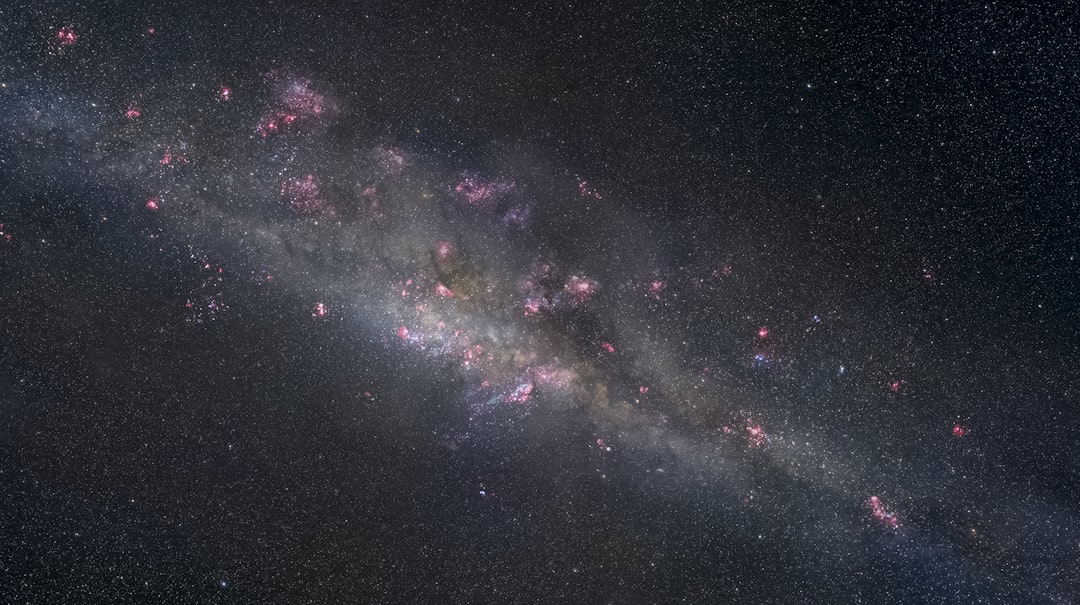
The vast expanse of the night sky, a canvas speckled with the light of distant stars and galaxies, has long been a subject of human fascination and scientific inquiry. Astronomers, armed with increasingly sophisticated telescopes, have peered deeper and deeper into the cosmos, charting its mysteries and unveiling its wonders. Yet, despite these monumental efforts, a significant portion of the universe remains shrouded in obscurity. This region, known as the Zone of Avoidance (ZoA), presents a formidable challenge to our understanding of galactic distribution and the large-scale structure of the universe. It is a region where the Milky Way Galaxy, our cosmic home, acts as a colossal cosmic curtain, obscuring our view of what lies beyond.
The Zone of Avoidance is not an abstract concept of empty space; rather, it is a physical barrier to observation. The dense interstellar medium of our own galaxy, comprised of dust and gas, absorbs and scatters the light emanating from distant celestial objects. Imagine trying to peer through a thick fog; the farther away the object, the more obscured it becomes. The Milky Way, with its billions of stars and vast nebulae, creates a similar, albeit on a far grander cosmic scale, “fog” that hinders our observations.
Dust Lanes: The Milky Way’s Dark Veils
Gas Clouds: Scattering the Starlight
Stellar Foreground: A Sea of Stars
The very stars of the Milky Way, which are so captivating up close, become a dense foreground that overwhelms fainter, more distant galaxies. It’s akin to standing in a brightly lit room and trying to see a candle flame flickering outside a smudged window. The window itself, smeared with dust and lit by the room’s light, makes the distant candle appear dim or invisible. Similarly, the overwhelming brightness of our own galaxy’s stellar population makes it incredibly difficult to detect the faint signals from galaxies located behind it.
Recent studies have shed light on the fascinating concept of the zone of avoidance, where hidden galaxies remain obscured from our view due to the dense concentration of stars and dust in the Milky Way. For a deeper understanding of this intriguing phenomenon and its implications for our knowledge of the universe, you can explore a related article that delves into the latest discoveries and research findings. To read more, visit this article.
Overcoming the Obstacles: Unveiling the Hidden Treasures
Despite the formidable challenges posed by the Zone of Avoidance, astronomers have developed ingenious methods to circumvent its obscuring effects and catch glimpses of the hidden universe. These techniques, born out of necessity and driven by an insatiable curiosity, are akin to a skilled explorer finding a secret passage through a dense jungle.
Radio Astronomy: Listening Through the Dust
One of the most effective ways to pierce the obscuring veil of the Milky Way is by utilizing radio waves. Unlike visible light, radio waves are far less affected by interstellar dust. Therefore, radio telescopes can “hear” the faint radio emissions from galaxies located in the Zone of Avoidance, even when their visible light is completely blocked. This is like using sonar to navigate a foggy sea; you can’t see through the fog, but you can detect objects by their echoes.
Hydrogen Alpha Emissions: A Cosmic Fingerprint
Redshifted Light: Echoes from the Past
Infrared Astronomy: Feeling the Heat
Infrared radiation, which lies just beyond the visible spectrum, also possesses a greater ability to penetrate dust clouds compared to visible light. Infrared telescopes can detect the heat emitted by stars and galaxies, even when their visible light is obscured. This is akin to feeling the warmth of a distant fire through a thin veil.
Spitzer Space Telescope: A Pioneering Eye
James Webb Space Telescope: The New Frontier
Gravitational Lensing: Cosmic Magnifying Glasses
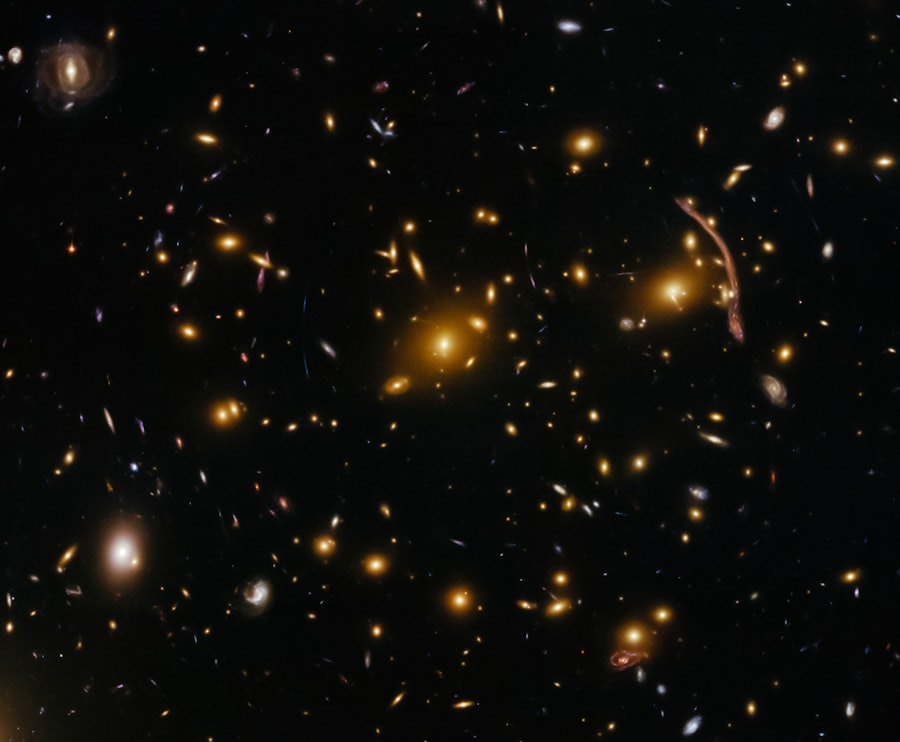
Gravitational lensing, a phenomenon predicted by Einstein’s theory of general relativity, also offers a unique way to study objects in the Zone of Avoidance. Massive objects, such as galaxy clusters, warp the fabric of spacetime, bending the path of light from more distant objects. This bending can act as a natural magnifying glass, allowing us to see objects that would otherwise be too faint to detect. Imagine looking through a warped piece of glass at a distant object; the distortion can sometimes reveal details that would be hidden in a straight view.
The Scientific Significance: Why the ZoA Matters
The Zone of Avoidance is not merely a patch of obscured sky; it represents a significant gap in our cosmic census. Understanding the distribution and nature of galaxies within this region is crucial for several key areas of astronomical research.
Galactic Distribution: Mapping the Cosmic Web
The study of galaxy distribution is fundamental to understanding the large-scale structure of the universe, often referred to as the cosmic web. This web is a vast network of galaxy clusters, filaments, and voids. The Zone of Avoidance represents a blind spot in our mapping of this cosmic architecture. Unveiling the galaxies hidden within it allows us to complete the cosmic map and investigate whether the distribution of matter is truly uniform across the universe, as predicted by the cosmological principle, or if there are significant deviations. Imagine trying to understand the layout of a city by only looking at a map that has a large, unmapped section in the middle.
The Laniakea Supercluster: A Neighboring Influence
Deviations from the Cosmological Principle: Questioning Assumptions
Dwarf Galaxies: The Unseen Majority
Dwarf galaxies, small and faint galaxies that are far more numerous than their larger counterparts, are particularly prone to being hidden within the Zone of Avoidance. These galaxies are thought to be the building blocks of larger galaxies, and their study provides crucial insights into galaxy formation and evolution. Their absence from our surveys in the ZoA means our understanding of galactic demographics might be skewed. It’s like trying to understand a forest by only counting the large trees and ignoring the undergrowth, which is often far more prevalent.
Galaxy Formation and Evolution: The Early Universe
Baryonic Acoustic Oscillations: Cosmic Rulers
Cosmology: The Universe’s Expansion and Fate
The number and distribution of galaxies in the universe are critical for understanding fundamental cosmological parameters, such as the expansion rate of the universe (Hubble constant) and the nature of dark energy. The Zone of Avoidance contaminates our measurements of these quantities, leading to potential biases and uncertainties. Filling in this cosmic void is essential for refining our cosmological models and gaining a clearer picture of the universe’s ultimate fate. It’s like trying to calculate the speed of a car by only observing its motion for a fraction of its journey; you need a complete picture to get an accurate measurement.
The Hubble Tension: A Lingering Discrepancy
Dark Energy and Dark Matter: Unseen Influences
Notable Discoveries Within the ZoA
Despite the difficulties, numerous discoveries have been made within or partially within the Zone of Avoidance, showcasing the perseverance and ingenuity of astronomers. These discoveries serve as beacons of hope, illuminating what lies hidden and beckoning further exploration.
Sculptor Wall and Norma Cluster: Nearby Structures
IC 1101: A Giant Among Giants
The Sculptor Group: A Cosmic Neighborhood
Recent studies have shed light on the intriguing phenomenon of hidden galaxies within the zone of avoidance, a region in the sky where dust and gas obscure our view of the universe. These discoveries have significant implications for our understanding of galaxy formation and distribution. For a deeper exploration of this topic, you can read more about the latest findings in the article on cosmic discoveries at My Cosmic Ventures. This resource provides valuable insights into the methods astronomers are using to uncover these elusive celestial bodies.
Future Prospects: Beyond the Veil
| Metric | Description | Value / Range | Unit | Notes |
|---|---|---|---|---|
| Zone of Avoidance (ZoA) Width | Galactic latitude range obscured by Milky Way dust and stars | ±10 to 15 | Degrees | Varies depending on wavelength and survey |
| Number of Hidden Galaxies | Estimated galaxies obscured in ZoA | Thousands | Count | Based on infrared and radio surveys |
| Typical Redshift Range | Redshift of galaxies detected behind ZoA | 0.001 to 0.05 | z | Nearby galaxies mostly |
| Detection Wavelengths | Electromagnetic spectrum used to detect hidden galaxies | Infrared, Radio (HI 21cm) | nm / cm | Infrared penetrates dust, radio detects neutral hydrogen |
| HI 21cm Line Flux Limit | Minimum detectable flux for neutral hydrogen surveys | ~0.1 to 1 | Jy km/s | Depends on survey sensitivity |
| Infrared Magnitude Limit | Typical limiting magnitude in near-infrared surveys | ~15 to 17 | mag (K-band) | Allows detection through dust extinction |
| Extinction in ZoA | Average visual extinction due to dust | 1 to 30 | mag (A_V) | Highly variable, causes optical obscuration |
As technology continues to advance, our ability to peer into the Zone of Avoidance will undoubtedly improve. Next-generation telescopes and innovative observational techniques hold the promise of unlocking the secrets of this enigmatic region, further expanding our understanding of the cosmos.
The Square Kilometre Array: A Radio Revolution
New Infrared Telescopes: Deeper and Sharper Views
Machine Learning and AI: Unlocking Hidden Patterns
The ongoing quest to understand the Zone of Avoidance is a testament to the human spirit of exploration. It is a frontier that, though invisible to our everyday senses, holds profound implications for our understanding of the universe and our place within it. Each discovery made within this obscured realm is a small victory, a step closer to completing the cosmic puzzle and unraveling the full grandeur of the universe. The Zone of Avoidance is a reminder that even in the age of advanced technology, the universe still holds vast mysteries waiting to be unveiled, whispering secrets from behind our own galactic curtain.
FAQs
What is the Zone of Avoidance in astronomy?
The Zone of Avoidance is a region in the sky obscured by the Milky Way’s dense concentration of stars, gas, and dust, making it difficult to observe distant galaxies behind it using visible light.
Why are galaxies hidden in the Zone of Avoidance?
Galaxies are hidden in this zone because the thick interstellar dust and gas in the plane of the Milky Way block or scatter visible light, preventing telescopes from detecting galaxies located beyond this region.
How do astronomers detect hidden galaxies in the Zone of Avoidance?
Astronomers use observations in other wavelengths such as infrared, radio, and X-rays, which can penetrate the dust and gas, allowing them to identify and study galaxies that are otherwise obscured in visible light.
What is the significance of discovering galaxies in the Zone of Avoidance?
Discovering galaxies in this zone helps astronomers complete maps of the large-scale structure of the universe, improves understanding of galaxy distribution, and provides insights into cosmic phenomena that might be hidden behind the Milky Way.
Have any notable galaxies been discovered in the Zone of Avoidance?
Yes, several galaxies and galaxy clusters have been discovered in the Zone of Avoidance using radio and infrared surveys, such as the Great Attractor region, which influences the motion of our Local Group of galaxies.