
In the vast expanse of outer space, a growing concern looms over the future of space exploration and satellite operations: space junk. This term refers to the myriad of defunct satellites, spent rocket stages, and fragments from collisions or disintegration that orbit the Earth. As humanity’s ventures into space have increased, so too has the accumulation of debris, creating a complex and hazardous environment for operational spacecraft.
The issue of space junk is not merely an abstract concern; it poses real threats to both current and future missions, necessitating urgent attention and innovative solutions. The phenomenon of space junk has garnered significant attention from scientists, engineers, and policymakers alike. With thousands of pieces of debris traveling at high velocities, the potential for catastrophic collisions is ever-present.
As the number of satellites in orbit continues to rise, driven by advancements in technology and the demand for communication, navigation, and Earth observation, the urgency to address the challenges posed by space junk becomes increasingly critical. Understanding the nature of this debris, its speed, and the risks it presents is essential for ensuring the safety and sustainability of space activities.
Key Takeaways
- Space junk refers to the debris left in space as a result of human activities, posing a threat to satellites and spacecraft.
- Space junk can be classified into two types: natural (meteoroids) and artificial (defunct satellites, spent rocket stages, etc.).
- The speed of space junk is influenced by factors such as altitude, atmospheric drag, and gravitational forces.
- The speed of space junk can be calculated using mathematical formulas and observational data.
- Examples of fast-moving space junk include fragments from satellite collisions and rocket explosions.
Definition and Types of Space Junk
Space junk encompasses a wide variety of objects that no longer serve a functional purpose in orbit. At its core, space junk can be defined as any human-made object in space that is no longer operational. This includes defunct satellites that have reached the end of their operational life, spent rocket stages that have been discarded after launching payloads into orbit, and fragments resulting from collisions or explosions.
Each of these categories contributes to the growing population of debris that poses risks to active spacecraft. The types of space junk can be broadly categorized into two main groups: large debris and small debris. Large debris typically includes defunct satellites and spent rocket bodies, which can be several meters in size.
These objects are particularly concerning due to their potential to cause significant damage upon collision with operational spacecraft. On the other hand, small debris consists of fragments that are often less than 10 centimeters in size. While these pieces may seem insignificant individually, their high velocities can result in severe consequences when they collide with other objects in space.
The diversity in size and origin of space junk complicates efforts to track and manage it effectively.
Factors Affecting the Speed of Space Junk
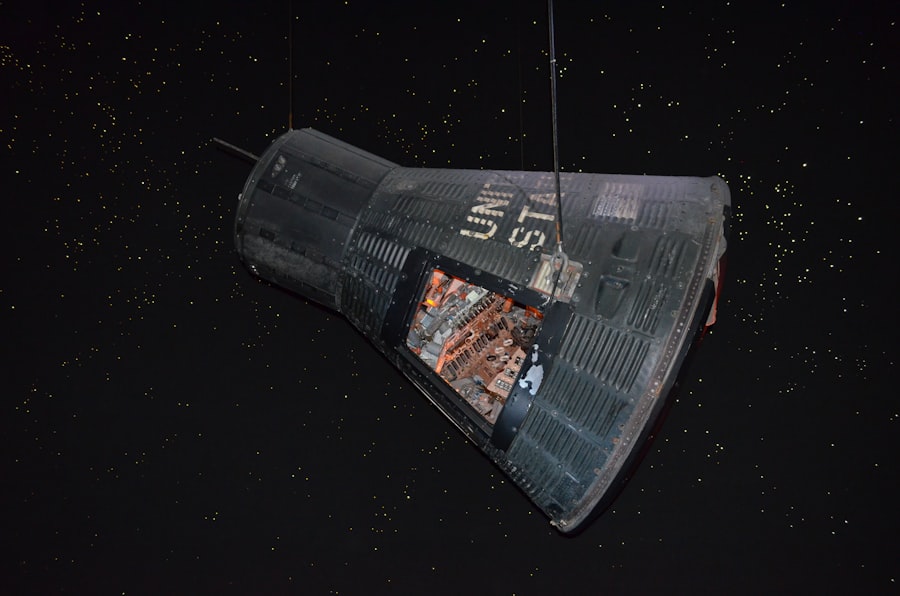
The speed of space junk is influenced by several factors, including its altitude, orbital path, and the gravitational pull exerted by Earth. Objects in low Earth orbit (LEO), which ranges from approximately 160 kilometers to 2,000 kilometers above the Earth’s surface, typically travel at speeds exceeding 28,000 kilometers per hour (17,500 miles per hour). This high velocity is a result of the balance between gravitational forces and the inertia of the object as it moves along its orbital path.
For instance, objects in geostationary orbit, located around 35,786 kilometers above the equator, move at a slower relative speed compared to those in LEO due to their higher altitude and specific orbital mechanics. Furthermore, atmospheric drag can also affect the speed of debris in lower orbits; as objects encounter residual atmospheric particles, they may experience deceleration over time.
Understanding these factors is vital for assessing the risks associated with fast-moving space junk.
Calculation of the Speed of Space Junk
| Space Junk | Speed Calculation |
|---|---|
| Object 1 | Measured speed: 17,500 mph |
| Object 2 | Estimated speed: 22,000 mph |
| Object 3 | Calculated speed: 15,000 mph |
Calculating the speed of space junk involves applying principles from physics and orbital mechanics. The velocity of an object in orbit can be determined using the formula for circular orbital velocity: \( v = \sqrt{\frac{GM}{r}} \), where \( G \) represents the gravitational constant, \( M \) is the mass of the Earth, and \( r \) is the distance from the center of the Earth to the object. By substituting appropriate values for these variables based on an object’s altitude, one can derive its orbital speed.
For example, an object in low Earth orbit at an altitude of 300 kilometers would have a calculated speed of approximately 7.67 kilometers per second (27,600 kilometers per hour). This high velocity underscores the potential danger posed by even small pieces of debris; a collision at such speeds can result in catastrophic damage to operational satellites or spacecraft. Accurate calculations are essential for tracking debris and predicting potential collision events.
Examples of Fast-moving Space Junk
Numerous instances highlight the dangers posed by fast-moving space junk. One notable example is the collision between Iridium 33 and Cosmos 2251 in February 2009. This event resulted in thousands of pieces of debris being generated at high velocities, further complicating the already crowded environment in low Earth orbit.
The collision served as a stark reminder of how quickly operational satellites can become part of the debris problem. Another example involves fragments from defunct satellites that have broken apart due to collisions or explosions. The breakup of China’s Fengyun-1C satellite in 2007 created over 3,000 pieces of debris that now travel at speeds exceeding 28,000 kilometers per hour.
These fragments pose ongoing risks to both active satellites and crewed missions to the International Space Station (ISS). Such incidents illustrate not only the speed at which space junk travels but also the long-lasting implications for future space operations.
Potential Risks and Dangers of Fast-moving Space Junk
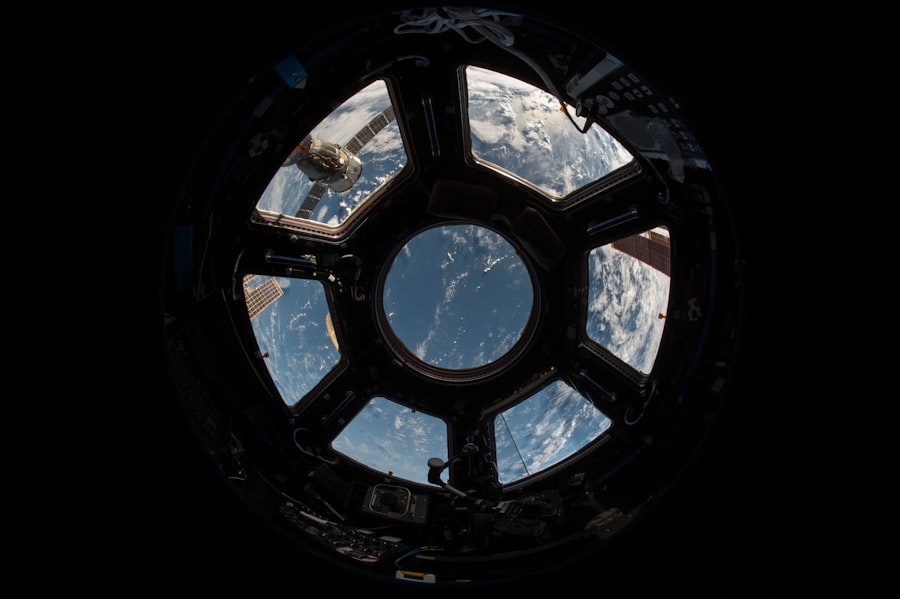
The risks associated with fast-moving space junk are multifaceted and potentially catastrophic. One primary concern is the threat posed to operational satellites that provide essential services such as communication, weather forecasting, and navigation. A collision with even a small piece of debris can result in significant damage or complete destruction of a satellite, leading to costly replacements and disruptions in service.
Moreover, crewed missions are particularly vulnerable to fast-moving debris. The ISS, which orbits Earth at an altitude of approximately 400 kilometers, regularly conducts maneuvers to avoid potential collisions with space junk. The presence of fast-moving debris increases the risk to astronauts aboard the station and necessitates constant vigilance and monitoring.
The potential for loss of life or mission failure due to collisions with space junk underscores the urgent need for effective management strategies.
Efforts to Track and Monitor Fast-moving Space Junk
In response to the growing threat posed by space junk, various organizations and agencies have implemented tracking and monitoring systems designed to keep tabs on debris in orbit. The United States Space Surveillance Network (SSN) plays a pivotal role in tracking objects in space, utilizing radar and optical telescopes to monitor thousands of pieces of debris.
International collaboration is also essential for effective tracking efforts. Organizations such as the European Space Agency (ESA) and private companies are increasingly involved in monitoring space debris. By sharing data and resources, these entities can enhance their ability to track fast-moving objects and develop strategies for mitigating risks associated with collisions.
The establishment of global standards for tracking and reporting space debris is crucial for fostering cooperation among nations engaged in space activities.
Technology and Tools Used to Measure the Speed of Space Junk
Advancements in technology have significantly improved the ability to measure the speed and trajectory of space junk. Ground-based radar systems are among the primary tools used for tracking debris; these systems emit radio waves that bounce off objects in orbit, allowing operators to determine their position and velocity accurately. High-frequency radar systems can detect even small pieces of debris, providing valuable data for collision avoidance.
In addition to radar systems, optical telescopes equipped with advanced imaging technology are employed to track larger pieces of debris. These telescopes capture images of objects in orbit, enabling analysts to calculate their speed based on observed motion over time. Furthermore, satellite-based sensors are being developed to monitor space junk from above, offering a comprehensive view of debris populations in various orbits.
The integration of these technologies enhances overall situational awareness regarding fast-moving space junk.
Impact of Speed on Collision Risk with Satellites and Spacecraft
The speed at which space junk travels has a direct impact on collision risk with operational satellites and spacecraft. As previously mentioned, objects in low Earth orbit can reach speeds exceeding 28,000 kilometers per hour; at such velocities, even tiny fragments can cause catastrophic damage upon impact. The kinetic energy involved in these collisions is immense, making it imperative for satellite operators to remain vigilant about potential threats.
Collision risk assessments are conducted regularly using sophisticated modeling techniques that take into account both the size and speed of debris as well as its trajectory relative to operational spacecraft. These assessments help inform decisions regarding collision avoidance maneuvers and contribute to overall mission safety. As more satellites are launched into orbit, understanding how speed influences collision risk becomes increasingly critical for ensuring sustainable space operations.
Future Challenges and Solutions for Managing Fast-moving Space Junk
Looking ahead, managing fast-moving space junk presents numerous challenges that require innovative solutions. One significant challenge is the sheer volume of debris currently in orbit; as more countries engage in space activities and commercial satellite launches increase, the risk of collisions will continue to rise. Developing effective strategies for debris mitigation will be essential for preserving a safe operating environment in space.
Potential solutions include implementing guidelines for responsible satellite design and end-of-life disposal practices. For instance, satellites could be designed with mechanisms that allow them to deorbit safely at the end of their operational life or be equipped with propulsion systems that enable them to move away from congested orbital regions. Additionally, active debris removal technologies are being explored; these involve using robotic systems or nets to capture defunct satellites or large fragments for removal from orbit.
Conclusion and Summary of Key Findings
In conclusion, space junk represents a significant challenge for current and future space operations due to its potential risks and dangers associated with fast-moving debris. Understanding its definition, types, speed factors, and impact on collision risk is crucial for developing effective management strategies. As humanity continues to explore outer space and expand its presence beyond Earth’s atmosphere, addressing the issue of space junk will require international collaboration, technological innovation, and responsible practices.
The ongoing efforts to track and monitor fast-moving space junk highlight a growing awareness within the global community regarding this pressing issue. By leveraging advanced technologies and fostering cooperation among nations and organizations involved in space activities, it is possible to mitigate risks associated with debris while ensuring sustainable exploration beyond our planet. As challenges persist, proactive measures will be essential for safeguarding both current missions and future endeavors in outer space.
Space junk, also known as orbital debris, is a growing concern for space agencies and satellite operators worldwide. These fragments, which can include defunct satellites, spent rocket stages, and other debris, travel at incredibly high speeds, often exceeding 17,500 miles per hour. This velocity poses significant risks to operational spacecraft and the International Space Station. For a deeper understanding of the challenges posed by space debris and the measures being taken to mitigate these risks, you can explore a related article on the topic by visiting My Cosmic Ventures. This resource provides insights into the dynamics of space junk and the innovative solutions being developed to address this pressing issue.
🌌 WATCH THIS! The Billion-Dollar Satellite That Will Trap Humanity on Earth
FAQs
What is space junk?
Space junk refers to the debris left in space as a result of human activities, including defunct satellites, spent rocket stages, and fragments from disintegration, erosion, and collisions.
How fast is space junk moving?
Space junk can travel at speeds of up to 17,500 miles per hour (28,000 kilometers per hour) in low Earth orbit. This high velocity poses a significant risk to operational spacecraft and satellites.
What causes space junk to move at such high speeds?
The high speeds of space junk are primarily due to the orbital velocity of objects in low Earth orbit. This velocity is necessary to counteract the gravitational pull of the Earth and maintain a stable orbit.
What are the potential dangers of fast-moving space junk?
Fast-moving space junk poses a threat to operational satellites, spacecraft, and the International Space Station. Collisions with space junk can cause significant damage and generate more debris, leading to a cascade effect known as the Kessler syndrome.
How is the speed of space junk monitored and tracked?
Space agencies and organizations around the world use radar and optical telescopes to track the movement of space junk. This tracking data is used to predict potential collisions and maneuver operational spacecraft to avoid collisions.