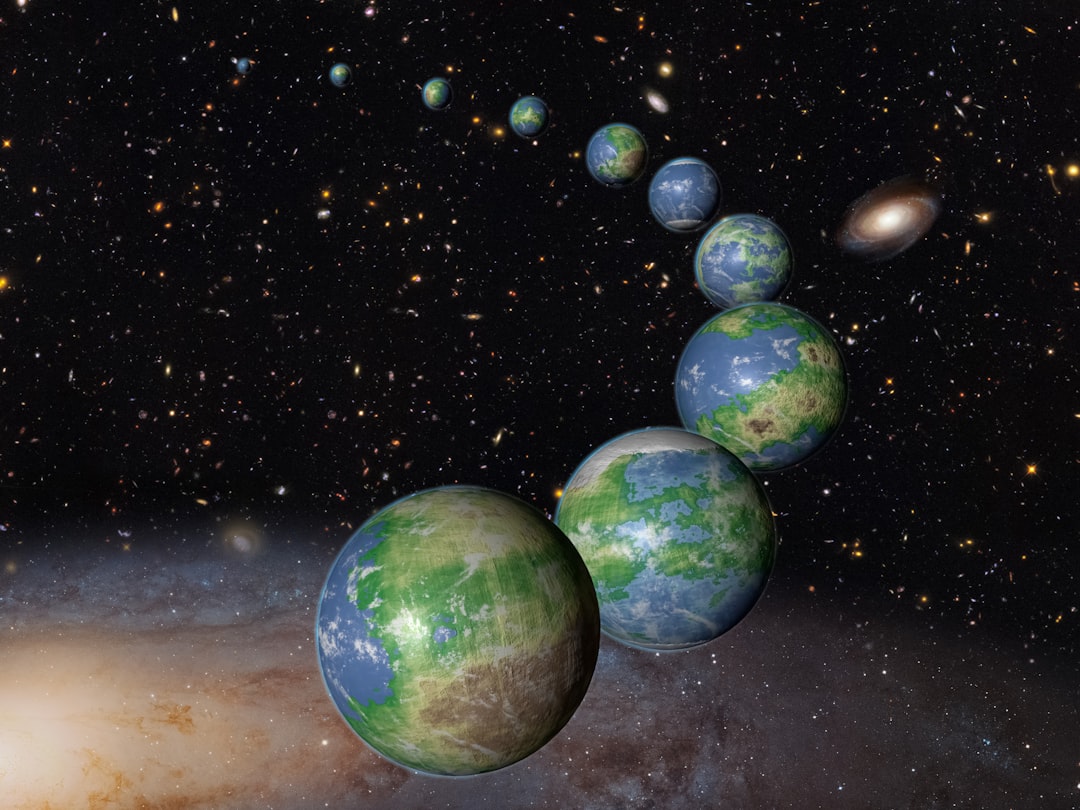
The outer reaches of our solar system, a realm of frigid giants and icy sentinels, have long been a fertile ground for scientific inquiry. Beyond the familiar orbits of Mars and Jupiter lies a vast expanse, a cosmic ocean where the known planets are mere specks of light. For decades, astronomers have meticulously charted the trajectories and characteristics of objects in this distant frontier. However, recent observations and analyses have begun to reveal a subtle yet persistent disharmony within this celestial ballet, hinting at the presence of gravitational influences not accounted for by the known celestial bodies. This article aims to explore these intriguing gravitational anomalies, delving into the evidence, the possible explanations, and the implications for our understanding of the solar system’s formation and evolution.
The exploration of the outer solar system has been a gradual unfolding, a slow peeling back of cosmic layers. Early telescopic observations, limited by the technology of their time, provided glimpses of the gas giants – Jupiter, Saturn, Uranus, and Neptune. These behemoths, so different from their rocky inner counterparts, sparked immense curiosity about their origins and the vast emptiness that stretched beyond them.
The Dawn of Observational Astronomy
The Pioneer Missions: A Quantum Leap in Knowledge
The advent of space exploration in the latter half of the 20th century marked a paradigm shift in our understanding of the outer solar system. The Voyager probes, a pair of intrepid robotic explorers, ventured into the depths, offering humanity its first close-up views of Jupiter’s turbulent atmosphere, Saturn’s majestic rings, Uranus’s tilted axis, and Neptune’s enigmatic blue hue. These missions provided a wealth of data, fundamentally reshaping our models of planetary formation and dynamics.
The Age of Remote Sensing and Ground-Based Telescopes
Following the Voyager encounters, a reliance on increasingly sophisticated ground-based telescopes and specialized space observatories continued to expand our knowledge. Instruments like the Hubble Space Telescope and adaptive optics on terrestrial telescopes allowed for detailed atmospheric studies, the detection of new moons, and the characterization of faint, distant objects. This era laid the groundwork for the more subtle investigations that would eventually uncover the anomalies discussed herein.
Recent studies have highlighted intriguing gravitational anomalies in the outer solar system, suggesting the presence of unseen celestial bodies that may be influencing the orbits of distant objects. These findings have sparked interest in the scientific community, prompting researchers to explore the implications of such anomalies on our understanding of planetary formation and dynamics. For more detailed insights into this fascinating topic, you can read the related article at this link.
The Unseen Tugs: Evidence for Gravitational Perturbations
The core of the scientific puzzle lies in the observed behavior of objects in the Kuiper Belt and beyond. These icy bodies, remnants from the solar system’s formation, follow predictable paths dictated by the gravitational pull of the Sun and the known planets. Yet, some of these paths deviate from these expectations in ways that suggest the presence of an unseen mass.
Anomalous Orbits of Trans-Neptunian Objects (TNOs)
A significant body of evidence for gravitational anomalies stems from the study of Trans-Neptunian Objects, a vast population of bodies residing in the region beyond Neptune’s orbit. These objects can be broadly categorized, but certain subsets have exhibited peculiar orbital clustering. Astronomers have observed that a number of TNOs with highly elliptical orbits tend to align their perihelia (the point in their orbit closest to the Sun) in roughly the same direction. This alignment is statistically improbable if only the gravitational forces of the known planets are at play. Imagine a flock of birds all turning in unison without any visible leader; this is analogous to the observed clustering of TNO orbits.
The Kuiper Belt Dynamical Instability
Beyond the Kuiper Belt, in what is termed the scattered disk and potentially further out, observations have revealed further irregularities. Some objects in these regions exhibit highly eccentric and inclined orbits, suggesting they have undergone significant gravitational interactions that have flung them into these unusual paths. The sheer number and nature of these perturbed orbits have led researchers to consider external forces beyond those exerted by the known planets.
The Discovery of Sedna and its Unusual Orbit
The discovery of Sedna in 2003 was a pivotal moment in this ongoing investigation. Sedna is an extreme Trans-Neptunian Object (eTNO) with an exceptionally distant and elongated orbit, reaching out to hundreds of astronomical units (AU) from the Sun. Its aphelion (the point furthest from the Sun) is estimated to be around 937 AU. The unusual shape and extent of Sedna’s orbit, especially its perihelion distance, make it difficult to explain solely by the gravitational influences of the known planets, even considering multiple encounters with Neptune or Uranus during the solar system’s youth.
Statistical Significance of Orbital Alignments
The observed alignment of TNO perihelia is not a matter of chance. Researchers have employed rigorous statistical analyses to determine the likelihood of such a configuration occurring naturally under the influence of the known solar system architecture. These analyses consistently point to a non-random distribution, suggesting that an unknown gravitational perturbator is at play, subtly nudging these distant worlds into a shared cosmic orientation. Like a skilled conductor subtly guiding an orchestra, an unseen mass could be orchestrating these orbital melodies.
The Ghost in the Machine: Hypotheses for the Anomaly
The existence of these gravitational tugs has naturally led to a flurry of theoretical explanations, each attempting to account for the observed anomalies. These hypotheses range from relatively minor adjustments to our current models to the inclusion of entirely new celestial bodies.
The Hypothetical “Planet Nine”
Perhaps the most prominent and widely discussed hypothesis is the existence of a massive, undiscovered planet residing in the outer solar system, often dubbed “Planet Nine.” Based on the observed orbital clustering of TNOs, simulations suggest that a planet with a mass approximately five to ten times that of Earth, orbiting at an average distance of several hundred AU, could indeed be responsible for the observed perturbations. This hypothetical planet, if it exists, would be a super-Earth or a mini-Neptune, a type of planet commonly found around other stars, but conspicuously absent from our current planetary catalog.
Characteristics and Predicted Location of Planet Nine
If Planet Nine exists, its orbit is predicted to be highly eccentric and inclined relative to the ecliptic plane (the plane in which most planets orbit). This would explain why it has eluded direct detection so far; it would spend most of its time in the dark, frigid void of the outer solar system, making it incredibly faint. Its predicted orbital parameters are derived from detailed computer simulations that seek to find a gravitational scenario that replicates the observed TNO orbital behavior. Pinpointing its exact location within its vast orbit remains a significant challenge.
The Collective Influence of Smaller, Undetected Bodies
Another proposed explanation involves the cumulative gravitational effect of a multitude of smaller, as-yet-undetected objects. While individual ice dwarfs or large Kuiper Belt Objects would not possess sufficient mass to cause the observed clustering, a vast population of such objects, distributed in a particular manner, could collectively exert a significant gravitational influence. This “swarm” hypothesis suggests that the outer solar system may harbor many more objects than currently cataloged, and their combined pull is shaping the orbits of other TNOs.
Modifications to Gravitational Theory
A more radical, though less favored, explanation suggests that our current understanding of gravity, specifically Newtonian gravity or Einstein’s theory of general relativity, might require modification at these vast distances and low densities. While the successes of these theories in other contexts are undeniable, some scientists ponder whether subtle deviations might manifest in the extreme outer solar system. This would represent a fundamental shift in physics, akin to discovering that the rules of chess change when played on a different board.
The Role of Galactic Tides
While the internal dynamics of the solar system are primarily governed by the Sun’s gravity, external forces, such as tidal forces exerted by the Milky Way galaxy, can also play a role. These galactic tides can subtly perturb orbits over immense timescales. However, current models suggest that galactic tides alone are unlikely to precisely explain the observed clustering of TNO perihelia. They are more of a background hum than the distinct melody of the observed anomaly.
The Hunt and the Challenges: Detecting the Unseen
The search for the source of these gravitational anomalies is a contemporary quest at the forefront of astronomical observation. Despite the compelling evidence for an unseen influence, directly detecting its origin presents formidable challenges.
The Limitations of Current Telescopes
The vast distances involved in the outer solar system mean that any potential new planet or significant mass distribution would be extremely faint. Current telescopes, while powerful, have limitations in their ability to resolve such dim objects against the backdrop of the cosmos. The faintest stars and most distant galaxies are within reach, but a dim, distant planet in our own solar system is a different kind of target.
Imaging Techniques and Strategies
Astronomers are employing a variety of imaging techniques and survey strategies to uncover the potential culprit. These include wide-field surveys designed to scan vast swathes of the night sky, as well as targeted investigations of regions predicted by theoretical models. The strategy is akin to a painstaking search for a needle in a cosmic haystack, using the most sensitive instruments available.
The Role of Citizen Science
Citizen science projects have become increasingly valuable in astronomical research, and the hunt for Planet Nine is no exception. Amateur astronomers, with their own telescopes and dedication, can contribute to the massive data collection effort, helping to scan the sky and report any intriguing findings. Their collective efforts amplify the reach of professional observatories.
The “Naked Eye” Challenge
The sheer emptiness of the outer solar system poses a significant challenge. Unlike the inner solar system, where planets are relatively numerous and bright, the outer regions are characterized by vast distances and sparse objects. Even a planet several times the mass of Earth would appear exceedingly dim, presenting a formidable detection problem.
The Importance of Follow-up Observations
Once a candidate object is identified, meticulous follow-up observations are crucial. These would involve confirming its presence, determining its orbit, and characterizing its properties to ensure it aligns with the gravitational explanations for the anomalies. This iterative process of discovery and verification is the bedrock of scientific progress.
Recent studies have highlighted intriguing gravitational anomalies in the outer solar system that suggest the presence of unseen celestial bodies. These anomalies have sparked interest among astronomers and scientists, leading to various hypotheses about the existence of a possible ninth planet. For a deeper understanding of these phenomena, you can explore a related article that delves into the implications of these gravitational irregularities and their potential impact on our knowledge of the solar system. Check it out here for more insights.
Implications for Our Cosmic Neighborhood
| Metric | Value | Unit | Description |
|---|---|---|---|
| Anomalous Acceleration | 8.74 × 10⁻¹⁰ | m/s² | Observed unexplained acceleration of Pioneer 10 and 11 spacecraft |
| Distance Range | 20 – 70 | AU | Range in the outer solar system where anomalies were detected |
| Orbital Residuals | Up to 0.1 | arcseconds | Deviation in predicted vs. observed positions of trans-Neptunian objects |
| Kuiper Belt Mass Estimate | 0.01 – 0.1 | Earth masses | Mass range of Kuiper Belt objects affecting gravitational field |
| Hypothetical Planet Nine Mass | 5 – 10 | Earth masses | Estimated mass of proposed Planet Nine causing orbital clustering |
| Hypothetical Planet Nine Distance | 400 – 800 | AU | Estimated semi-major axis of Planet Nine’s orbit |
The confirmation of a gravitational anomaly in the outer solar system, be it a new planet or another phenomenon, would have profound implications for our understanding of the solar system’s history, formation, and its place in the galaxy.
Revisiting Solar System Formation Models
The discovery of a significant unseen mass would necessitate a re-evaluation of existing models for solar system formation. It might suggest that planetary migration, core accretion processes, or even gravitational interactions with passing stars played a more significant role than previously understood. The current models are like a well-worn map; a new discovery might require redrawing entire continents.
Understanding the Dynamics of Other Planetary Systems
The lessons learned from our own outer solar system could provide invaluable insights into the architecture and dynamics of exoplanetary systems. Many exoplanets have been discovered in configurations that differ significantly from our own solar system, and understanding anomalies in our backyard could help us interpret these distant worlds.
The Search for Life Beyond Earth
While the outer solar system is largely considered inhospitable to life as we know it, the gravitational dynamics of this region could indirectly influence the potential for life elsewhere. For instance, the long-term stability of planetary orbits, influenced by unseen masses, could affect the habitability of planets in other star systems over cosmic timescales.
The Ever-Expanding Frontier of Knowledge
Ultimately, the ongoing investigation into these gravitational anomalies underscores the dynamic and often surprising nature of scientific discovery. The universe, it seems, continues to hold secrets, and the outer solar system, a seemingly quiescent realm, is proving to be a fertile ground for unlocking them. Each anomaly uncovered is another page turned in the grand cosmic narrative, inviting further exploration and deeper understanding.
The quest to unravel these gravitational puzzles is far from over. It is a testament to human curiosity and our unwavering drive to comprehend the universe around us. As technology advances and our observational capabilities expand, the dim whispers from the outer solar system are growing louder, promising to reveal a more complete and intricate picture of our celestial home.
FAQs
What are gravitational anomalies in the outer solar system?
Gravitational anomalies in the outer solar system refer to unexpected variations or irregularities in the gravitational field that cannot be fully explained by the known distribution of mass, such as planets, moons, and other celestial bodies. These anomalies may suggest the presence of unknown objects or require adjustments to current models of gravity.
What causes gravitational anomalies in the outer solar system?
Gravitational anomalies can be caused by several factors, including the presence of undiscovered celestial bodies like dwarf planets or large trans-Neptunian objects, inaccuracies in the measurement of known objects’ masses, or potential modifications needed in our understanding of gravitational physics.
How are gravitational anomalies detected in the outer solar system?
Scientists detect gravitational anomalies by analyzing the trajectories and orbital motions of spacecraft and celestial bodies. Deviations from predicted paths, based on current gravitational models, can indicate anomalies. Precise tracking of spacecraft like Voyager, New Horizons, and others provides data to identify these irregularities.
What is the significance of studying gravitational anomalies in the outer solar system?
Studying these anomalies helps improve our understanding of the solar system’s structure and composition. It can lead to the discovery of new celestial objects, refine models of planetary formation, and test the limits of gravitational theories, potentially contributing to advances in astrophysics and cosmology.
Have any specific gravitational anomalies been observed in the outer solar system?
Yes, one notable example is the observed deviations in the orbits of some trans-Neptunian objects, which have led to hypotheses about a possible ninth planet, often referred to as “Planet Nine.” Additionally, subtle discrepancies in spacecraft trajectories have prompted investigations into gravitational anomalies beyond Neptune.