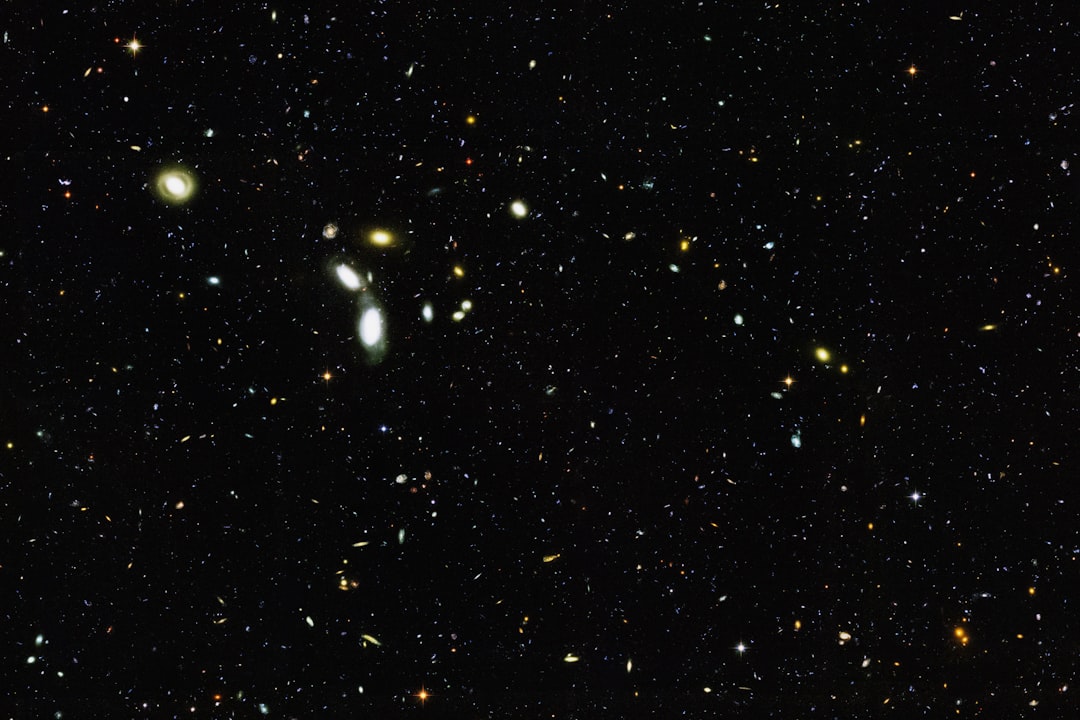
Cosmology, the scientific study of the universe’s origin, evolution, and eventual fate, has made remarkable strides over the past century. However, as researchers delve deeper into the cosmos, they encounter a series of observational tensions that challenge existing theories and models. These tensions arise from discrepancies in measurements and interpretations of various cosmic phenomena, leading to a complex landscape where established understandings are continually tested.
The implications of these tensions are profound, as they not only question the validity of current cosmological models but also hint at the possibility of new physics beyond the standard model of cosmology. The existence of these tensions has sparked intense debate within the scientific community. As cosmologists strive to reconcile conflicting data, they are compelled to reassess fundamental concepts such as the nature of dark matter and dark energy, the rate of expansion of the universe, and the mechanisms behind galaxy formation.
Each tension presents an opportunity for discovery, yet it also underscores the limitations of current observational techniques and theoretical frameworks. As researchers navigate this intricate web of contradictions, they remain hopeful that a clearer understanding of the universe will emerge, illuminating the path forward in cosmological research.
Key Takeaways
- Cosmology faces numerous observational tensions, including conflicting measurements of dark matter, discrepancies in the cosmic microwave background, and challenges in understanding dark energy.
- The Hubble Constant debate revolves around the inconsistency in the measurements of the rate of expansion of the universe, leading to conflicting results in supernova cosmology and divergent measurements of the universe’s age.
- Conflicting measurements of dark matter have created discrepancies in large-scale structure formation, while inconsistencies in galaxy formation and evolution further complicate our understanding of the universe.
- Discrepancies in the cosmic microwave background data challenge our understanding of the early universe and the nature of inflation, adding to the complexities of cosmological tensions.
- Future prospects for resolving these tensions lie in advancements in observational techniques, improved data analysis, and the development of new theoretical frameworks to reconcile conflicting measurements in cosmology.
The Hubble Constant Debate
One of the most prominent tensions in modern cosmology revolves around the Hubble constant, a critical parameter that describes the rate at which the universe is expanding. Measurements of this constant have yielded conflicting results, leading to a significant debate among astronomers. On one hand, observations derived from the cosmic microwave background (CMB) radiation suggest a lower value for the Hubble constant, approximately 67 kilometers per second per megaparsec.
Conversely, measurements obtained through local distance ladder methods, which involve observing Cepheid variable stars and Type Ia supernovae, indicate a higher value closer to 73 kilometers per second per megaparsec. This discrepancy has far-reaching implications for our understanding of the universe’s expansion history and its ultimate fate. The divergence in measurements raises questions about the accuracy of existing methods and whether they adequately account for all variables involved in cosmic expansion.
Some researchers speculate that this tension could signal new physics, such as modifications to general relativity or the existence of previously unknown forms of energy or matter. As scientists continue to refine their techniques and gather more data, the hope remains that a consensus will eventually emerge, shedding light on this fundamental aspect of cosmology.
Conflicting Measurements of Dark Matter

Dark matter, an elusive substance that constitutes a significant portion of the universe’s mass-energy content, remains one of the most enigmatic components of cosmology. Its existence is inferred from gravitational effects on visible matter, yet direct detection has proven elusive. Conflicting measurements related to dark matter have emerged from various observational techniques, leading to further complications in understanding its nature.
For instance, galaxy rotation curves suggest that dark matter is distributed in a halo around galaxies, while gravitational lensing studies indicate a more complex distribution. These conflicting measurements have prompted researchers to explore alternative theories regarding dark matter’s properties. Some scientists propose modifications to Newtonian dynamics or general relativity to account for observed phenomena without invoking dark matter.
Others investigate exotic particles or interactions that could explain discrepancies in measurements. The ongoing debate highlights not only the challenges in detecting dark matter but also the need for a unified framework that can reconcile these conflicting observations.
Discrepancies in the Cosmic Microwave Background
| Study | Discrepancy | Significance |
|---|---|---|
| Planck Collaboration (2018) | Low value of the Hubble constant | 3.4σ |
| ACT Collaboration (2020) | Tension in the amplitude of matter fluctuations | 2.3σ |
| SPT Collaboration (2021) | Higher value of the Hubble constant | 2.7σ |
The cosmic microwave background (CMB) radiation serves as a crucial relic from the early universe, providing invaluable insights into its formation and evolution. However, recent analyses of CMB data have revealed discrepancies that challenge established cosmological models. For instance, measurements from the Planck satellite suggest a lower value for the Hubble constant than those derived from local observations.
Additionally, anomalies in temperature fluctuations within the CMB have raised questions about the uniformity of the universe on large scales. These discrepancies have led cosmologists to reconsider fundamental assumptions about the early universe’s conditions and its subsequent evolution. Some researchers propose that these anomalies could be indicative of new physics or modifications to inflationary models.
Others suggest that systematic errors in data analysis may be responsible for these inconsistencies. As scientists continue to investigate these issues, they remain hopeful that resolving these discrepancies will lead to a deeper understanding of the universe’s origins and its underlying structure.
Challenges in Understanding Dark Energy
Dark energy, a mysterious force driving the accelerated expansion of the universe, presents another significant challenge in cosmology. While its existence is widely accepted due to observational evidence from distant supernovae and galaxy clusters, its nature remains elusive. Theoretical models attempting to explain dark energy range from cosmological constants to dynamic fields that evolve over time.
However, conflicting observations have emerged regarding its properties and effects on cosmic evolution. One major challenge lies in reconciling measurements of dark energy’s influence on cosmic expansion with those derived from large-scale structure formation. Some studies suggest that dark energy behaves differently on smaller scales than previously thought, leading to inconsistencies in predictions about galaxy clustering and distribution.
As researchers explore various models and refine their observational techniques, they face an uphill battle in unraveling the complexities surrounding dark energy and its role in shaping the universe.
Inconsistencies in Galaxy Formation and Evolution
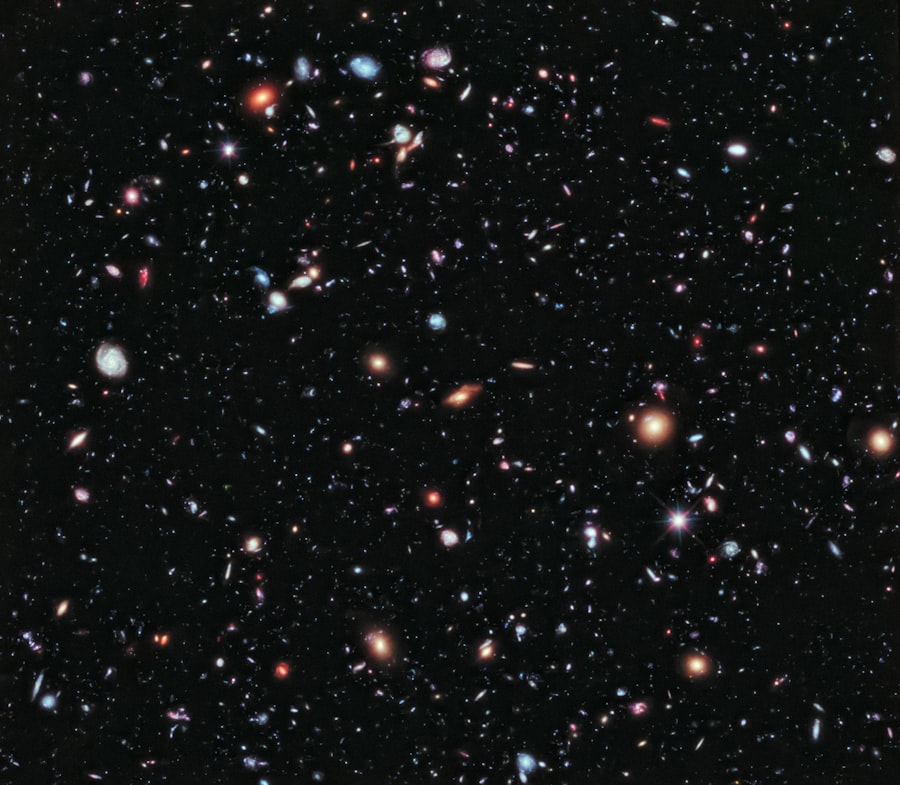
The formation and evolution of galaxies are central topics in cosmology, yet inconsistencies persist in our understanding of these processes. Observations reveal a diverse array of galaxy types and structures across different epochs, raising questions about how galaxies form and evolve over time. Some models predict a smooth transition from primordial gas clouds to complex galactic structures, while others suggest more chaotic processes driven by mergers and interactions.
Conflicting observations regarding star formation rates and metallicity distributions further complicate this picture. For instance, some studies indicate that star formation rates in early galaxies were significantly higher than predicted by current models, suggesting that our understanding of galaxy evolution may be incomplete. Additionally, discrepancies in metallicity measurements challenge existing theories about chemical enrichment processes within galaxies.
As researchers continue to investigate these inconsistencies, they strive to develop more comprehensive models that can account for the observed diversity in galaxy formation and evolution.
Divergent Measurements of the Universe’s Age
Determining the age of the universe is a fundamental question in cosmology, yet divergent measurements have led to significant tensions within the field. Estimates based on CMB data suggest an age of approximately 13.8 billion years, while other methods—such as those involving globular clusters or supernovae—yield slightly older or younger estimates. These discrepancies raise important questions about the reliability of different dating techniques and their underlying assumptions.
The implications of these divergent measurements extend beyond mere numbers; they challenge our understanding of cosmic history and evolution. If different methods yield inconsistent results, it may indicate gaps in our knowledge regarding stellar evolution or cosmic expansion rates. As researchers work to refine their techniques and gather more precise data, they remain hopeful that a clearer consensus will emerge regarding the age of the universe and its implications for cosmological models.
Conflicting Results in Supernova Cosmology
Supernovae serve as vital tools for measuring cosmic distances and understanding the expansion history of the universe. However, conflicting results from different supernova surveys have introduced tensions into this area of research. Type Ia supernovae are particularly valuable as standard candles due to their consistent peak luminosity; yet variations in their intrinsic properties have led to discrepancies in distance measurements.
Some studies suggest that environmental factors may influence supernova behavior, complicating efforts to standardize their use as distance indicators. Additionally, differences in data analysis techniques among various surveys can lead to divergent conclusions about cosmic expansion rates. As researchers continue to investigate these issues, they face challenges in reconciling conflicting results while striving to improve our understanding of supernovae and their role in cosmology.
Discrepancies in Large-Scale Structure Formation
The large-scale structure of the universe provides critical insights into its formation and evolution; however, discrepancies persist between observations and theoretical predictions regarding structure formation. Simulations based on cold dark matter models predict a specific distribution of galaxies and clusters on large scales; yet observations often reveal deviations from these predictions. These discrepancies raise important questions about our understanding of both dark matter and baryonic physics—the ordinary matter that makes up stars and galaxies.
Some researchers propose modifications to existing models or explore alternative theories that could account for observed anomalies in large-scale structure formation. As scientists continue to refine their simulations and gather more observational data, they remain committed to unraveling these complexities and achieving a more coherent picture of cosmic structure.
Challenges in Understanding the Nature of Inflation
Inflation theory posits that a rapid expansion occurred during the early moments of the universe’s existence, explaining many observed features such as homogeneity and isotropy on large scales. However, challenges remain in understanding the precise nature of inflation and its underlying mechanisms. Various inflationary models propose different scenarios for how inflation occurred; yet discrepancies between predictions and observations have led to ongoing debates within the field.
Some researchers argue that certain inflationary models may not adequately account for observed features in the CMB or large-scale structure formation. Others explore alternative scenarios or modifications to existing theories that could better align with observational data. As scientists continue to investigate these challenges surrounding inflationary theory, they remain hopeful that new insights will emerge, shedding light on one of cosmology’s most profound mysteries.
Future Prospects for Resolving Cosmological Tensions
As cosmologists grapple with these observational tensions, future prospects for resolution remain promising yet uncertain. Advances in technology and observational techniques hold great potential for refining measurements across various domains of cosmology. Upcoming missions such as space-based telescopes and next-generation ground-based observatories aim to provide more precise data on key parameters like the Hubble constant and dark energy.
Moreover, interdisciplinary collaboration among physicists, astronomers, and mathematicians may yield innovative approaches to addressing these tensions.
In conclusion, while cosmology faces significant observational tensions that challenge existing paradigms, these challenges also present opportunities for discovery and advancement within the field.
As scientists continue their quest for knowledge about the cosmos, they remain committed to unraveling these complexities and striving toward a more coherent understanding of our universe’s origins and evolution.
In recent years, the field of cosmology has been grappling with various observational tensions, particularly those related to the Hubble constant and the cosmic microwave background. These discrepancies have sparked numerous discussions and research efforts aimed at understanding the underlying causes.
This piece explores the potential implications of these tensions and the innovative approaches scientists are employing to resolve them. For a deeper understanding, you can read the full article by visiting