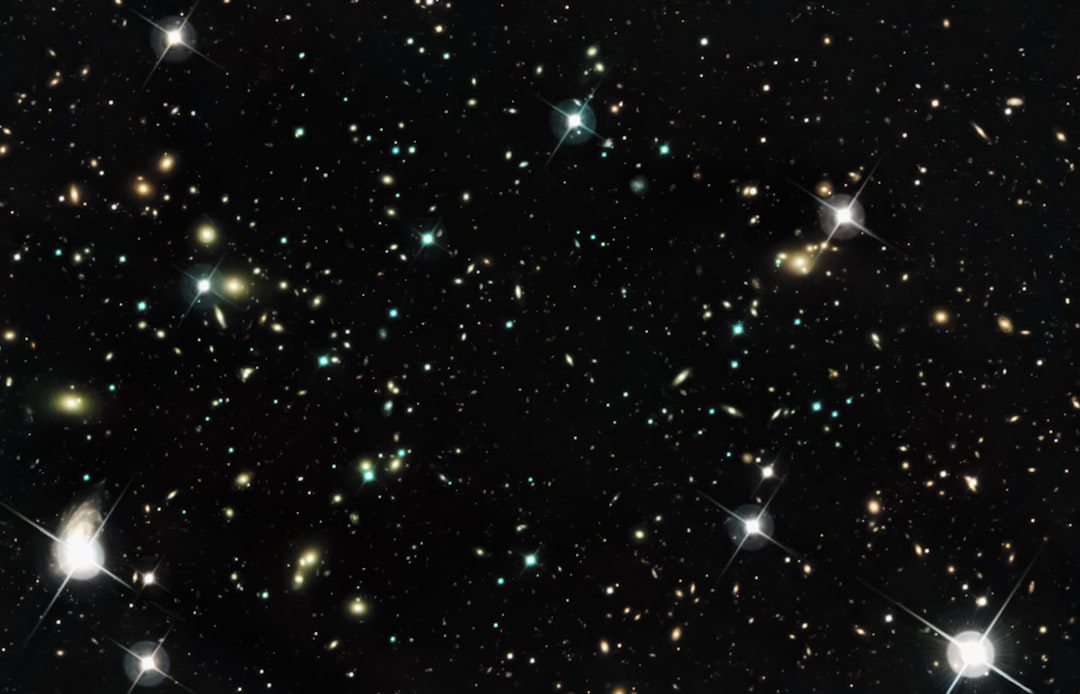
Measuring cosmic distances is a fundamental aspect of astronomy that underpins much of the knowledge about the universe. Understanding how far away celestial objects are allows astronomers to construct a three-dimensional map of the cosmos, which is essential for studying the structure and evolution of galaxies, stars, and other astronomical phenomena. Without accurate distance measurements, it would be impossible to determine the scale of the universe or to understand the relationships between different celestial bodies.
This knowledge is crucial not only for theoretical astrophysics but also for practical applications, such as navigation in space missions.
The distance to various galaxies helps astronomers calculate their redshifts, which in turn provides insights into the rate at which the universe is expanding.
This expansion is a key component in the study of cosmology, influencing theories about the origin and fate of the universe. As such, accurate distance measurements are not merely academic; they are essential for answering some of the most profound questions about existence itself.
Key Takeaways
- Measuring cosmic distances is crucial for understanding the scale and structure of the universe.
- Methods such as parallax, Cepheid variables, and the Hubble Space Telescope are used to measure cosmic distances.
- Parallax, the apparent shift in position of a nearby star against the background of more distant stars, is a key method for measuring nearby stars.
- Cepheid variables, stars that pulsate in a regular pattern, are used as standard candles to measure distances to galaxies.
- The Hubble Space Telescope has played a crucial role in measuring cosmic distances and expanding our understanding of the universe.
Methods of Measuring Cosmic Distances
Astronomers employ a variety of methods to measure cosmic distances, each suited to different scales and types of celestial objects. The techniques range from direct measurements for nearby stars to more complex methods for distant galaxies. One of the most straightforward methods involves using parallax, which relies on observing an object from two different positions in Earth’s orbit around the Sun.
By measuring the apparent shift in position against more distant background stars, astronomers can calculate the distance to nearby stars with remarkable precision. For greater distances, astronomers turn to standard candles, such as Cepheid variables and Type Ia supernovae. These objects have known luminosities, allowing astronomers to determine their distances based on their observed brightness.
Additionally, redshift measurements provide another method for gauging distances to far-off galaxies. By analyzing the light emitted from these galaxies and observing how it shifts toward longer wavelengths, astronomers can infer how fast they are moving away from Earth and thus estimate their distance based on Hubble’s Law.
Parallax: A Key Method for Measuring Nearby Stars
Parallax is one of the oldest and most reliable methods for measuring distances to nearby stars. It involves observing a star from two different points in Earth’s orbit around the Sun, typically six months apart. As Earth moves, nearby stars appear to shift position against the more distant background stars.
This apparent shift is known as parallax angle, and it can be measured with great accuracy using telescopes equipped with precise instruments. The relationship between the parallax angle and distance is straightforward: the smaller the angle, the farther away the star is. This method is effective for stars within a few hundred light-years from Earth.
However, as distances increase, the parallax angle becomes exceedingly small and difficult to measure accurately. Despite this limitation, parallax remains a cornerstone of distance measurement in astronomy and serves as a foundation for other methods used to gauge greater cosmic distances.
The Use of Cepheid Variables in Measuring Cosmic Distances
| Year | Discovery | Significance |
|---|---|---|
| 1784 | Edward Pigott | First observed Cepheid variable star |
| 1908 | Henrietta Swan Leavitt | Discovered period-luminosity relationship |
| 1924 | Edwin Hubble | Used Cepheid variables to measure distance to Andromeda galaxy |
| 1994 | ESA’s Hipparcos satellite | Measured distances to Cepheid variables with unprecedented accuracy |
Cepheid variables are a class of pulsating stars that have a well-defined relationship between their luminosity and pulsation period. This relationship allows astronomers to use them as standard candles for measuring cosmic distances. By observing a Cepheid variable’s brightness and determining its pulsation period, astronomers can calculate its intrinsic luminosity.
Comparing this intrinsic brightness with the observed brightness enables them to derive the distance to the star. The significance of Cepheid variables extends beyond individual stars; they serve as vital tools for measuring distances to galaxies. For instance, by identifying Cepheid variables in nearby galaxies, astronomers can establish a distance scale that can be applied to more distant objects.
This method has been instrumental in refining measurements of the Hubble constant, which describes the rate of expansion of the universe. The ability to accurately measure distances using Cepheid variables has profound implications for understanding cosmic evolution and structure.
The Hubble Space Telescope and its Role in Measuring Cosmic Distances
The Hubble Space Telescope (HST) has revolutionized our understanding of cosmic distances since its launch in 1990. Positioned above Earth’s atmosphere, HST provides unparalleled clarity and precision in astronomical observations. One of its key contributions has been in measuring distances to galaxies using various methods, including Cepheid variables and supernovae.
HST’s observations have allowed astronomers to refine their measurements of the Hubble constant significantly. By observing Cepheid variables in distant galaxies and Type Ia supernovae, HST has provided critical data that has helped establish a more accurate cosmic distance scale. This information is essential for understanding not only the expansion rate of the universe but also its overall structure and evolution over time.
The Cosmic Distance Ladder: How Astronomers Use Multiple Methods to Measure Distances
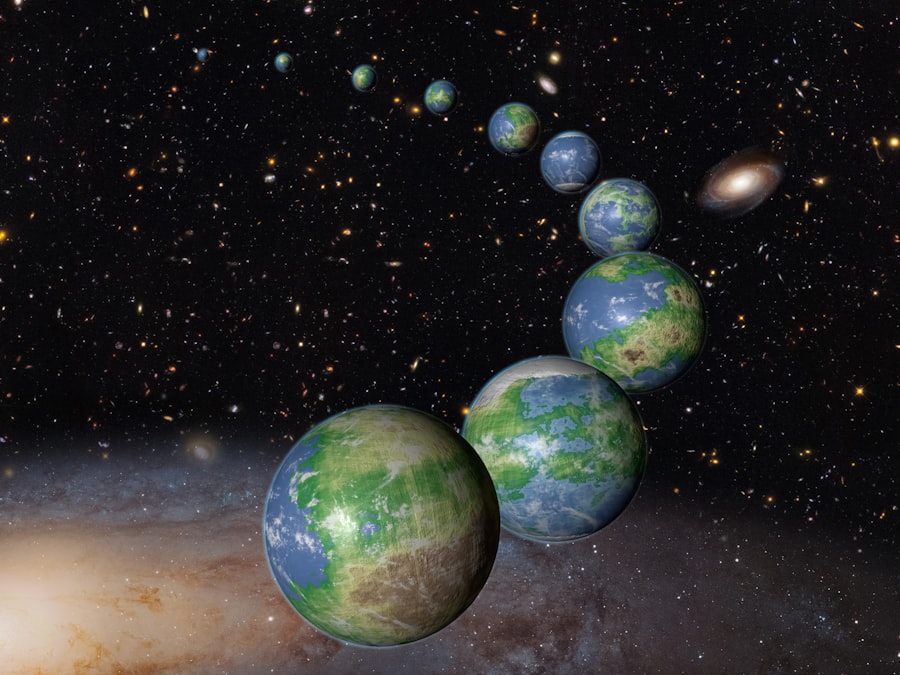
The cosmic distance ladder is a hierarchical framework that astronomers use to measure distances across different scales in the universe. Each “rung” of this ladder represents a different method for measuring distance, starting with parallax for nearby stars and extending to more complex techniques for distant galaxies. By building upon each method’s results, astronomers can create a comprehensive picture of cosmic distances.
At the base of this ladder are direct measurements like parallax, which provide accurate distances for nearby stars. As one ascends the ladder, methods such as Cepheid variables and Type Ia supernovae come into play, allowing astronomers to measure distances to galaxies millions or even billions of light-years away. Each rung relies on the accuracy of those below it, creating a robust system that enhances our understanding of the universe’s scale and structure.
Challenges and Limitations in Measuring Cosmic Distances
Despite advancements in technology and methodology, measuring cosmic distances presents numerous challenges and limitations. One significant issue is the inherent uncertainty associated with each measurement technique.
Similarly, standard candles like Cepheid variables rely on assumptions about their intrinsic properties that may not always hold true. Another challenge arises from interstellar dust and gas that can obscure light from distant objects, leading to inaccurate brightness measurements. This effect can skew results when using methods that depend on observed luminosity, such as standard candles or redshift measurements.
Additionally, variations in stellar populations or environmental factors can introduce further uncertainties into distance calculations. As a result, astronomers must continually refine their methods and account for these limitations to improve accuracy.
The Impact of Measuring Cosmic Distances on Our Understanding of the Universe
The ability to measure cosmic distances has profoundly impacted humanity’s understanding of the universe. Accurate distance measurements have allowed astronomers to determine the scale of cosmic structures, leading to insights into galaxy formation and evolution. Furthermore, these measurements have been crucial in establishing models of cosmic expansion and understanding phenomena such as dark energy.
By quantifying distances across vast expanses of space, astronomers have been able to map out the distribution of galaxies and clusters within the universe. This mapping has revealed patterns that inform theories about large-scale structure formation and gravitational interactions among celestial bodies. Ultimately, measuring cosmic distances has not only expanded knowledge but has also raised new questions about the nature of reality itself.
Future Technologies and Methods for Measuring Cosmic Distances
As technology continues to advance, new methods for measuring cosmic distances are emerging on the horizon. Future telescopes equipped with cutting-edge instruments may enhance parallax measurements by providing even greater precision in observing nearby stars. Additionally, space-based observatories could minimize atmospheric interference further, allowing for clearer observations of distant objects.
Innovative techniques such as gravitational wave astronomy also hold promise for measuring cosmic distances. By detecting ripples in spacetime caused by merging black holes or neutron stars, astronomers may gain new insights into distance measurements across vast scales. These advancements could lead to more accurate models of cosmic expansion and deepen our understanding of fundamental questions about dark matter and dark energy.
The Role of Cosmic Distance Measurements in Understanding Dark Matter and Dark Energy
Cosmic distance measurements play a crucial role in unraveling the mysteries surrounding dark matter and dark energy—two enigmatic components that constitute much of the universe’s mass-energy content. By accurately determining distances to galaxies and clusters, astronomers can study their gravitational interactions and distribution patterns, shedding light on dark matter’s influence on cosmic structure. Furthermore, understanding how galaxies are distributed across vast distances helps researchers investigate dark energy’s role in accelerating cosmic expansion.
By measuring distances over time and comparing them with redshift data, scientists can gain insights into how dark energy affects the universe’s fate. Thus, cosmic distance measurements are not merely tools for mapping space; they are integral to deciphering some of the most profound mysteries in modern astrophysics.
The Exciting Discoveries Made Possible by Measuring Cosmic Distances
The quest to measure cosmic distances has led to numerous exciting discoveries that have reshaped our understanding of the universe. One notable example is the realization that the universe is expanding at an accelerating rate—a finding that emerged from precise distance measurements combined with redshift data from distant supernovae. This discovery has profound implications for cosmology and has prompted further investigation into dark energy’s nature.
Additionally, measuring cosmic distances has enabled astronomers to identify exoplanets around distant stars by analyzing their gravitational effects on their host stars’ motion or light curves during transits. These discoveries have opened new avenues for exploring planetary systems beyond our own and have sparked interest in searching for potentially habitable worlds elsewhere in the universe. In conclusion, measuring cosmic distances is an essential endeavor that underpins much of modern astronomy and cosmology.
Through various methods—ranging from parallax to standard candles—astronomers have made significant strides in understanding not only how far away celestial objects are but also how they interact within the vast tapestry of space-time. As technology continues to evolve, so too will our ability to explore these cosmic frontiers, leading to new discoveries that will undoubtedly reshape humanity’s understanding of its place in the universe.
In the quest to understand the vastness of the universe, measuring cosmic distances accurately is crucial. One of the methods employed by astronomers is the use of Baryon Acoustic Oscillations (BAO), which serve as a “standard ruler” for gauging distances across the cosmos. For a deeper dive into how BAO contributes to our understanding of the universe’s scale, you can explore a related article on this topic by visiting this page. This resource provides insights into the methodologies and significance of BAO in cosmic measurements, enhancing our comprehension of the universe’s expansive nature.
WATCH THIS!🚀 The DESI Shockwave: Dark Energy is NOT Constant🚀🚀
FAQs
What is the purpose of measuring cosmic distances?
Measuring cosmic distances allows astronomers to understand the scale and structure of the universe, as well as the evolution and dynamics of celestial objects. It also helps in determining the age of the universe and the rate of its expansion.
How do astronomers measure cosmic distances?
Astronomers use various methods to measure cosmic distances, including parallax, standard candles (such as supernovae and Cepheid variables), and redshift. Each method has its own limitations and uncertainties, so astronomers often use multiple methods to cross-check their results.
What is parallax and how is it used to measure cosmic distances?
Parallax is the apparent shift in the position of a nearby object when viewed from different vantage points. Astronomers use parallax to measure the distance to nearby stars by observing their apparent shift in position as the Earth orbits the Sun.
What are standard candles and how are they used to measure cosmic distances?
Standard candles are astronomical objects with known intrinsic brightness, such as supernovae and Cepheid variables. By comparing the apparent brightness of these objects with their known intrinsic brightness, astronomers can calculate their distance from Earth.
What is redshift and how is it used to measure cosmic distances?
Redshift is the phenomenon where the light from distant objects is shifted towards longer (redder) wavelengths due to the expansion of the universe. Astronomers use redshift to measure the distance to galaxies and other celestial objects by analyzing the extent of this shift in their spectral lines.