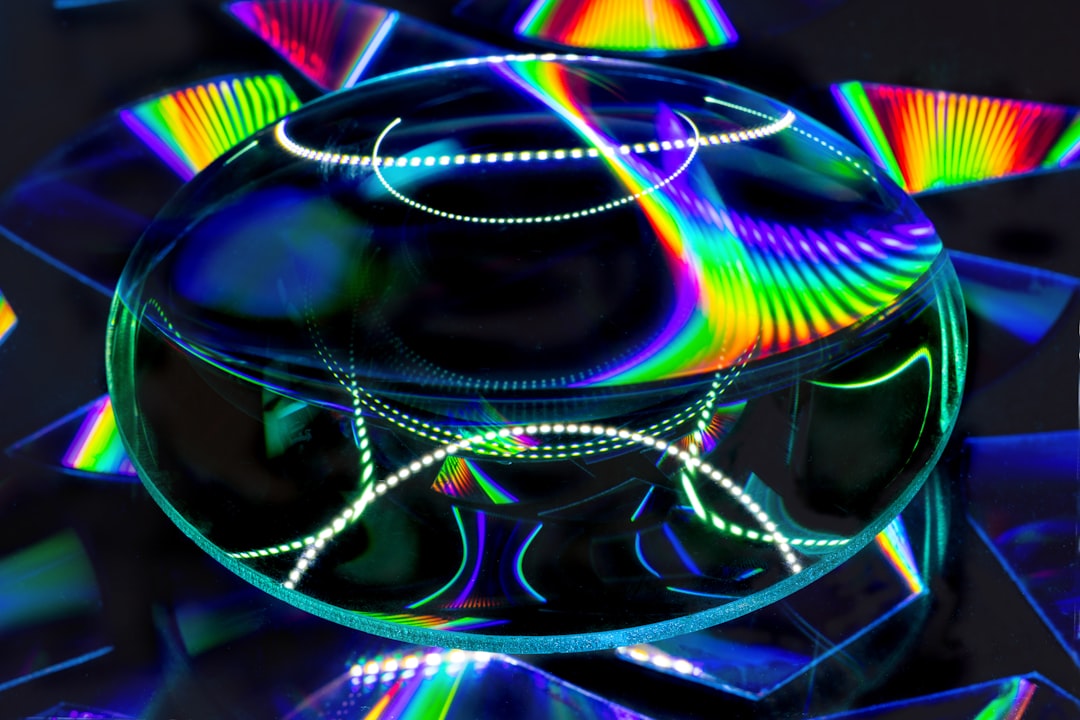
The holographic principle, a profound concept emerging from the intersection of quantum mechanics and general relativity, posits that all information contained within a three-dimensional volume can be fully described by data on a two-dimensional surface enclosing that volume. This seemingly counterintuitive idea challenges our fundamental understanding of reality, suggesting that the universe might be more akin to a hologram than the inherently three-dimensional space we perceive.
The holographic principle did not spring forth fully formed; rather, it developed from a confluence of theoretical insights and perplexing problems in physics, particularly those related to black holes and quantum gravity.
Black Hole Thermodynamics and the Area Law
The initial seeds of the holographic principle were sown in the 1970s through the study of black holes. Stephen Hawking’s groundbreaking work on black hole radiation, coupled with Jacob Bekenstein’s earlier suggestions regarding black hole entropy, led to a startling revelation: a black hole’s entropy is proportional to its event horizon’s surface area, not its volume.
- Bekenstein-Hawking Entropy: Bekenstein hypothesized that black holes possess entropy, as otherwise, violating the second law of thermodynamics would be trivial (one could throw matter into a black hole to reduce the universe’s entropy). Hawking later developed this further, showing that black holes emit thermal radiation (Hawking radiation) and thus have a temperature and, consequently, an entropy directly proportional to the area of their event horizon. This stands in stark contrast to ordinary objects, whose entropy is proportional to their volume.
- Information Paradox: This area-dependent entropy fueled the black hole information paradox. If information falls into a black hole, and the black hole eventually evaporates, what happens to that information? Does it truly disappear, violating a fundamental tenet of quantum mechanics (unitarity), or is it somehow encoded on the event horizon? This paradox hinted at a deeper connection between information and surface area.
‘t Hooft and Susskind’s Formulations
Gerard ‘t Hooft and Leonard Susskind were instrumental in formalizing the holographic principle. They took the black hole entropy-area relationship and generalized it to encompass the entire universe.
- ‘t Hooft’s Proposal: ‘t Hooft, in the early 1990s, argued that if the degrees of freedom of a black hole could be described by its surface area, then perhaps the entire universe’s degrees of freedom could be similarly encoded on a distant two-dimensional boundary. He proposed that the fundamental building blocks of reality might reside on a boundary, and our three-dimensional perception is merely a projection.
- Susskind’s Elaboration: Susskind further developed this concept, emphasizing the relationship between information and surface area. He coined the term “holographic principle,” drawing an analogy to optical holograms where a three-dimensional image is encoded on a two-dimensional photographic plate. He suggested that the maximum amount of information within a given volume is limited by the area of its boundary, effectively challenging the conventional notion that information density scales with volume.
If you’re curious about the fascinating concept of the holographic principle and want to dive deeper into its implications for our understanding of the universe, you might find this article particularly enlightening. It breaks down complex ideas into easily digestible segments, making it perfect for beginners. To explore this topic further, check out the related article on holography and its significance in modern physics at My Cosmic Ventures.
Decoding the Holographic Analogy
To grasp the holographic principle, it is helpful to consider the analogy with an optical hologram. While not a direct one-to-one mapping, it provides an intuitive framework for understanding the core idea.
The Optical Hologram
An optical hologram stores a three-dimensional image on a two-dimensional surface. When illuminated with a coherent light source, this surface reconstructs the original three-dimensional object.
- Encoding and Reconstruction: In an optical hologram, interference patterns created by two laser beams (one reflected from the object, one reference beam) are recorded on a photographic plate. This seemingly chaotic pattern, when illuminated correctly, diffracts the light to create a lifelike 3D image. The information required to reconstruct the entire 3D scene is thus encoded on a 2D surface.
- Whole from Part: A remarkable property of optical holograms is that if the holographic plate is broken, each piece can still reconstruct the entire original image, albeit with reduced clarity and resolution. This redundancy of information storage serves as a potent metaphor for the holographic principle, where information about the entire volume might be present everywhere on its boundary.
The Universe as a Hologram
The holographic principle extrapolates this concept to the universe itself. It suggests that the reality we experience might be a projection from a lower-dimensional boundary.
- Boundary as the “True” Reality: This perspective posits that the fundamental degrees of freedom, the ultimate carriers of information, do not reside in the 3D space we inhabit but rather on a distant, 2D boundary. Our perceived 3D reality, with all its complexities and phenomena, is then merely an emergent property or a “holographic projection” from this boundary.
- Information Compression: The principle implies an extraordinary level of information compression. Instead of describing every point in a 3D volume, one only needs to describe the phenomena on its 2D surface. This drastically reduces the number of fundamental degrees of freedom required to describe the universe.
AdS/CFT Correspondence: A Concrete Realization

While the holographic principle remained a largely abstract concept for some time, the discovery of the Anti-de Sitter/Conformal Field Theory (AdS/CFT) correspondence in 1997 by Juan Maldacena provided a concrete mathematical realization of its core tenets.
A Duality Between Theories
AdS/CFT is a conjectured duality, meaning it proposes that two seemingly different physical theories are actually equivalent descriptions of the same underlying reality.
- Anti-de Sitter Space (AdS): On one side of the duality is a theory of gravity in a specific type of spacetime called Anti-de Sitter space. AdS is a negatively curved spacetime, like the surface of a saddle, which has a well-defined boundary. This side is often associated with string theory, a leading candidate for quantum gravity.
- Conformal Field Theory (CFT): On the other side is a quantum field theory without gravity, living on the boundary of the Anti-de Sitter space. Conformal field theories are particularly well-behaved theories in quantum mechanics, often used to describe critical phenomena. Importantly, CFTs are intrinsically two-dimensional in the context of the AdS/CFT correspondence (for a 3D AdS bulk, the boundary is 2D, and so on).
- The “Dictionary”: The correspondence provides a “dictionary” that maps quantities and phenomena from the gravitational theory in the bulk to corresponding quantities and phenomena in the CFT on the boundary. For instance, a black hole in AdS space corresponds to thermal plasma in the CFT. This allows physicists to transform difficult problems in one theory into potentially solvable problems in the other.
Testbed for Quantum Gravity
AdS/CFT has become an invaluable tool for exploring the challenging realm of quantum gravity, offering a window into how gravity might emerge from quantum mechanics.
- Non-Perturbative Quantum Gravity: Before AdS/CFT, understanding quantum gravity in regimes where gravity is strong was incredibly challenging due to the lack of a reliable theoretical framework. AdS/CFT provides a non-perturbative definition of quantum gravity in certain spacetimes, allowing for calculations that were previously impossible.
- Emergence of Spacetime: A profound implication of AdS/CFT is the idea that spacetime itself, along with its gravitational dynamics, might be an emergent phenomenon arising from the entanglement of degrees of freedom in the boundary conformal field theory. This suggests that the fundamental entities are not spacetime points but rather quantum information on a boundary.
- Applications Beyond Quantum Gravity: While originating from string theory and quantum gravity, AdS/CFT has found unexpected applications in other areas of physics, including condensed matter physics. It has been used to model strongly coupled systems, such as high-temperature superconductors and quark-gluon plasmas, which are notoriously difficult to describe using traditional methods.
Implications and Future Directions

The holographic principle, particularly through the lens of AdS/CFT, has profound implications for our understanding of the universe and opens up new avenues for theoretical exploration.
Information and Reality
The holographic principle fundamentally redefines our understanding of information and its role in shaping reality.
- Information as Primary: It suggests that information might be more fundamental than space and time themselves. The universe, in this view, is not a collection of objects in space and time, but rather a vast information processing system where our perceived reality is a consequence of how this information is encoded and processed.
- Degrees of Freedom: The startling reduction in the number of required degrees of freedom—from volume-scaling to area-scaling—challenges the naive intuition that a larger volume implies more independent pieces of information. It indicates that the information content of the universe is surprisingly sparse when viewed from this holographic perspective.
Black Hole Dynamics Revisited
The holographic principle offers a potential resolution to the black hole information paradox and provides new insights into their internal workings.
- Information Preservation: Within the holographic framework, information is not lost when it falls into a black hole. Instead, it is encoded on the event horizon, and in the case of AdS black holes, this information is fully recoverable by studying the corresponding boundary CFT. This provides a mechanism for preserving unitarity and resolving the information paradox, although the details of how this works for realistic, asymptotically flat black holes are still being explored.
- Quantum Entanglement and Spacetime: Recent research suggests deep connections between spacetime geometry, black holes, and quantum entanglement. The “ER=EPR” conjecture, for instance, posits that entangled particles are connected by wormholes (Einstein-Rosen bridges), further highlighting the interwoven nature of information, quantum mechanics, and gravity in the holographic picture.
Towards a Unified Theory
The holographic principle is a strong contender for a guiding principle in the quest for a unified theory of everything, a theory that consistently describes all fundamental forces of nature.
- Quantum Gravity Framework: By providing a framework where quantum gravity can be described in terms of a non-gravitational quantum field theory, the holographic principle offers a path to tackle one of the most challenging problems in modern physics. It provides a means to understand how the smooth, continuous fabric of spacetime and gravity might emerge from the discrete, quantum nature of reality.
- Cosmological Implications: While AdS/CFT typically deals with Anti-de Sitter spacetimes, which are conceptually different from our largely flat or positively curved universe, efforts are underway to extend holographic ideas to more realistic cosmological settings, such as our own expanding universe (dS/CFT correspondence, for de Sitter space). This could potentially offer new insights into the origin and evolution of the cosmos.
- Experimental Verification: Directly testing the holographic principle is a monumental challenge given its highly theoretical nature and the extreme scales involved. However, as our understanding of quantum gravity and its observational signatures progresses, indirect evidence or theoretical consistency checks might offer glimpses into its validity. For instance, studying the properties of specific quantum materials using AdS/CFT could lead to predictions that are experimentally verifiable in condensed matter laboratories, providing indirect support for the holographic framework.
In conclusion, the holographic principle, born from the mysteries of black holes and refined through correspondences like AdS/CFT, represents a profound shift in our understanding of reality. It suggests that the three-dimensional universe we perceive might be an emergent property, a grand illusion projected from a more fundamental, lower-dimensional canvas of information. As physicists continue to explore its implications, the holographic principle promises to reshape our understanding of spacetime, gravity, and the very nature of existence.
FAQs
What is the holographic principle?
The holographic principle is a theoretical concept in physics suggesting that all the information contained within a volume of space can be represented as encoded data on the boundary of that space, much like a hologram. It implies that the universe can be described in fewer dimensions than it appears.
Who proposed the holographic principle?
The holographic principle was first proposed by physicists Gerard ‘t Hooft and Leonard Susskind in the 1990s. It was inspired by studies of black hole thermodynamics and quantum gravity.
How does the holographic principle relate to black holes?
The principle originated from the observation that the entropy of a black hole, which measures its information content, is proportional to the area of its event horizon rather than its volume. This suggests that all information inside the black hole can be encoded on its surface.
Is the holographic principle proven or still theoretical?
The holographic principle remains a theoretical framework. While it is supported by mathematical models and has strong implications in string theory and quantum gravity, it has not yet been experimentally confirmed.
Why is the holographic principle important in physics?
The holographic principle offers a potential way to unify quantum mechanics and general relativity by providing a new perspective on how information and space-time are related. It could help solve fundamental problems in understanding the nature of the universe.