
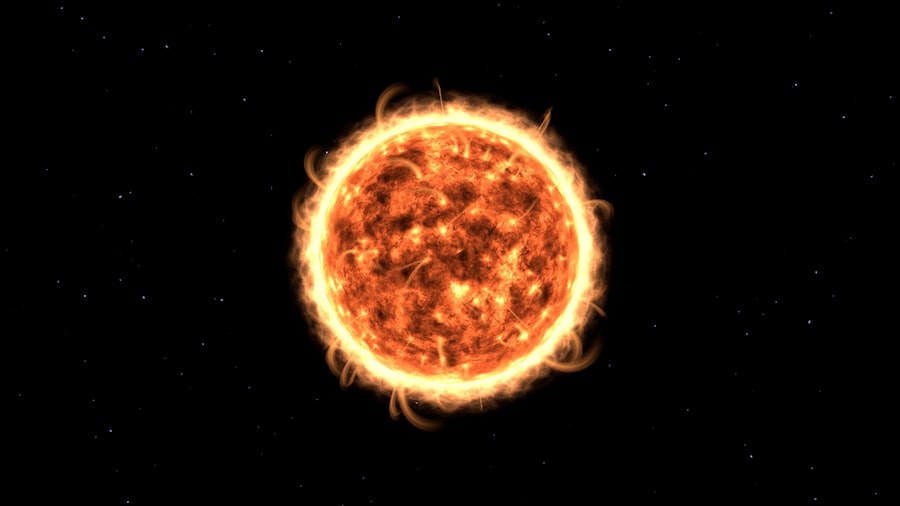
The Solar Max, or solar maximum, refers to the peak phase of the Sun’s 11-year solar cycle, during which solar activity reaches its highest levels. This period is characterized by an increase in sunspots, solar flares, and coronal mass ejections (CMEs). Sunspots are temporary phenomena on the Sun’s photosphere that appear as dark spots due to their cooler temperatures compared to surrounding areas.
During the Solar Max, the number of these sunspots can increase dramatically, sometimes numbering in the hundreds. This heightened activity is not just a fascinating aspect of solar physics; it has significant implications for space weather and its effects on Earth. The Solar Max is a critical phase in understanding the Sun’s behavior and its influence on the solar system.
It is part of a larger cycle that includes a solar minimum, where activity is at its lowest. The transition between these two extremes can have profound effects on various aspects of life on Earth and in space. Scientists closely monitor these cycles to predict solar activity and its potential impacts, making the Solar Max a focal point for research in heliophysics and space weather forecasting.
Key Takeaways
- The Solar Max is the period of maximum solar activity in the 11-year solar cycle.
- The Sun’s 11-year cycle is characterized by changes in solar activity, including sunspots and solar flares.
- The Solar Max can have various effects on Earth, including disruptions to technology and communication systems.
- Space weather during the Solar Max can impact satellite operations, power grids, and astronaut safety.
- Predicting the Solar Max is important for preparing for potential impacts on technology and infrastructure.
The Sun’s 11-year Cycle
The Sun operates on an approximately 11-year cycle of solar activity, known as the solar cycle. This cycle is driven by the Sun’s magnetic field, which undergoes periodic changes. At the beginning of the cycle, known as solar minimum, sunspot numbers are low, and solar activity is relatively calm.
As the cycle progresses toward solar maximum, sunspots become more numerous, and solar flares and CMEs increase in frequency and intensity. This cyclical behavior is a result of the complex interactions between the Sun’s magnetic field and its plasma. Understanding this 11-year cycle is crucial for predicting solar activity and its potential impacts on Earth.
Each cycle can vary in intensity; some cycles may produce more sunspots and solar events than others. For instance, Cycle 24, which peaked in 2014, was relatively weak compared to previous cycles. In contrast, Cycle 23, which peaked in 2000, was one of the most active in recent history.
By studying these cycles, scientists can gain insights into the underlying mechanisms driving solar activity and improve their ability to forecast future events.
Effects of the Solar Max on Earth
The Solar Max has a range of effects on Earth that can be both beneficial and detrimental. One of the most visible effects is the enhancement of auroras, or northern and southern lights. During periods of high solar activity, charged particles from the Sun interact with Earth’s magnetic field, creating stunning displays of light in polar regions.
These natural light shows are not only beautiful but also serve as a reminder of the dynamic relationship between the Sun and Earth. However, the Solar Max can also pose risks to technology and infrastructure on Earth. Increased solar activity can lead to geomagnetic storms that disrupt communication systems, navigation technologies, and power grids.
These storms occur when CMEs collide with Earth’s magnetic field, causing fluctuations that can induce currents in electrical systems. Such disturbances can lead to power outages and damage to satellites, highlighting the need for preparedness during periods of heightened solar activity.
Solar Max and Space Weather
| Metrics | Value |
|---|---|
| Solar Maximum | 11-year cycle of high solar activity |
| Solar Flares | Sudden, intense bursts of radiation from the sun’s surface |
| Coronal Mass Ejections (CMEs) | Explosive release of plasma and magnetic field from the sun’s corona |
| Solar Wind | Stream of charged particles released from the sun’s corona |
| Auroras | Natural light display in the Earth’s sky, caused by solar wind interacting with the magnetosphere |
Space weather refers to the environmental conditions in space as influenced by solar activity. The Solar Max plays a significant role in shaping space weather phenomena. During this period, the Sun emits a higher volume of solar wind—a stream of charged particles that flows outward from the Sun—along with increased radiation levels.
These conditions can affect not only satellites orbiting Earth but also astronauts working in space. The implications of space weather during Solar Max extend beyond immediate effects on technology; they can also influence long-term climate patterns on Earth. While research is ongoing to fully understand these connections, some studies suggest that increased solar activity may correlate with changes in atmospheric conditions.
Predicting the Solar Max
Predicting when the Solar Max will occur is a complex task that involves analyzing historical data and current solar observations. Scientists utilize various models to forecast solar activity based on past cycles and magnetic field behavior. These predictions are crucial for preparing for potential impacts on technology and infrastructure.
One method used in predictions involves studying sunspot cycles and their correlation with other solar phenomena. By examining patterns from previous cycles, researchers can estimate when the next Solar Max might occur and how intense it may be. Additionally, advancements in satellite technology have improved real-time monitoring of solar activity, allowing for more accurate forecasts and timely warnings about potential space weather events.
Solar Max and Technology

The technological implications of the Solar Max are profound, as increased solar activity can disrupt various systems that modern society relies upon. For instance, GPS systems can experience inaccuracies due to fluctuations in Earth’s ionosphere caused by heightened solar activity. This can affect navigation for both civilian and military applications, leading to potential safety concerns.
Moreover, communication satellites are particularly vulnerable during periods of intense solar activity. Increased radiation levels can interfere with signal transmission, leading to disruptions in television broadcasts, internet services, and other forms of communication. As society becomes increasingly dependent on technology that relies on satellite systems, understanding and preparing for the impacts of Solar Max becomes essential for maintaining connectivity.
Solar Max and Communication
Communication systems are among the most affected by the Solar Max due to their reliance on radio waves that can be disrupted by increased ionospheric activity. During periods of heightened solar activity, radio signals can experience degradation or complete blackout, particularly at high frequencies used for long-distance communication. This phenomenon can impact everything from amateur radio operators to commercial aviation communications.
In addition to radio communications, satellite-based services such as GPS and satellite television can also face interruptions during Solar Max events. The increased radiation from solar flares can cause temporary outages or degraded performance in these systems. As a result, industries that depend heavily on reliable communication channels must remain vigilant during periods of heightened solar activity to mitigate potential disruptions.
Solar Max and Power Grids
The impact of Solar Max on power grids is another critical area of concern for scientists and engineers alike. Geomagnetic storms induced by CMEs can induce electric currents in power lines, potentially leading to voltage fluctuations that can damage transformers and other critical infrastructure components. In severe cases, these disturbances can result in widespread power outages.
Utilities must take proactive measures to protect their infrastructure during periods of heightened solar activity. This includes monitoring space weather forecasts closely and implementing protective measures such as grid reconfigurations or load shedding to prevent damage from induced currents. The lessons learned from past events underscore the importance of preparedness in safeguarding power systems against the unpredictable nature of solar activity.
Solar Max and Satellite Operations
Satellites play a crucial role in modern life, providing services ranging from weather forecasting to global communications. However, during Solar Max periods, these satellites face increased risks due to heightened radiation levels and potential damage from energetic particles emitted by the Sun. Operators must carefully monitor satellite health and performance during these times to ensure continued functionality.
To mitigate risks associated with increased solar activity, satellite operators often implement protective measures such as shutting down non-essential systems or adjusting satellite orbits to minimize exposure to harmful radiation. Additionally, advancements in satellite design have led to more resilient systems capable of withstanding some effects of space weather. Nevertheless, ongoing vigilance is necessary as operators navigate the challenges posed by Solar Max events.
Solar Max and Astronaut Safety
Astronauts working aboard the International Space Station (ISS) or other missions beyond Earth’s protective atmosphere are particularly vulnerable during periods of heightened solar activity. Increased radiation levels pose significant health risks, including potential long-term effects such as cancer or acute radiation sickness. As such, ensuring astronaut safety during Solar Max events is a top priority for space agencies.
To protect astronauts from harmful radiation exposure during these periods, mission planners closely monitor solar activity forecasts and may adjust mission schedules accordingly. In some cases, astronauts may be instructed to take shelter in specially designed areas within spacecraft or stations that offer additional protection from radiation. These precautions highlight the importance of understanding solar cycles and their implications for human spaceflight.
Preparing for the Next Solar Max
As scientists continue to study the Sun’s behavior and improve predictive models for future Solar Max events, preparation remains key for mitigating potential impacts on technology and infrastructure. Governments, industries, and researchers must collaborate to develop strategies that enhance resilience against space weather phenomena. Public awareness campaigns can also play a vital role in preparing society for future Solar Max events.
Educating individuals about potential disruptions—such as communication outages or power grid vulnerabilities—can foster a culture of preparedness that extends beyond specialized sectors into everyday life. By understanding the implications of solar activity and taking proactive measures, society can better navigate the challenges posed by future Solar Max events while harnessing their beauty and wonder as part of our dynamic relationship with the cosmos.
To gain a deeper understanding of the solar maximum, a period of greatest solar activity in the 11-year solar cycle of the Sun, it is beneficial to explore various resources that delve into the intricacies of solar phenomena. One such resource is an article available on My Cosmic Ventures, which provides insights into the dynamics of solar flares, sunspots, and their impact on space weather. This article can serve as a valuable guide for both enthusiasts and researchers interested in the complexities of solar activity. For more detailed information, you can read the related article by visiting this link.
WATCH THIS ☀️The Sun as Software: Why Top Scientists Now Say a Solar Flare Could Wipe Everything
FAQs
What is the solar max?
The solar max, short for solar maximum, refers to the period of greatest solar activity in the 11-year solar cycle of the Sun. During this time, the Sun experiences an increase in sunspots, solar flares, and coronal mass ejections.
How often does the solar max occur?
The solar max occurs approximately every 11 years, as part of the solar cycle. The previous solar max occurred in 2013, and the next one is expected around 2024-2025.
What are sunspots and how are they related to the solar max?
Sunspots are temporary phenomena on the Sun’s photosphere that appear as dark spots compared to surrounding areas. During the solar max, the number of sunspots increases, reaching a peak before decreasing again as the solar cycle progresses.
What are solar flares and coronal mass ejections, and how do they relate to the solar max?
Solar flares are sudden, intense bursts of radiation from the Sun’s surface, while coronal mass ejections are massive expulsions of plasma and magnetic field from the Sun’s corona. Both solar flares and coronal mass ejections are more frequent and intense during the solar max.
What are the potential effects of the solar max on Earth?
The increased solar activity during the solar max can lead to geomagnetic storms, which have the potential to disrupt satellite operations, communication systems, and power grids on Earth. Additionally, increased solar radiation during the solar max can impact astronauts and technology in space.