The Enigmatic Power of Black Holes
Imagine a region in spacetime where gravity is so intense that nothing, not even light, can escape its clutches. This is the fundamental concept behind a black hole, one of the most fascinating and extreme objects in the universe. These cosmic entities, spawned from the implosion of massive stars, represent a pinnacle of physical conditions, pushing our understanding of gravity, space, and time to their limits. Their very existence, once a theoretical prediction, has now been confirmed through meticulous observation and scientific inquiry, transforming them from abstract curiosities into crucial elements in our cosmic narrative. Understanding black holes is not merely about cataloging astronomical oddities; it is about unraveling fundamental laws of physics and gaining profound insights into the very fabric of reality.
Black holes are not born from nothing; they are the dramatic endpoints of stellar evolution for stars that vastly exceed our Sun in mass. The lifecycle of any star is a cosmic tug-of-war between the outward pressure generated by nuclear fusion in its core and the inward pull of its own gravity. For most stars, this balance is maintained for billions of years, a gentle dance of creation and stability. However, for stars significantly more massive than our Sun – typically, those more than 20 solar masses – this equilibrium becomes increasingly precarious.
Stellar Collapse: The Ultimate Gravitational Fall
As these massive stars exhaust their nuclear fuel, the outward pressure diminishes. Without this counteracting force, gravity asserts its dominion with overwhelming authority. The star begins to collapse inward, its core imploding at an astonishing rate. This process is not a slow decay; it is a catastrophic unraveling. The sheer density of matter being compressed into an ever-smaller volume creates immense gravitational forces.
The Chandrasekhar Limit and Beyond
The ultimate fate of a star’s core after it exhausts its fuel depends on its mass. For stars like our Sun, the core will eventually become a white dwarf, a dense ember supported by electron degeneracy pressure. For stars with masses between roughly 1.4 and 3 times that of the Sun, the collapse leads to a neutron star, an object of unimaginable density where protons and electrons are squeezed together to form neutrons, supported by neutron degeneracy pressure. However, when the core’s mass exceeds approximately three solar masses (the Tolman–Oppenheimer–Volkoff limit), even neutron degeneracy pressure is insufficient to resist the inescapable pull of gravity.
The Birth of the Singularity and Event Horizon
When gravity overwhelms all known forces, the stellar core continues to collapse indefinitely, crushing itself into a point of infinite density and zero volume – the singularity. This theoretical point is where our current understanding of physics breaks down, a concept that physicists continue to grapple with. Surrounding this singularity is a boundary known as the event horizon.
The Point of No Return
The event horizon is not a physical surface in the traditional sense, but rather a region of spacetime where the escape velocity exceeds the speed of light. Imagine throwing a ball upwards on Earth. If you throw it hard enough, it will escape Earth’s gravity. Now imagine a place where no matter how fast you throw something, it will always be pulled back. That is the essence of the event horizon. Once an object, including light, crosses this boundary, it is irrevocably trapped, destined to fall towards the singularity. This is why black holes are termed “black” – they emit no light and reflect no light, rendering them invisible to direct optical observation.
Black holes continue to captivate the imagination of scientists and enthusiasts alike, as they challenge our understanding of the universe. For those interested in delving deeper into this fascinating topic, a related article can be found at My Cosmic Ventures, which explores the latest discoveries and theories surrounding black holes and their impact on cosmic evolution.
The Architecture of a Black Hole
While the singularity and event horizon are the defining features of a black hole, their structure and properties are more nuanced than this simple description might suggest. General relativity provides a framework for understanding the spacetime distortions that characterize these objects, revealing a complex interplay of gravity and matter.
Schwarzschild Black Holes: The Simplest Case
The simplest type of black hole, and the one first theoretically described, is the Schwarzschild black hole. This theoretical model assumes a non-rotating, electrically neutral black hole. Its defining characteristic is its event horizon, the radius of which is directly proportional to its mass.
The Schwarzschild Radius: A Cosmic Threshold
The Schwarzschild radius ($r_s$) is the radius of the event horizon for a non-rotating, uncharged black hole. It is calculated using the formula $r_s = \frac{2GM}{c^2}$, where G is the gravitational constant, M is the mass of the black hole, and c is the speed of light. For a solar-mass black hole, the Schwarzschild radius would be approximately 3 kilometers. For a supermassive black hole like Sagittarius A* at the center of our Milky Way (which has a mass of about 4 million solar masses), the Schwarzschild radius is roughly 12 million kilometers. This radius dictates the point of no return; anything that crosses this invisible boundary will be inexorably drawn into the black hole.
Rotating Black Holes: The Kerr Solution
The vast majority of black holes in the universe are expected to be rotating, a consequence of the spinning progenitor stars from which they formed. The theoretical description of a rotating black hole is given by the Kerr solution, named after mathematician Roy Kerr.
The Ergosphere: A Region of Frame-Dragging
Rotating black holes possess an additional region outside the event horizon called the ergosphere. This is a consequence of frame-dragging, a phenomenon predicted by general relativity where rotating masses drag spacetime around them. Within the ergosphere, spacetime is so distorted that it is impossible to remain stationary; objects are forced to rotate with the black hole, even if they are not falling in. Energy can, in theory, be extracted from the ergosphere through processes like the Penrose process, though the practicalities of this are purely theoretical. The inner boundary of the ergosphere is the event horizon, and the outer boundary is called the static limit.
Accretion Disks: Feeding the Beast
Black holes, especially supermassive ones, are often surrounded by accretion disks. These are vast, swirling structures of gas, dust, and stellar debris that orbit the black hole. As material within the accretion disk spirals inward, it generates immense friction and heat, causing it to glow brightly across the electromagnetic spectrum, particularly in X-rays. These accretion disks are not part of the black hole itself but are crucial observational signatures that allow us to detect and study these otherwise invisible objects. The intense gravitational forces of the black hole can also launch powerful jets of plasma from the poles of the accretion disk, stretching for vast distances into space.
Observational Evidence: Peering into the Darkness
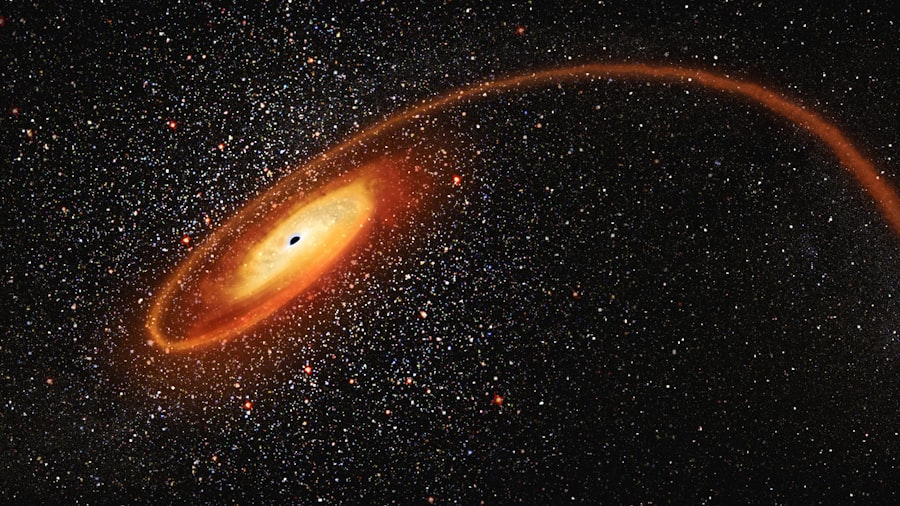
The enigmatic nature of black holes, particularly their inability to emit light, initially made their detection a daunting challenge. However, through ingenious astrophysical observations and theoretical predictions that have been subsequently confirmed, scientists have amassed compelling evidence for their existence.
Indirect Detection: Gravitational Fingerprints
The most common method for detecting black holes is through their gravitational influence on their surroundings. This is akin to inferring the presence of a massive, invisible object by observing how it affects the motion of visible objects.
Stellar Orbits and Binary Systems
Astronomers examine the orbits of stars around an unseen, massive object. If a star is observed to be orbiting a point in space where no visible object resides, and the inferred mass of that unseen object is substantial enough to be a black hole, then the presence of a black hole is strongly suggested. These systems are often referred to as X-ray binaries, where a visible star orbits an unseen companion that is accreting material from its partner, heating it to extreme temperatures and emitting X-rays.
Gravitational Lensing: Warping Light
Black holes, like any massive object, warp the fabric of spacetime. This warping can bend the path of light from distant objects, a phenomenon known as gravitational lensing. Imagine looking through a bottle of water; the glass distorts the image behind it. A black hole acts as a cosmic lens, bending and magnifying the light from objects located behind it. While this lensing can be caused by any massive object, the extreme gravitational gradients near a black hole can produce unique lensing patterns that are telltale signs.
The Event Horizon Telescope: A Direct Glimpse
A groundbreaking leap in our ability to study black holes came with the Event Horizon Telescope (EHT) collaboration. This international network of radio telescopes, spread across Earth, works together to create an Earth-sized virtual telescope. Its primary goal has been to capture the first direct images of the event horizons of black holes.
Imaging Sagittarius A and M87
In 2019, the EHT released the first-ever image of the supermassive black hole at the center of the galaxy Messier 87 (M87). This remarkable achievement revealed a dark central region, the shadow of the event horizon, surrounded by a bright ring of light emitted by hot gas swirling around it. More recently, in 2022, the EHT released an image of Sagittarius A (Sgr A*), the supermassive black hole at the center of our own Milky Way galaxy. These direct images provide powerful visual confirmation of theoretical predictions and offer unprecedented opportunities to test general relativity in extreme gravitational environments.
The Profound Influence of Black Holes: Cosmic Architects
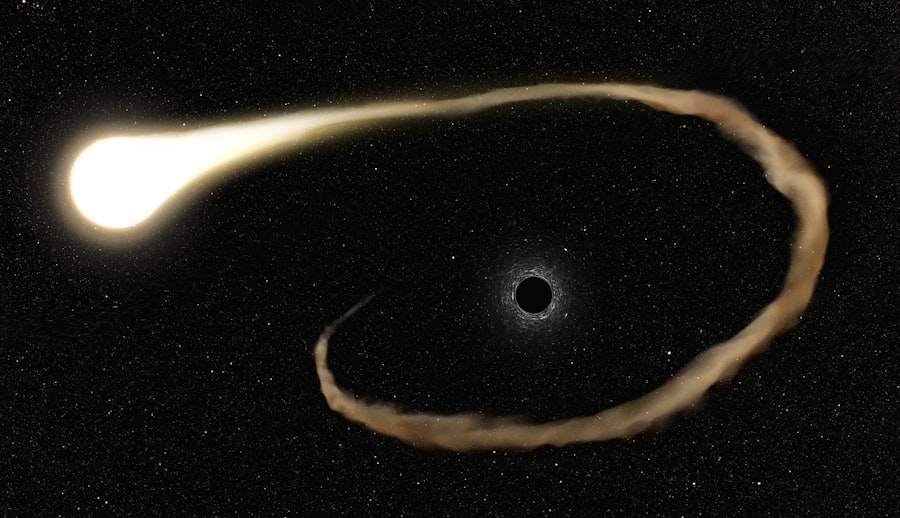
Black holes are not simply passive objects in the cosmos; they are active participants that profoundly shape their galactic environments and influence the evolution of the universe. Their immense gravitational pull and the energy released through accretion processes play crucial roles in cosmic phenomena.
Galactic Evolution: A Double-Edged Sword
Supermassive black holes residing at the centers of most galaxies, including our own Milky Way, are believed to play a significant role in galactic evolution. Their growth is intimately linked to the growth of their host galaxies, a relationship that has long puzzled astrophysicists.
Feedback Mechanisms: Quenching Star Formation
The energetic jets and radiation emanating from accreting supermassive black holes can exert a powerful influence on their surroundings. This “feedback” can heat and expel gas from the galaxy, thereby quenching star formation. This process is thought to be a key mechanism in regulating the growth of galaxies and preventing them from becoming too massive. Imagine a furnace that, while providing heat, also blows away excess fuel, controlling its ultimate size.
Driving Galaxy Mergers and Growth
Conversely, black holes may also play a role in driving the initial stages of galaxy mergers. As galaxies approach each other, their central supermassive black holes can interact gravitationally, potentially leading to increased accretion rates and further fueling the black hole’s activity. This can lead to bursts of star formation or, in other cases, contribute to the suppression of star formation.
Extreme Physics: Testing the Limits of Understanding
Black holes represent natural laboratories where the laws of physics are pushed to their absolute limits. Studying these objects allows scientists to test theories of gravity and explore phenomena that cannot be replicated on Earth.
Gravitational Waves: Ripples in Spacetime
The merger of two black holes, or a black hole with a neutron star, creates powerful ripples in spacetime known as gravitational waves. The detection of these waves by observatories like LIGO and Virgo has opened an entirely new window onto the universe, allowing us to “hear” the universe for the first time. These gravitational wave signals carry information about the masses, spins, and properties of the merging objects, providing direct evidence for the existence of binary black hole systems and offering rigorous tests of Einstein’s theory of general relativity.
Quantum Gravity: The Unification Challenge
At the heart of a black hole lies the singularity, a point where general relativity predicts infinite density and curvature, a breakdown of known physics. Theorists believe that a complete understanding of black holes requires a theory of quantum gravity, which would unify the principles of general relativity with quantum mechanics. This elusive theory might resolve the singularities and shed light on the fundamental nature of spacetime at its most extreme scales. Black holes, therefore, serve as crucial signposts in the quest for a unified theory of everything.
Recent discoveries in astrophysics have shed new light on the enigmatic nature of black holes, revealing their complex interactions with surrounding matter and their role in the evolution of galaxies. For those interested in exploring this fascinating topic further, you can read a related article that delves into the latest research and theories surrounding these cosmic phenomena. Understanding black holes not only enhances our knowledge of the universe but also challenges our perceptions of space and time. To learn more, check out this insightful piece on mycosmicventures.com.
The Mysteries That Remain: Frontiers of Knowledge
| Metric | Value | Unit | Description |
|---|---|---|---|
| Mass | 4 million | Solar masses | Mass of the supermassive black hole at the center of the Milky Way (Sagittarius A*) |
| Event Horizon Radius | 12 | Million kilometers | Approximate radius of the event horizon for a black hole with 4 million solar masses |
| Schwarzschild Radius | 3 | Kilometers per solar mass | Radius of the event horizon per solar mass of a non-rotating black hole |
| Spin Parameter (a*) | 0 to 1 | Dimensionless | Dimensionless spin parameter indicating black hole rotation speed |
| Hawking Temperature | ~1.2 × 10^-8 | Kelvin | Temperature of a black hole with the mass of the Sun due to Hawking radiation |
| Accretion Disk Temperature | 10^5 to 10^7 | Kelvin | Typical temperature range of matter in the accretion disk around a black hole |
| Distance to Nearest Known Black Hole | 1,000 | Light years | Approximate distance to the closest known black hole, V616 Monocerotis |
Despite significant advancements, black holes continue to pose profound mysteries and represent active frontiers in astrophysical research. Many questions remain unanswered, beckoning further exploration.
Information Paradox: What Happens to What Falls In?
One of the most perplexing theoretical challenges is the black hole information paradox. According to quantum mechanics, information cannot be destroyed. However, if something falls into a black hole, it seemingly disappears beyond the event horizon, and if the black hole eventually evaporates through Hawking radiation (a theoretical process where black holes radiate particles and slowly lose mass), then the information about what fell in might be lost forever. Resolving this paradox is a key goal for physicists seeking to reconcile general relativity and quantum mechanics.
Hawking Radiation: The Slow Evaporation
Stephen Hawking proposed that black holes are not entirely black but slowly radiate particles due to quantum effects near the event horizon. This Hawking radiation causes black holes to lose mass and energy over incredibly long timescales. For stellar-mass black holes, this evaporation process would take far longer than the current age of the universe. For smaller, hypothetical primordial black holes, however, this evaporation could be an ongoing or even spectacular event.
The Nature of Dark Matter and Dark Energy: Cosmic Connections?
While not directly composed of dark matter or dark energy, black holes could be indirectly linked to these enigmatic components of the universe. Some theories propose that primordial black holes could constitute a portion of dark matter. Furthermore, the immense gravitational forces of supermassive black holes and their influence on galactic dynamics might indirectly affect the distribution and behavior of dark matter and dark energy on cosmic scales.
Primordial Black Holes: Echoes of the Early Universe
One speculative but intriguing idea is the existence of primordial black holes, formed in the extreme conditions of the early universe shortly after the Big Bang. These hypothetical black holes could range in mass from microscopic to significantly larger than stellar-mass black holes. Their existence and properties could have profound implications for our understanding of cosmology and the composition of dark matter.
The Enduring Fascination: Our Cosmic Mirror
The study of black holes is more than an academic pursuit; it is a journey into the most extreme conditions imaginable, a quest to understand the fundamental forces that govern our universe. These celestial enigmas, once confined to the realm of theoretical physics, are now tangible objects of scientific inquiry, offering profound insights into the nature of gravity, spacetime, and potentially, the very origin of reality.
A Window into Fundamental Physics
Black holes serve as a cosmic mirror, reflecting our incomplete understanding of physics and highlighting the areas where our current theories falter. The singularity and the information paradox are not just theoretical conundrums; they are beacons guiding us towards a deeper, more unified understanding of the universe. Each discovery, each observation, whether it be the first image of an event horizon or the detection of gravitational waves from merging black holes, pushes the boundaries of human knowledge.
The Future of Black Hole Research
The ongoing advancements in observational technology, such as next-generation telescopes and gravitational wave detectors, promise to unlock even more secrets of black holes. Future research will likely focus on refining our understanding of black hole mergers, exploring the detailed structure of their surrounding environments, and potentially detecting or ruling out the existence of primordial black holes. The quest to comprehend these enigmatic entities will undoubtedly continue to drive innovation and shape our cosmic perspective for generations to come. As we continue to probe the darkness, we are, in a way, also illuminating our own place within the grand cosmic tapestry.
FAQs
What is a black hole?
A black hole is a region in space where the gravitational pull is so strong that nothing, not even light, can escape from it. It forms when a massive star collapses under its own gravity at the end of its life cycle.
How are black holes detected if they emit no light?
Black holes are detected by observing their effects on nearby matter and light. For example, astronomers look for stars orbiting an invisible object, or for X-rays emitted by hot gas as it falls into a black hole.
What are the different types of black holes?
There are three main types of black holes: stellar black holes, which form from collapsing stars; supermassive black holes, found at the centers of galaxies; and intermediate black holes, which are thought to be a size between stellar and supermassive.
Can anything escape from a black hole?
Once something crosses the event horizon, the boundary around a black hole, it cannot escape. However, theoretical particles called Hawking radiation may allow black holes to slowly lose mass over time.
What happens inside a black hole?
The interior of a black hole contains a singularity, a point where density and gravity become infinite and the laws of physics as we know them break down. The exact nature of the singularity remains one of the biggest mysteries in astrophysics.