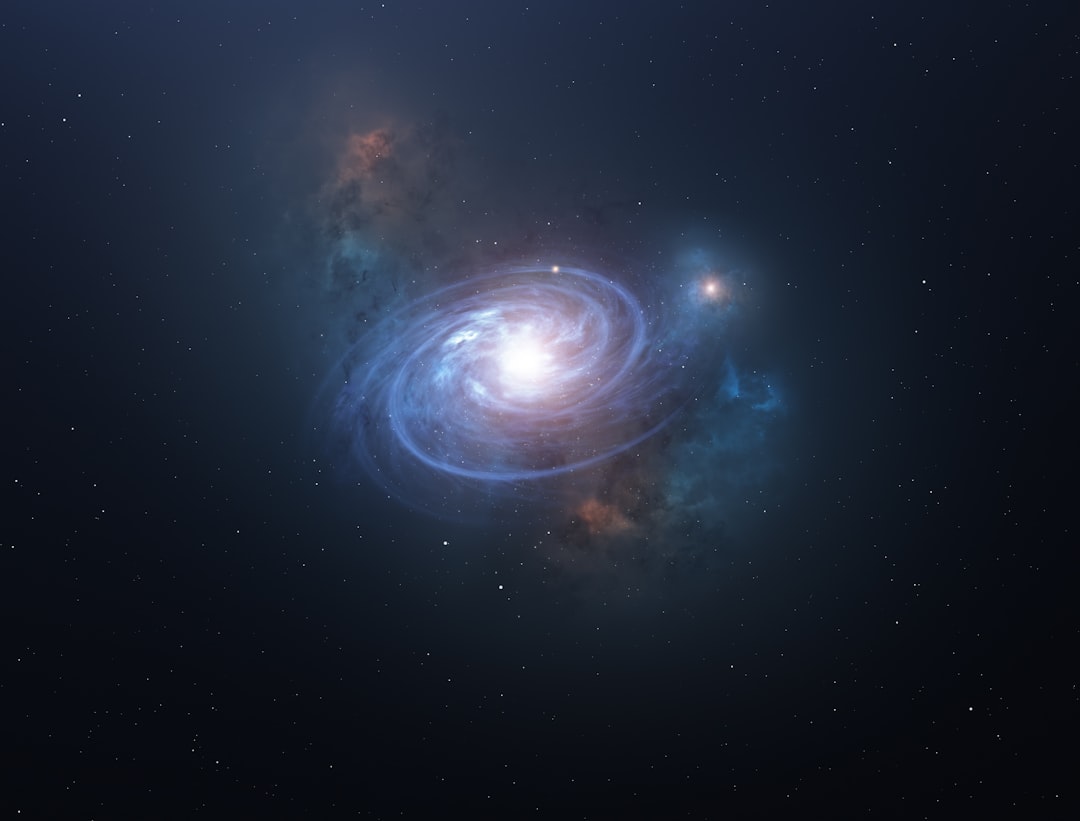
The cosmos, an expansive tapestry of stars, gas, and dust, is woven with the threads of galactic evolution. Understanding how galaxies form, grow, and interact is one of the most fundamental quests in modern astrophysics. From the chaotic dance of early universe mergers to the stately spiral arms of mature galaxies, the journey of these stellar islands is a story of immense scales and profound transformations. This exploration delves into the intricate mechanisms that govern galactic development, uncovering the forces that have shaped the universe into its current grand architecture.
The initial conditions for galaxy formation were laid down in the very early universe, a mere fraction of a second after the Big Bang. This period, characterized by extreme temperatures and densities, saw the emergence of subtle inhomogeneities in the distribution of matter and energy.
Cosmic Microwave Background Anisotropies
The cosmic microwave background (CMB) radiation, a relic from the universe’s infancy, bears the imprint of these primordial density fluctuations. These minuscule variations, observed as tiny temperature differences across the sky, served as the gravitational seeds for all subsequent large-scale structure formation. Regions with slightly higher density would exert a stronger gravitational pull, attracting more matter over time.
Dark Matter Halos and Hierarchical Structure Formation
Within this framework, the enigmatic dark matter plays a pivotal role. While not directly observable, its gravitational influence is profound. Dark matter, comprising roughly 27% of the universe’s mass-energy content, began to clump together first, forming invisible gravitational potential wells known as dark matter halos. These halos acted as scaffolding, drawing in ordinary baryonic matter (protons, neutrons, electrons) that would eventually form stars and galaxies. This process is often described as “hierarchical structure formation,” where smaller halos merge to form larger ones, progressively building up the cosmic web.
The First Stars and Reionization
The collapse of baryonic matter within these nascent dark matter halos led to the formation of the universe’s first stars, often referred to as Population III stars. These stars, massive and short-lived, were pure hydrogen and helium, lacking the heavier elements forged in subsequent stellar generations. Their intense ultraviolet radiation played a crucial role in “reionizing” the universe, stripping electrons from neutral hydrogen atoms and making the cosmos transparent to light, a pivotal transition that allowed light to travel freely across vast distances.
For those interested in the fascinating topic of Galaxy Evolution, a related article that delves deeper into the formation and development of galaxies can be found at this link. This article explores various theories and recent discoveries that shed light on how galaxies evolve over billions of years, providing insights into the cosmic processes that shape our universe.
Galactic Growth and Transformation: The Engines of Evolution
Once formed, galaxies are not static entities but dynamic systems constantly evolving through various internal and external processes. These processes dictate their morphology, star formation rates, and chemical enrichment.
Stellar Evolution and Feedback
The lives of individual stars significantly impact their host galaxies. Massive stars, after exhausting their nuclear fuel, explode as supernovae, enriching the interstellar medium with heavier elements (metals). These metals are then incorporated into subsequent generations of stars, changing their properties and the chemical composition of the galaxy as a whole. Supernova explosions also drive powerful outflows of gas and dust, known as galactic winds, which can suppress or trigger star formation in different regions. This interplay between stars and their environment is known as stellar feedback.
Gas Accretion and Regulation of Star Formation
Galaxies continuously accrete gas from their surroundings, providing the raw material for new star formation. This accretion can occur through smooth inflow from the cosmic web or through the infall of smaller satellite galaxies. The interplay between gas accretion, cooling, and stellar feedback regulates the rate at which galaxies form stars. Too much gas can lead to a burst of star formation, while vigorous outflows can deplete the gas supply, effectively quenching star production.
Galactic Mergers and Interactions
Galaxy mergers are fundamental drivers of galactic evolution, profoundly altering the morphology, stellar populations, and dynamics of the interacting galaxies. These cosmic collisions range from minor interactions, where a small galaxy is tidally disrupted by a larger one, to major mergers of similarly sized galaxies.
Minor Mergers and Disk Thickening
When a smaller galaxy interacts with or is absorbed by a larger spiral galaxy, it can contribute to the “thickening” of the larger galaxy’s disk. The gravitational perturbation from the incoming satellite can disrupt the ordered orbits of stars and gas in the disk, scattering them into a thicker, more chaotic distribution. This process can also trigger bursts of star formation as gas clouds collide and compress.
Major Mergers and Elliptical Galaxy Formation
Major mergers, where two galaxies of comparable mass collide, are often implicated in the formation of elliptical galaxies. The violent tidal forces and stellar encounters during such a merger can completely destroy the delicate spiral structures, re-shaping the stellar orbits into a more randomized, spheroidal distribution. These mergers also often trigger intense bursts of star formation, consuming vast amounts of gas, before the newly formed elliptical galaxy settles into a more quiescent state.
Supermassive Black Holes: The Central Engine

Almost every massive galaxy harbors a supermassive black hole (SMBH) at its center. These behemoths, with masses millions to billions of times that of the Sun, are not merely passive residents but active participants in galactic evolution.
Active Galactic Nuclei (AGN) and Feedback
When matter spirals into a supermassive black hole, it forms an accretion disk that becomes incredibly hot and luminous, emitting radiation across the electromagnetic spectrum. This phenomenon is known as an Active Galactic Nucleus (AGN). The energy output from AGNs, often in the form of powerful jets and winds, can exert a significant influence on the surrounding galaxy.
Positive and Negative Feedback
AGN feedback can be both positive and negative. Positive feedback occurs when the outflows from the AGN compress surrounding gas clouds, potentially triggering new star formation. More commonly, however, AGN feedback is negative, meaning it suppresses star formation. The intense radiation and energetic outflows can heat or expel gas from the galaxy, thus removing the fuel needed for new stars to form. This “quenching” mechanism is thought to be crucial in explaining the observed dichotomy between actively star-forming spiral galaxies and quiescent elliptical galaxies.
Co-evolution of Galaxies and Supermassive Black Holes
Observations have revealed a strong correlation between the mass of a supermassive black hole and the properties of its host galaxy’s bulge (the central, spheroidal component). This “co-evolution” suggests a deep, symbiotic relationship where the growth of one influences the growth of the other. The exact mechanisms driving this co-evolution are still an active area of research, but AGN feedback and galaxy mergers are considered key players.
Morphological Evolution: Shaping Galactic Forms

Galaxies exhibit a stunning diversity of shapes, from the elegant spirals to the majestic ellipticals and the irregular, often chaotic forms. These morphologies are not static but evolve over cosmic time, driven by the processes discussed above.
Hubble Sequence and Cosmological Evolution
The Hubble sequence, a classification scheme for galaxies based on their visual appearance, provides a framework for understanding morphological evolution. However, the sequence itself is not a static evolutionary path. Instead, it represents snapshots of galaxies at different stages of their lives, influenced by their environment and merger history. In the early universe, irregular and disturbed galaxies were more common, reflecting the chaotic environment dominated by frequent mergers. Over time, as the universe expanded and galaxy interactions became less frequent, more ordered spiral and elliptical galaxies emerged.
Disk Galaxies: Spirals and Lenticulars
Spiral galaxies, characterized by their prominent rotating disks and spiral arms, are typically actively forming stars. They reside in regions of lower density and have maintained a relatively undisturbed accretion of gas. Lenticular galaxies (S0), possessing a disk but lacking prominent spiral arms, are considered an intermediate class, potentially representing spirals that have exhausted their gas supply or undergone minor mergers.
Elliptical Galaxies: Quenched and Red
Elliptical galaxies are generally gas-poor, appear redder due to their older stellar populations, and exhibit little or no ongoing star formation. Their smooth, spheroidal shapes are often attributed to major merger events that have randomized the stellar orbits and consumed or expelled their gas. They tend to reside in denser environments, such as galaxy clusters, where interactions are more frequent.
Galaxy evolution is a fascinating topic that delves into the formation and development of galaxies over cosmic time. For those interested in exploring this subject further, a related article can provide additional insights into the processes that shape galaxies and their interactions. You can read more about these cosmic phenomena in the article on My Cosmic Ventures, which discusses the various factors influencing galaxy evolution and the latest discoveries in the field.
Environmental Influence on Galaxy Evolution
| Metric | Description | Typical Range/Value | Significance in Galaxy Evolution |
|---|---|---|---|
| Redshift (z) | Measure of how much the wavelength of light is stretched by the expansion of the universe | 0 (local) to >10 (early universe) | Indicates the age and distance of galaxies; higher redshift means earlier in cosmic time |
| Star Formation Rate (SFR) | Rate at which a galaxy forms new stars | 0 to >100 solar masses per year | Tracks growth and activity phases of galaxies |
| Stellar Mass | Total mass of stars in a galaxy | 10^7 to 10^12 solar masses | Indicates galaxy size and evolutionary stage |
| Gas Fraction | Ratio of gas mass to total baryonic mass | 0.01 to 0.9 | Higher gas fractions indicate potential for future star formation |
| Metallicity (Z) | Abundance of elements heavier than helium | 0.0001 to 0.05 (fraction by mass) | Reflects chemical enrichment and star formation history |
| Morphology | Galaxy shape classification (e.g., spiral, elliptical, irregular) | Varies | Correlates with evolutionary processes and environment |
| Velocity Dispersion | Spread in velocities of stars or gas within a galaxy | 10 to 300 km/s | Indicates dynamical mass and galaxy stability |
| Dark Matter Halo Mass | Mass of dark matter surrounding a galaxy | 10^10 to 10^15 solar masses | Crucial for galaxy formation and evolution |
Beyond the internal mechanisms and merger history, the environment in which a galaxy resides plays a crucial role in shaping its evolutionary trajectory.
Field Galaxies vs. Cluster Galaxies
Galaxies in isolation (“field galaxies”) tend to evolve more slowly, largely governed by internal processes and smooth gas accretion. In contrast, galaxies residing in dense environments, such as galaxy clusters, experience a much more dynamic and often accelerated evolution due to frequent interactions and the presence of hot intra-cluster medium (ICM).
Ram Pressure Stripping
As a galaxy moves through the hot, X-ray emitting gas of the ICM, the pressure exerted by this medium can “strip” away the galaxy’s cold gas, much like wind blowing away smoke. This process, known as ram pressure stripping, can rapidly quench star formation in affected galaxies, transforming them from star-forming spirals into passive, gas-poor systems.
Tidal Interactions and Harassment
Within clusters, galaxies are subject to strong tidal forces from their massive neighbors and the cluster’s overall gravitational potential. These tidal interactions can perturb galactic disks, trigger starbursts in some cases, or gradually remove gas and stars from the outer regions of galaxies, leading to their eventual disruption. This phenomenon, often referred to as “galaxy harassment,” contributes to the higher proportion of elliptical and lenticular galaxies observed in clusters.
The unraveling of galaxy evolution is a continuous endeavor, driven by advancements in observational astronomy and sophisticated N-body simulations. Telescopes like the Hubble Space Telescope and new generation observatories such as the James Webb Space Telescope continue to push the frontiers of our understanding, providing unprecedented glimpses into the early universe and the intricate processes that forge these magnificent cosmic islands. As you ponder the twinkling stars on a clear night, remember that each galaxy has embarked on a unique and extraordinary journey, a testament to the dynamic and ever-changing nature of the universe.
FAQs
What is galaxy evolution?
Galaxy evolution refers to the processes by which galaxies form, change, and develop over cosmic time. It involves the study of how galaxies grow in size, change in shape, and alter their star formation rates and chemical compositions.
What factors influence the evolution of galaxies?
Several factors influence galaxy evolution, including gravitational interactions and mergers with other galaxies, the availability of gas for star formation, feedback from supernovae and active galactic nuclei, and the environment in which a galaxy resides, such as clusters or voids.
How do astronomers study galaxy evolution?
Astronomers study galaxy evolution by observing galaxies at different distances, which correspond to different times in the universe’s history. They use telescopes across various wavelengths (optical, infrared, radio, etc.) and computer simulations to understand the physical processes driving changes in galaxies.
What are the main types of galaxies involved in evolutionary studies?
The main types of galaxies studied in galaxy evolution are spiral galaxies, elliptical galaxies, and irregular galaxies. Each type has distinct characteristics and evolutionary paths, with spirals often evolving into ellipticals through mergers and interactions.
Why is understanding galaxy evolution important?
Understanding galaxy evolution is important because it helps scientists learn about the history and structure of the universe, the formation of stars and planets, and the conditions that led to the development of life. It also provides insights into fundamental physical processes governing matter and energy on large scales.