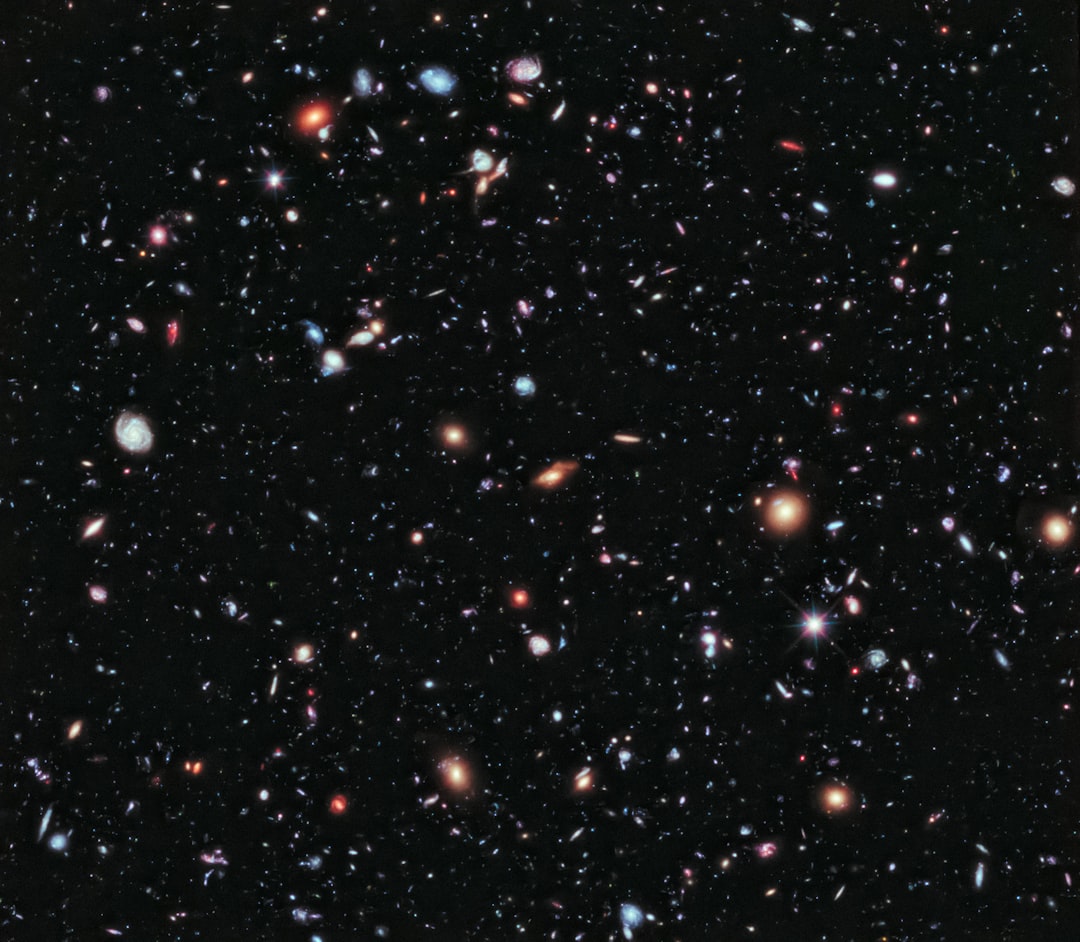
The universe, a vast and enigmatic expanse stretching beyond human comprehension, has long been a subject of profound curiosity. Cosmology, the scientific study of the origin, evolution, and ultimate fate of the universe, endeavors to unravel these mysteries. It is a field that pushes the boundaries of human knowledge, employing sophisticated theoretical frameworks and cutting-edge observational techniques to chart the cosmic landscape. For anyone gazing at the night sky, the questions that cosmology seeks to answer are often the same: How did it all begin? What is it made of? And where is it all going?
The Dawn of Cosmic Understanding
The quest to understand the universe is not a new one. Ancient civilizations, observing the celestial dance of stars and planets, developed intricate mythologies and early astronomical models. However, it was the advent of science, with its emphasis on empirical evidence and mathematical reasoning, that truly began to unlock the universe’s secrets.
Early Cosmological Models
Early cosmologies, such as the geocentric model which placed Earth at the center of the universe, were deeply ingrained in human thought for centuries. These models, while ingenious for their time, were ultimately limited by the observational capabilities and theoretical tools available.
- Ptolemaic System: This complex model, developed by Claudius Ptolemy, used epicycles to explain the retrograde motion of planets. Despite its intricate nature, it provided a workable predictive framework, influencing astronomical thought for over a millennium.
- Aristotelian Physics: Aristotle’s philosophical framework, which included ideas about the four elements and celestial spheres, also contributed to early cosmological thinking, though it was based more on philosophical reasoning than direct observation.
The Copernican Revolution
A pivotal moment in cosmological history arrived with Nicolaus Copernicus, who proposed a heliocentric model where the Sun, not the Earth, occupied the central position. This paradigm shift, though met with resistance, laid the groundwork for future astronomical advancements.
- Heliocentric Theory: Copernicus’s bold assertion, published in De Revolutionibus Orbium Coelestium, initiated a fundamental reevaluation of humanity’s place in the cosmos.
- Johannes Kepler’s Laws: Building upon the work of Copernicus and Tycho Brahe, Kepler formulated three laws of planetary motion, accurately describing the elliptical orbits of planets.
- Galileo Galilei’s Observations: Galileo’s telescopic observations provided compelling evidence for the heliocentric model, revealing the moons of Jupiter and the phases of Venus, challenging established Aristotelian physics.
Newton’s Universal Gravitation
Sir Isaac Newton’s formulation of the law of universal gravitation provided a unifying physical principle that explained the motions of celestial bodies and earthly objects alike. This was a monumental step, offering a predictive and consistent framework for understanding the mechanics of the cosmos.
- The Principia Mathematica: Newton’s magnum opus laid out his laws of motion and universal gravitation, revolutionizing physics and cosmology, and providing a mathematical language to describe the universe.
The Expanding Universe and Its Implications
The 20th century witnessed a dramatic transformation in our understanding of the universe, driven by revolutionary observations and theoretical breakthroughs. The once-static picture of the cosmos gave way to a dynamic, ever-expanding reality.
Hubble’s Discovery of Galactic Redshift
Edwin Hubble’s groundbreaking observations in the late 1920s provided the first direct evidence that the universe is not static but is, in fact, expanding. He observed that galaxies are moving away from us, and the further away they are, the faster they recede. This phenomenon, known as redshift, is analogous to the Doppler effect heard with sound waves.
- Redshift as a Cosmic Yardstick: The redshift of light from distant galaxies acts as a cosmic yardstick, allowing astronomers to measure their distances and velocities.
- Hubble’s Law: This empirical relationship, which states that the recessional velocity of a galaxy is directly proportional to its distance from us, revolutionized cosmology and became a cornerstone for modern theories.
The Big Bang Theory
Hubble’s findings provided crucial support for the Big Bang theory, the prevailing cosmological model that describes the universe’s origin approximately 13.8 billion years ago. This theory posits that the universe began as an extremely hot, dense point and has been expanding and cooling ever since.
- Cosmic Microwave Background Radiation (CMB): A key piece of evidence for the Big Bang is the CMB, a faint radiation that permeates the entire universe. It is considered the afterglow of the Big Bang, a relic from the early, hot, and dense state of the universe. Its discovery by Arno Penzias and Robert Wilson in 1964 was a monumental validation of the theory.
- Nucleosynthesis in the Early Universe: The abundance of light elements, such as hydrogen and helium, observed in the universe today aligns with predictions made by Big Bang nucleosynthesis, the process by which these elements were formed in the first few minutes after the Big Bang.
- Large-Scale Structure Formation: The Big Bang theory, when combined with concepts of gravity and inflation, provides a framework for understanding how the initial tiny fluctuations in the early universe grew into the vast cosmic web of galaxies and clusters we observe today.
The Role of Dark Energy and Dark Matter
While the Big Bang theory successfully explains many aspects of the universe, it also highlights the existence of enigmatic components that make up the vast majority of its mass-energy content: dark matter and dark energy.
- Dark Matter: This invisible substance does not interact with light or other electromagnetic radiation, making it incredibly difficult to detect directly. Its presence is inferred from its gravitational effects on visible matter. Galaxies rotate faster than they should based on the visible matter they contain, and galaxy clusters hold together far more strongly than visible matter alone would permit. Billions of research hours are dedicated to understanding its true nature and origin.
- Dark Energy: Even more mysterious than dark matter, dark energy is thought to be responsible for the accelerating expansion of the universe. Its discovery in the late 1990s, through observations of distant supernovae, was a profound surprise, suggesting that the universe’s expansion is not slowing down, as was previously expected, but is actually speeding up. The nature of dark energy remains one of the greatest unsolved mysteries in physics.
Unveiling the Cosmic Architecture
The universe is not a uniform soup; it is structured into an intricate cosmic architecture, a grand tapestry woven by gravity over billions of years. Understanding this structure is crucial for comprehending the processes that have shaped the cosmos.
The Cosmic Web
At the largest scales, galaxies are not randomly distributed but are organized into a vast, interconnected network known as the cosmic web. This web consists of massive filaments of galaxies and clusters, separated by enormous, nearly empty voids.
- Filaments and Walls: These are the most prominent structures, containing vast concentrations of galaxies and dark matter.
- Voids: These immense, underdense regions of space are largely devoid of galaxies, offering a stark contrast to the crowded filaments.
- Galaxy Clusters: These are the largest gravitationally bound structures in the universe, containing hundreds or even thousands of galaxies.
The Formation of Galaxies and Stars
The cosmic web provides the scaffolding upon which galaxies and stars form. Gravity pulls together gas and dark matter within these structures, leading to the birth of stars and the assembly of galaxies.
- Gravitational Collapse: Initial density fluctuations in the early universe acted as seeds for gravitational collapse, attracting surrounding matter.
- Star Formation: Within nascent galaxies, clouds of gas and dust collapse under their own gravity, igniting nuclear fusion and giving birth to stars.
- Galaxy Mergers and Evolution: Galaxies are not static entities; they interact, merge, and evolve over cosmic timescales, influencing their shapes, sizes, and star formation rates.
Black Holes: Singularities in Spacetime
At the heart of most large galaxies lie supermassive black holes, enigmatic objects with gravitational pulls so strong that nothing, not even light, can escape them. Their presence and influence play a significant role in galactic evolution.
- Event Horizon: The boundary around a black hole beyond which escape is impossible.
- Accretion Disks: Matter spiraling into a black hole forms a superheated disk that emits intense radiation, often observable by astronomers.
- Active Galactic Nuclei (AGN) and Quasars: These extremely luminous objects are powered by material falling into supermassive black holes at the centers of galaxies.
Probing the Earliest Moments
The quest to understand the universe extends to its very earliest moments, a period shrouded in extreme conditions and fundamental physics. Cosmology has developed theoretical tools and sought observational clues to probe this primordial era.
Inflationary Cosmology
The inflationary theory proposes a period of rapid, exponential expansion in the universe during the first fraction of a second after the Big Bang. This theory elegantly addresses several puzzles within the standard Big Bang model.
- Horizon Problem: Inflation explains why the cosmic microwave background radiation is so uniform across the sky, even though parts of the sky were once causally disconnected.
- Flatness Problem: Inflation suggests that the universe is remarkably flat, a geometric property that is difficult to explain without such a period of rapid expansion.
- Monopole Problem: Inflation dilutes the density of hypothetical magnetic monopoles to undetectable levels.
Quantum Fluctuations and Structure Seeds
The extremely brief period of inflation is thought to have amplified tiny quantum fluctuations in the primordial soup of energy. These fluctuations, stretched to cosmic scales by inflation, are believed to be the seeds from which all the large-scale structure – galaxies, clusters, and filaments – eventually grew.
- Primordial Density Perturbations: These initial slight variations in the density of the early universe are the crucial ingredients that, under the influence of gravity, led to the formation of all cosmic structures.
The Quark-Gluon Plasma
Before the formation of protons and neutrons, the universe existed as an incredibly hot and dense state known as the quark-gluon plasma. Experiments at particle accelerators, such as the Relativistic Heavy Ion Collider (RHIC) and the Large Hadron Collider (LHC), aim to recreate and study this primordial state.
- Particle Accelerators: These sophisticated instruments collide atomic nuclei at near-light speeds, recreating conditions similar to the early universe, allowing physicists to study the fundamental forces and particles.
The Future of Cosmology
Cosmology is a continually evolving field, driven by new observations and theoretical advancements. While much has been learned, many profound mysteries remain, beckoning further exploration. The universe is a cosmic ocean, and we are but humble voyagers charting its depths.
Observational Frontiers
Technological advancements are constantly pushing the boundaries of what can be observed, providing astronomers with ever-clearer views of the cosmos.
- Next-Generation Telescopes: Projects like the James Webb Space Telescope (JWST) are providing unprecedented insights into the early universe and the formation of the first stars and galaxies. Future ground-based telescopes, such as the Extremely Large Telescope (ELT), will offer further enhancements in observational power.
- Gravitational Wave Astronomy: The detection of gravitational waves, ripples in spacetime caused by cataclysmic cosmic events, has opened a new window for observing the universe, complementing traditional electromagnetic observations.
- Precision Cosmology Experiments: Surveys mapping the distribution of galaxies and the subtle variations in the cosmic microwave background are refining our understanding of the universe’s composition and expansion history.
Theoretical Challenges
The current cosmological model, known as the Lambda-CDM model (Lambda for dark energy, CDM for Cold Dark Matter), provides a remarkably successful framework but is not without its limitations and unanswered questions.
- Nature of Dark Matter and Dark Energy: As mentioned, their fundamental nature remains one of the most significant challenges in modern physics.
- Unification of Forces: The quest to unify gravity with the other fundamental forces of nature, potentially requiring a theory of quantum gravity, is a major theoretical pursuit.
- The Multiverse Hypothesis: Some theoretical frameworks suggest the possibility of a multiverse, a collection of universes beyond our own, though this remains a speculative and difficult-to-test concept.
The Ultimate Fate of the Universe
The expanding universe, propelled by dark energy, raises fundamental questions about its ultimate destiny. Will it expand forever, or will some unknown force eventually halt or reverse this expansion?
- The Big Freeze (Heat Death): If the universe continues to expand indefinitely, it will eventually become cold, dark, and diffuse as stars burn out and matter disperses.
- The Big Rip: A more extreme scenario where dark energy’s repulsive force becomes so strong that it tears apart galaxies, stars, planets, and even atoms.
- The Big Crunch: While currently disfavored by observations of accelerating expansion, a future reversal of expansion driven by gravity could lead to a collapse of the universe back into a singularity.
In conclusion, cosmology is a testament to humanity’s insatiable desire to comprehend our place in the grand cosmic narrative. From the ancient stargazers to the modern astrophysicists employing sophisticated instruments and theories, the exploration of the universe’s mysteries continues to inspire awe and drive scientific progress. The questions cosmology poses are often profound, touching upon the very essence of existence, and the answers it seeks are as vast as the cosmos itself.
FAQs
What is cosmology?
Cosmology is the scientific study of the large scale properties of the universe as a whole. It involves the understanding of the origin, evolution, structure, and eventual fate of the universe.
What are the main theories in cosmology?
The main theories in cosmology include the Big Bang theory, which describes the origin of the universe from a singularity approximately 13.8 billion years ago, and the theory of cosmic inflation, which explains the rapid expansion of the universe in its earliest moments.
What is the cosmic microwave background radiation?
The cosmic microwave background (CMB) radiation is the thermal radiation left over from the time of recombination in Big Bang cosmology. It is a key piece of evidence supporting the Big Bang theory and provides a snapshot of the universe when it was about 380,000 years old.
How do cosmologists study the universe?
Cosmologists study the universe using a combination of observational data from telescopes and satellites, theoretical models, and computer simulations. They analyze light from distant galaxies, cosmic background radiation, and the distribution of matter to understand the universe’s properties.
What is dark matter and dark energy in cosmology?
Dark matter is a form of matter that does not emit, absorb, or reflect light, making it invisible, but it exerts gravitational effects on visible matter. Dark energy is a mysterious form of energy that is driving the accelerated expansion of the universe. Both are fundamental components in current cosmological models.