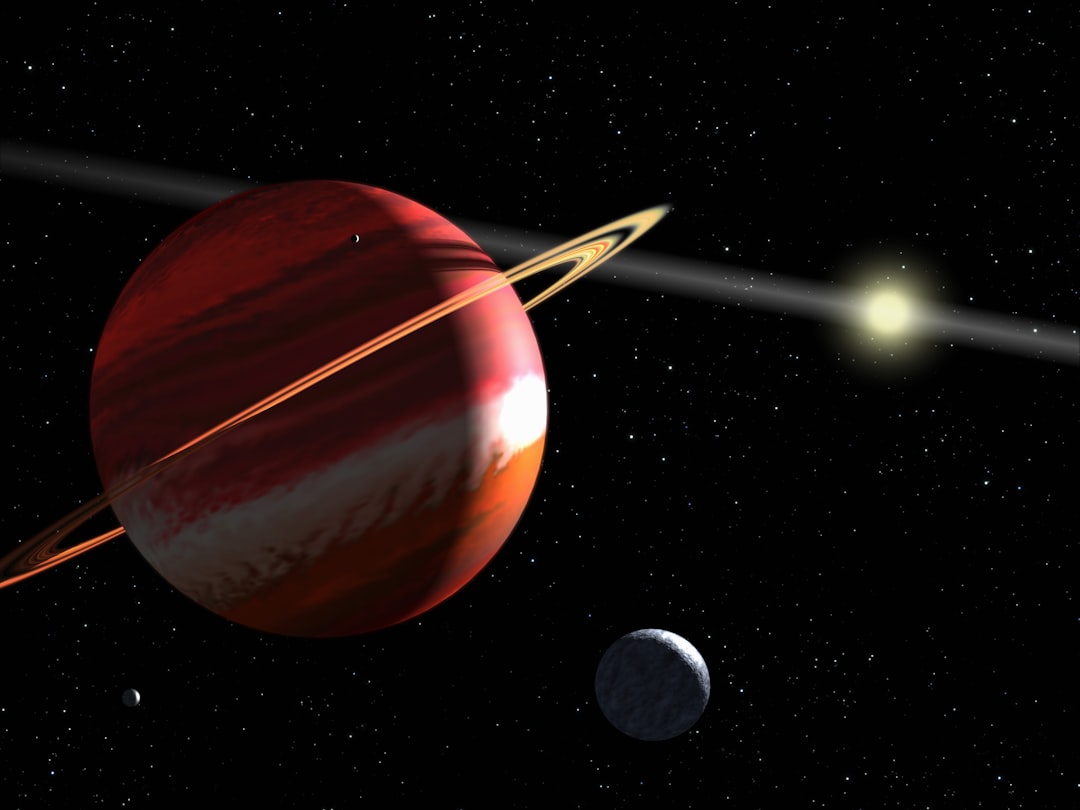
Planetary science is a multidisciplinary field that encompasses the study of planets, moons, and other celestial bodies within our solar system and beyond. It integrates aspects of astronomy, geology, atmospheric science, and even biology to unravel the mysteries of these distant worlds. As humanity’s understanding of the cosmos expands, planetary science plays a crucial role in deciphering the processes that govern the formation, evolution, and characteristics of various celestial entities.
This field not only enhances knowledge about our own planet but also provides insights into the potential for life elsewhere in the universe. The significance of planetary science extends beyond mere academic curiosity; it has profound implications for understanding Earth’s past, present, and future. By studying other planets, scientists can draw parallels and contrasts with Earth, leading to a deeper comprehension of geological processes, climate dynamics, and even the potential for extraterrestrial life.
As technology advances and exploration missions become more sophisticated, the scope of planetary science continues to broaden, promising exciting discoveries that could reshape humanity’s place in the cosmos.
Key Takeaways
- Planetary science is the study of planets, moons, and other celestial bodies in our solar system and beyond.
- Planets are formed from the accumulation of dust and gas in a rotating disk around a young star.
- The structure and composition of planets vary, with rocky planets like Earth having solid surfaces and gas giants like Jupiter being composed mainly of hydrogen and helium.
- The study of planetary atmospheres helps scientists understand the climate and weather patterns on different planets.
- The exploration of planetary surfaces, such as Mars and the Moon, provides valuable information about the geology and potential for life on other planets.
The Formation of Planets
The formation of planets is a complex process that begins with the accumulation of dust and gas in a protoplanetary disk surrounding a young star. Over millions of years, these particles collide and stick together, gradually forming larger bodies known as planetesimals. Through a process called accretion, these planetesimals continue to collide and merge, eventually forming protoplanets.
This stage is marked by intense heat and pressure, leading to differentiation where heavier materials sink to the center while lighter materials rise to the surface. As protoplanets grow larger, they can attract more material through their gravitational pull, leading to the formation of fully-fledged planets. The dynamics of this process are influenced by various factors, including the distance from the star, the composition of the material in the disk, and the presence of other celestial bodies.
For instance, the inner solar system formed rocky planets like Earth and Mars due to higher temperatures that prevented volatile compounds from condensing, while the outer solar system gave rise to gas giants like Jupiter and Saturn, which could capture vast amounts of hydrogen and helium.
The Structure and Composition of Planets
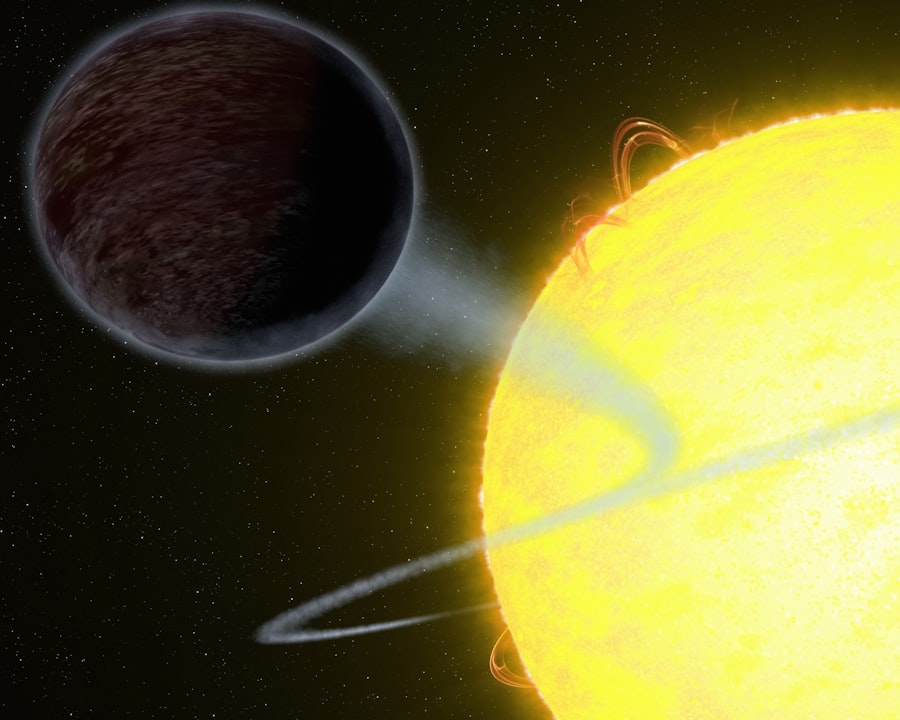
The structure and composition of planets vary significantly across the solar system, reflecting their unique formation histories and environmental conditions. Generally, planets can be categorized into two main types: terrestrial and gas giants. Terrestrial planets, such as Earth, Venus, Mars, and Mercury, are characterized by solid surfaces composed primarily of rock and metal.
These planets have distinct layers: a core made of iron and nickel, a mantle composed of silicate minerals, and a crust that forms the outermost layer. In contrast, gas giants like Jupiter and Saturn lack a well-defined solid surface. Instead, they are composed mainly of hydrogen and helium, with possible rocky cores buried deep within their thick atmospheres.
The study of planetary composition not only reveals information about their formation but also provides clues about their geological activity and potential for hosting life. For example, the presence of water ice on moons like Europa suggests that these bodies may harbor subsurface oceans capable of supporting life.
The Study of Planetary Atmospheres
| Planet | Atmospheric Composition | Surface Temperature (°C) |
|---|---|---|
| Earth | Nitrogen (78%), Oxygen (21%), Other gases (1%) | 14 |
| Mars | Carbon Dioxide (95.3%), Nitrogen (2.7%), Argon (1.6%) | -63 |
| Venus | Carbon Dioxide (96.5%), Nitrogen (3.5%) | 462 |
Planetary atmospheres are critical for understanding a planet’s climate, weather patterns, and potential habitability. The composition and behavior of an atmosphere can vary widely from one planet to another. For instance, Earth’s atmosphere is rich in nitrogen and oxygen, supporting a diverse range of life forms.
In contrast, Venus has a thick atmosphere dominated by carbon dioxide, resulting in extreme greenhouse conditions that make it one of the hottest places in the solar system. Scientists employ various methods to study planetary atmospheres, including remote sensing techniques from spacecraft and telescopes.
Understanding these dynamics is essential for predicting climate changes on other planets and assessing their potential for sustaining life. For example, studying Mars’ thin atmosphere has provided insights into its past climate and the possibility of liquid water on its surface.
The Exploration of Planetary Surfaces
The exploration of planetary surfaces has been revolutionized by advancements in space technology. Robotic missions have allowed scientists to gather detailed data about the geology, topography, and composition of various celestial bodies. Rovers like NASA’s Perseverance on Mars are equipped with sophisticated instruments that analyze soil samples and search for signs of past life.
These missions provide invaluable information about the history of planets and their potential for habitability. In addition to Mars exploration, missions to other bodies such as asteroids and moons have yielded fascinating discoveries. For instance, NASA’s OSIRIS-REx mission successfully collected samples from the asteroid Bennu, providing insights into the building blocks of our solar system.
Similarly, missions to icy moons like Enceladus have revealed subsurface oceans that could harbor microbial life. Each exploration mission contributes to a growing body of knowledge about planetary surfaces and their evolution over time.
The Search for Life on Other Planets

The search for extraterrestrial life is one of the most compelling aspects of planetary science. Scientists are particularly interested in identifying environments that could support life as we know it or even forms of life that may be entirely different from those on Earth. The discovery of extremophiles—organisms that thrive in extreme conditions on Earth—has expanded the possibilities for where life might exist beyond our planet.
Mars has long been a focal point in this search due to evidence suggesting it once had liquid water on its surface. Missions like the Mars rovers aim to uncover signs of past microbial life by analyzing soil samples and searching for organic compounds. Additionally, the study of exoplanets—planets orbiting stars outside our solar system—has gained momentum with missions like Kepler and TESS (Transiting Exoplanet Survey Satellite).
By identifying potentially habitable zones around stars where conditions might be right for life, scientists are broadening their search for life beyond Earth.
Planetary Dynamics and Climate
Understanding planetary dynamics is essential for comprehending how celestial bodies interact with one another and how they evolve over time. Gravitational forces play a significant role in shaping planetary orbits and influencing climate patterns. For instance, the gravitational pull between Earth and its moon affects ocean tides and stabilizes Earth’s axial tilt, which in turn influences seasonal changes.
Climate on other planets is shaped by various factors including distance from their star, atmospheric composition, and surface features. For example, Jupiter’s immense size generates strong winds and storms in its atmosphere, while Saturn’s rings create unique climatic phenomena. Studying these dynamics helps scientists understand not only individual planets but also broader processes that govern planetary systems as a whole.
The Role of Planetary Science in Understanding Earth
Planetary science offers valuable insights into Earth’s own history and future. By examining other planets’ geological processes and climatic conditions, scientists can draw parallels that enhance their understanding of Earth’s evolution. For instance, studying Mars’ dry riverbeds provides clues about Earth’s ancient water systems and climate changes over millennia.
Moreover, understanding planetary processes can inform predictions about Earth’s future climate scenarios. As human activities continue to impact global temperatures and weather patterns, insights gained from studying other planets can help scientists model potential outcomes on Earth. This comparative approach underscores the interconnectedness of planetary systems and emphasizes the importance of planetary science in addressing pressing environmental challenges.
Planetary Science and Space Exploration
The relationship between planetary science and space exploration is symbiotic; each drives advancements in the other. As new technologies emerge for space travel and observation, they enable more detailed studies of celestial bodies. Conversely, discoveries made through exploration often lead to new questions that propel further research in planetary science.
Missions such as NASA’s Artemis program aim to return humans to the Moon while also preparing for future crewed missions to Mars. These endeavors not only seek to expand human presence in space but also aim to gather data that will enhance understanding of planetary systems. The ongoing exploration efforts highlight humanity’s innate curiosity about the universe and its desire to uncover its secrets.
The Future of Planetary Science Research
The future of planetary science research is poised for exciting developments as technology continues to advance at an unprecedented pace. Upcoming missions planned by various space agencies promise to delve deeper into our solar system’s mysteries. For instance, NASA’s James Webb Space Telescope is set to revolutionize our understanding of exoplanets by providing unprecedented views into their atmospheres.
Additionally, international collaborations are becoming increasingly common in planetary science research. Joint missions between countries can pool resources and expertise to tackle complex questions about planetary formation and evolution. As humanity continues to explore beyond its home planet, the potential for groundbreaking discoveries remains vast.
The Importance of Planetary Science in Understanding the Universe
In conclusion, planetary science serves as a vital key to unlocking the mysteries of not only our solar system but also the broader universe. Through studying planets’ formation, structure, atmospheres, surfaces, and potential for life, scientists gain insights that enhance our understanding of Earth itself. As exploration efforts expand into new frontiers with advanced technology and international collaboration, humanity stands on the brink of transformative discoveries that could reshape our perception of existence within the cosmos.
The importance of planetary science extends beyond academic inquiry; it fosters a sense of connection between humanity and the universe at large. By exploring other worlds, scientists not only seek answers about our origins but also inspire future generations to look up at the stars with wonder and curiosity. As we continue this journey into space exploration and discovery, planetary science will remain at the forefront of humanity’s quest for knowledge about its place in an ever-expanding universe.
In recent developments within planetary science research, a fascinating article has emerged that delves into the intricate dynamics of planetary atmospheres and their evolution over time. This research provides new insights into how atmospheric conditions can influence planetary habitability and the potential for life beyond Earth. For those interested in exploring this topic further, the article is available on My Cosmic Ventures. You can read more about these groundbreaking findings by visiting the following link: Planetary Science Research Article. This resource offers a comprehensive overview of the latest advancements and theories in the field, making it an essential read for enthusiasts and researchers alike.
WATCH THIS! The Secret Ocean of Europa: Why NASA is Hunting for Alien Life Beneath the Ice
FAQs
What is planetary science research?
Planetary science research is the study of the planets, moons, and other objects in our solar system and beyond. It involves the use of various scientific disciplines, such as astronomy, geology, and atmospheric science, to understand the formation, evolution, and current state of these celestial bodies.
What are the main goals of planetary science research?
The main goals of planetary science research are to understand the processes that shape planetary bodies, including their geology, atmospheres, and potential for hosting life. Researchers also aim to gain insights into the history and evolution of the solar system and to identify potential hazards from space, such as asteroid impacts.
What are some of the key areas of study in planetary science research?
Key areas of study in planetary science research include planetary geology, atmospheric science, astrobiology, planetary formation and evolution, and the search for extraterrestrial life. Researchers also study the potential for human exploration and colonization of other planets and moons.
How is planetary science research conducted?
Planetary science research is conducted using a variety of methods, including spacecraft missions, telescopic observations, laboratory experiments, computer modeling, and analysis of meteorites and other extraterrestrial samples. Researchers also collaborate with colleagues in other scientific disciplines to gain a comprehensive understanding of planetary bodies.
What are some recent advancements in planetary science research?
Recent advancements in planetary science research include the discovery of exoplanets in other star systems, the exploration of Mars and its potential for past or present life, the study of icy moons in the outer solar system, and the development of new technologies for spacecraft missions and remote sensing.