
The landscape of data storage is perpetually evolving, driven by an insatiable human appetite for information and the ever-increasing complexity of its management. From the rudimentary punch cards of the 20th century to the petabyte-scale data centers of today, each leap forward has unlocked new possibilities. As we stand on the precipice of an era defined by artificial intelligence, virtual realities, and the Internet of Things, the demands placed upon storage solutions are reaching new heights. Traditional magnetic and flash-based storage, while remarkably advanced, are beginning to encounter fundamental physical limitations. In this context, holographic data storage emerges as a potential paradigm shift, promising unprecedented density, speed, and longevity.
Before delving into the promise of holography, it is crucial to understand the limitations that plague current storage technologies. These limitations act as the growing pains of our digital civilization, prompting the search for a more robust and scalable future.
Hard Disk Drives (HDDs): The Relentless Mechanical March
Hard disk drives, for decades the workhorse of bulk storage, rely on magnetic heads to read and write data onto spinning platters. Their capacity has grown exponentially through miniaturization and improved magnetic media. However, HDDs are inherently mechanical, making them susceptible to physical shock, wear and tear, and slower access times compared to solid-state alternatives.
Density Limitations: The Tyranny of the Magnetic Bit
While HDDs can achieve impressive capacities, the fundamental physics of magnetism imposes a ceiling on how densely data can be packed. As bits become smaller, they become more prone to thermal instability (superparamagnetism), where the magnetic orientation can flip spontaneously due to heat, leading to data corruption. This requires ever more sophisticated encoding schemes and error correction, adding complexity and cost without fundamentally breaking the density barrier.
Latency Issues: The Dance of the Read/Write Heads
The physical movement of the read/write heads across the spinning platters introduces latency – the time it takes to locate and access a specific piece of data. While improved through faster rotation speeds and sophisticated actuator mechanisms, this mechanical delay remains a bottleneck for applications demanding near-instantaneous data retrieval.
Solid-State Drives (SSDs): The Rise of the Electron
Solid-state drives, predominantly using NAND flash memory, have revolutionized performance with their lack of moving parts. They offer significantly faster read and write speeds and greater resilience to physical stress.
Endurance and Wear: The Finite Life of Flash Cells
Each flash memory cell can only undergo a finite number of write/erase cycles before it degrades and becomes unreliable. While advancements in wear-leveling algorithms and multi-level cell technologies have extended the lifespan of SSDs, this inherent limitation means they are not ideal for every long-term archival scenario.
Cost Per Gigabyte: The Premium of Speed
Despite decreasing costs, SSDs generally remain more expensive per gigabyte than HDDs, making them less economical for storing massive volumes of data that do not require constant, high-speed access. Furthermore, as flash cells become smaller and more densely packed, their susceptibility to errors and degradation increases, necessitating more aggressive error correction, which consumes valuable capacity and processing power.
Optical Storage: The Fading Echo of Discs
Optical media like CDs, DVDs, and Blu-ray discs store data by physically altering the surface of a disc, which is then read by a laser. While offering good archival stability for some formats, these technologies suffer from relatively low storage density and slow access speeds.
Limited Capacity: A Puddle in the Ocean of Data
The capacity of optical discs, even Blu-ray, is orders of magnitude smaller than what modern data demands. Storing even a modest collection of high-definition videos would require hundreds or thousands of discs, rendering them impractical for large-scale data storage.
Slower Access Times: The Search for the Right Track
Like HDDs, optical drives involve physical movement to locate data. The laser must be precisely positioned over the correct track on the spinning disc, leading to noticeable latency.
Holographic data storage represents a groundbreaking advancement in the field of data management, offering the potential for vastly increased storage capacities and faster data retrieval times. For those interested in exploring this innovative technology further, a related article can be found at this link, which delves into the principles of holography and its applications in modern data storage solutions.
Holographic Data Storage: A New Dimension of Information Retrieval
Holographic data storage represents a fundamental departure from these conventional methods. Instead of storing data on a two-dimensional surface, it leverages the three-dimensional nature of light to encode information throughout the volume of a storage medium. Imagine a library where books are not just arranged on shelves, but also stacked vertically, interlaced, and even stored within the very substance of the shelves themselves. This is the conceptual leap holographic storage offers.
The Principle of Holography: Capturing Light’s Full Potential
Holography, in its most basic form, is the process of recording and reconstructing a three-dimensional image of an object by interfering two coherent light beams. In data storage, this principle is adapted to store binary data.
The Reference Beam and the Data Beam: A Coded Dance of Light
A laser beam, known as the reference beam, is split. Another portion of the laser, the data beam, is modulated by the data to be stored, essentially creating a unique pattern for each bit or block of information. This data beam is then interfered with the reference beam within a photosensitive material. The resulting interference pattern, a complex interplay of light and dark fringes, is recorded as a hologram.
Page-Based Storage: Information Encoded in Blocks
Crucially, holographic storage encodes data in “pages” – large blocks of bits that are written and read simultaneously. This is a significant departure from the bit-by-bit or track-by-track operations of traditional storage. A single holographic recording can contain thousands or even millions of bits, all accessible at once.
The Storage Medium: A Crystal of Possibilities
The material used to record these holograms is key to the technology’s success. These are typically photopolymer or photorefractive crystals that can accurately capture and retain the intricate interference patterns.
Photosensitive Crystals: Capturing the Light’s Imprint
These crystals possess the ability to change their optical properties in response to light. When the reference and data beams interfere within the crystal, localized changes occur, creating variations in the refractive index. These variations form the holographic grating that represents the stored data.
Volume Holography: Storing Data Throughout the Medium
Unlike surface-based storage, holographic storage utilizes the entire volume of the medium. This is achieved by recording multiple holograms at different angles or positions within the crystal. Each hologram is a complete “page” of data, and they are distinct from one another, allowing for massive data density.
The Promise of Holographic Data Storage: Beyond Today’s Limitations
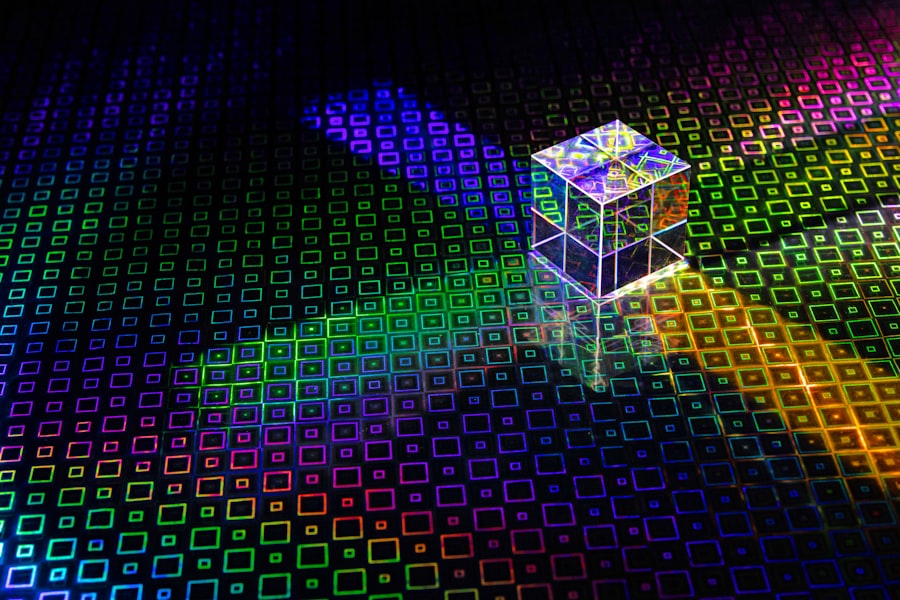
The unique nature of holographic storage addresses many of the inherent limitations found in existing technologies, opening doors to previously unimagined data handling capabilities.
Unparalleled Storage Density: A Universe in a Grain of Sand
The ability to store data throughout the volume of a medium, rather than just on a surface, is the cornerstone of holographic storage’s density advantage.
Stacking Information in Three Dimensions: The Cubic Universe
Imagine a small crystal, no larger than a sugar cube. By strategically recording holograms at different angles within this crystal, it is theoretically possible to store petabytes of data – an amount currently requiring entire warehouses filled with servers. This is like being able to store every book ever written within a single, compact volume.
Overcoming Superparamagnetism: A Different Approach to Data Integrity
Holographic storage does not rely on magnetism, thus bypassing the superparamagnetism limitations that plague high-density magnetic media. The data is encoded in the physical structure of the recording medium, making it inherently more stable.
Blazing-Fast Access Speeds: Information at the Speed of Light
The page-based nature of holographic storage allows for the retrieval of vast amounts of data simultaneously, leading to dramatic improvements in access times.
Parallel Retrieval: Accessing Entire Books at Once
Instead of reading one word or sentence at a time, holographic storage can retrieve an entire “page” of data – containing thousands or millions of bits – in a single operation. This is akin to being able to read an entire chapter or even a whole book simultaneously.
Reduced Latency: The Elimination of Mechanical Delays
Since there are no moving parts involved in reading the holographic data (only light manipulation), the time it takes to access information is drastically reduced, approaching the speed of light itself.
Superior Longevity and Durability: A Legacy of Data
The nature of the holographic recording medium also offers significant advantages in terms of data longevity and resistance to environmental factors.
Archival Stability: A Permanent Imprint
The holographic patterns are physically imprinted within the crystal and can remain stable for decades, even centuries, under appropriate storage conditions. This makes holographic storage an ideal candidate for long-term archival of critical data.
Robustness Against Environmental Factors: Immunity to the Elements
Unlike magnetic media that can be corrupted by strong magnetic fields, or optical discs that can be scratched, holographic data stored within a solid crystal is largely immune to many common forms of data degradation.
Challenges and the Road to Commercialization

Despite its immense potential, holographic data storage is not yet a mainstream technology. Several significant hurdles must be overcome to transition from the laboratory to widespread adoption.
The Engineering Gauntlet: Precision and Control
The precise alignment of beams, the quality of the recording medium, and the sophisticated optical systems required present formidable engineering challenges.
Optical System Complexity: A Symphony of Lenses and Mirrors
To accurately record and retrieve holograms, highly precise optical systems are required. These involve complex arrangements of lenses, mirrors, beam splitters, and spatial light modulators, all of which must be meticulously calibrated.
Material Science Breakthroughs: The Quest for the Perfect Crystal
The development of stable, high-capacity, and easily readable holographic recording materials is an ongoing area of research. Achieving the perfect balance of sensitivity, resolution, and longevity in these materials is critical.
Cost of Implementation: The Price of Innovation
Developing and manufacturing holographic storage systems is currently expensive, putting them out of reach for many applications.
High Initial Investment: The Seed Money for a Revolution
The research and development, as well as the specialized manufacturing processes, require substantial upfront investment. This can be a barrier to entry for companies looking to adopt the technology.
Scaling Up Production: From Lab Bench to Assembly Line
Translating laboratory prototypes into mass-produced, cost-effective devices is a significant undertaking. Economies of scale are essential for making holographic storage competitive.
Standardization and Integration: The Language of Data
For any new storage technology to gain widespread adoption, it must be compatible with existing systems and follow industry standards.
Interoperability: Speaking the Same Digital Language
Ensuring that holographic storage systems can communicate and exchange data with existing servers, networks, and software is crucial. This requires the development of standardized interfaces and protocols.
Software and Hardware Ecosystem: Building the Digital Infrastructure
A robust ecosystem of software drivers, management tools, and compatible hardware is needed for holographic storage to become a seamless part of the digital infrastructure.
Holographic data storage is an innovative technology that promises to revolutionize the way we store and access information. For those interested in exploring this topic further, a related article can be found at My Cosmic Ventures, which delves into the potential applications and benefits of holographic storage systems. This technology not only offers increased storage capacity but also enhances data retrieval speeds, making it a compelling option for future data management solutions.
Potential Applications: Where Holography Might Shine
| Metric | Value | Unit | Description |
|---|---|---|---|
| Storage Capacity | 1 | TB/cm³ | Typical volumetric data density achievable with holographic storage |
| Data Transfer Rate | 1 | Gbps | Speed at which data can be read or written |
| Access Time | 10 | ms | Time to access data compared to traditional optical storage |
| Wavelength of Laser | 532 | nm | Common laser wavelength used for recording holograms |
| Number of Data Pages per Hologram | 1000 | pages | Multiplexing capability to store multiple data pages in one hologram |
| Material Sensitivity | 10⁻⁴ | J/cm² | Energy required to record a hologram in the storage medium |
| Data Retention Time | 10 | years | Estimated duration data remains stable without degradation |
Should these challenges be overcome, holographic data storage could find transformative applications across a wide spectrum of industries.
Long-Term Archival: The Digital Graveyard of Memory
The exceptional longevity and density of holographic storage make it an ideal candidate for long-term archival of critical data, from government records and scientific research to historical archives and personal memories.
Preserving the Digital Heritage: A Legacy for Future Generations
Imagine being able to store the entire collected works of humanity, or vast astronomical datasets, on a medium that will outlast written records by millennia. This offers a level of data preservation previously only dreamed of.
Regulatory Compliance: Mandates for Data Retention
Many industries are subject to strict regulations requiring the retention of data for extended periods. Holographic storage could offer a cost-effective and highly reliable solution for meeting these mandates.
Big Data and Scientific Research: Unlocking Unfathomable Insights
The sheer capacity and rapid access offered by holographic storage could revolutionize the handling and analysis of enormous datasets generated by scientific endeavors.
Genomics and Astronomy: Decoding the Universe and Ourselves
Fields like genomics, which generate petabytes of data per individual, and astronomy, with its ever-growing telescopes capturing immense volumes of cosmic information, would greatly benefit from holographic storage’s capacity.
Climate Modeling and AI Training: The Fuel for Discovery
Complex climate simulations and training massive artificial intelligence models require vast datasets. Holographic storage could provide the necessary backbone for these computationally intensive processes.
Cloud Storage and Data Centers: The Next Generation of Information Hubs
As cloud providers grapple with ever-increasing data demands, holographic technology could offer a revolutionary solution for their massive data centers.
Hyper-Dense Storage Solutions: Maximizing Footprint Efficiency
The ability to store petabytes of data in a small footprint would significantly reduce the physical space and energy requirements of data centers, leading to substantial cost savings and environmental benefits.
High-Speed Data Access for Cloud Services: The Ultimate Performance Boost
For cloud services that rely on rapid data retrieval, holographic storage could offer a significant performance advantage, leading to faster application response times and improved user experiences.
Secure and Private Data Storage: Fortifying the Digital Vault
The inherent security and inherent immutability of holographically stored data could offer new avenues for secure and private data management.
Tamper-Proof Archives: A Digital Fortress
Once a hologram is recorded, it is very difficult to alter or delete without physically destroying the medium. This provides a high degree of tamper-proof security for sensitive information.
Decentralized Data Storage: Empowering Individuals
While challenges remain, the potential for small, high-capacity holographic drives could enable more decentralized data storage solutions, giving individuals greater control over their personal data.
The Horizon of Holography: A Glimpse into the Future
The journey of holographic data storage is akin to the early days of computing – a promising technology with immense potential, yet facing considerable engineering and economic hurdles. While current iterations may not be ready for the average consumer, ongoing research and development are steadily pushing the boundaries of what is possible. The persistent quest for more efficient, denser, and faster ways to store our ever-expanding digital universe makes holographic technology a compelling area of future innovation. As the cost decreases and performance improves, holographic data storage could well become an integral part of our digital infrastructure, transforming how we interact with, preserve, and utilize information in the decades to come. The future of data storage is not just about more bits on a platter; it’s about reimagining the very dimensions of information itself.
FAQs
What is holographic data storage?
Holographic data storage is a method of storing information by recording data throughout the volume of a medium using the interference pattern of laser beams, rather than just on the surface. This allows for high-density and high-speed data storage.
How does holographic data storage work?
It works by splitting a laser beam into two parts: the signal beam, which carries the data, and the reference beam. When these beams intersect in a photosensitive material, they create an interference pattern that encodes the data in three dimensions. The stored data can later be retrieved by illuminating the medium with the reference beam.
What are the advantages of holographic data storage?
Advantages include very high storage capacity, fast data transfer rates, and the ability to store data in three dimensions, which allows for more information to be stored in a smaller physical space compared to traditional storage methods.
What materials are used for holographic data storage?
Common materials include photopolymers, photorefractive crystals, and photorefractive polymers. These materials are sensitive to light and can record and retain the interference patterns created by the laser beams.
What are the current challenges facing holographic data storage technology?
Challenges include the complexity and cost of the required optical systems, material stability and longevity, data retrieval accuracy, and the need for standardization before widespread commercial adoption can occur.