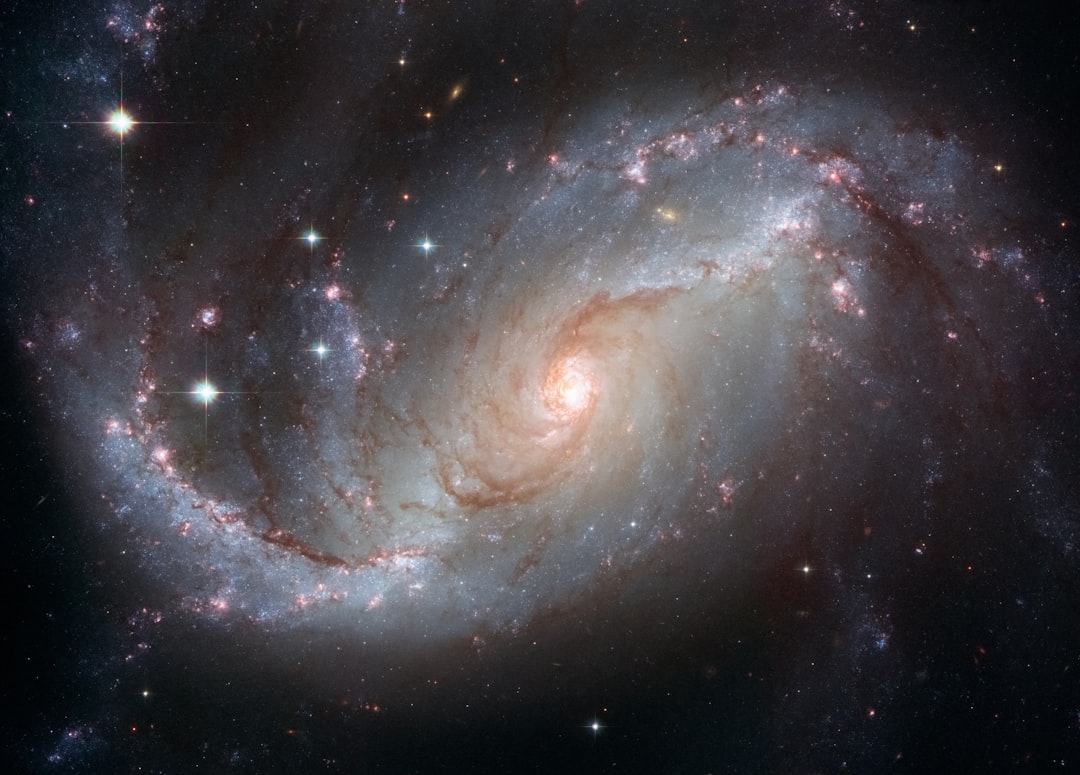
The universe, in its vastness, presents humanity with a tapestry of celestial wonders. Among these, massive galaxies stand as colossal islands in the cosmic ocean, dwarfing their smaller brethren and holding within their gravitational embrace billions, even trillions, of stars. The study of these giants, therefore, is not merely an academic pursuit; it is an endeavor to understand the very architecture of the cosmos and the fundamental forces that shaped it. Yet, despite decades of observation and theoretical advancement, the formation and evolution of these behemoths remain shrouded in an enigma, posing challenging questions that continue to captivate and perplex astrophysicists.
When we speak of massive galaxies, we are referring to the extreme end of the galactic spectrum. These are not your average spiral or elliptical collections of stars, but rather the true giants of the universe. Their sheer scale is difficult to fully comprehend, akin to comparing a pebble to a mountain.
Stellar Populations and Mass
The defining characteristic of a massive galaxy is its immense stellar mass. This is the total mass contributed by all the stars within the galaxy, excluding gas, dust, and dark matter. These galaxies can contain upwards of 1011 to 1013 solar masses, a number so staggering that it strains our everyday intuition. To put this into perspective, our own Milky Way galaxy, a respectable spiral, has a stellar mass estimated to be around 5 x 10¹⁰ solar masses. Massive galaxies are, therefore, hundreds to thousands of times more massive than our home galaxy.
Morphological Diversity
While often associated with the elliptical shape, massive galaxies exhibit a range of morphological types.
Elliptical Giants
The most iconic massive galaxies are the giant ellipticals. These are smooth, featureless spheroids of stars, characterized by their lack of prominent spiral arms or significant gas and dust content. Their stellar populations are generally older, with a prevalence of redder, cooler stars. These immense structures often reside at the centers of rich galaxy clusters, acting as gravitational anchors.
Intermediate and Irregular Forms
Not all massive galaxies conform to the classic elliptical mold. Some exhibit less regular shapes, often a consequence of past mergers and interactions with other galaxies. These “intermediate” types can retain some degree of structure, hinting at a more complex formation history. While less common at the absolute highest mass scales, massive spiral galaxies do exist, although their formation pathways might differ from their elliptical counterparts.
Environmental Influence
The environment in which a galaxy resides plays a crucial role in its evolution, and this is particularly true for massive galaxies.
The Heart of Clusters
Massive galaxies are disproportionately found in dense regions of the universe, specifically at the centers of galaxy clusters. These clusters are the largest gravitationally bound structures known, effectively acting as cosmic metropolises where galaxies congregate. The gravitational pull of a cluster draws in surrounding material, fueling the growth of its central galaxy.
The Cosmic Web
Beyond clusters, galaxies are organized into a vast, filamentary structure known as the cosmic web. Massive galaxies often lie at the nodes of this web, the points where multiple filaments intersect, representing regions of immense gravitational density.
Massive galaxies are fascinating cosmic structures that provide insights into the formation and evolution of the universe. For those interested in delving deeper into this topic, a related article can be found at My Cosmic Ventures, which explores the characteristics and significance of these colossal entities in greater detail.
Formation Pathways: Seeds of Giants
The genesis of these cosmic titans is a question that has occupied astrophysicists for decades. The prevailing theories suggest that massive galaxies are not born in isolation but rather evolve through a hierarchical process of mergers and accretion.
The Hierarchical Model of Galaxy Formation
The dominant paradigm in cosmology is the Lambda-CDM (ΛCDM) model, which posits that the universe evolved from small density fluctuations in the early universe into the large-scale structures we observe today.
From Small to Large
In this model, small halos of dark matter first formed and then merged over cosmic time to create larger and larger halos. Galaxies are thought to reside within these dark matter halos. The merging of smaller galaxies, each with its own stellar content and gas, is a primary mechanism for building up larger galaxies. A massive galaxy, therefore, can be thought of as the ultimate victor in a cosmic series of galactic collisions and absorptions.
The Role of Mergers
Mergers are not gentle unions. For smaller galaxies, encountering a more massive neighbor can be a cataclysmic event. Tidal forces can strip stars and gas, and the gravitational dance can trigger intense bursts of star formation or even completely disrupt the smaller galaxy, feeding its material into the larger one. The more massive the progenitor galaxies involved in a merger, the more colossal the resulting galaxy.
Early Universe Seeds and Growth
While mergers are crucial for later growth, the initial formation of massive galaxies in the early universe presents a particular challenge for current models.
The Problem of Early Growth
Observations of distant, and therefore younger, galaxies have revealed the existence of surprisingly massive galaxies quite early in cosmic history. This presents a puzzle: how could such large structures have assembled so quickly, given the time required for hierarchical merging to build such mass? Current models sometimes struggle to produce such early giants without invoking unusual conditions.
Early Mergers and Supermassive Black Holes
One avenue of research focuses on the role of early, rapid mergers in the nascent universe. If massive black holes, which are known to reside at the centers of most galaxies, play a catalytic role in galaxy growth, their rapid formation and accretion in the early universe could have accelerated the development of massive galaxies. The energy released by active galactic nuclei (AGN), powered by these accreting black holes, can also influence star formation within the host galaxy, further complicating the growth story.
The Influence of Supermassive Black Holes
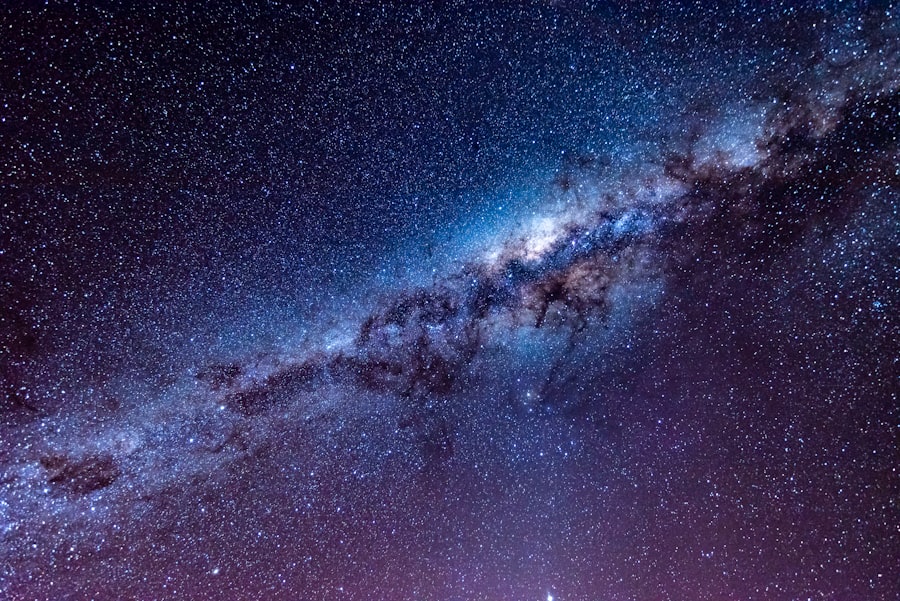
The central region of almost every galaxy, irrespective of its size, harbors a supermassive black hole (SMBH). In massive galaxies, these central behemoths are often proportionally more massive themselves, and their presence is inextricably linked to the galaxy’s evolution.
The SMBH-Galaxy Connection
The correlation between the mass of a supermassive black hole and the mass of its host galaxy’s bulge (the central, spheroidal component of a spiral or elliptical galaxy) is one of the most robust findings in extragalactic astronomy.
A Cosmic Symbiosis
This remarkable relationship suggests a deep, co-evolutionary link between the black hole and its galaxy. It is not simply that the black hole is a passenger; rather, it appears to actively participate in shaping the galaxy’s properties. The mechanisms driving this co-evolution are still a subject of intense research.
Feedback Mechanisms
One prominent theory involves feedback processes. When a supermassive black hole actively accretes matter, it can launch powerful jets and winds of energetic particles and radiation.
AGN Feedback
These outflows from active galactic nuclei (AGN) can inject enormous amounts of energy into the surrounding interstellar medium, heating and expelling gas. This “AGN feedback” can regulate or even quench star formation in the host galaxy, preventing it from growing uncontrollably large. For massive galaxies, the feedback from their proportionally larger SMBHs is thought to be a critical factor in halting their growth.
Stellar Feedback
In addition to black hole feedback, the energetic processes associated with star formation itself, such as stellar winds and supernova explosions, also play a role in regulating gas within a galaxy. This stellar feedback can both trigger and suppress star formation depending on the local conditions.
Structure and Dynamics: The Inner Workings
The immense scale of massive galaxies implies complex internal dynamics and interactions between their constituent parts. Understanding these inner workings provides clues to their formation and evolution.
Stellar Kinematics and Dynamics
The movement of stars within a galaxy provides a powerful probe of its underlying gravitational potential and internal structure.
Velocity Dispersions
In elliptical galaxies, stars do not follow orderly orbits like those in spiral arms. Instead, their motions are largely random, resulting in a high “velocity dispersion” – a measure of the range of their speeds. This high dispersion is indicative of a deep, centrally concentrated gravitational potential, consistent with a massive object.
Rotation Curves and Dark Matter
While ellipticals are often pressure-supported, some massive galaxies, particularly those that may have undergone recent mergers, can exhibit rotational support. Studying the rotation curves of these galaxies, which plot the orbital speed of stars and gas as a function of their distance from the center, provides strong evidence for the existence of dark matter. At large radii, the observed rotation is faster than can be explained by visible matter alone, implying a pervasive halo of unseen dark matter.
Gas and Dust Content
The presence and distribution of cold gas and dust within a galaxy are crucial for star formation and can also reveal insights into its history.
Gas-Poor Giants
Many of the most massive elliptical galaxies appear to be remarkably gas-poor. This suggests that they have either exhausted their gas supply through massive bursts of star formation or that processes like AGN feedback have effectively removed it. Their gas-poor nature contributes to their redder stellar populations, as the fuel for forming new, blue stars has been depleted.
Mergers and Fueling
However, not all massive galaxies are gas-poor. Some may have acquired gas through recent mergers with gas-rich galaxies, temporarily fueling intense star formation. These phases can lead to transient periods of blue colors and active star formation before the gas is eventually consumed or expelled.
Massive galaxies are fascinating structures that continue to intrigue astronomers and astrophysicists alike. Their formation and evolution provide insights into the fundamental processes that govern the universe. For those interested in exploring this topic further, a related article discusses the latest discoveries in galaxy formation and the role of dark matter in shaping these colossal structures. You can read more about it in this insightful piece on cosmic ventures.
The Enigma of Satellite Galaxies
| Metric | Description | Typical Value | Units |
|---|---|---|---|
| Stellar Mass | Total mass of stars in the galaxy | 1011 – 1012 | Solar Masses (M☉) |
| Diameter | Approximate size across the galaxy | 30,000 – 100,000 | Light Years |
| Velocity Dispersion | Measure of the range of velocities of stars | 200 – 350 | km/s |
| Redshift (z) | Measure of galaxy’s distance and age | 0.01 – 2.5 | Dimensionless |
| Star Formation Rate | Rate at which new stars are formed | 0.1 – 10 | Solar Masses per year (M☉/yr) |
| Dark Matter Halo Mass | Mass of the surrounding dark matter halo | 1012 – 1013 | Solar Masses (M☉) |
| Luminosity | Total light output of the galaxy | 1010 – 1011 | Solar Luminosities (L☉) |
A hallmark of massive galaxies, especially those residing at the centers of clusters, is their retinue of smaller companion galaxies, known as satellites. The relationship between these massive hosts and their smaller orbiting companions is a key area of research.
Tidal Stripping and Disruption
Massive galaxies exert powerful tidal forces on their satellite galaxies, the gravitational pull being stronger on the near side of the satellite than on the far side.
Cosmic Cannibalism
This differential pull can stretch and distort satellite galaxies, stripping away their outer stars and gas. Over time, this process, often referred to as “galactic cannibalism,” can render satellite galaxies almost unrecognizable, leaving behind only their denser cores. The diffuse streams of stars observed around massive galaxies are often remnants of these tidally disrupted satellites.
Starvation
Beyond outright disruption, the environment around massive galaxies can also lead to the gradual depletion of gas in their satellites through a process known as “ram pressure stripping.” As a satellite galaxy moves through the hot, diffuse gas that permeates galaxy clusters, its own gas is swept away, effectively starving the satellite of the fuel required for new star formation.
Dwarf Galaxy Ecosystems
The study of satellite galaxies, particularly dwarf galaxies, orbiting massive hosts offers a unique laboratory for understanding galaxy formation on smaller scales.
The Missing Satellites Problem
Historically, cosmological simulations predicted far more small satellite galaxies around large galaxies than were observed. This was known as the “missing satellites problem.” However, advances in observational techniques have revealed a much more populated population of faint dwarf galaxies, alleviating this discrepancy to some extent.
Diverse Satellite Populations
The diversity observed in the satellite populations of massive galaxies provides clues about their formation histories. Different types of satellites might indicate different merger events or accretion pathways. Understanding these relationships helps refine our models of how galaxies grow and evolve within the cosmic hierarchy.
The enigma of massive galaxies is not a single, monolithic puzzle, but rather a constellation of interconnected questions. From the rapid assembly of early giants to the co-evolution with supermassive black holes, and from the dynamics of their stellar populations to the fate of their satellite companions, these cosmic titans continue to challenge our understanding of the universe. As observational capabilities improve and theoretical models become more sophisticated, we inch closer to unraveling the mysteries that lie at the heart of these celestial behemoths, illuminating the grand narrative of cosmic evolution.
FAQs
What defines a galaxy as “massive”?
A massive galaxy is typically defined by its large stellar mass, often exceeding 100 billion times the mass of the Sun. These galaxies contain vast numbers of stars, significant amounts of gas and dust, and often have supermassive black holes at their centers.
How do massive galaxies form?
Massive galaxies form through a combination of processes including the merging of smaller galaxies, accretion of gas from their surroundings, and intense periods of star formation. Over billions of years, these processes contribute to their large size and mass.
What types of massive galaxies are most common?
The most common types of massive galaxies are elliptical galaxies and giant spiral galaxies. Elliptical galaxies are typically older and have less gas and dust, while giant spiral galaxies have prominent disk structures with ongoing star formation.
What role do massive galaxies play in the universe?
Massive galaxies play a crucial role in the structure and evolution of the universe. They often reside in the centers of galaxy clusters, influence the distribution of dark matter, and their supermassive black holes can impact star formation through energetic feedback processes.
How do astronomers study massive galaxies?
Astronomers study massive galaxies using a variety of observational tools including optical and infrared telescopes, radio observatories, and space-based instruments. They analyze light spectra, galaxy morphology, and dynamics to understand their composition, formation history, and evolution.